

With their wild features and beautiful leopard print, Bengals are truly wild and cool cats.
Bengals are often imagined as having a wild personality that doesn't warm up to owners, or being cool and preferring solitude, but what is their true personality like?
This article will delve into the roots of the Bengal's origins and explain their personality in detail. It will also cover the Bengal's physical characteristics and how to care for them.
Characteristics of the Bengal
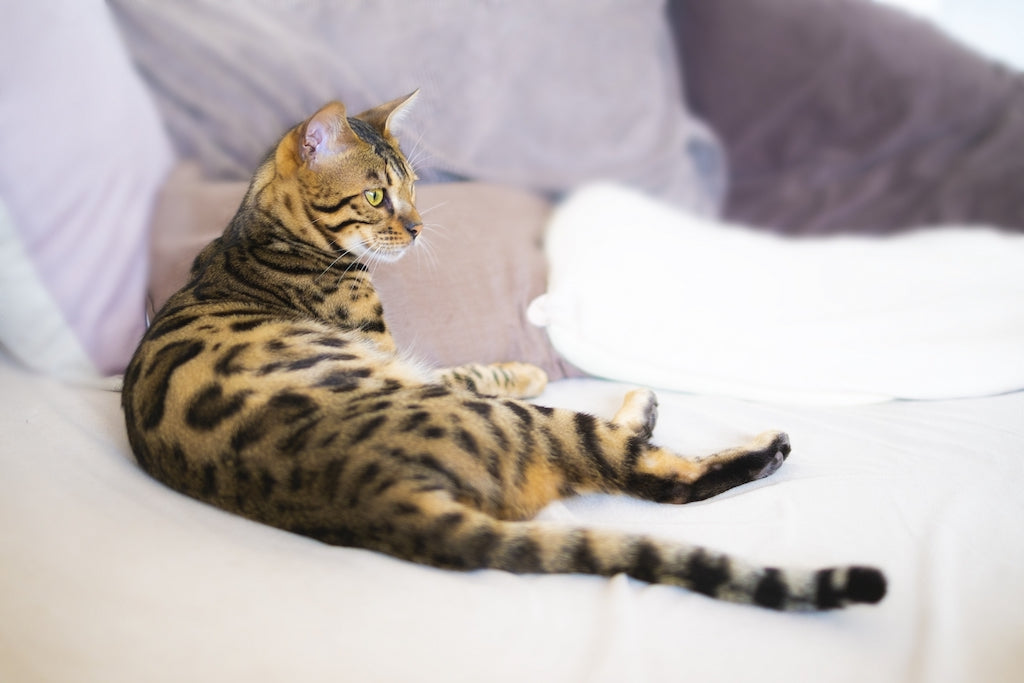
Bengals are captivating with their wild appearance, resembling small leopards. Their most distinctive feature is undoubtedly their beautiful leopard print.
The Bengal's coat is very smooth, and their fur color is broadly divided into three types: "brown," "silver," and "snow (white)." The patterns come in two types: "spotted" like a leopard print, or "marbled" like an American Shorthair.
For example, a Bengal with a brown coat and marbled pattern is called a "brown marbled tabby," and a Bengal with a silver coat and leopard print is called a "silver spotted tabby." "Tabby" refers to the striped pattern on a cat.
Excellent athletic ability!
Bengals are rather large cats, with females weighing 3-5kg and males weighing 3-6kg, some even reaching nearly 8kg. Their sleek, muscular bodies give them a strong and robust impression. Their hind legs are longer than their front legs, and they can be seen running with a leaping gait. They certainly look like they have high athletic capabilities.
A cat that loves water
Bengals are unusual for cats in that they love bathing and playing in water, and are unfazed by water on their faces. While there are individual differences, many don't mind when being shampooed. Some will happily come running when they hear the sound of water flowing in the kitchen or bathroom. To prevent them from falling into the bath and drowning, make sure not to fill the tub with water.
History of the Bengal
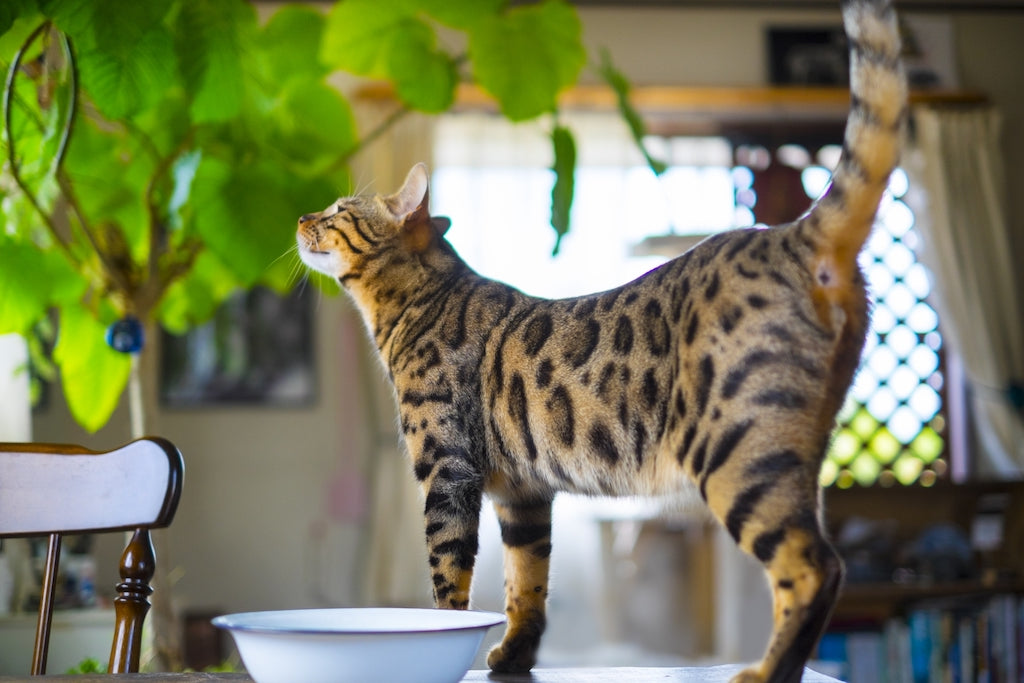
The ancestor of the Bengal is the "Asian Leopard Cat," also known as the "Bengal Wild Cat," a wild feline species. They lived in the forest regions of Southeast Asia, but their numbers drastically decreased due to excessive hunting for their beautiful fur.
To save the Asian Leopard Cat from extinction, efforts were made in the 1970s in the United States to preserve the species by crossbreeding them with domestic cats. By crossing various cat breeds, the Bengal, with its beautiful spotted pattern, was born.
In 1983, it was officially recognized by TICA (a global cat pedigree registry organization) and became extremely popular worldwide as a cat with wild ancestry.
Bengal Personality
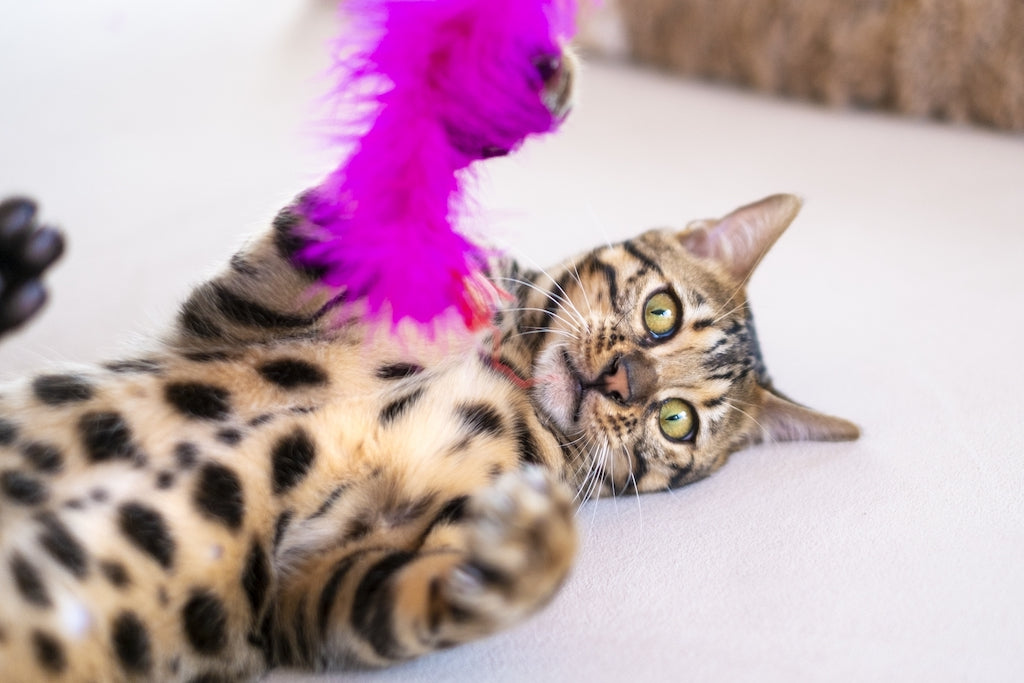
In a word, the Bengal's personality is "loves to play, sociable, and good at cuddling."
Compared to other cats, Bengals have exceptionally high athletic abilities, so they play with great energy. They love climbing cat trees and playing hunting games that involve chasing toys.
While their small heads and straight noses give them a very wild appearance, they actually have a very affectionate personality. They love their owners, purring and seeking physical affection, demonstrating a rich expression of affection.
Furthermore, they have a very sociable personality, so they can play well with strangers and children alike. They also love to interact with other cats and are well-suited for multi-cat households. You can see heartwarming scenes of them grooming each other and cuddling up for naps, which is truly comforting to watch.
Bengals have a wild appearance but are actually affectionate. This gap in their personality makes them such charming cats.
What you should know about Bengals
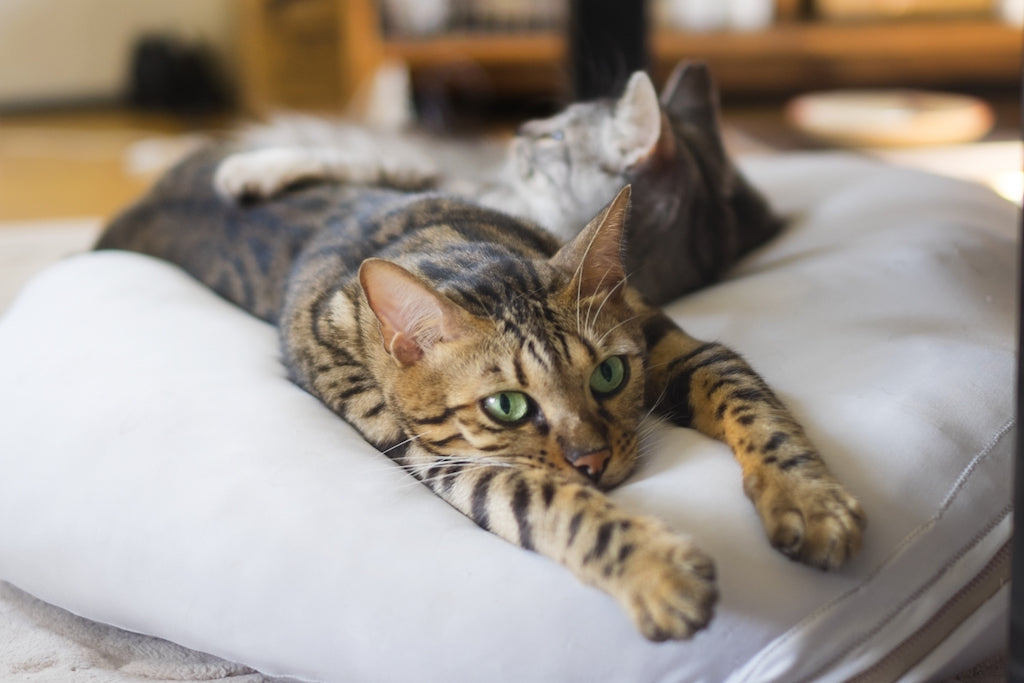
Bengals, with their wild ancestry, are extremely active. There are some things to be aware of when living with them.
Creating an environment for exercise is essential
Bengals are super energetic cats with strong bone structures and agile muscles. To ensure they get enough exercise, equipment for vertical movement, such as cat trees and cat steps, is essential.
They also love playing with their owners, so make sure to play with them a lot using cat toys. They often break toys due to their intensity, so it's a good idea to have as many toys as possible.
Also, after spaying or neutering, some cats may experience an increased appetite despite reduced activity. Be mindful of their diet to prevent obesity.
Diseases that Bengals are prone to
While Bengals are said to have few specific genetic diseases, they can become unwell if they experience "stress."
Bengals have a calm and affectionate nature, but they also have an abundance of energy and curiosity. If they don't get enough exercise or stimulation, they can accumulate stress.
This can manifest as symptoms like excessive grooming leading to hair loss, diarrhea, constipation, or cystitis. Be sure to play with them lovingly and often.
Summary
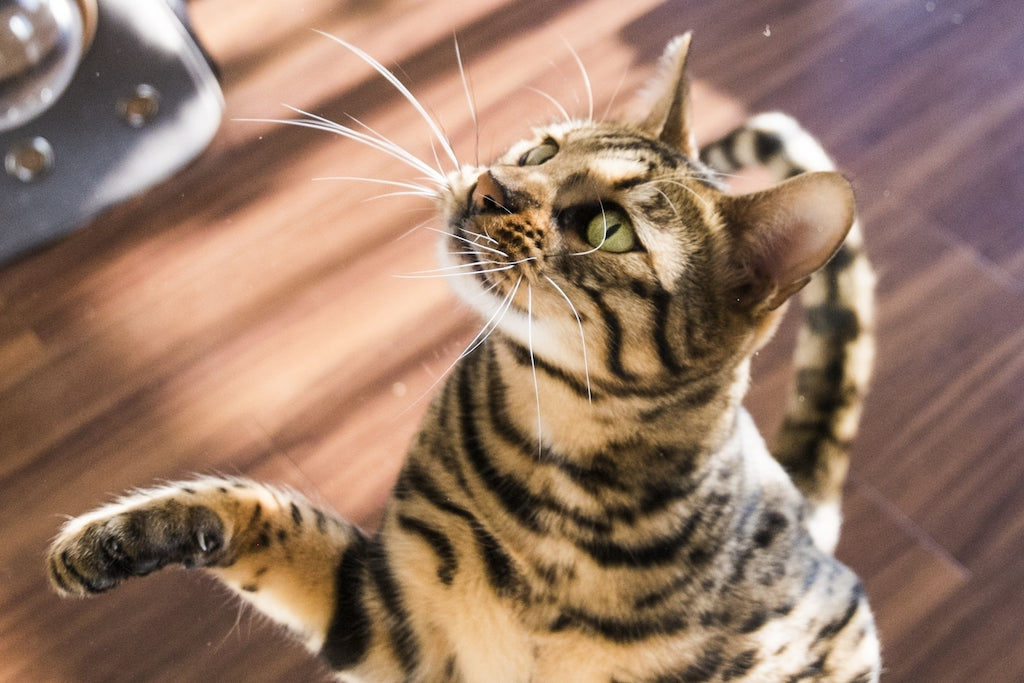
Bengals are wild and very energetic, yet they are sociable and affectionate cats with a calm disposition.
They love energetic play, climbing high places and hunting, which is characteristic of cats with wild ancestry. Unusually for cats, they love water, so many of them don't mind being shampooed.
However, if they don't get enough exercise or stimulation, they can become stressed and fall ill. It's essential to provide an environment where they can exercise, such as cat trees and cat steps. They also love playing with their owners, so be sure to play with them lovingly.
Despite their wild appearance, they are actually affectionate and sociable. Beyond their beautiful leopard print, enjoy the unique personality that only a Bengal can offer.
Author Profile




![[New Product] The joy of choosing for you, gentle comfort for your beloved cat. Graphic cat collars are here!](http://www.poponeko.jp/cdn/shop/articles/090600107_93c9c9e5-aa57-4ec7-bbdc-23c6ff1f104b.jpg?height=400&v=1751956036)
![[New Product] Improved fit & feel! Our cotton corduroy cat collars have been renewed!](http://www.poponeko.jp/cdn/shop/articles/240900219_fe07798b-62e5-4c12-9b56-7f12cde11ae1.jpg?height=400&v=1763642459)
![[Slightly Imperfect] Cat-Friendly Skin Protection Suit (Coverall) for Cats](http://www.poponeko.jp/cdn/shop/files/DSC05845.jpg?v=1769403729&width=600 "[Slightly Imperfect] Cat-Friendly Skin Protection Suit (Coverall) for Cats")
![[Set Product] Leaf Ribbon & Cat Collar - Gingham Check Green](http://www.poponeko.jp/cdn/shop/files/DSC00113_9928b03b-5bce-4bf5-b54f-3a4ef263fb16.jpg?v=1780663891&width=600 "[Set Product] Leaf Ribbon & Cat Collar - Gingham Check Green")
![[Set] Leaf Ribbon & Scrunchie Cat Collar - Champ de Fleurs Blue](http://www.poponeko.jp/cdn/shop/files/DSC00087_94f6c056-010c-400c-bd97-b15ffaf7d230.jpg?v=1780663183&width=600 "[Set] Leaf Ribbon & Scrunchie Cat Collar - Champ de Fleurs Blue")
![[Set Item] Leaf Ribbon & Cat Collar - Tartan Check Royal Red](http://www.poponeko.jp/cdn/shop/files/2606_00014.jpg?v=1785759845&width=600 "[Set Item] Leaf Ribbon & Cat Collar - Tartan Check Royal Red")
![[Set] Leaf Ribbon & Cat Collar: Petit Fleur, Blue](http://www.poponeko.jp/cdn/shop/files/2608_00407.jpg?v=1789946167&width=600 "[Set] Leaf Ribbon & Cat Collar: Petit Fleur, Blue")
Leave a comment