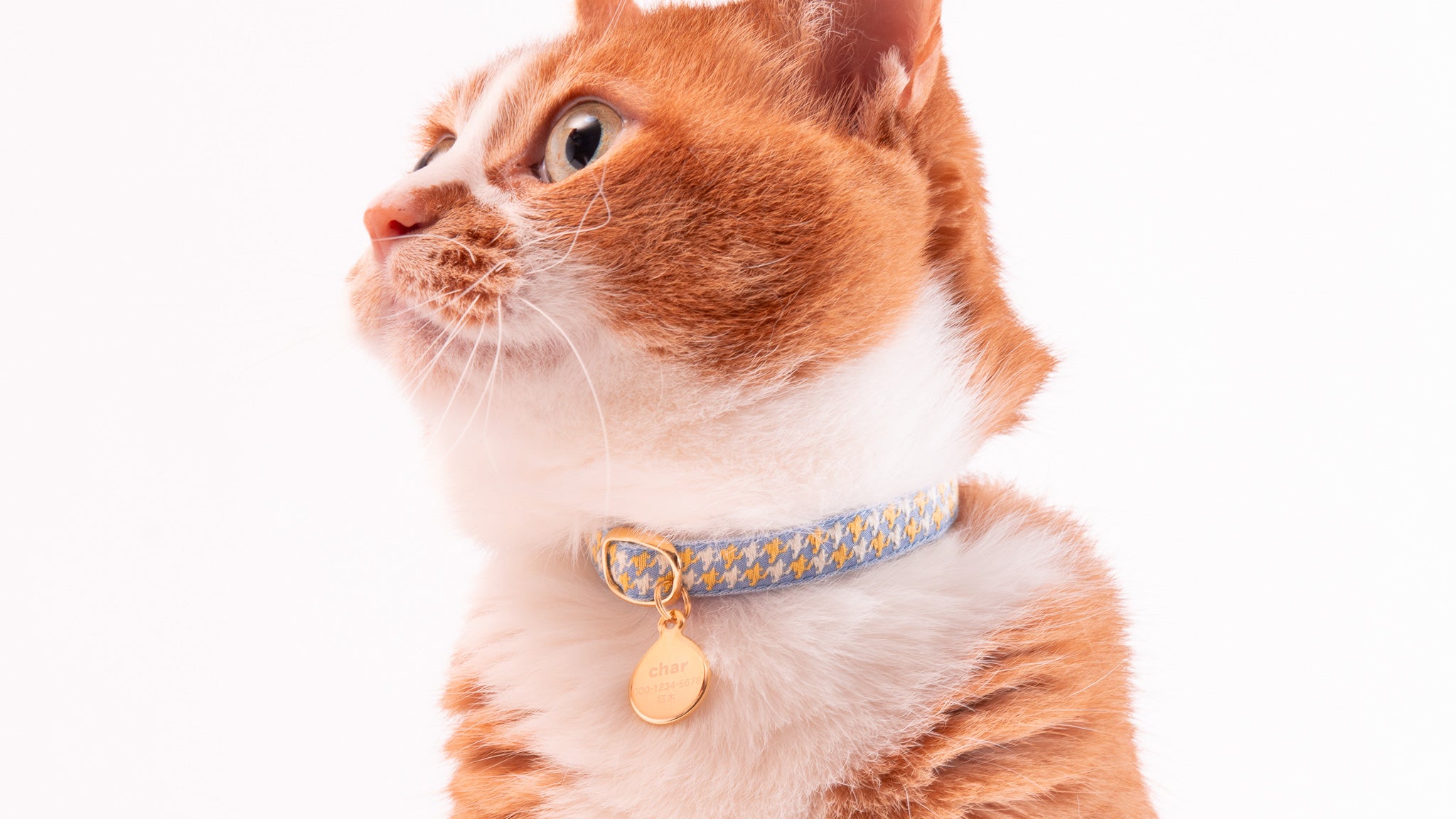
Time to switch to a fur-friendly cat collar?
"I worry about my cat escaping or getting lost..."
"But I'm also worried about collar baldness..."
"And my cat just hates wearing collars..."
You want to choose the most stress-free collar possible for your beloved cat. Inspired by your loving care, POPONEKO is a vet-recommended brand specializing in cat collars, meticulously crafted in Japan using natural materials.
Weighing just a few grams, our surprisingly light and soft collars offer a comfortable fit for cats of all ages—from kittens to seniors. We help you and your feline companion stay gently and comfortably connected.
New Arrivals
The latest collection has arrived to brighten your beloved cat's life.
Cat Collar Vidro
Cat Collar Merino Wool
Graphic Cat Collar Collection
Cat Collar: Viola Garden
Seasonal Picks
Discover our top picks to help you and your cat enjoy the changing seasons.
Cat collar with bandana for Halloween party
Tyrol Cat Collar Collection
Perfect for Their First Collar
A stress-free first collar experience, designed to gently wrap your cat in comfort.
Cat Collar MUJI Cotton Plain
Functional Cat Collars
Given up on cat collars? Give ours a try. We are here to solve your beloved cat's collar troubles.
Cat collar: Stain-resistant, water- and oil-repellent
Ultra-stretch Cat Collar
Prepared for the "What Ifs"
Essential safety gear designed for emergencies, without compromising everyday comfort.
Water-resistant, lightweight pet tag
Best-type harness that's gentle on cats
Gentle Care for the Healing Process
Providing gentle protection during recovery times, so your cat can rest and heal in comfort.
Cat-Friendly Cat Clothing Collection
Elizabethan collar
Learn more
Rescue Cat Adoption Support Program
For those who have welcomed a rescue cat into their family, we are offering a Poponeko gift certificate worth 2,222 yen. This is a special gift from Poponeko, filled with our wish for your happiness!
When can a kitten start wearing a collar? A comprehensive guide to safe choices and precautions
Does your kitten need a collar? How old should they be before they start wearing one? A veterinarian answers these common questions from pet owners.
A vet explains why your cat may have collar alopecia, and how to treat and prevent it
Hair loss due to collars is thought to be caused by friction, dermatitis, or stress from the collar. This article provides a detailed explanation of the causes, treatments, and prevention methods for collar-induced hair loss.
Do indoor-only cats need collars? Pros and cons compared
Do indoor-only cats need collars? While collars are useful in case of escape or getting lost, they have both pros and cons.
Blog
View allFAQs
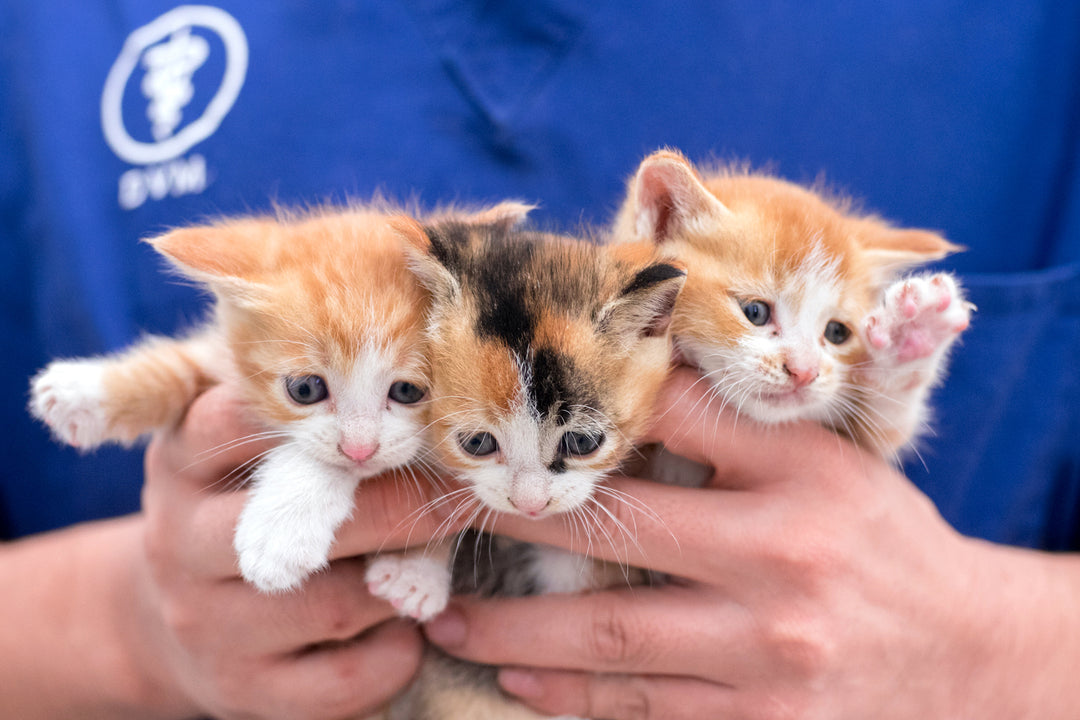
A. If you carefully consider the timing and how to choose a collar, it can be started very safely. The目安 for a kitten's first collar is around 3 to 4 months old (weighing around 1 kg), when their body becomes more developed.
Because kittens of this age have very delicate skin and bones, please choose a lightweight and soft collar. Also, to prevent accidents, a collar with a safety release mechanism that detaches when a certain amount of force is applied is recommended.
Poponeko's cat collars are made with materials that are gentle on the skin. They are so light that your cat will forget they're wearing it, providing gentle support for their first collar experience.
👉 For more details, please see "Does a Kitten Need a Collar? A Thorough Explanation of the Pros and Cons".
A. We recommend replacing it every "six months to a year." Even if your cat stays indoors, the fabric will gradually deteriorate due to daily grooming, sebum, and friction.
Even if it looks clean, the safety spring of the safety adjuster may be weakened, or the fastener may be loose. For your cat's safety and skin comfort, please replace it with a new one as soon as possible.
You can keep it clean by preparing 3-4 spare collars and changing them weekly.
👉 For more details, please see "When Should You Replace Your Cat's Collar? How to Determine Its Lifespan and Care for It to Make It Last Longer."
A. We generally recommend that your cat wears its collar 24 hours a day.
Unexpected disasters like earthquakes and escapes through small gaps can happen at night or while you're asleep. Should your cat ever get outside, its collar will serve as a "sign of a pet cat" and become a charm to help it find its way back home.
However, heavy and stiff collars can stress your cat. To ensure your cat can relax and sleep comfortably at night, Poponeko offers lightweight, soft fabric collars that weigh only a few grams, as if they weren't even there.
👉 For more details, please see "Choose a Stress-Free Cat Collar! 3 Important Things."
A. For adult cats, the appropriate tightness allows for a gap where 1 to 2 human fingers can easily fit between the neck and the collar (neck size + 2-4 cm). For kittens, aim for a gap where one finger can fit.
If the collar is looser than this, there is a risk of the cat getting its lower jaw or mouth caught in the collar while grooming, leading to a "muzzled" state. Conversely, if it's too tight, it can cause rubbing, leading to "collar baldness," dermatitis, or difficulty breathing.
Since neck size changes with weight fluctuations and seasonal changes (winter or summer coat), please check the tightness once every 1-2 weeks.
👉 For more details, please refer to "What's the right collar size for a cat: loose or tight? The importance of fit."
A. The main reasons why cats dislike collars are stress caused by "weight," "stiffness," and "the sound of the bell." For cats with sensitive senses, heavy and stiff collars feel very uncomfortable.
When your cat shows discomfort, never force them. Start by having them associate collars with positive experiences, such as giving treats or playing with their favorite toys, for just five minutes a day.
Some cats may accept Poponeko's simple, ultra-light, and soft collars, which avoid excessive decorations. Proceed at your cat's pace and gradually get them used to it.
👉 For more details, please refer to "[Veterinarian Supervised] When Your Cat Dislikes Collars: Reasons and How to Get Them Used to It."
A. The main causes of collar alopecia (frictional hair loss, hair shedding, and skin inflammation) are localized friction due to the "material hardness," "weight," and "inappropriate size" of the collar. Hard materials like nylon or leather, or heavy collars with large decorations, place a significant burden on the skin.
As a preventative measure, first adjust the collar to the correct size (allowing one to two fingers to fit underneath), and keep it clean by regularly removing sebum and dirt. If this doesn't resolve the issue, please switch to a collar made of a "low-friction material."
Poponeko was created to address the pressing problem of "collar alopecia." We are committed to developing ultra-lightweight "alopecia-resistant collars" using high-quality Japanese materials, meticulously designed to minimize skin irritation.
👉 For more details, please see "[Veterinarian Supervised] Cat Collar Alopecia! Causes, Prevention, and How to Choose a Cat Collar".
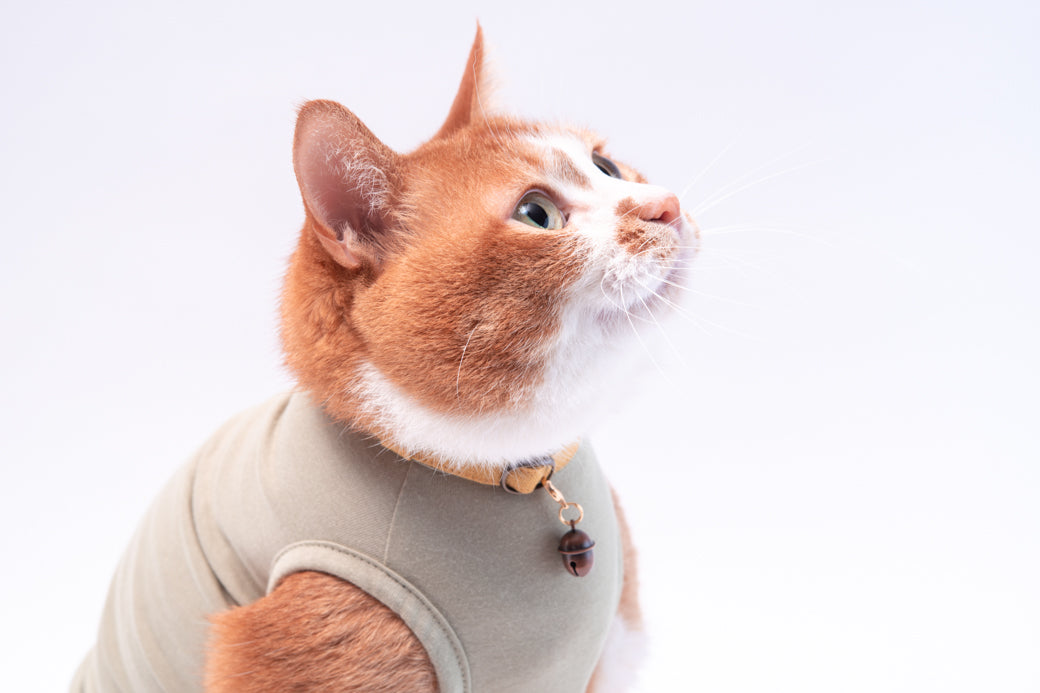
A. The main benefit of attaching a bell is that it tells you where your cat is with a "jingle" sound. This provides great peace of mind for owners, as it can prevent accidents where you might step on your cat because you didn't realize they were at your feet, and it helps you know where they are in the room.
However, for cats whose hearing is several times more sensitive than humans, the constant ringing near their ears can sometimes be stressful. For cats sensitive to sound, or those who freeze and can't walk when a bell is attached, we recommend a "no bell" option or a "small bell" with a subtle sound.
👉 For more details, please see "What are the Pros and Cons of Attaching a Bell to Your Cat's Collar?"
A. Yes, we strongly recommend that indoor-only cats wear a collar and ID tag (name tag).
Even if you think "it's fine because they don't go outside," there's always a risk of them panicking and bolting out the door when guests come and go, through a torn screen door, or during natural disasters like earthquakes or typhoons.
If your cat ever gets lost, a collar immediately signals that they are a pet, not a stray, significantly increasing the chances of a reunion. It's crucial to have your cat wear a collar as a "safeguard" for emergencies.
👉 For more details, please see "Do Indoor-Only Cats Need Collars? A Comprehensive Comparison of Pros and Cons."
A. Washing cat collars in a washing machine can cause buckle failure and deformation. Please handwash gently or wipe away dirt with a diluted mild detergent.
Because cats groom themselves daily, invisible saliva, sebum, and dust can accumulate on their collars. Leaving these untreated can lead to skin problems and unpleasant odors, so regular care is recommended.
👉 For more details, please see "Tips for Making Your Cat's Collar Last Longer!"
A. The safety adjuster used in Poponeko collars is designed to unlatch when a load is applied.
This life-saving feature prevents strangulation accidents if the collar gets caught on furniture during a high jump. While it won't come off with normal movements, it may unlatch if your cat scratches it vigorously with their paw.
This is "proof that the safety feature is working correctly," so please use it with confidence.
👉 For more details, please see "Dangerous! How to prevent your cat's collar from becoming a muzzle."