
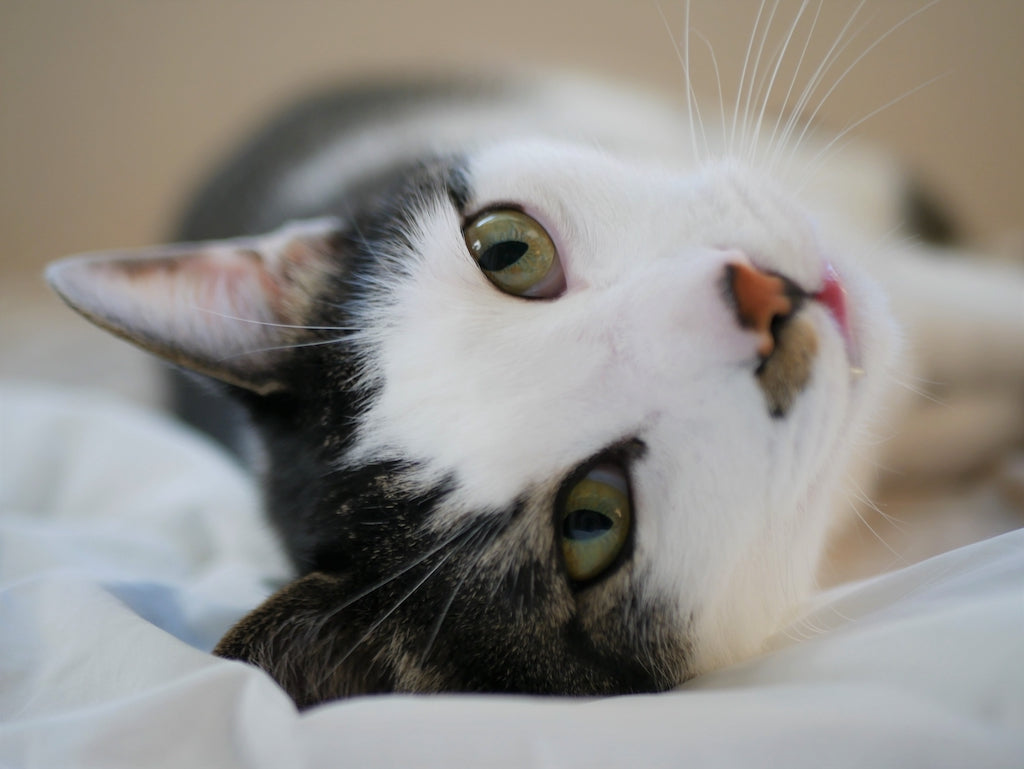
Affectionate cats are adorable. Many cat owners likely wish to sleep with them, hold them, and never be apart.
In reality, even cool-looking cats have feelings of not wanting to be separated from their owners. Some may experience intense anxiety and stress when left alone, leading to problematic behaviors.
This article focuses on feline "separation anxiety" and provides an easy-to-understand explanation of its symptoms, behavioral characteristics, causes, and coping strategies.
Could my cat have separation anxiety? What is feline separation anxiety?
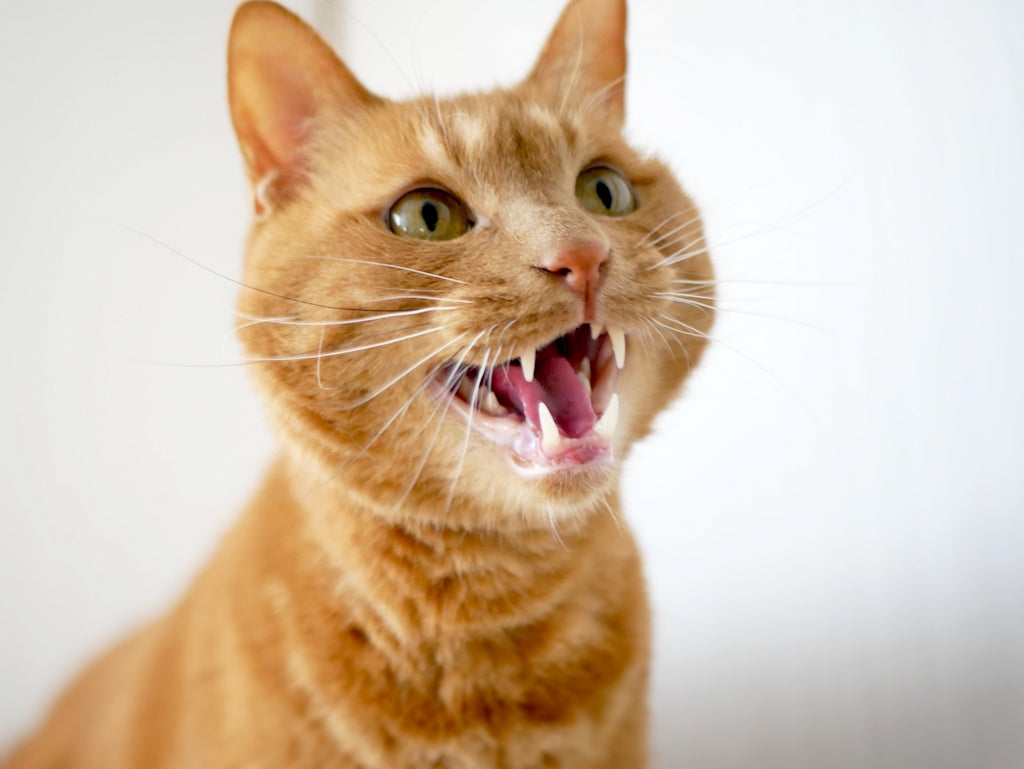
Separation anxiety refers to a condition where cats experience intense anxiety and stress when separated from their owners, leading them to exhibit problematic behaviors in an attempt to alleviate these feelings.
Additionally, extreme stress can sometimes cause them to fall ill.
Feline separation anxiety is a very distressing condition that takes a toll on both a cat's mind and body.
Symptoms of Feline Separation Anxiety
When cats with separation anxiety sense their owner is about to leave, they may become restless or follow their owner while meowing. They may also experience repeated episodes of vomiting or diarrhea.
Furthermore, they may exhibit the following problematic behaviors when left alone, which require attention:
- Continuous loud meowing
- Urination or defecation outside the litter box
- Marking on clothes or furniture
- Destroying objects
- Excessive grooming
- Becoming aggressive
- Ingesting foreign objects or food
|
[Related Articles] |
Causes of Feline Separation Anxiety
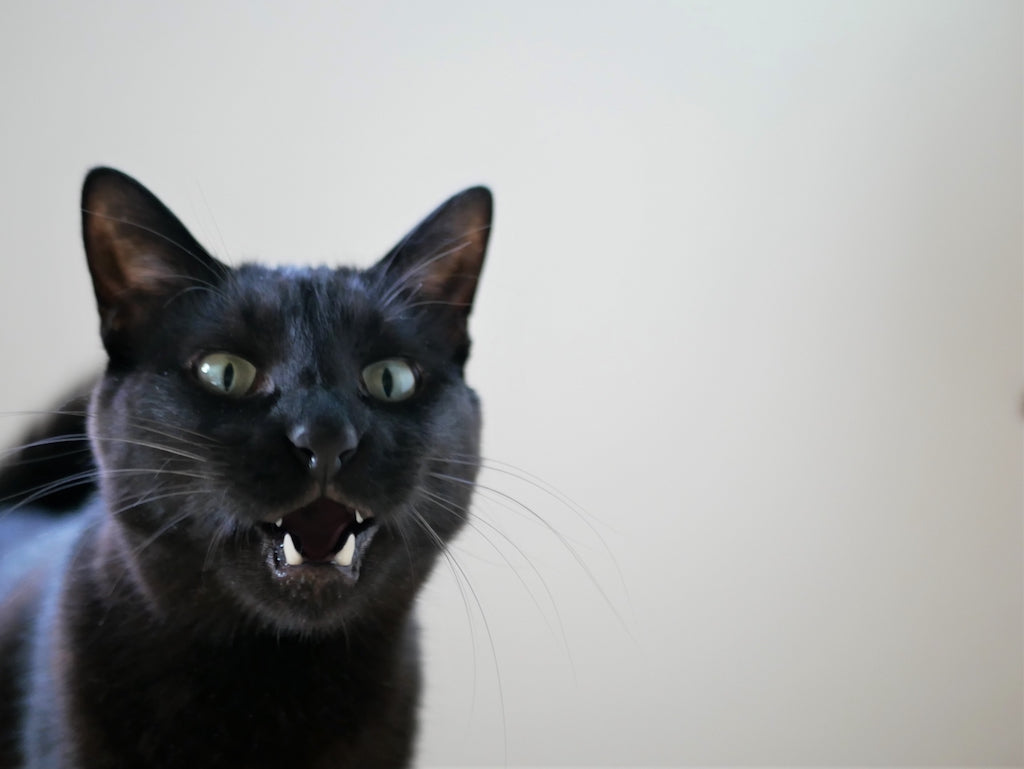
Feline separation anxiety often seems to be triggered by changes in their living environment.
For example, the following events may be causing severe anxiety and stress for your cat:
- Suddenly, the amount of time spent alone increased.
- Moved house.
- Construction started nearby.
- Experienced a traumatic event like thunder or an earthquake while alone.
- New family members or cats moved in.
- A family member or cat passed away.
- Older age or illness makes them prone to anxiety.
Are affectionate cats more prone to separation anxiety?
Separation anxiety is common in dogs, which have a pack mentality, but it can also be seen in cats, which are solitary animals.
In modern times, indoor-only keeping has become common, and as a result, cats spend more time with their owners. Some owners may even be working remotely.
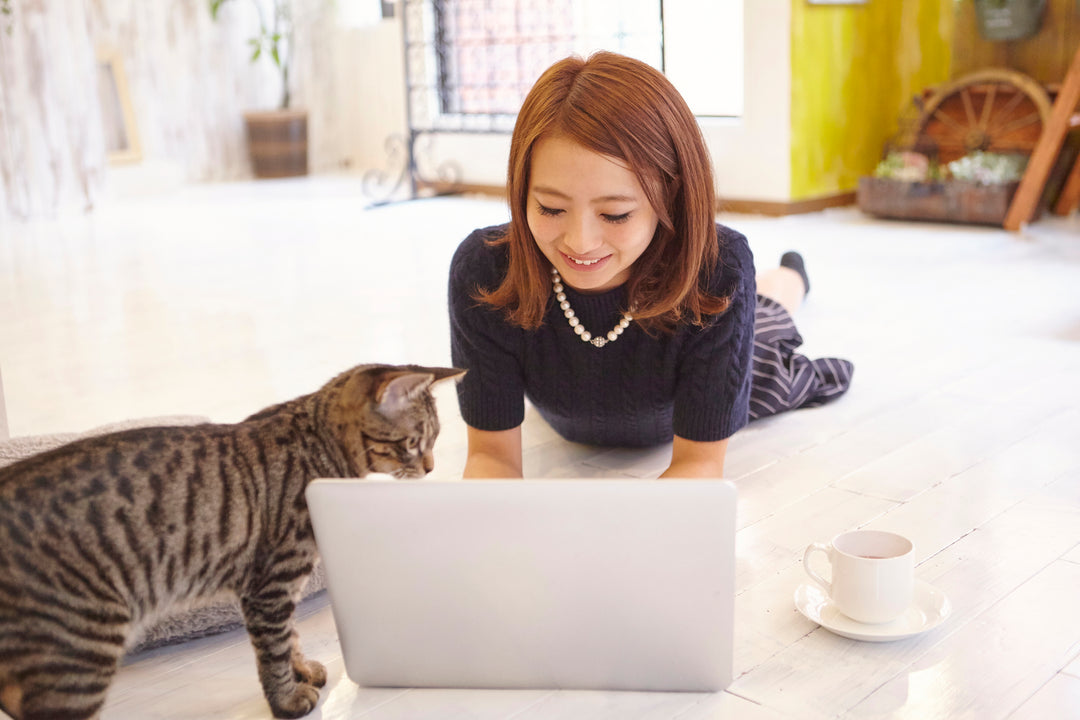
Therefore, cats that are not accustomed to being alone are at risk of separation anxiety. Especially affectionate cats may feel anxious when left alone.
Also, excessive physical affection or expressions of love from the owner can sometimes lead to separation anxiety.
|
[Related Articles] |
Coping Strategies and Treatment for Separation Anxiety
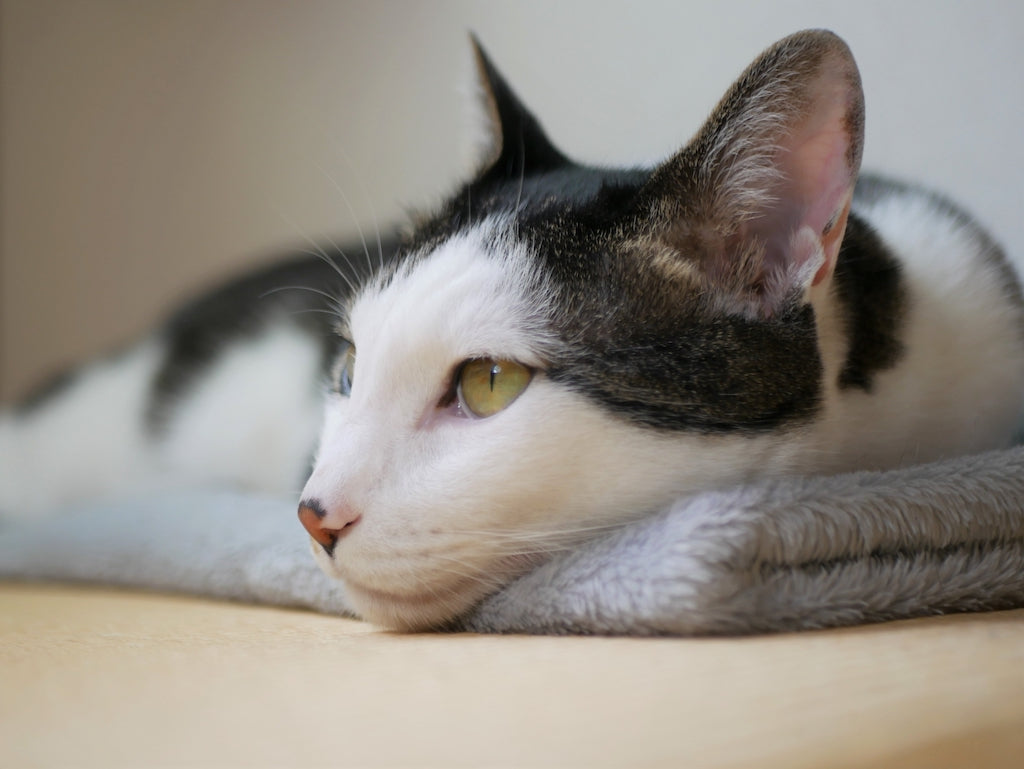
If your cat experiences vomiting, diarrhea, or dermatitis due to excessive grooming, consult a veterinarian.
If you suspect your beloved cat has separation anxiety, it's crucial to create an environment where they can feel safe and relaxed even when left alone. You may also need to re-evaluate your own behavior.
Rather than "curing" separation anxiety, the priority is to improve their environment and your behavior. These tips are also effective in preventing separation anxiety, so be sure to check them out.
1. Provide a safe space, such as a crate.
If your cat cries loudly while searching for you or exhibits destructive behavior, try using a crate effectively.
Place a bed and litter box inside the crate, allowing free access. Also, feed your cat meals inside the crate. Covering the crate with a bath towel or placing something with your scent inside can also be beneficial.
Once your cat recognizes the crate as a safe and secure place, they should feel less anxious when left alone. It also provides a place for them to escape to in emergencies, such as earthquakes or thunderstorms.
2. Leave quietly.
When you leave, do you say things like, "Be a good kitty while I'm gone," or talk to your cat?
To avoid making your cat anxious, refrain from talking to them or hugging them before you leave. Instead, try leaving quietly. Leaving the TV or music on can also be a way to "signal your quick return."
If your cat notices your departure by the sound of your bag or keys, patiently training them by "getting ready to leave but not actually leaving" can also be effective.
3. Make them associate being left alone with good things.
Give your cat their favorite treats before or after you leave them alone. It's important to improve their perception of being left alone by making them associate "being left alone with good things."
Use puzzle toys that dispense treats and other methods to help your cat stay calm while you're away.
4. Increase places where they can relieve stress.
Cats survey their surroundings from high places to confirm if the area is safe. Provide places where they can look down on their living space, such as cat trees or cat walks.
It's also recommended to increase the number of scratching posts. It's good to have a few in their favorite material.
5. Deal with accidents calmly.
Even if your cat has an accident, try not to overreact. If they think they can get your attention by having an accident, they will continue to do so, so quietly clean it up.
Similarly, instead of giving attention when your cat meows, praise and cuddle them when they behave well, gradually encouraging their emotional independence.
In contrast, when you play, try to engage with them in their favorite games and create a clear distinction in your interactions.
Summary
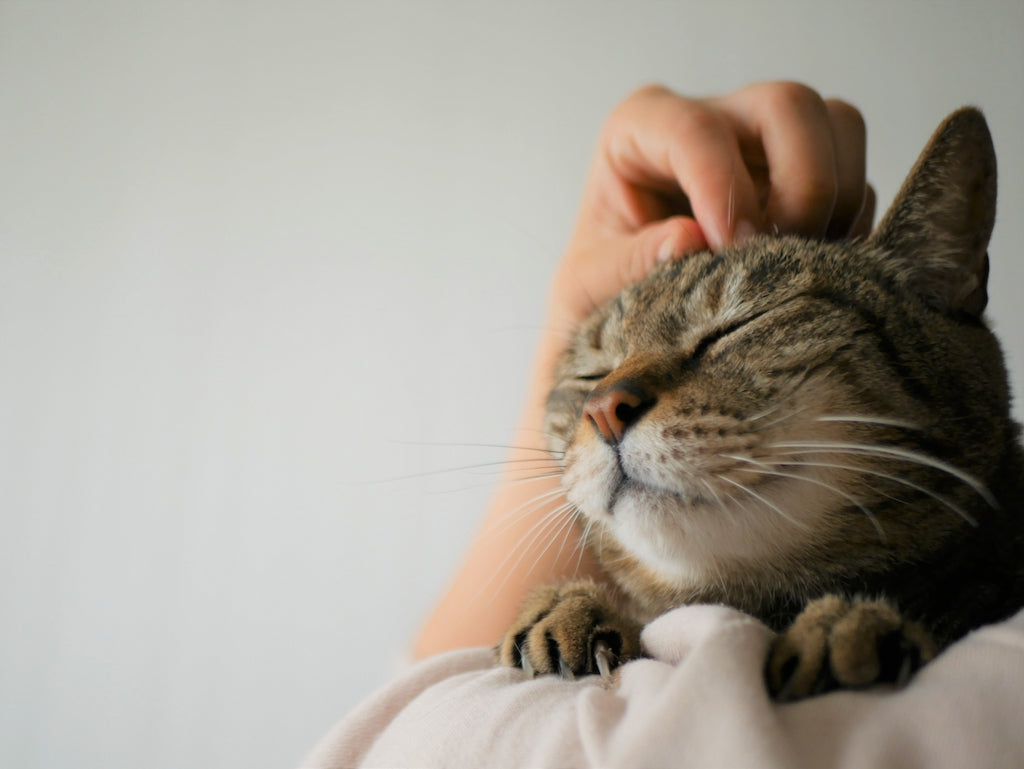
There are various potential causes for a cat developing separation anxiety.
Even cats that aren't naturally clingy can experience significant anxiety and stress from minor environmental changes.
Separation anxiety takes a major toll on a cat's mind and body. It's crucial to recognize your cat's SOS signals early and address them properly.
Check for bald spots, skin inflammation, or repeated vomiting and diarrhea. Observe your cat's condition carefully and jot down anything you notice in Poponeko's original "Cat Health Journal" for easy reference later.
Only owners can protect their cat's mental and physical health. Make it a habit to regularly check if your cat is doing well.
|
[Related products] |
Author Profile




![[New Product] The joy of choosing for you, gentle comfort for your beloved cat. Graphic cat collars are here!](http://www.poponeko.jp/cdn/shop/articles/090600107_93c9c9e5-aa57-4ec7-bbdc-23c6ff1f104b.jpg?height=400&v=1751956036)
![[New Product] Improved fit & feel! Our cotton corduroy cat collars have been renewed!](http://www.poponeko.jp/cdn/shop/articles/240900219_fe07798b-62e5-4c12-9b56-7f12cde11ae1.jpg?height=400&v=1763642459)
![[Set] Leaf Ribbon & Cat Collar Gingham Check Blue](http://www.poponeko.jp/cdn/shop/files/DSC00106_035b8e99-fd67-47ef-9132-ff2da1afbc67.jpg?v=1780663891&width=600 "[Set] Leaf Ribbon & Cat Collar Gingham Check Blue")
![[Set] Leaf Ribbon & Cat Collar - Champ de Fleurs, Raspberry](http://www.poponeko.jp/cdn/shop/files/DSC00099_6b51f9b4-93c7-4c58-b439-108715aa361f.jpg?v=1780663183&width=600 "[Set] Leaf Ribbon & Cat Collar - Champ de Fleurs, Raspberry")
![[Set] Leaf Ribbon & Cat Collar: Petit Fleur, Blue](http://www.poponeko.jp/cdn/shop/files/2608_00407.jpg?v=1789946167&width=600 "[Set] Leaf Ribbon & Cat Collar: Petit Fleur, Blue")
![[Set] Leaf Ribbon & Scrunchie Cat Collar, Petit Fleur, Pastel Pink [Limited Color]](http://www.poponeko.jp/cdn/shop/files/2608_00420.jpg?v=1789946167&width=600 "[Set] Leaf Ribbon & Scrunchie Cat Collar, Petit Fleur, Pastel Pink [Limited Color]")
![[Set] Leaf Ribbon & Scrunchie Cat Collar Champ de Fleurs Pink](http://www.poponeko.jp/cdn/shop/files/DSC00086_92430f49-b816-4514-8687-7fd9a6e57988.jpg?v=1780663183&width=600 "[Set] Leaf Ribbon & Scrunchie Cat Collar Champ de Fleurs Pink")
![[Set] Leaf Ribbon & Scrunchie Cat Collar, Elegant Cherry Blossom, Red](http://www.poponeko.jp/cdn/shop/files/2608_00137.jpg?v=1789197917&width=600 "[Set] Leaf Ribbon & Scrunchie Cat Collar, Elegant Cherry Blossom, Red")
Leave a comment