

Are cat collars necessary for strictly indoor cats? Even if you think, "We live in an apartment and don't let them outside, so we're safe," the risk of escape is always present.
Japan, in particular, is prone to natural disasters. During earthquakes or typhoons, there is no end to cases where panicked cats break through screen doors or dash out through open gaps, becoming lost.
In such cases, the benefit of a cat collar is that it significantly increases the chances of the cat returning to their owner.
Of course, there are also disadvantages to cat collars. In this article, we will consider the necessity of cat collars by looking at both their benefits and their downsides.
Reasons and Benefits of Why Cats Need Collars

The reason why cats need collars isn't just because they look cute; there are actually three key benefits.
Increasing the Chances of Return if Lost
If you write your contact information or attach an ID tag to the collar, someone who finds your cat can reach you immediately.
Furthermore, a collar makes it clear at a glance that the cat is a "pet cat," preventing them from being taken to a public health center or animal welfare center as a stray, or being adopted by someone else. They will instead be treated as a lost pet in search of their owner.
When creating "lost cat posters" or asking for sightings on social media, the color and design of the collar also serve as identifiers. It is safer to have a cat wear a collar in addition to a microchip, which stores your owner information.
Useful During Disasters
With rising disaster awareness, many owners use cat collars as part of their pet disaster preparedness kit.
Disasters like earthquakes or floods can happen at any time. It is possible to be separated from your beloved cat during a sudden disaster. Just like in an escape scenario, having a collar on shows that they are a pet cat, which increases the likelihood that they will be protected by someone and safely reunited with you.
Bells Help Locate Your Cat
Cats walk without making a sound. Accidents can occur where they are accidentally locked in a room or stepped on because they weren't noticed.
By attaching a bell to your cat's collar, you can track their whereabouts, preventing such startling accidents.
Disadvantages of Putting a Collar on a Cat

Of course, there are also disadvantages to cat collars. To take proper precautions, it is important to understand these downsides.
Feeling Stressed
If a cat collar is too heavy or rigid, the cat will feel stressed. Leather collars, like those used for dogs, are too much of a burden for cats.
Additionally, cats may become frustrated if the collar gets in the way of their grooming.
Risk of "Muzzle-Like" Entrapment or Hanging Accidents
While many owners understand the benefits of cat collars, many are also concerned about "suffocation."
There is a risk of a "hanging" accident if the collar catches on something when the cat climbs high, or a "muzzle-like" situation where the collar gets stuck on the lower jaw while the cat is grooming.
Cause of Collar Hair Loss or Dermatitis
My cat has lost hair where the collar sits... Many owners likely face this problem.

If the collar material is hard or heavy, the fur around the neck can rub off, leading to hair loss. If the damage reaches the hair follicles, the hair may stop growing back. Also, bacteria can breed on the collar, which may cause dermatitis.
Solving the Disadvantages! How to Choose a Stress-Free Cat Collar

As we have seen, cat collars have both pros and cons. If you choose to use one, it is important to fully understand the downsides and take proper countermeasures.
Because of this, "how to choose a cat collar" is crucial.
1. Choose a collar with a safety buckle
Choose a collar that features a "safety buckle" that snaps open when a certain amount of force is applied. This helps avoid the risk of hanging accidents.
2. Choose "light and soft" materials
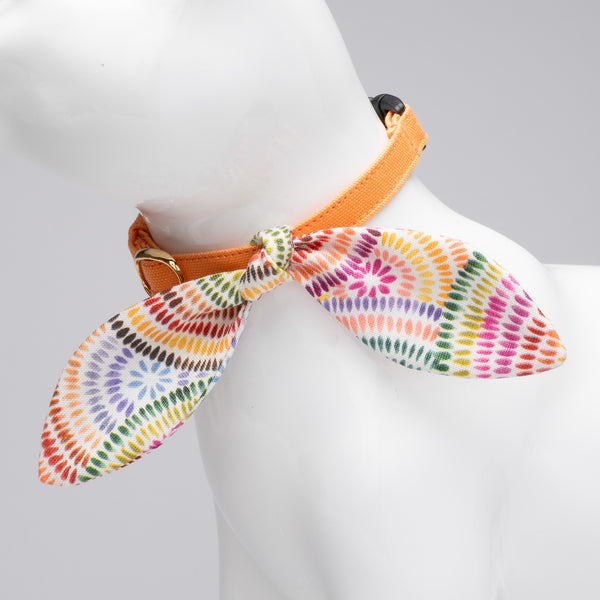
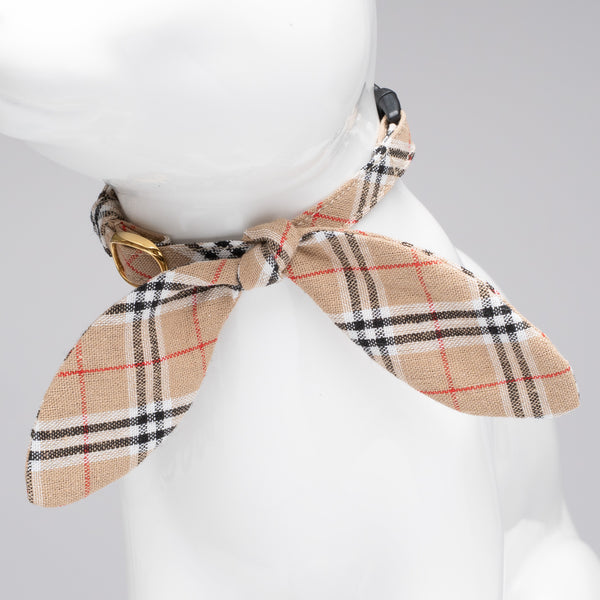
Leather or heavily decorated collars are heavy and put a burden on your cat. A cat's collar does not need to be sturdy, so try to choose a cloth cat collar that is as simple and lightweight as possible.
3. Choose one that is size-adjustable
To prevent accidents caused by collars, size selection and size adjustment are the keys. If it is too tight, it will cause hair loss, and if it is too loose, it can cause the "muzzle-like" entrapment mentioned earlier.
When purchasing a cat collar, always measure your cat's neck and choose the appropriate size. Make regular adjustments so that there is enough room to fit 1 to 2 fingers comfortably (nude neck size + 2–4 cm).
Measures to Take if Your Cat Dislikes Collars

"I tried a collar, but my cat hates it and keeps taking it off." For owners with this concern, here are some recommended training methods. Do not rush; patience is key.
Step 1: Start with a ribbon or string
Instead of jumping straight into a sturdy collar, start by loosely tying a ribbon or string around their neck. It's perfectly fine to remove it immediately. Get them used to the sensation of "something touching their neck."
Step 2: Only put it on during meal or playtime
Put the collar on when your cat is distracted by something else. By pairing it with fun activities, you can eliminate the image that "collar = bad thing."
Step 3: Gradually increase the time with a soft collar
Once they get used to the presence of a collar, gradually increase the time they wear it. If they dislike it, remove it immediately.
Step 4: Praise them
When they let you put the collar on, give them a treat and praise them profusely.
Step 5: Maintain it
Keeping the collar clean is also important. Brush the area where the collar sits frequently and replace the collar periodically.
If you notice any abnormalities in their skin or fur, stop using the collar immediately and consult a veterinarian.
Summary

When you think about putting a collar on your cat, the feeling that it might be "poor thing" is likely a hurdle, isn't it?
It is only natural that your heart aches when you see them acting out or freezing up the first time you put it on. However, considering the possibility of becoming lost and never returning home, a collar is indeed necessary for your cat.
Instead of saying "I won't put one on because it's sad," it is important to "help them get used to it in order to protect them."
To make the most of the benefits of a cat collar—such as being prepared for escape or getting lost—it is essential to choose a collar that addresses the potential downsides. For the sake of protecting your life with your cherished cat, please do try giving a cat collar a chance.






Leave a comment