

When you rescue a cat or adopt one from a shelter, it often has eye discharge and a runny nose. These cats may have cat flu. Cat flu is not just a problem for the infected cat; it can also spread to other cats.
We will explain in detail the causes and symptoms of cat flu.
Causes and Symptoms of Cat Flu
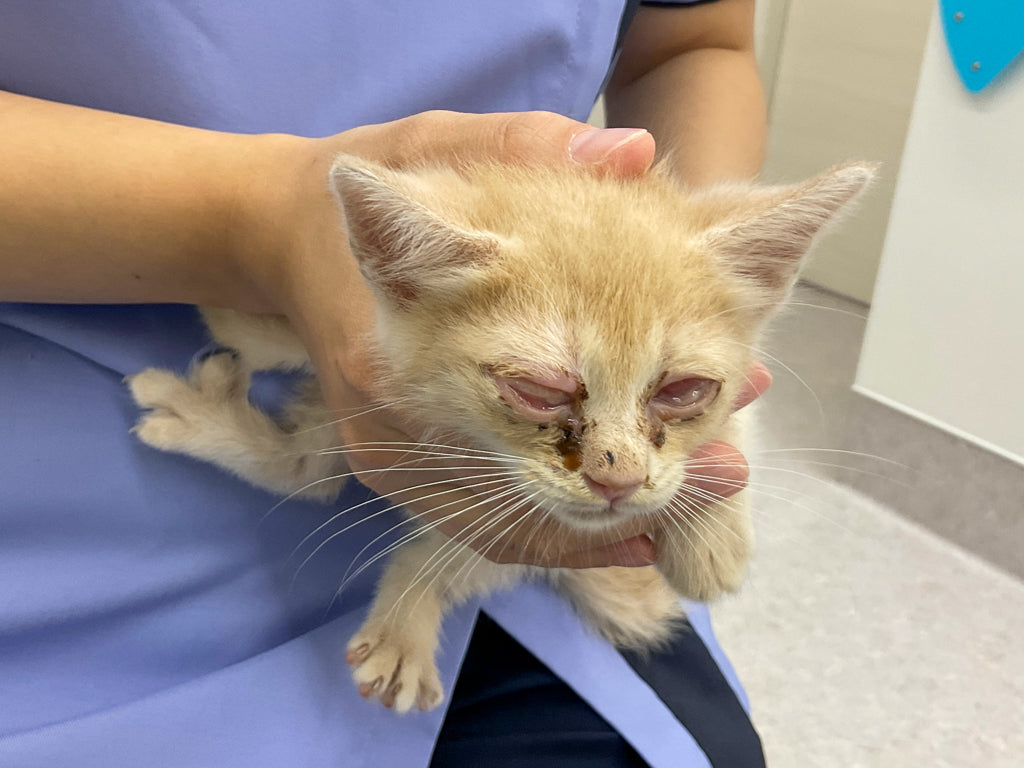
▲ Conjunctivitis in a rescued cat (at initial examination)
Cat flu is an infection caused by viruses such as herpesvirus and calicivirus. These viruses spread through droplet infection from an infected cat's nasal discharge, sneezes, and coughs, as well as through contact infection from contact with an infected cat during grooming, for example. Infection usually occurs from the mother cat or cohabiting cats.
In veterinary medicine, cat flu caused by herpesvirus is distinguished as "feline viral rhinotracheitis," and cat flu caused by calicivirus as "calicivirus infection."
Feline Viral Rhinotracheitis
This is cat flu caused by herpesvirus. A characteristic feature of this virus is that it causes conjunctivitis in addition to cold symptoms such as sneezing and nasal discharge. Once infected, herpesvirus lurks in the cat's nerves, and symptoms appear when the cat's immunity declines. When immunity is activated, it returns to hiding in the nerves, making it seem as if the cat has recovered, but it remains infected with the virus.
If kittens or elderly cats with weakened immune systems become infected, their nasal passages may become blocked by discharge, they may develop pneumonia leading to respiratory distress, or lose their appetite, potentially leading to death. Severe conjunctivitis can also lead to blindness.
Calicivirus Infection
This is cat flu caused by calicivirus. A characteristic feature of this virus is that it causes stomatitis in addition to cold symptoms such as sneezing and nasal discharge. Once infected, calicivirus also remains in the body for a long time, continuously shedding the virus.
Because stomatitis occurs in addition to cold symptoms, there may be excessive drooling or bad breath. Severe stomatitis can prevent the cat from eating, potentially leading to death.
Treatment for Cat Flu
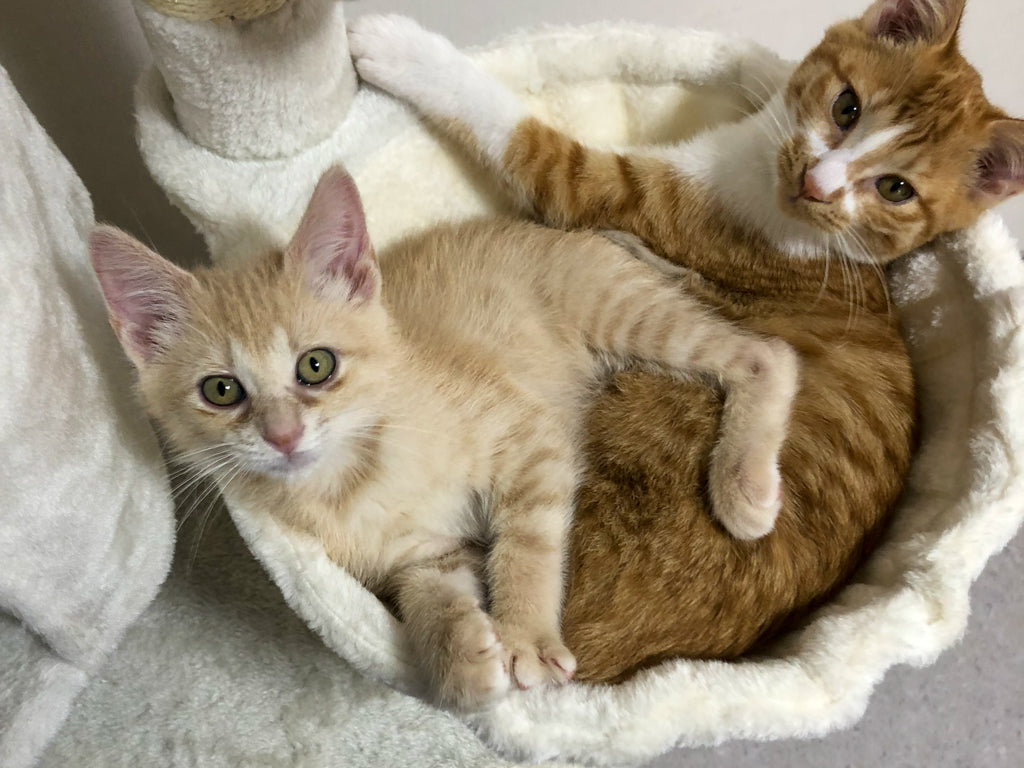
▲ Antibiotic eye drops, oral medication, and inhalation led to improvement in about 2 weeks (left)
Since cat flu is caused by a virus, treatment primarily focuses on suppressing symptoms, preventing secondary bacterial infections, and boosting immunity.
Antibiotics and interferon injections are mainly administered to activate immunity.
If conjunctivitis is severe, antibiotic eye drops may be used. In cases of herpesvirus, antiviral drugs may also be used.
If stomatitis is severe, oral administration of interferon is also performed.
If respiratory distress occurs due to nasal discharge, bronchodilator inhalation may also be performed.
Since it is crucial to prevent a decline in physical strength, it is necessary to provide easily digestible food and keep the cat warm to maintain its body temperature.
When a cat is rescued, it almost always has cat flu. If it becomes severe, it can be fatal. If you rescue a cat, visit a veterinarian as soon as possible for a health check-up and receive appropriate treatment.
How to Prevent Cat Flu
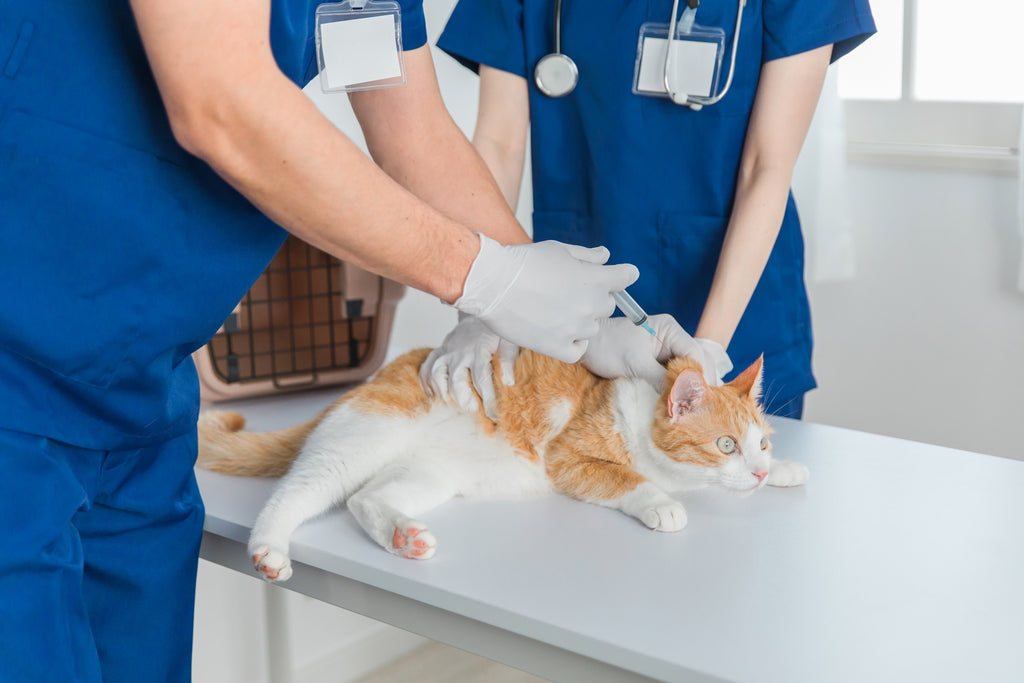
Once a cat gets cat flu, it carries the risk of developing symptoms for its entire life and can infect other cats. Therefore, it is important to prevent cat flu.
Here's how to prevent cat flu.
Vaccinate Your Cat
There are 3-way, 4-way, and 5-way vaccines for cats. All of them include protection against feline viral rhinotracheitis and calicivirus. Vaccination helps prevent infection even if the virus enters the body, or at least mitigates the symptoms if the cat does get sick.
Avoid Contact with Other Cats
Both you and your beloved cat should avoid contact with other cats. Even if there are no symptoms, there is a possibility that the virus is being shed. Not only can your cat directly contract the virus, but the virus can also adhere to your clothes. If you touch other cats, wash your hands and change your clothes before touching your own cat.
In multi-cat households, cats are in close proximity, which can cause significant stress. Stress can weaken immunity and lead to infection. Cats suspected of infection should be isolated, and the living environment should be managed to reduce stress.
Summary
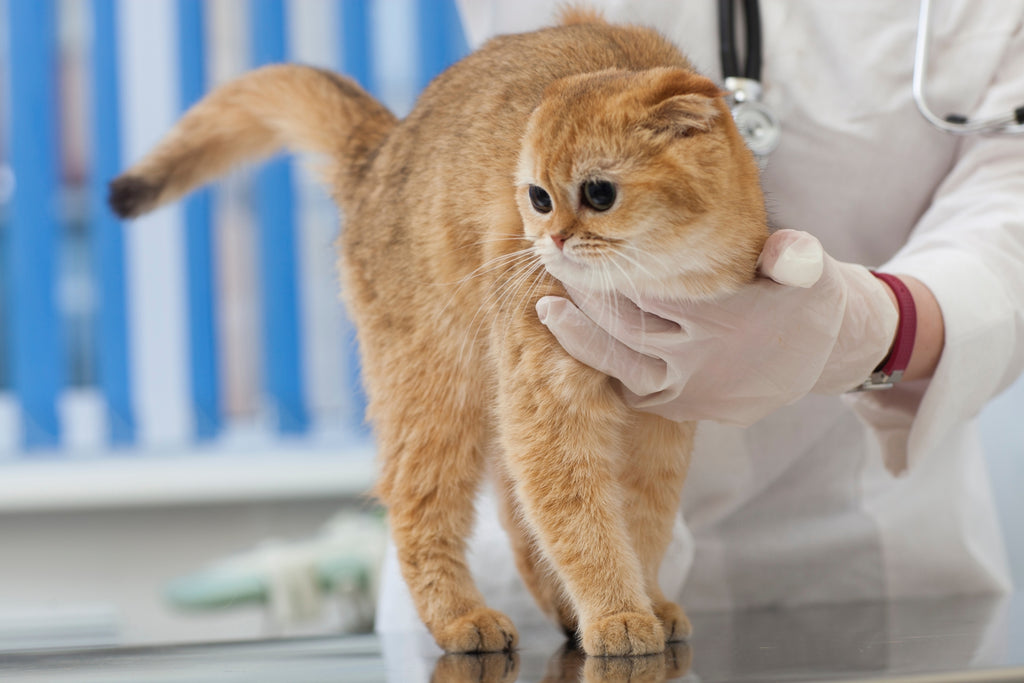
Once a cat contracts cat flu, it carries the virus for life. Viruses are very often transmitted from mother cats to kittens, so you should assume that most rescued cats have cat flu. Also, we often see kittens purchased from pet shops or breeders exhibiting symptoms of cat flu.
If a cat's immune system is strong, it can prevent the onset of cat flu or reduce its symptoms. To activate immunity, it is necessary to vaccinate, provide proper nutrition, and maintain a good living environment.
If your cat does get sick, seek appropriate treatment at a veterinary clinic. Prompt treatment leads to a faster recovery. However, it is important to understand that the virus has not completely disappeared.
If you have a cat with cat flu, isolate it to prevent infection to other cats, and cherish that one cat for its entire life.

![Feline Infectious Peritonitis (FIP) Treatment Guide [2024 Edition]: Latest Information and Treatment Options](http://www.poponeko.jp/cdn/shop/articles/shutterstock_1633580878.jpg?height=400&v=1727181737)


![[Set] Leaf Ribbon & Cat Collar - Gingham Check Pale Lavender](http://www.poponeko.jp/cdn/shop/files/DSC00112_63ffeab6-aadb-4f1e-87d0-1061074971ac.jpg?v=1780663891&width=600 "[Set] Leaf Ribbon & Cat Collar - Gingham Check Pale Lavender")
![[Set Product] Leaf Ribbon & Cat Collar - Champ de Fleurs Mustard](http://www.poponeko.jp/cdn/shop/files/DSC00104_6c37e71d-120f-40d9-a773-9a5b7e885760.jpg?v=1780663183&width=600 "[Set Product] Leaf Ribbon & Cat Collar - Champ de Fleurs Mustard")
![[Set Product] Leaf Ribbon by Moda Salutations & Cat Collar by MUJI Cotton Plain - Koubai](http://www.poponeko.jp/cdn/shop/files/260618_00176.jpg?v=1784451813&width=600 "[Set Product] Leaf Ribbon by Moda Salutations & Cat Collar by MUJI Cotton Plain - Koubai")
![[Set] Leaf Ribbon moda The Fleeting Outdoors & Cat Collar Stain-Resistant Water-Repellent Oil-Repellent Black](http://www.poponeko.jp/cdn/shop/files/260618_00173-2.jpg?v=1784452166&width=600 "[Set] Leaf Ribbon moda The Fleeting Outdoors & Cat Collar Stain-Resistant Water-Repellent Oil-Repellent Black")
![[Set] Leaf Ribbon "Fleurage" Pink & Scrunchie Cat Collar "Belgian Linen" Wine Rose](http://www.poponeko.jp/cdn/shop/files/2608_00132.jpg?v=1789197487&width=600 "[Set] Leaf Ribbon \"Fleurage\" Pink & Scrunchie Cat Collar \"Belgian Linen\" Wine Rose")
Leave a comment