
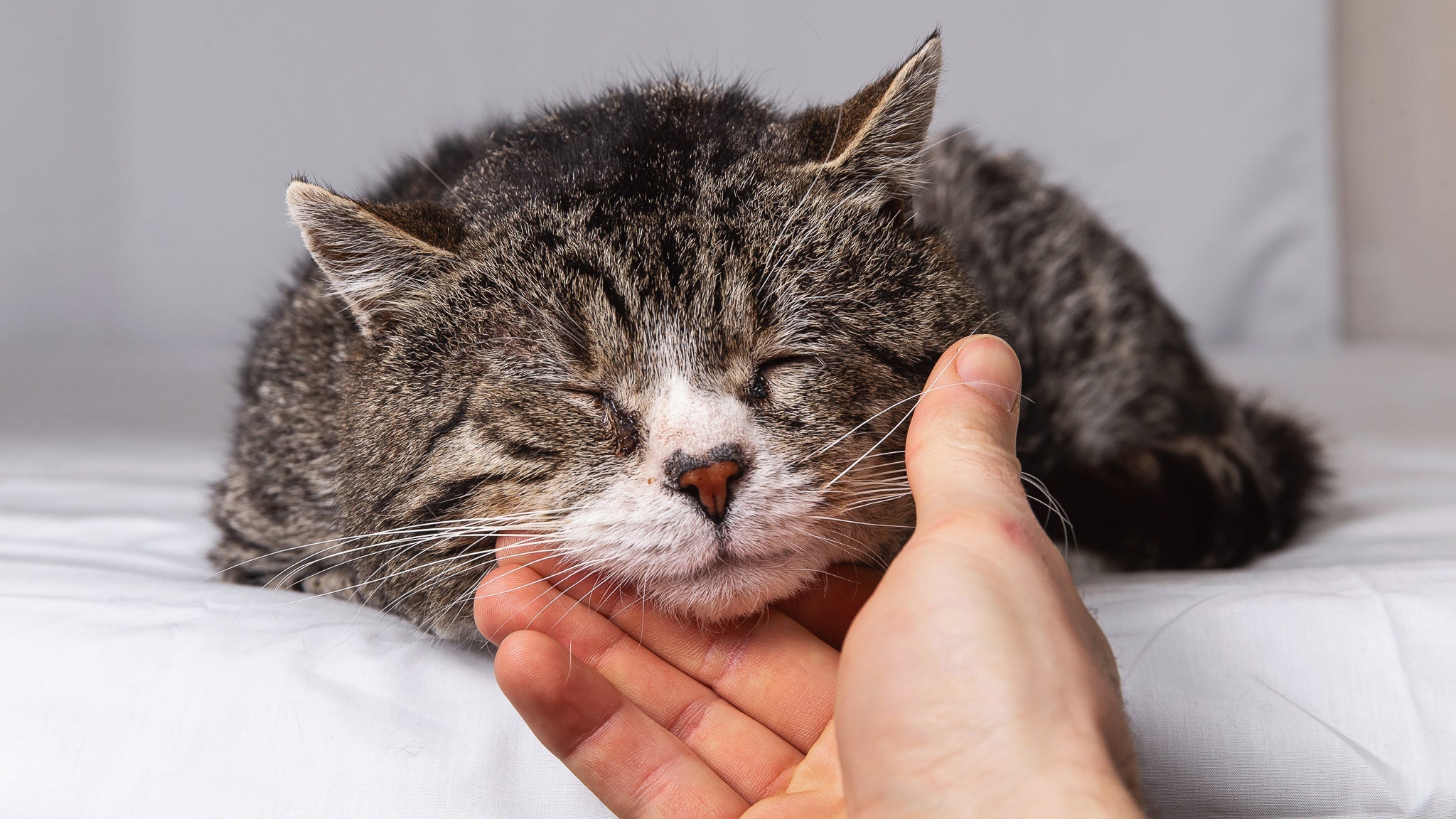
In recent years, with advancements in veterinary medicine, improved living environments, and higher quality food, more cats are living longer.
The average lifespan of a cat is now said to be about 15 years. A 15-year-old cat is equivalent to about 76 human years. Just as humans can develop dementia in old age, it is becoming clear that cats can also develop dementia.
This article will explain cat dementia.
At what age do cats get dementia?

Cat dementia refers to a condition where cognitive function declines due to some acquired brain damage, leading to difficulties in daily life.
The main cause is aging, but it can also be seen in conjunction with degenerative brain diseases like human Alzheimer's disease, cerebrovascular disorders such as cerebral infarction and cerebral hemorrhage, and brain diseases like brain tumors and encephalitis. It is said that an increasing number of cats show a decline in cognitive function after reaching around 10 years of age.
What are the causes of cat dementia?

The main causes of cat dementia include aging, degenerative brain diseases, cerebrovascular disorders, and other brain diseases. It can also be caused by metabolic diseases.
Aging
Aging is considered the primary cause of dementia. As brain cells and nerves decrease in number or function declines due to aging, cognitive function deteriorates.
Degenerative brain diseases
Alzheimer's disease, a major cause of dementia in humans, is a degenerative disease. In Alzheimer's disease, the accumulation of waste products in the brain leads to a decline in cognitive function. Although Alzheimer's disease was once thought to be unique to humans, it has recently been discovered that cats can also suffer from a similar condition.
Cerebrovascular disease
Cerebrovascular disease is one of the causes of dementia in humans. When blood vessels in the brain are damaged and bleed, or become blocked by blood clots, the surrounding brain cells are deprived of blood and die. This leads to a decline in cognitive function. While cerebrovascular disease is not very common in cats, elderly cats can develop high blood pressure due to chronic kidney disease or hyperthyroidism, which can lead to cerebral hemorrhage.
Brain disease
Brain cells can be damaged by brain diseases such as brain tumors and encephalitis. If the damaged area is large, or if the brain regions related to memory are affected, dementia can develop.
In addition, head injuries from accidents can also lead to dementia.
Other systemic diseases
Even without direct brain abnormalities, systemic diseases can damage the brain and lead to dementia. Chronic kidney disease and hyperthyroidism, common in older cats, can damage blood vessels in the brain. Also, blood clots formed in heart disease can block blood vessels in the brain. Diabetes and liver disease can produce substances that cause brain damage, increasing the risk of dementia.
Signs of cat dementia

Symptoms of cat dementia are not limited to a decline in cognitive function; various other symptoms can also appear. These symptoms are not exclusive to dementia and can also manifest with various other diseases. Do not self-diagnose.
Night crying and excessive vocalization
Cats with dementia may experience a reversal of their day-night cycle, leading to sudden, loud and continuous crying at night.
Night crying and excessive vocalization can also be observed in conditions other than dementia. As cats age, their eyesight and hearing may decline, causing them to feel anxious and vocalize. Additionally, many older cats develop arthritis, and pain can often cause them to cry. Cats with hyperthyroidism may become easily excitable, which can lead to night crying.
Inappropriate urination/defecation
When a cat develops dementia, they may suddenly start having accidents despite having been litter-trained. This occurs because the decline in cognitive function can cause them to forget the location of the litter box or dull their sensation of needing to urinate. In addition to dementia, chronic kidney disease can increase urination, sometimes leading to accidents if the cat can't reach the litter box in time. Arthritis can also cause pain that prevents the cat from getting to the litter box, resulting in accidents. Cystitis and diabetes can also increase the frequency and volume of urination, making it difficult for the cat to make it to the litter box.
Wandering
Wandering, such as walking in circles in the same direction or pacing along the walls of a room, is commonly seen in dementia. This wandering occurs because the decline in cognitive function causes the cat to lose its sense of direction. Wandering can also occur due to deteriorating eyesight, even without dementia. If paralysis occurs due to a brain tumor, the cat may also walk in circles in the same direction.
Personality changes
When a cat develops dementia, they may become unresponsive to things they used to love, such as food or toys. They may also stop responding to their owner's calls. The same can happen due to declining eyesight and hearing.
Conversely, their personality might become more aggressive, or their appetite might increase abnormally.
How is cat dementia treated?

Dementia is a brain dysfunction that leads to a decline in cognitive abilities.
Unfortunately, treating dementia itself is difficult with current veterinary medicine, so it is important to focus on slowing down the decline in cognitive function.
Provide appropriate brain stimulation
Stimulating the brain may improve declining cognitive function. While cats with dementia may become unresponsive to stimulation, try to offer different types of stimulation, such as inviting them to play with toys or using puzzle feeders for meals. Even if they don't respond to toys, massages, brushing, and gentle stretching of their joints can provide brain stimulation. Older cats may experience joint pain, so avoid forcing these activities if they show discomfort.
Avoid severe stress
Severe stress can inhibit blood flow to the brain and potentially accelerate the progression of dementia. While small changes to their daily routine can stimulate the brain, changes that confuse the cat can cause significant stress. In particular, never rearrange objects, as this could lead to unexpected accidents or inappropriate elimination.
Use supplements and the like
Omega-3 fatty acids (DHA and EPA), for example, are gaining attention as brain-stimulating supplements and may sometimes be added to cat food. While the scientific evidence for supplements is not always fully established, and they don't guarantee results, they can be a good option to try to slow down the progression of dementia.
Besides brain activation, Omega-3 fatty acids are also expected to have anti-inflammatory effects and are prescribed for conditions such as arthritis and chronic kidney disease.
Night crying and excessive vocalization
It is difficult to control night crying and excessive vocalization itself. As mentioned earlier, night crying can occur even without dementia. First, consult a veterinarian to rule out other diseases. If it's due to a condition other than dementia, treatment may alleviate the crying.
If night crying is due to dementia, establishing a regular daily rhythm is important. Exposure to sunlight can help regulate the cat's internal clock. However, excessive sunlight can damage the skin. Create escape routes or set time limits for sun exposure.
When caring for a cat with dementia, night crying is often the most distressing issue for owners. If the night crying is severe, veterinarians may prescribe sleeping pills or anti-anxiety medications. Some owners may hesitate to visit the vet for night crying, but veterinary hospitals can also offer advice on caring for elderly cats.
Wandering
In cases of wandering due to dementia, accident prevention is more important than control. If the wandering is caused by a condition other than dementia, treatment may lead to improvement.
Wandering is characterized by walking around in the same direction along the walls of a room. Since the cat itself is disoriented, it may get stuck if it enters a narrow space. If your cat wanders, try to keep the room free of obstacles and block off narrow gaps. Living in an enclosure is also a good option, and cloth or vinyl materials are preferable to prevent injuries.
Wandering often occurs with night crying. If your sleep schedule is disrupted, it may be helpful to consider using sleeping pills for your cat.
Inappropriate elimination
If your cat has accidents due to dementia, never scold them. The cat itself has forgotten where the litter box is, so the best approach is to place several litter boxes in the cat's living space. Elderly cats with dementia may also experience pain from arthritis. It's a good idea to provide not only the usual type of litter box but also ones with low entry points.
Inappropriate elimination can also be a sign of other diseases, especially chronic kidney disease. If your cat starts having more accidents, be sure to have them examined by a veterinarian.
In elderly cats, weakening of the muscles around the urethra and bladder can also occur, leading to urine leakage. In such cases, consider using diapers. Since cats may dislike being forced to wear diapers, gradually accustom them to it. Also, leaving a soiled diaper on can cause skin inflammation. Wash the diaper with lukewarm water once a day and shampoo the genital area at least.
Consult a veterinarian

Symptoms of dementia can also be caused by other diseases. While diagnosing dementia typically requires detecting brain lesions or atrophy with CT or MRI, it is usually diagnosed by excluding other conditions.
If another disease is present, treatment may improve the symptoms. Additionally, it is not uncommon for dementia to coexist with other conditions in older age. Don't give up just because it's dementia; there's a chance symptoms could improve with treatment.
Veterinary hospitals can provide information on caregiving and help owners get some rest. Some veterinary staff members are trained in caring for elderly animals. If you are struggling with dementia care, please consult your veterinarian.
Summary

Cat dementia is a brain disorder, making it extremely difficult to control.
However, night crying, wandering, and inappropriate urination/defecation can be very stressful for owners. The caregiving period is not something that ends in a few days. If your beloved cat develops dementia, it's important not only to manage the cat's stress but also for the owner to avoid accumulating stress.
Never try to handle it alone; please consult a veterinarian or other professionals.

![Feline Infectious Peritonitis (FIP) Treatment Guide [2024 Edition]: Latest Information and Treatment Options](http://www.poponeko.jp/cdn/shop/articles/shutterstock_1633580878.jpg?height=400&v=1727181737)


![[Set] Leaf Ribbon & Scrunchie Cat Collar, Arabesque Swirl, Teal](http://www.poponeko.jp/cdn/shop/files/2608_00131.jpg?v=1789044775&width=600 "[Set] Leaf Ribbon & Scrunchie Cat Collar, Arabesque Swirl, Teal")
![[Slightly Damaged] Cat-Friendly Cat Warm Shirt, Border (Short Sleeve)](http://www.poponeko.jp/cdn/shop/products/DSC_7661.jpg?v=1675832922&width=600 "[Slightly Damaged] Cat-Friendly Cat Warm Shirt, Border (Short Sleeve)")

![[Set] Leaf Ribbon Fleurage Purple & Scrunchie Cat Collar Belgian Linen Turquoise](http://www.poponeko.jp/cdn/shop/files/2608_00136.jpg?v=1789197487&width=600 "[Set] Leaf Ribbon Fleurage Purple & Scrunchie Cat Collar Belgian Linen Turquoise")
![[Set] Leaf Ribbon & Cat Collar - Gingham Check Pink](http://www.poponeko.jp/cdn/shop/files/DSC00107_be0c6dc2-1e03-4ba3-9fbe-dcb40be6c72c.jpg?v=1780663891&width=600 "[Set] Leaf Ribbon & Cat Collar - Gingham Check Pink")
![[Set] Leaf Ribbon moda Old Glory & Cat Collar Okayama Kojima Denim Black](http://www.poponeko.jp/cdn/shop/files/260618_00167.jpg?v=1784451812&width=600 "[Set] Leaf Ribbon moda Old Glory & Cat Collar Okayama Kojima Denim Black")
記事を読ませて頂き本当に勉強になりました。うちの愛猫は今24歳です。食事の量が増えましたが太る事はなく逆に痩せてきています。同じところを何度もクルクル周りながら鳴きます。トイレの失敗は毎回のようにあります。こちらが泣きたくなるくらい辛い時もあります。でも寝る時は必ず私の隣に来て寝ます。
Leave a comment