

When you adopt a cat from a pet store or similar establishment, you will likely be advised on when to administer vaccinations. If you have already visited a veterinary clinic, the veterinarian will probably have explained vaccinations and sent you a postcard reminding you of the vaccination schedule.
In my daily practice, I encounter a certain number of pet owners who misunderstand infectious diseases and vaccinations, stating things like, "It's okay because my cat doesn't go outside," or "I don't have other cats, so I don't need to vaccinate."
This article will explain cat vaccinations.
What are Cat Vaccinations?
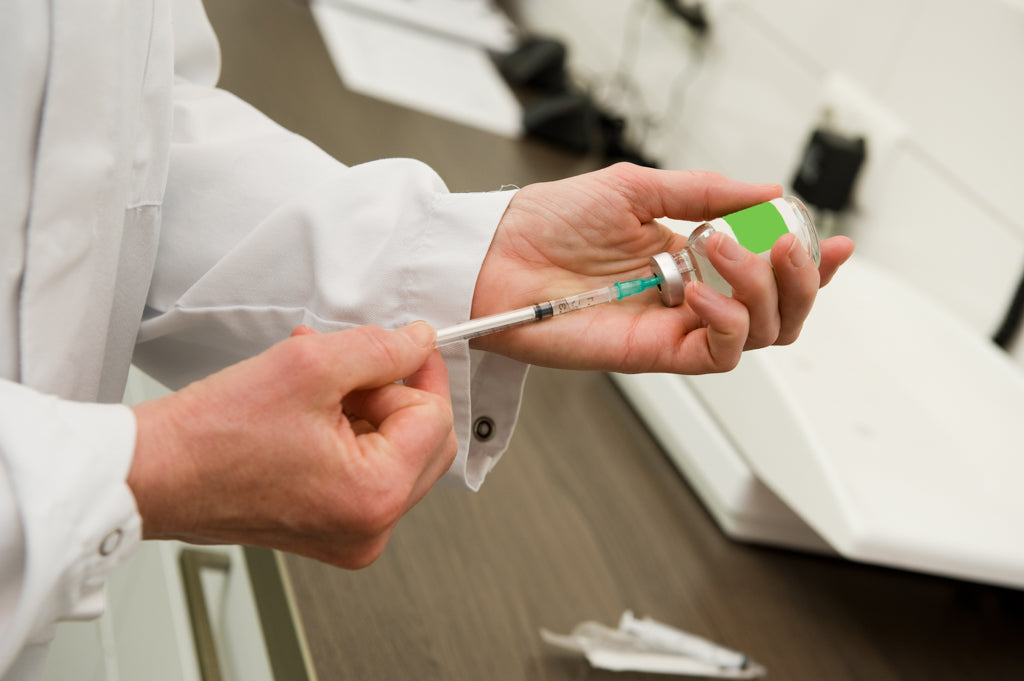
When an animal contracts an infectious disease caused by a pathogen, antibodies are formed in the body. The next time the same pathogen enters the body, these antibodies attack it, preventing the disease. Newborn kittens have no antibodies and receive them from their mother cat. The antibodies in the mother cat's body are abundantly present in the colostrum (milk secreted immediately after birth), and kittens receive these antibodies by drinking colostrum (maternal antibodies). These received antibodies gradually decrease, and by approximately 8 weeks of age, they drop to a level insufficient to prevent infection.
Vaccines primarily consist of live attenuated vaccines and inactivated vaccines. Live attenuated vaccines contain weakened pathogens of infectious diseases. When administered, they cause a state of actual infection (without producing severe symptoms), thereby generating strong antibodies in the body. Inactivated vaccines contain pathogens that have been rendered non-pathogenic or killed, so they do not cause infection upon administration. Adjuvants are included in these vaccines to stimulate antibody production. Since antibody production is weaker than with live attenuated vaccines, multiple doses are required.
Vaccinations do not guarantee 100% prevention of infection, but they can alleviate symptoms if an infection occurs.
Types of Cat Vaccines
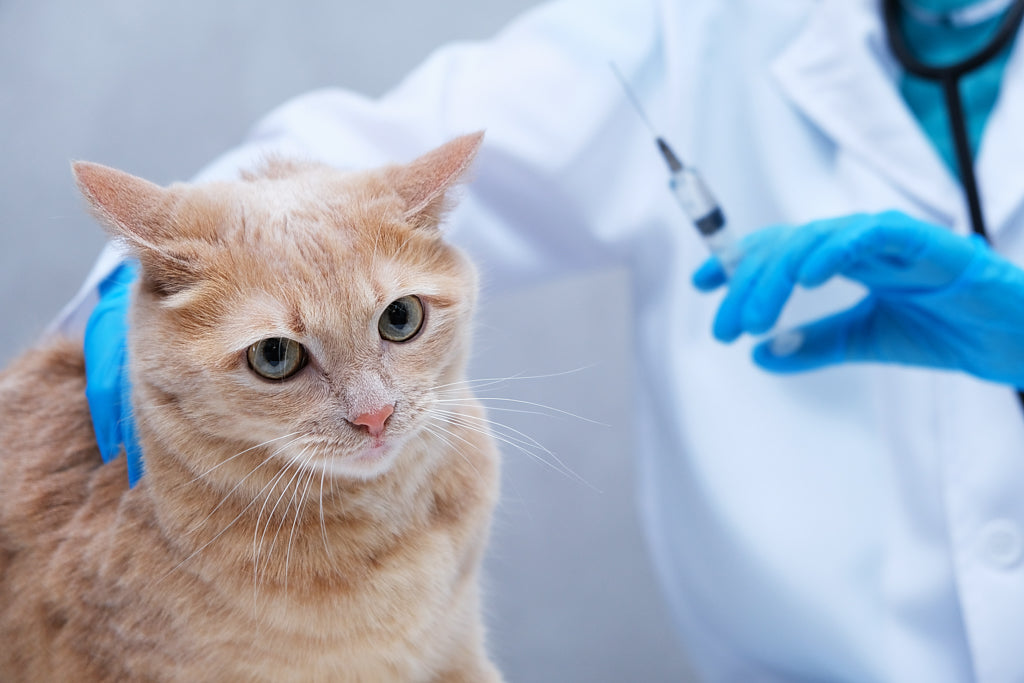
Cat vaccines come in 3-way, 4-way, and 5-way varieties. A 3-way vaccine includes protection against Feline Viral Rhinotracheitis, Feline Calicivirus Infection, and Feline Panleukopenia. A 4-way vaccine adds Feline Leukemia Virus Infection to the 3-way vaccine. A 5-way vaccine includes Feline Chlamydophila Infection in addition to the 4-way vaccine.
Previously, there was also a vaccine for Feline Immunodeficiency Virus (FIV), but its production has now been discontinued.
Feline Viral Rhinotracheitis
Feline Viral Rhinotracheitis and the next Feline Calicivirus Infection are commonly referred to as "cat flu." Feline Viral Rhinotracheitis is caused by the herpesvirus and is characterized by cold-like symptoms such as a runny nose, cough, and conjunctivitis. The virus is present in the cat's nasal discharge and spreads through sneezing and coughing. In severe cases, it can lead to pneumonia or prevent the cat from eating, potentially resulting in death.
Feline Calicivirus Infection
Similar to Feline Viral Rhinotracheitis, it exhibits cold-like symptoms and is caused by calicivirus. A distinguishing feature is the occurrence of stomatitis in addition to cold symptoms. Limping can also occur. The infection spreads through nasal discharge and other bodily fluids. In severe cases, it can cause pneumonia or prevent the cat from eating due to stomatitis.
Feline Panleukopenia
Feline panleukopenia is an infectious disease caused by the parvovirus. The parvovirus is highly contagious and can survive in the natural environment for over a month. The virus is present in feces and vomit, leading to rapid infection. Furthermore, it is not eliminated by common disinfectants such as alcohol. Symptoms vary depending on the stage of infection, but kittens infected with parvovirus experience severe diarrhea, bloody stools, and vomiting, and typically die within a few days. Additionally, white blood cell counts decrease significantly (panleukopenia), leading to a loss of resistance to infections. If a mother cat is infected and the virus reaches the fetus, it can cause brain abnormalities.
Feline Leukemia Virus Infection
This infection is caused by the Feline Leukemia Virus. It is an infection that can sometimes resolve depending on when it was contracted. If infected immediately after birth, 100% of cats will remain persistently infected. If infected around 3 months of age, about 25% will become infected, and if infected after 1 year of age, very few will become infected. Immediately after infection, symptoms such as fever, loss of appetite, and stomatitis may appear. In severe cases, it can lead to severe leukopenia, anemia, and bleeding. Once the infection is established, cats typically die within about 3 to 4 years.
The virus is present in saliva and nasal discharge and can be transmitted through shared food bowls or even through grooming. It is often found in outdoor cats.
Feline Chlamydophila Infection
Feline Chlamydophila infection is caused by the bacterium Chlamydophila felis. It primarily infects the conjunctiva, causing severe conjunctivitis with significant eye discharge. Chlamydia is found in nasal discharge and eye discharge.
When to Vaccinate Cats?
The vaccination schedule typically involves three (or two) doses at 2, 3, and 4 months of age, followed by a booster one year later. After that, booster shots are generally recommended every three years. For cats between 4 months and 1 year of age, one initial vaccination is given upon arrival, followed by boosters one month and one year later, and then every three years thereafter. For cats receiving their first vaccination after 1 year of age, one dose is given upon arrival, followed by a booster one year later, and then every three years thereafter.
The number of vaccinations may vary depending on when you start keeping the cat and its living environment, so please follow your veterinarian's instructions.
Cost of Cat Vaccinations
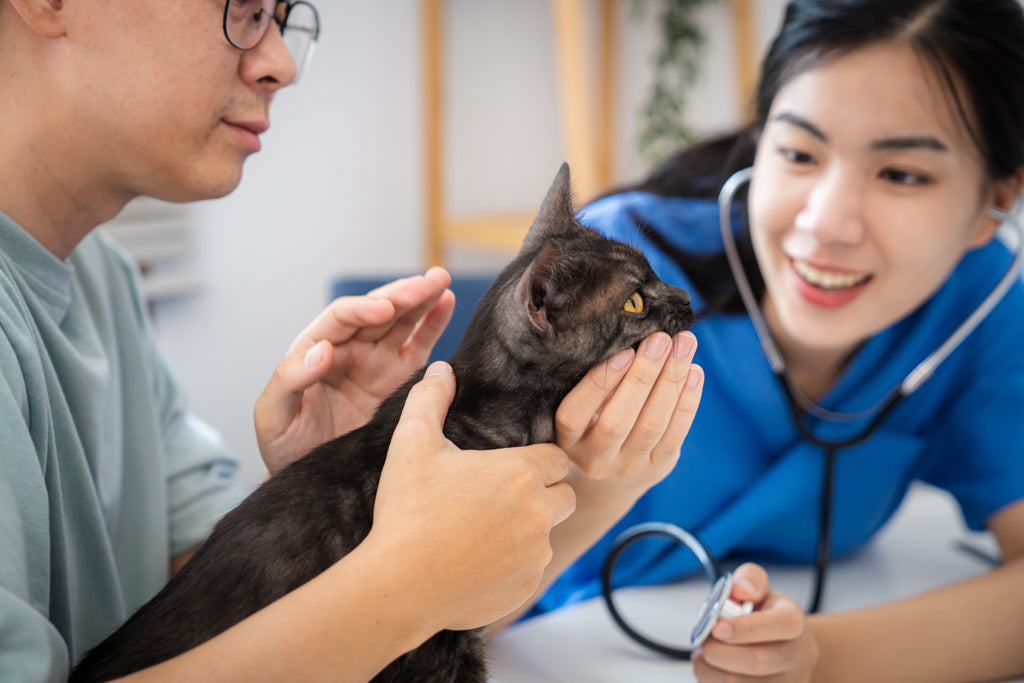
The cost of vaccinations varies depending on the veterinary clinic and the type of vaccine.
The average cost for vaccination is approximately 4,000 to 6,000 yen. There may also be additional charges for examination fees.
Summary

Infectious diseases included in vaccines can be contracted not only by cats going outdoors but also by pathogens adhering to their owners' clothes and belongings. Vaccination can either prevent infection or reduce the severity of symptoms. To ensure your beloved cat doesn't suffer from preventable infectious diseases, make sure to get them vaccinated regularly.

![Feline Infectious Peritonitis (FIP) Treatment Guide [2024 Edition]: Latest Information and Treatment Options](http://www.poponeko.jp/cdn/shop/articles/shutterstock_1633580878.jpg?height=400&v=1727181737)


![[Set Item] Leaf Ribbon & Cat Collar - Petit Fleur - Purple](http://www.poponeko.jp/cdn/shop/files/2608_00408.jpg?v=1789946167&width=600 "[Set Item] Leaf Ribbon & Cat Collar - Petit Fleur - Purple")
![[Set] Leaf Ribbon "Fleurage" Pink & Cat Collar "Belgian Linen" Wine Rose](http://www.poponeko.jp/cdn/shop/files/2608_00119.jpg?v=1789197487&width=600 "[Set] Leaf Ribbon \"Fleurage\" Pink & Cat Collar \"Belgian Linen\" Wine Rose")
![[Set] Leaf Ribbon & Cat Collar - Gingham Check Orange](http://www.poponeko.jp/cdn/shop/files/DSC00109_9b2822dd-1b99-4744-982e-5a48c8c1f667.jpg?v=1780663891&width=600 "[Set] Leaf Ribbon & Cat Collar - Gingham Check Orange")
![[Set] Leaf Ribbon & Scrunchie Cat Collar, Arabesque Swirl, Red](http://www.poponeko.jp/cdn/shop/files/2608_00130.jpg?v=1789044775&width=600 "[Set] Leaf Ribbon & Scrunchie Cat Collar, Arabesque Swirl, Red")
![[Set Item] Leaf Ribbon & Cat Collar, Petit Fleur, Mint](http://www.poponeko.jp/cdn/shop/files/2608_00406.jpg?v=1789946167&width=600 "[Set Item] Leaf Ribbon & Cat Collar, Petit Fleur, Mint")


Leave a comment