

Many pet owners have experienced hives from food or other substances. These symptoms are called allergic dermatitis, and just like humans, cats can also suffer from allergic dermatitis. This article will explain feline allergic dermatitis.
What is feline allergic dermatitis? Symptoms and characteristics explained

Definition and mechanism of allergic dermatitis
Allergic dermatitis is a condition where the immune system overreacts to substances that cause allergies (allergens) entering a cat's body, leading to symptoms such as itching and eczema. These symptoms may occur seasonally, appearing around the same time each year.
Strictly speaking, hypersensitivity disorders where the reaction to allergens occurs in the skin, digestive tract, or respiratory system are called feline atopic syndrome. Feline atopic syndrome includes flea allergic dermatitis, feline atopic dermatitis, feline food allergy, and feline asthma. Flea allergic dermatitis, feline atopic dermatitis, and feline food allergy, which present with skin symptoms, are collectively referred to as allergic dermatitis.
■Main diseases included in feline atopic syndrome
| Disease Name | Main affected areas | Description |
| Flea allergic dermatitis | Skin | An allergic reaction to substances contained in flea saliva. Regardless of the number of fleas, dermatitis appears systemically, not just at the bite sites. |
| Feline atopic dermatitis | Skin | Skin symptoms appearing in response to environmental allergens such as pollen and house dust. |
| Feline food allergy | Skin, digestive system | Dermatitis, diarrhea, vomiting, etc., occurring in response to specific proteins. |
| Feline asthma | Respiratory system | Respiratory symptoms such as coughing and wheezing appear in response to house dust, tobacco smoke, etc. |
Representative symptoms such as itching, hair loss, and redness
Cats with allergic dermatitis may itch their face and ears, and scratch marks may be seen on the face, ears, and neck. They may also develop bumps or eczema. Due to frequent licking from itching, hair loss, redness of the skin, and ulceration may occur.
Since these symptoms can also appear with other forms of dermatitis, allergic dermatitis cannot be diagnosed by appearance alone.
Main causes of feline allergic dermatitis

Food allergy
Cats may show an allergic reaction to certain substances in their food. Chicken, fish, and beef have been reported as highly probable causes of food allergies in cats.
Flea allergic dermatitis
Cats show an allergic reaction to substances contained in flea saliva. Regardless of the number of fleas, dermatitis appears systemically, not just at the bite sites.
Environmental allergies
Environmental allergies are reactions to allergens in the environment, such as house dust and pollen. Symptoms may become more severe during periods when these allergens are abundant.
Contact allergy
Contact allergy refers to an allergic reaction that occurs when the skin comes into direct contact with a substance. Causes can include shampoos, detergents, or plastic products used in food bowls.
Diagnosis and treatment of feline allergic dermatitis

Veterinary diagnostic process (skin examination, allergy testing, elimination diet trial)
Diagnosis of feline allergic dermatitis begins with evaluating the state of the dermatitis and differentiating it from other non-allergic dermatitis (fungal, demodectic mange, scabies, viral, bacterial, neoplastic, psychogenic). After excluding these skin diseases, it is determined if the cat meets diagnostic criteria, such as characteristic skin symptoms of allergic dermatitis, hair loss, or lesions on the face or mouth. If the diagnostic criteria are met, allergy tests or an elimination diet trial using specific allergen-free food are performed to diagnose allergic dermatitis.
|
【Related articles】 |
Treatment options
Allergic dermatitis is treated with steroids and immunosuppressants. For canine atopic dermatitis, molecular-targeted drugs that specifically suppress substances related to itching are used, and they may also be used in cats.
Flea allergy measures
In flea allergies, symptoms appear throughout the body regardless of the number of fleas. Therefore, regular use of flea control medication is essential. Fleas can occur indoors year-round, making it necessary to administer flea control medication throughout the year. Additionally, regular cleaning of the indoor environment to remove fleas is important.
Response to food allergy
In food allergies, an allergic reaction occurs in response to allergens contained in food. Identifying the allergen is necessary for diagnosing food allergies. Once the allergen is identified, it is necessary to use an elimination diet that does not contain that allergen or switch to an allergy-friendly diet using proteins that are less likely to cause allergies.
Preventive measures to avoid feline allergic dermatitis

Reviewing diet
Feline allergic dermatitis can be prevented to some extent. Food allergies cannot be completely prevented since they are caused by allergens in what the cat eats. However, foods with many additives or human food can put a strain on the cat's body, not just cause allergies. Very cheap foods can contain many additives, so it's important to provide reliable food. For skin health, foods containing omega-3 fatty acids may also be beneficial.
Maintaining a clean living environment and regular parasite control
Feline allergic dermatitis can be caused by flea allergies. While fleas are often thought of as outdoor pests, they can attach to human clothing, shoes, and bags and enter indoor environments. Fleas are active and reproduce at average temperatures of 14 degrees Celsius (57 degrees Fahrenheit) or higher. Therefore, if they get indoors, they can multiply. Regular vacuuming and cleaning, as well as airing out bedding, can help eliminate fleas.
Maintaining a clean indoor environment alone may not be sufficient for flea prevention. Even without allergies, regular flea control is important.
Summary

Feline allergic dermatitis is a skin inflammation caused by reactions to fleas, food, or house dust. It often causes severe itching and recurs repeatedly. Treatment involves controlling the itching, preventing contact with allergens, and regular flea control. Additionally, changing food and keeping the indoor environment clean are also important.

![Feline Infectious Peritonitis (FIP) Treatment Guide [2024 Edition]: Latest Information and Treatment Options](http://www.poponeko.jp/cdn/shop/articles/shutterstock_1633580878.jpg?height=400&v=1727181737)


![[Set] Leaf Ribbon Fleurage Blue & Cat Collar Belgian Linen Orange](http://www.poponeko.jp/cdn/shop/files/2608_00122.jpg?v=1789197487&width=600 "[Set] Leaf Ribbon Fleurage Blue & Cat Collar Belgian Linen Orange")
![[Set] Leaf Ribbon & Cat Collar - Arabesque Swirl, Teal](http://www.poponeko.jp/cdn/shop/files/2608_00118.jpg?v=1789044775&width=600 "[Set] Leaf Ribbon & Cat Collar - Arabesque Swirl, Teal")
![[Set Product] Leaf Ribbon & Cat Collar - Gingham Check Green](http://www.poponeko.jp/cdn/shop/files/DSC00113_9928b03b-5bce-4bf5-b54f-3a4ef263fb16.jpg?v=1780663891&width=600 "[Set Product] Leaf Ribbon & Cat Collar - Gingham Check Green")
![[Set] Leaf Ribbon & Scrunchie Cat Collar, Gingham Check, Tomato Red](http://www.poponeko.jp/cdn/shop/files/DSC00091_c37cc8a7-d056-4cf1-a8ec-9defb7c0c502.jpg?v=1780663891&width=600 "[Set] Leaf Ribbon & Scrunchie Cat Collar, Gingham Check, Tomato Red")
![[Set] Leaf Ribbon moda Old Glory & Cat Collar Okayama Kojima Denim Black](http://www.poponeko.jp/cdn/shop/files/260618_00167.jpg?v=1784451812&width=600 "[Set] Leaf Ribbon moda Old Glory & Cat Collar Okayama Kojima Denim Black")
![[Set Product] Leaf Ribbon & Scrunchie Cat Collar - Tartan Check - Dress Green](http://www.poponeko.jp/cdn/shop/files/2606_00009-2.jpg?v=1785759892&width=600 "[Set Product] Leaf Ribbon & Scrunchie Cat Collar - Tartan Check - Dress Green")

ウチのねこも二匹アレルギーです。
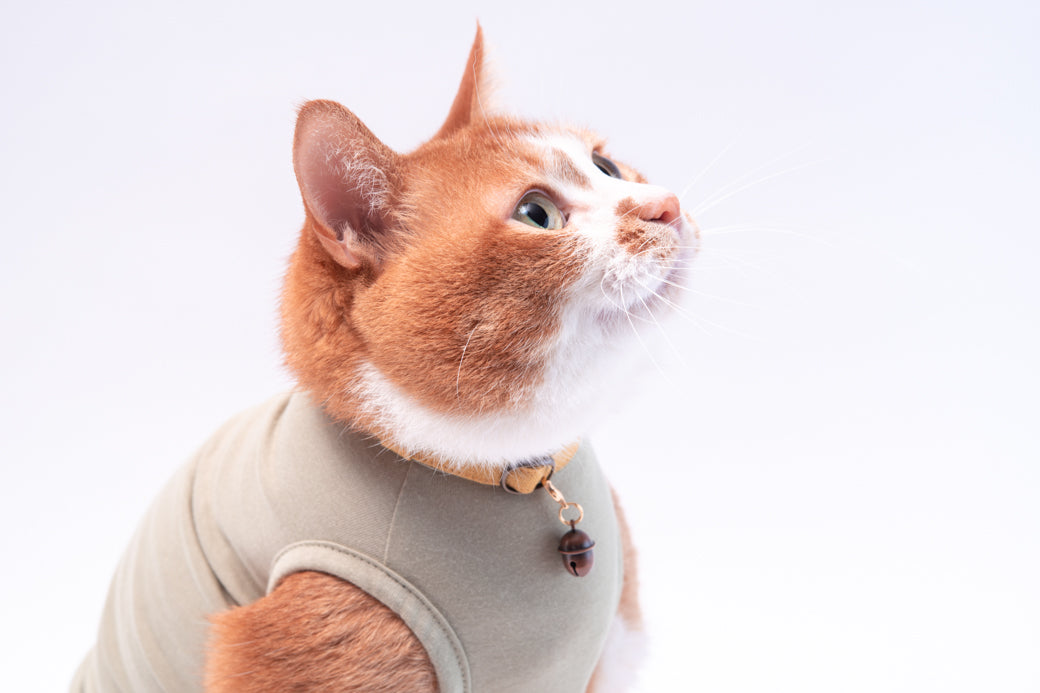
一匹は全身で背中がひどいのでぽぽねこさんの保護服を着て塗り薬でだいぶ良くなりました。
もう一匹はおなかで塗り薬とぽぽねこさんの保護服を着ていますがいつの間にか脱いでいます。
ぽぽねこさんの保護服はなかなか売ってなくてとても役に立ってます。
Leave a comment