
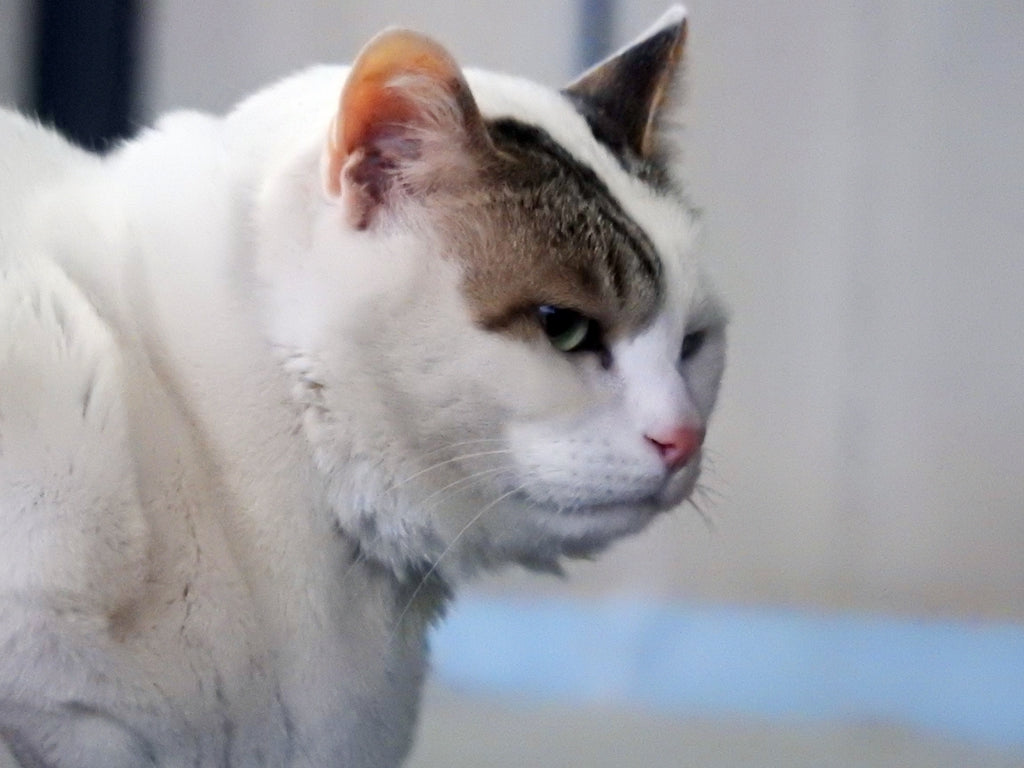
Chubby cats are charming and absolutely adorable. With their round faces and squishy bodies, just looking at them is healing.
However, obesity is not good. In this article, I would like to focus on feline weight loss and explain how to manage their diet to help them shed some weight.
I will introduce how to check your cat’s obesity level, how to determine and provide the right amount of food for a cat that needs to lose weight, and effective ways to encourage exercise.
Feline obesity is the owner’s responsibility
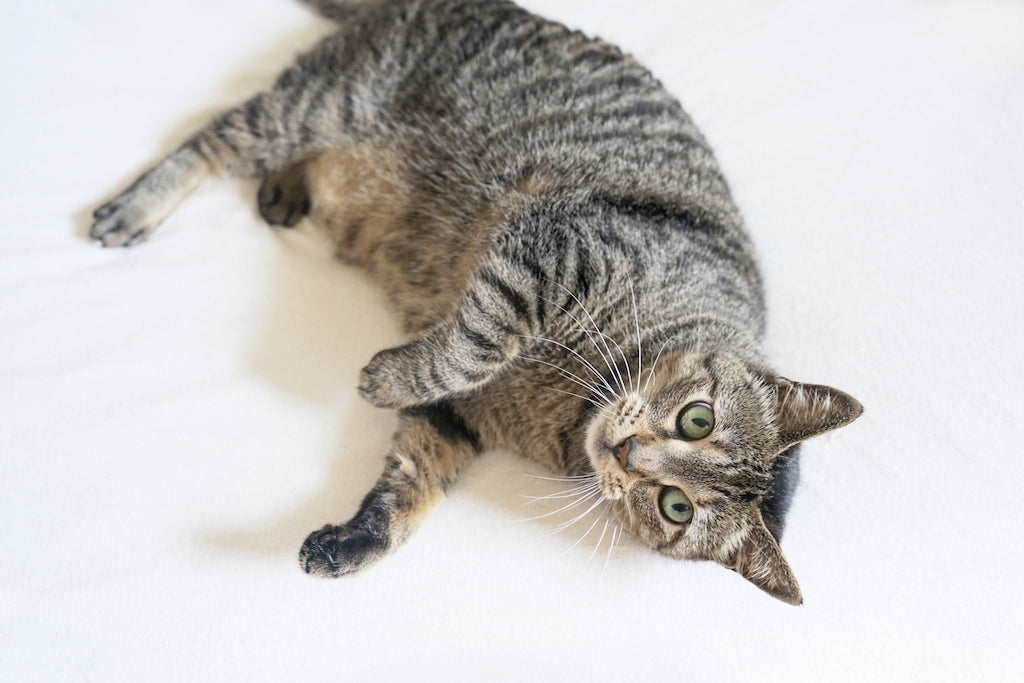
The causes of obesity in cats are "overeating" and "lack of exercise."
Kittens play a lot and consume a lot of energy. However, as they approach their senior years around age seven, they stop playing as vigorously.
At the same time,their metabolism slows down, so a lifestyle of eating as much as they want will lead to obesity. Additionally, spaying or neutering can make them prone to weight gain due to hormonal shifts.
Cats cannot manage their own diets. Nor can they arrange their living environment to prevent a lack of exercise. Always remember that feline obesity is the owner’s responsibility.
Cats are prone to obesity
Cats are natural-born sprinters. They are highly muscular and possess excellentexplosive power for pouncing on prey.
While it may seem that they are immune to obesity, theylive in a constant energy-saving mode so they can unleash their power when it truly counts. Since they can now get food without hunting, they quickly become obese if they overeat or don't get enough exercise.
Feline obesity is the root of many illnesses
Just like in humans, feline obesity increases the risk of disease. It can cause diabetes, heart disease, and fatty liver, as well as arthritis and skin conditions. If you want your cat to live a healthy, long life, you must not let them become obese.
How to check your cat’s obesity level
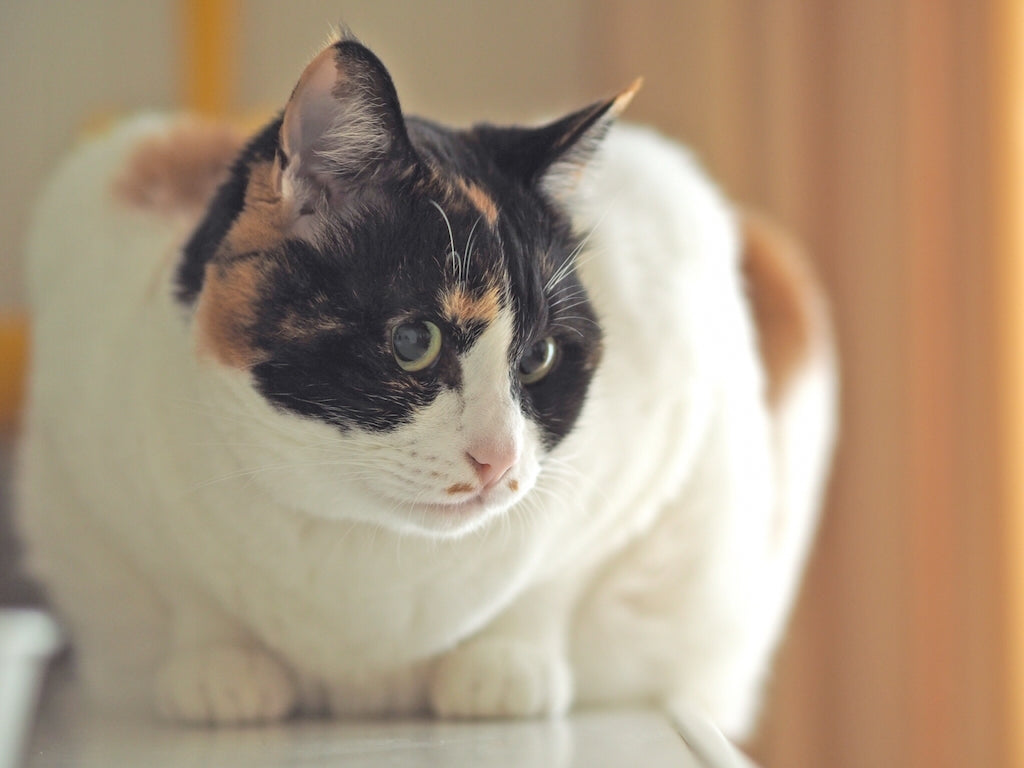
Feline obesity is a state where the cat isheavier than its ideal weight and carries too much body fat.
Even regarding a cat's "ideal weight," there is no standard value like "over X kg means obese," because a cat's weight varies greatly depending on the breed, gender, and build.
Since it is difficult to determine the obesity level by weight alone, a metric called"BCS" is used.
BCS stands for Body Conditioning Score, a method for checking obesity based on the cat's appearance and how their body feels when touched. The cat's obesity level is evaluated on a 5-point scale, andBCS 3 is considered the ideal body shape.
The key points are thewaist, ribs, and abdomen. If your cat’s body shape matches two or more of the criteria for"slightly overweight" or"obese," you should be careful.
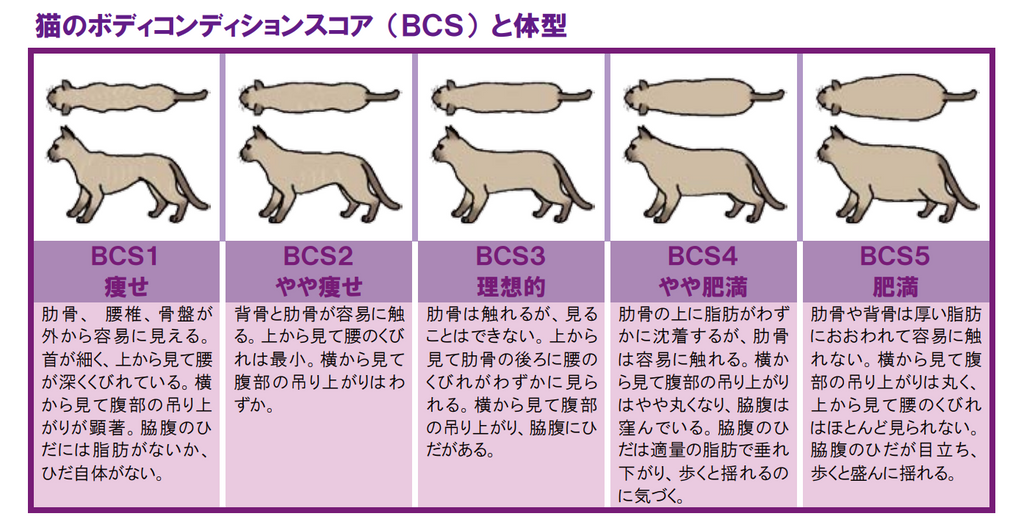
| Source:Ministry of the Environment "Pet Food Guidelines for Owners" |
1. Check the waist from above
Have your cat stand and look at their body from directly above to check for a waistline.
・Standard weight
A slight waistline is visible.
・Slightly overweight
The waist is hard to see, and the body bulges out to the sides.
・Obese
There is no waistline, and the body looks like a barrel.
2. Check by touching the ribs
When your cat is relaxed, try feeling around the base of the front legs with both hands. Check the obesity level based on how easily you can feel the ribs.
・Standard weight
You can feel the ribs, but they aren't protruding.
・Slightly overweight
There is some fat, but you can still feel the ribs.
・Obese
Covered in fat, you cannot feel the ribs.
3. Check the abdominal bulge
When your cat is standing, look at the belly from the side.
・Standard weight
The belly is nearly parallel to the floor.
・Slightly overweight
The lower abdomen is bulging and sways slightly when walking.
・Obese
The entire abdomen, starting from the flanks, is bulging and sways significantly when walking.
Start your cat’s diet
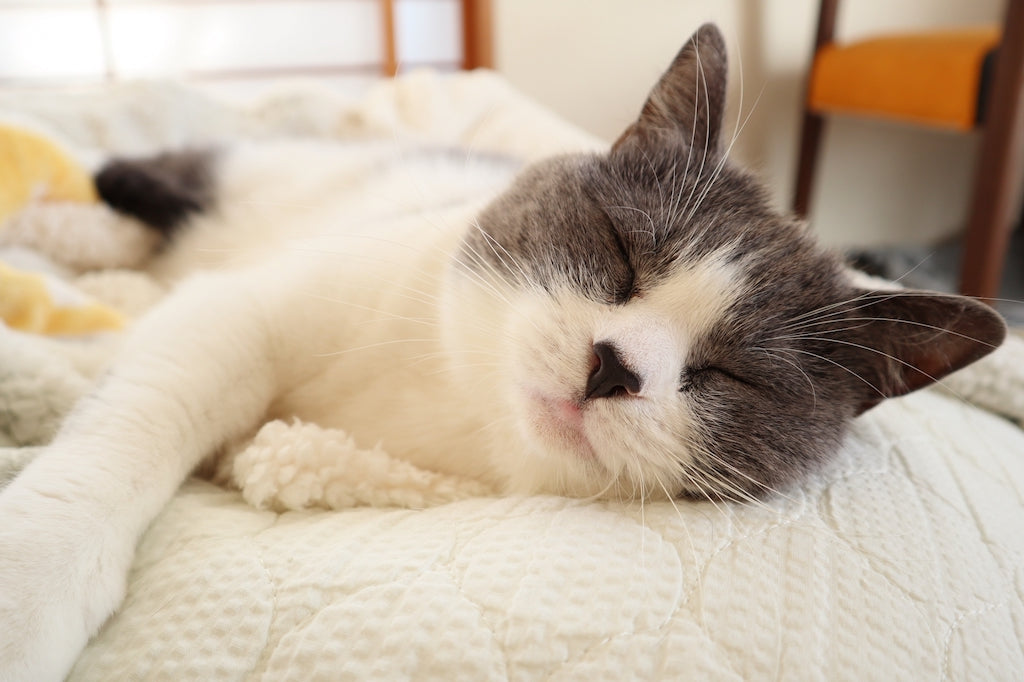
If the BCS results concern you regarding your cat's obesity, you should try a diet for their health.
However, rapid weight loss is very dangerous for small cats. Skipping meals or drastically reducing food is a big NO. I also cannot support forcibly taking a reluctant cat outside.The basic rule is to diet patiently over more than a year.
Indispensable to a cat’s diet are"meal management" and"appropriate exercise." Both require patience from the owner.
If your cat is obese enough to require a serious diet, or if you are unsure if a diet is necessary, please be sure to consult a veterinarian.
Cat Diet Method 1 [Manage food intake]

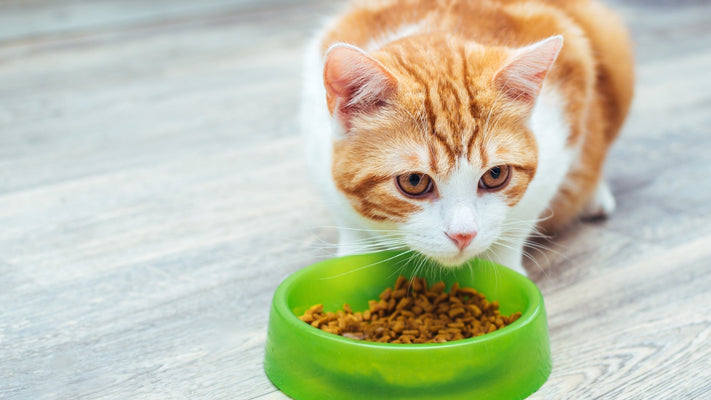
If you are concerned about your cat's weight, start by reviewing their food intake. It is important not just to reduce the amount of food, but to manage it properly.
Provide the appropriate amount of cat food
Instead of giving them food whenever they ask, you need to provide the appropriate amount based on the cat's weight and activity level.
The daily calories needed for an adult cat can be calculated using the formula:"80kcal × weight (kg)." For less active cats, use the formula:"70kcal × weight (kg)."
Next, calculate the amount needed based on the calorie count per 100g stated on the cat food package. Do not give food by eye, but measure the required amount each time.
|
[Related Article] |
Reduce the food portion
If they are prone to obesity despite eating the appropriate amount,try reducing the amount of food provided by 5–10%. Above all, do not reduce the food amount drastically.A pace of losing 1–3% of their body weight in a week is optimal.Adjust the food amount while checking your cat's weight frequently.
Increase the frequency of meals
Extended periods of hunger can lead to fat storage.To curb hunger, increase the number of meals and divide the daily ration into 3–4 portions. When you are out, using an automatic feeder or a puzzle toy that dispenses food is also recommended.
Treats in moderation
Giving treats is fine, but try to choose low-calorie options. The appropriate amount of treats iswithin 20% of the total daily calories required. When giving treats, be sure to reduce the amount of their regular meal by the same number of calories.
Prevent eating too fast
Cats are instinctually fast eaters. However,fast eating makes it difficult to feel full, causing them to constantly beg for food. Giving in to their begging and providing treats will lead to obesity.
To succeed in dieting, it is necessary to use tricks to prevent fast eating, such as using a food bowl that makes eating more challenging.
Diets using plastic bottles are popular on social media. Punch holes in a plastic bottle large enough for kibble to pass through, put the food inside, and give it to your cat. Since they have to roll it with their paws to get the food out, they can eat little by little. It also stimulates the cat’shunting instincts.
Provide diet cat food
Gradually switching to low-calorie cat food for weight loss is also effective. Also, since wet food has fewer calories than dry food, using a combination of both is recommended.
Cat Diet Method 2 [Exercise]

Exercise is also indispensable for a successful diet. You need to reduce caloric intake through meal management while increasing caloric expenditure through exercise.
Unlike dogs, cats do not go for walks outside or run in dog parks. Increasing a cat’s activity level requires a little ingenuity.
Games that stimulate instinct
Keep various types of cat wands handy and consciously invite them to play. You should also polish your wand-waving technique. It is also good to have motorized toys, puzzle toys, and tunnels for them.
Eat on a cat tree
Cats love cat trees. It not only provides exercise but also serves as a safe place to protect themselves. A simple one is fine, so please make sure to provide a cat tree.
For cats that aren't very interested in playing, having them eat on the cat tree is also effective. Place the food bowl in a high place to increase their activity level without much effort.
Summary
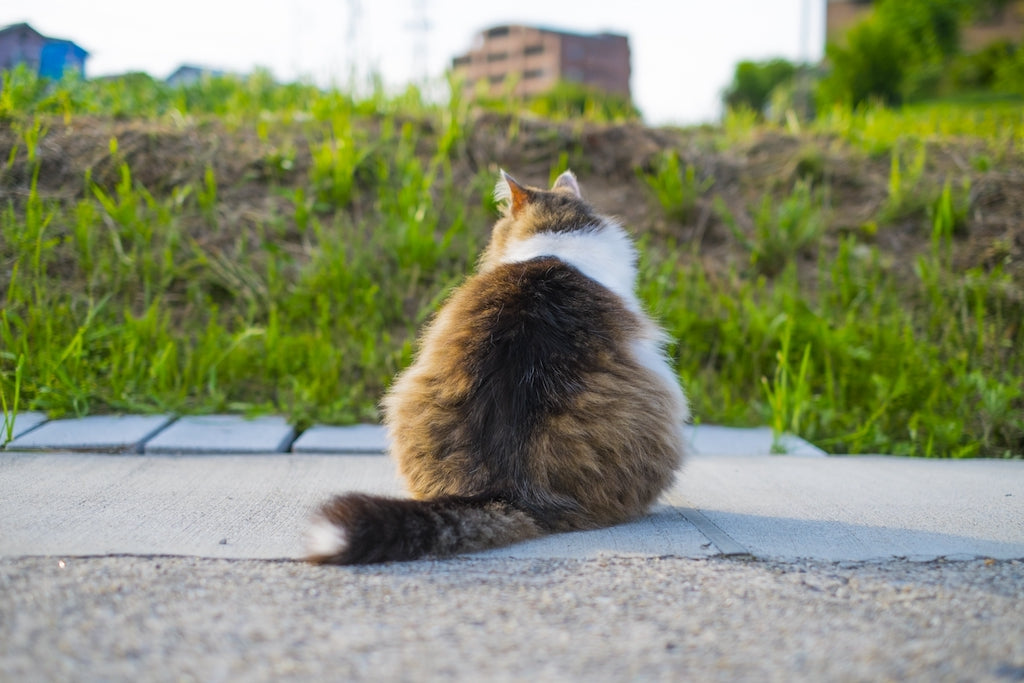
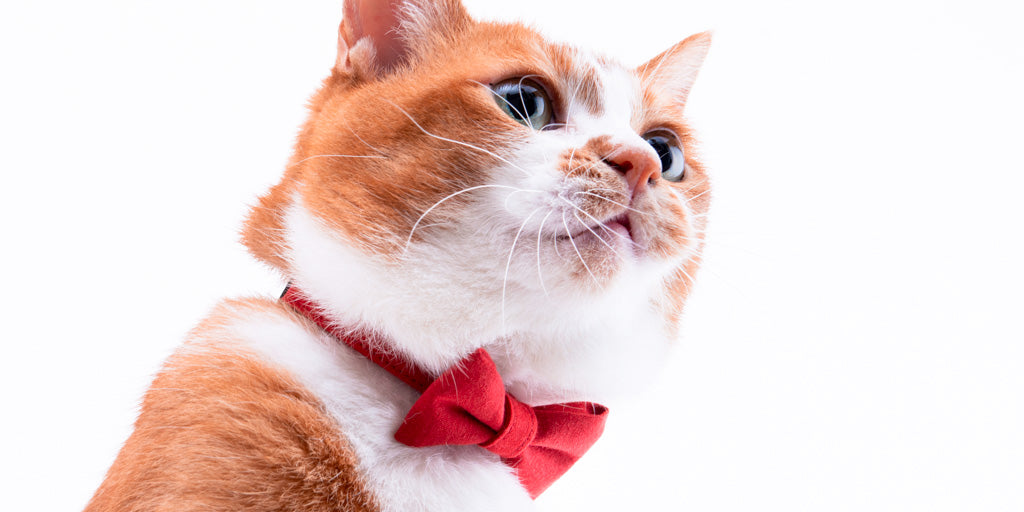
We offer large sizes for Poponeko’scollars andcat clothes, but occasionally we receive messages saying even thelarge size doesn't fit.
These sizes were intended for larger breeds or long-haired cats, but it seems that these cats are obese. I have a feeling that the number of cats struggling with obesity is increasing.
Chubby cats are very cute, but they are at risk of disease. To help them live a healthy and long life, they must go on a diet.
The most important thing in a cat's diet is to keep to an appropriate amount of food. Giving cat food by eye or giving them as much as they want is the cause of obesity.
If they are still slightly chubby, reduce the meal amount by about 5–10%. Please, strictly avoid sudden dieting. Try to approach it patiently, aiming to diet over the course of a year or more.
Feline obesity is the owner’s responsibility. For the sake of your cat's health, please review your meal management and exercise methods.

Author Profile









Leave a comment