

With more time being spent at home now, accidents involving cats accidentally swallowing or eating foreign objects are increasing rapidly.
Whether it’s swallowing a toy while playing or eating something because they mistook it for food... some items can even be life-threatening.
To help keep your cat safe from danger, I would like to explain in detail the symptoms and countermeasures for when a cat accidentally swallows or eats something they shouldn't.
What is Accidental Ingestion/Eating in Cats?
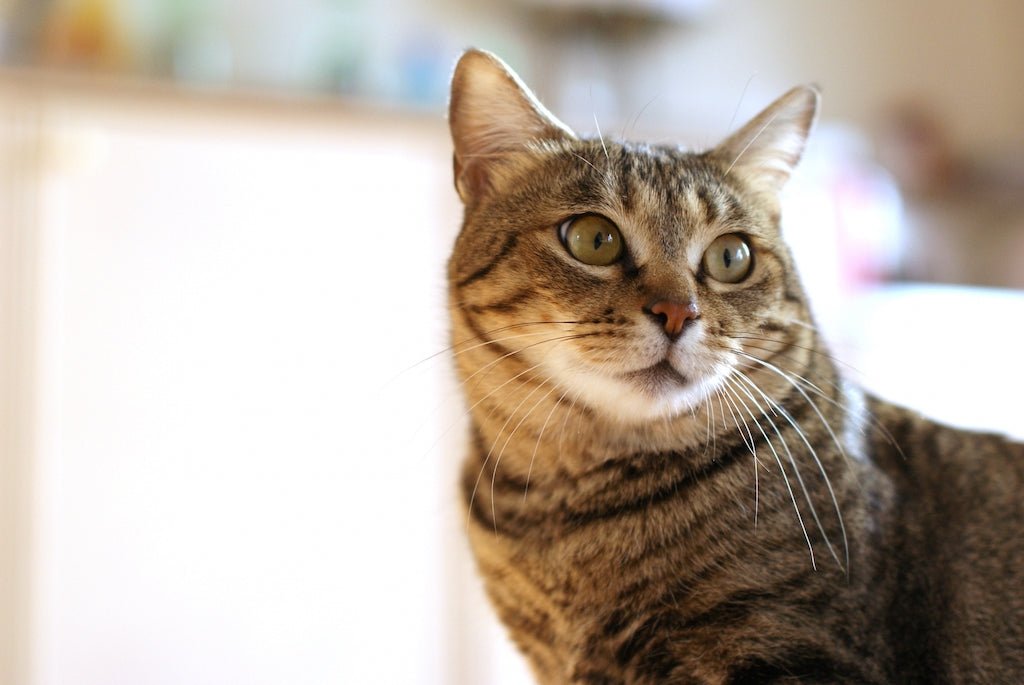
"Accidental ingestion" refers to a cat swallowing a foreign object. "Accidental eating" refers to an accident where a cat mistakes a foreign object for food and consumes it.
For a cat with a small body, even the smallest "foreign object" can be life-threatening.
The case of "accidentally swallowing a foreign object while playing" is very common, and every cat is at risk of such accidents.
A Cat's Tongue is Designed for "Swallowing Whole"
Cats are animals that "swallow whole" without chewing their food. Their jaw strength isn't that strong, as they retain the instinctual habit of using their rough tongues to scrape meat off bones.
The roughness of a cat's tongue consists of "filiform papillae," characterized by tiny, thorn-like projections pointing toward the throat. This is a structure designed for easy swallowing whole, allowing them to finish eating quickly.
In other words, a cat’s tongue is designed to easily snag objects.
String-like objects, in particular, easily tangle on the tongue, and many cats end up swallowing them. Lint, toy strings, and ribbons are easy to swallow, so please be sure not to leave them out.
|
[Related Articles] |
Things Cats Frequently Swallow or Eat Accidentally
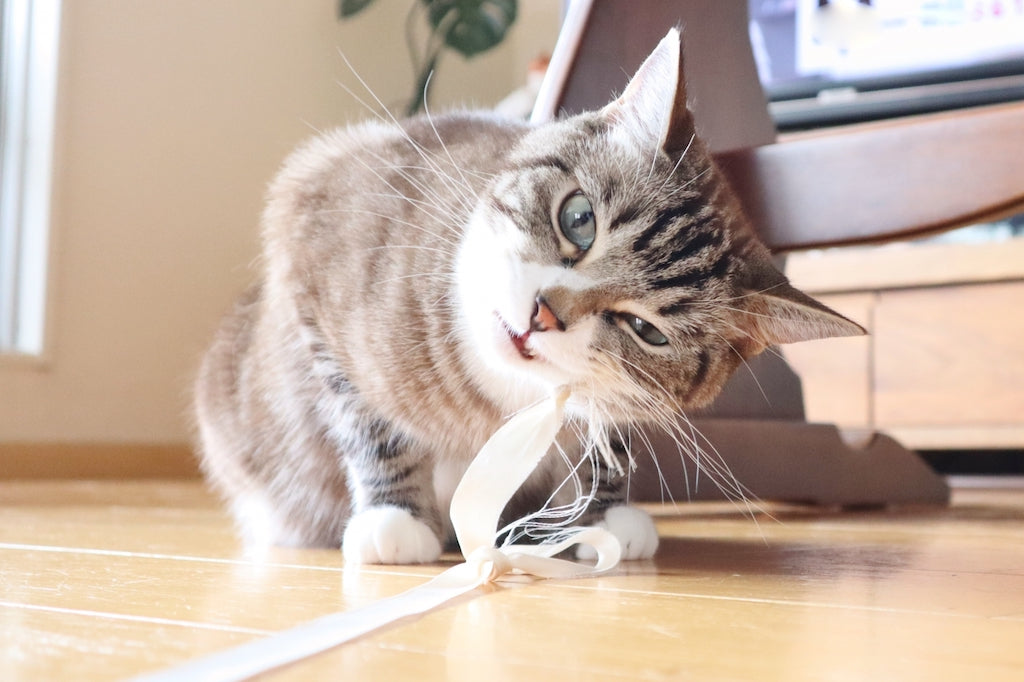
Assuming "my cat would never swallow something like that..." is dangerous. Please remember that cats are highly curious and are constantly at risk of accidental ingestion or eating.
The items cats most commonly swallow or eat accidentally are as follows.
Long, thin items like strings or ribbons
The most common item cats swallow or eat accidentally is "string." Be careful with plastic string, ribbons, lint from towels or blankets, rubber bands, and hair ties. Furthermore, there is an increasing number of cases where cats tear off and swallow the ear loops from face masks.
Plastic bags and cling film
Many cats swallow or eat plastic bags and cling film because they often smell like food. Many cats also love the crinkling sound these make. Please also be careful with snack packaging film.
Cat toys
Cat toys like feathered wand toys and mouse toys also pose a risk of accidental ingestion. Even items about 5cm in diameter can be swallowed whole.
Sponges
Cats sometimes eat dishwashing sponges or foam cushions.
Sharp objects
"Sharp objects" like fish bones, bamboo skewers, toothpicks, sewing needles, and thumbtacks can pierce the mouth, stomach, or intestines. Also, sparkly earrings often attract a cat’s interest.
Cords and cables
A great many cats chew on electrical cords and charging cables. This also carries the risk of electric shock.
Batteries
If a cat swallows a button battery, the discharge can cause a hole in the stomach or intestines.
Plant seeds
Even small seeds can cause difficulty breathing if they get stuck in the esophagus. Be careful with seeds from pickled plums (umeboshi) or legumes like peanuts or edamame.
Substances that cause poisoning
Desiccants, oxygen absorbers, ice packs, and human medications pose the risk of toxic symptoms. Cats may also mistake bead-type deodorizers for food, so you need to be careful to make them inaccessible.
Symptoms of Accidental Ingestion/Eating
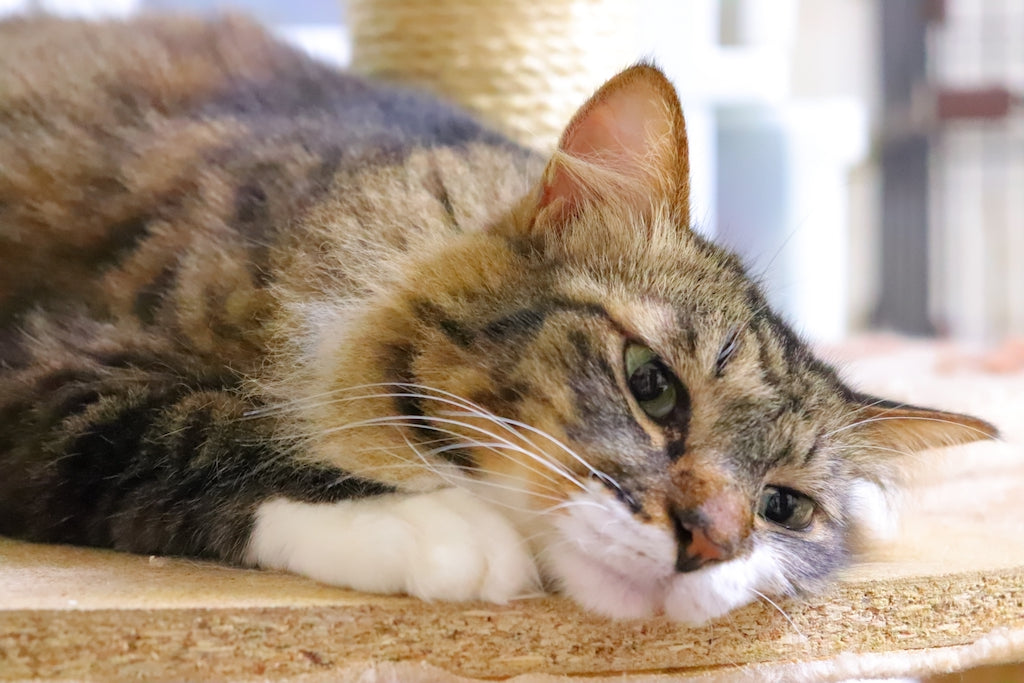
If you notice signs that a room has been ransacked, carpet or blankets have been chewed to bits, accessories or small items have gone missing, or toys have been destroyed, along with changes in physical condition, it is possible your cat has accidentally ingested or eaten something.
To avoid it becoming too late, you should know the symptoms that suggest accidental ingestion or eating.
Passing objects in stool
Depending on the size of the swallowed object, it might pass through with their stool without any symptoms. However, since the foreign object might have damaged the inside of their mouth or digestive tract, you should still consult a veterinarian.
Vomiting/Diarrhea
Cats vomit often, but if they are vomiting multiple times a day, it could be caused by accidental ingestion. If they are trying to vomit but nothing comes out, or if they have diarrhea, you should suspect accidental ingestion or eating.
|
【Related Articles】 |
Loss of appetite
If they suddenly lose their appetite, they may be suffering from a "bowel obstruction," where a foreign object blocks the intestines.
Swallowing long, thin, string-like objects frequently causes bowel obstructions, with symptoms such as constipation, vomiting, and abdominal pain. In the worst-case scenario, it can lead to death.
Lethargy
Swallowing sharp objects can cause a "gastrointestinal perforation," where a hole is punctured in the intestinal wall. They may also show signs of resistance when you try to touch their stomach. Emergency surgery may be required.
Difficulty breathing/Cyanosis
If an ingested object blocks the airway, oxygen deprivation can cause cyanosis (the tongue, oral mucosa, and gums turning blue-purple). Symptoms such as labored breathing or opening and closing their mouth as if gagging, despite having eaten nothing, are also suspicious for accidental ingestion.
What to Do When a Cat Accidentally Swallows or Eats Something
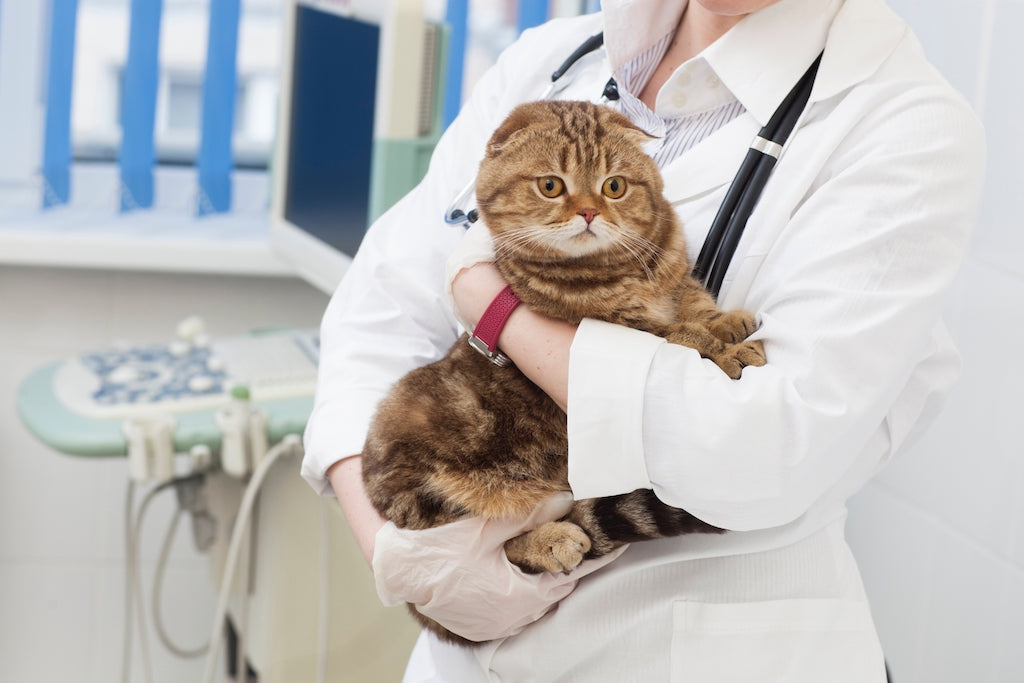
If you realize your cat has accidentally swallowed or eaten a foreign object, you might be unsure whether to wait and see or take them to the animal hospital immediately.
The appropriate response varies depending on what the cat ingested and what symptoms they have, so do not make an independent judgment; follow the instructions of a veterinarian.
Call your regular animal hospital and convey as much detail as possible about what was swallowed, how much, and what symptoms are present.
Even if you are not sure whether they have swallowed anything, please be sure to visit an animal hospital.
There are also emergency animal hospitals that offer nighttime services, so it is a good idea to look these up in case of an emergency.
Treatment methods for accidental ingestion
At the animal hospital, they will check where the foreign object is in the digestive tract using physical examinations, ultrasound, or X-rays.
Depending on the situation, they may monitor the cat with food that aids digestion, induce vomiting, or perform an endoscopic procedure to remove the object. If the object is in the duodenum or small intestine, it may require abdominal surgery to remove it.
Things you must NOT do
There are certain things you absolutely must not do if your cat has accidentally swallowed or eaten something.
First, do not try to induce vomiting yourself. Do not pat them on the back, and do not hold them upside down or shake them.
Also, if you see the end of a string or thread protruding from their mouth or anus, do not force it out by pulling.
While I understand the urge to remove the object quickly, doing so risks damaging the mouth, esophagus, or digestive tract. This will only worsen the condition, so please be sure to follow the instructions of your veterinarian.
How to Prevent Accidental Ingestion/Eating

First and foremost, do not leave items that could be dangerous if ingested out in the open.
Only play with string or feathered wand toys when you are there to supervise. When you finish playing, put them away somewhere your cat cannot reach.
Also, when choosing toys, pick those that are sturdy and too large to swallow. Replace them immediately if they become broken or frayed.
Many cases involve cats raiding trash cans to eat foreign objects. Choose trash cans with lids and consider installing gates to keep them out of the kitchen.
Check for signs of stress
Lack of exercise and stress can be causes of accidental ingestion. Review your cat's environment, checking if equipment like cat towers and scratchers are sufficient, if they get along with other cats in the home, or if their playtime has decreased.
Some cats even feel stress if their litter box is dirty.
Utilize a crate when leaving them alone
Accidental ingestion often happens when the owner isn't looking.
The iron rule is to store items that could be dangerous to your cat out of reach, but many cats are clever enough to open drawers...
It is necessary to keep an eye on them normally, and perhaps use a crate when they are left home alone.
Use a bell on their collar to track their location
It is important to ensure items easily swallowed or eaten are not left out or accessible when your cat is nearby.
There are cases where a cat swallows plastic string while you are bundling newspapers, eats dropped beans, or sneaks into a storage room to mischief when you aren't looking.
However, cats are like ninjas who walk without making a sound. To track your cat's location, I recommend attaching a "bell" to their collar. The sound of the bell helps you realize when your cat is approaching or if they have become trapped somewhere.
Also, cats are creatures that hide when they are unwell. To avoid finding them collapsed somewhere out of your sight, being able to locate them provides peace of mind.
| 【Related Products】 |
|
【Related Articles】 |
Conclusion
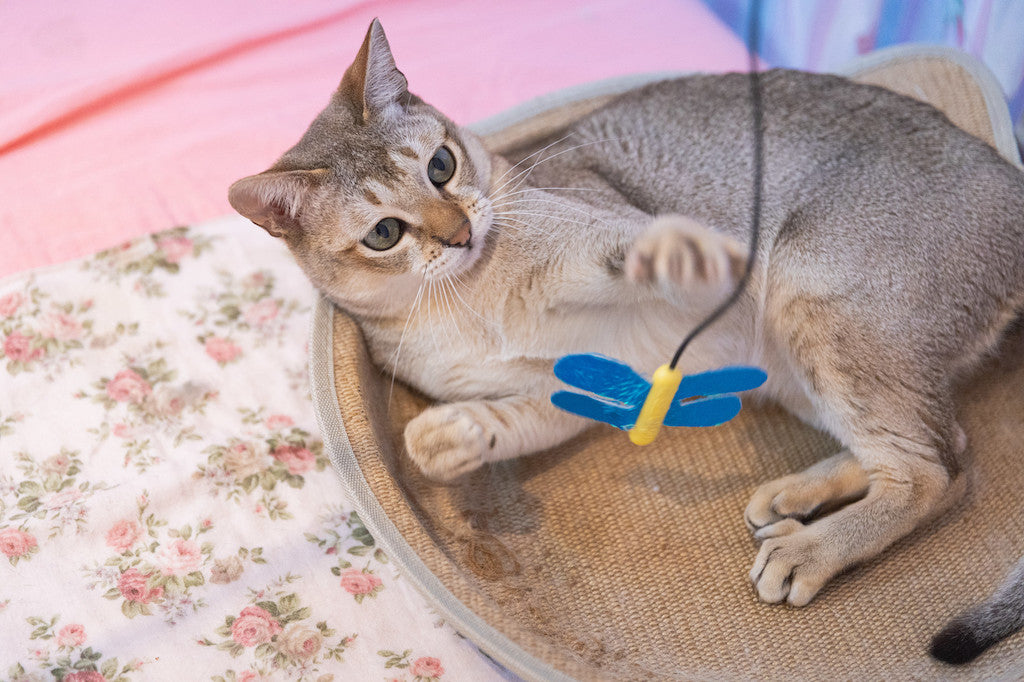
Even items that are perfectly common for owners can pose a risk of accidental ingestion or eating for cats.
You should be especially careful with "string-like objects" and "sharp objects." These can cause bowel obstructions or gastrointestinal perforations, which in some cases require emergency abdominal surgery. In the worst-case scenario, it can lead to death.
What an owner can do is know what items cats are prone to swallowing and prevent them from having access to them.
To catch accidental ingestion early, it is also important to observe your cat's condition daily. If you think something seems "off" or "different than usual," suspect accidental ingestion and consult a veterinarian.
Keep small items tidied away and keep the kitchen area clean. Creating an environment where you can live comfortably as an owner also leads to preventing your cat from accidentally swallowing or eating something.
Author Profile












Leave a comment