

Kittens are super cute. But getting scratched by their claws is pretty painful...
Many owners may wonder when they should start trimming their kitten's claws, or how to do it.
In this article, we’ll explain how to safely trim a kitten’s tiny claws. We will also introduce in detail the precautions to take when trimming them and some tips for ensuring your kitten doesn’t hate the process.
When is it okay to start trimming a kitten's claws?

A cat's claws are very sharp and are incredibly useful for catching prey or climbing trees. They are designed to extend only when needed and remain retracted within the toes at other times.
However, because a kitten's "ligaments" for retracting their claws are underdeveloped, their claws are always out. Many owners likely find themselves covered in fresh scratches when playing with them.
Since it’s dangerous for both the kitten and the owner, you should start trimming their claws once they are over one month old, when their claws have become firm. This is usually around the time they start toddling.
Getting them used to claw trimming from this age will make it less likely they will dislike it when they grow up.
If you've adopted a rescue cat or brought home a kitten from a pet shop, they are likely already over a month old. In that case, start trimming their claws as soon as they have become accustomed to their new environment and to you.
How to trim a kitten's claws

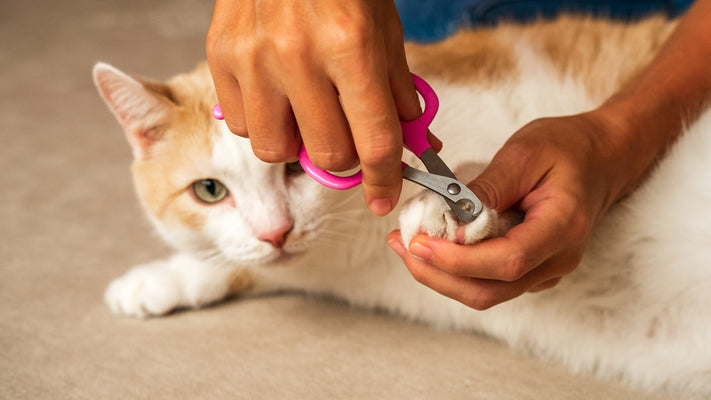
Your first time trimming their claws can be nerve-wracking, but it’s important to stay relaxed. Human nail clippers can sometimes cause the claws to split, so be sure to prepare clippers specifically for cats.
First, relax
To help your kitten stay relaxed, hold them in a comfortable position. Make sure to keep the clippers hidden for now.
Gently hold their paw and use your thumb to lightly press on the pad to give it a massage. Check to see if the claw pops out. If they have trouble extending or retracting their claws, try practicing by pressing the pad a few times.
Just "clip the tips"
Support your kitten's body so they don’t move, and clip off about 1.5mm of the whitish tip of the claw. The idea is to "just clip the tip"—only the sharp part.
If they seem to dislike it, don't force it and stop there. If they seem okay, try trimming the other claws.
Frequency of trimming a kitten's claws

Kitten claws should be trimmed about once every week to ten days.
Kitten claws are thin and sharp, and they can’t retract them well. While playing energetically, they can sometimes snag their claws on curtains or carpets and get injured.
Also, kittens' claws grow very quickly. It's recommended to check their claws during your regular bonding time and trim them if the tips feel sharp.
Tips for trimming a kitten's claws

Cats dislike having their bodies restrained or their paws touched.
If you are in a rush and force them to hold still, they will develop a negative association with claw trimming.
Keep these simple tips in mind to ensure a smooth and safe experience.
Tip 1: Hold them from behind
Holding your kitten from behind seems to make them feel more secure. Speak to them gently and pet them until they settle down.
Tip 2: Touch them gently
Cats don't like having their paws touched. Don't grip their paw tightly; gently press the pad to extend the claw. If they resist, stop immediately rather than forcing them.
Tip 3: Finish quickly
If you spend too much time on it, the kitten will get bored and increasingly anxious. The key is to finish quickly. If you're not used to it, don't try to do it all at once—doing one claw per day is perfectly fine.
Tip 4: Make a clean cut in one go
If you are overly cautious and try to chip away at it little by little, it will take too much time. You should aim to clip the claw cleanly in one go.
Tip 5: Don't forget the reward
Once you've successfully trimmed their claws, shower them with praise and give them a treat. Claw trimming is a necessity throughout their life, so be patient and persistent to help them get used to it.
Precautions for trimming a kitten's claws

There are a few things to be careful about when trimming a kitten's claws.
Be careful not to cut too short
If you look closely at a cat's claw, there is a translucent pink area that extends from the base to about halfway up. This part is called the "quick," and it contains blood vessels and nerves.
If you cut into the quick, it will bleed and cause them significant pain. Be very careful not to cut too short. You may need to have two people work together or wrap the kitten in a bath towel to keep them from moving.
Go to the vet if they bleed
If they start bleeding, stop the bleeding immediately using clean gauze or similar material.
If you have a styptic powder for pets, you should use it, but most owners won't have one on hand. Apply pressure to stop the bleeding and head to the animal hospital immediately.
Don't forget any claws
Cats have 10 claws on their front paws and 8 on their back paws. Remember that there is also a claw located slightly higher up on the front paw—the equivalent of a human thumb—so be careful not to miss it.
Recommended claw clippers for kittens

Many owners want to trim their kitten's claws but aren't sure how far they can cut.
If you aren't used to trimming cat claws, guillotine-style clippers or human nail clippers are not recommended. It is difficult to tell how far you can cut, which often leads to cutting into the quick.
For trimming a kitten's claws, scissor-type or nipper-type clippers are recommended.
Cat claw nippers designed for "tip clipping"
If you want to trim your cat's claws without them hating it, we recommend using clippers that allow you to "finish quickly" and "cut cleanly in one go."
SUWADA cat claw nippers make it easy to aim and cut cleanly with very little force, making them safe even for beginners. They don't make a clicking sound or cause jarring impact, so they are less likely to scare your cat.
They are very easy to grip and spring-loaded to make cutting effortless, so you can finish before your cat gets bored. Some say their cats are perfectly fine as long as they use SUWADA.
|
[Related Products] |
|
[Related Articles] [Home Claw Trimming] Start your nail care routine with non-scary cat claw clippers |
Summary
Trimming a kitten's tiny claws can be a bit nerve-wracking.
However, because kittens' claws grow at a fast pace, regular trimming is necessary. To avoid cutting into the quick, make sure to only trim the whitish tip.
The key is to hold them from behind and touch them gently. Then, finish the cut cleanly in one quick motion. Of course, don't forget the reward. Do this about once every week to ten days.
To prevent injuries to both your kitten and yourself, start trimming their claws once they reach one month of age.
|
[Related Articles] |









Leave a comment