

If you live with a cat, you'll notice that they vomit quite often.
One moment, they're happily eating their cat food, and the next, they're distressingly throwing it back up. Or you might come home to find vomit on the sofa.
While we hear that "cats often vomit," why do they regurgitate their cat food? Let's explore the reasons why cats throw up their food and what measures can be taken to prevent it.
What is "regurgitation" in cats?
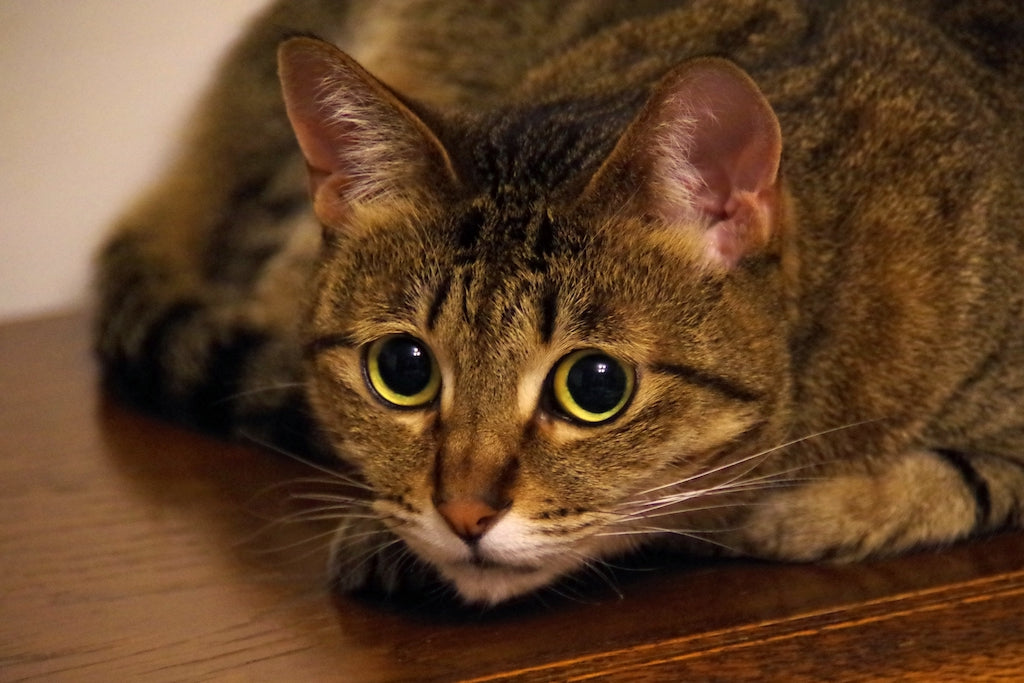
Cats do vomit frequently. However, it's concerning to see them struggling and making retching sounds.
What's particularly common is "regurgitation" during or immediately after eating. Sometimes, they throw up dry food that is mostly undigested.
In these cases, the food accumulates in the esophagus and hasn't reached the stomach, so it's regurgitated undigested. Regurgitation in cats isn't always pathological; it seems to be a physiological phenomenon for them.
Causes of regurgitation in cats
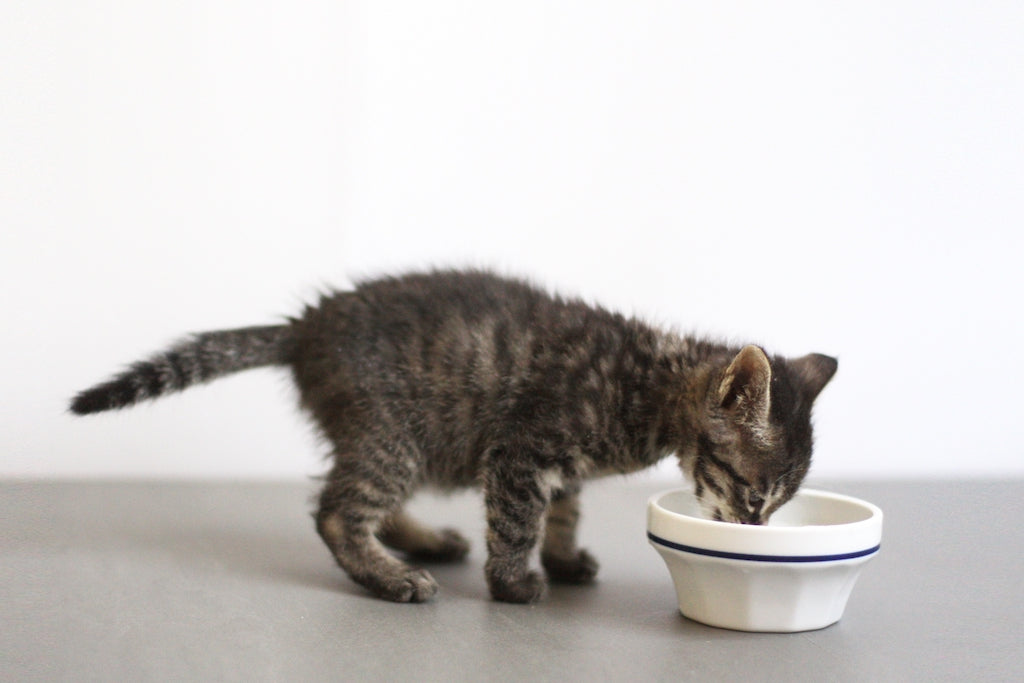
There are reasons why cats regurgitate their food. It's related to their habits and body structure, which I will explain in detail.
Swallowing prey whole
Cats are carnivores that originally lived by hunting. When they catch small animals like mice or birds, they mostly swallow them whole. Their teeth structure is also typical of a carnivore, specialized for tearing meat and swallowing it.
Cats have a habit of "swallowing whole" to prevent other animals from stealing their prey, and "eating quickly" before being attacked by other animals.
Eating this way would certainly lead to regurgitation.
Food tends to accumulate in the esophagus
Food tends to accumulate in a cat's esophagus because a cat's esophagus runs straight from the mouth to the stomach, and it takes time for food to reach the stomach.
Humans are bipedal, so food entering the mouth passes through the esophagus and quickly reaches the stomach. However, cats are quadrupeds, so their esophagus is parallel to the ground. As a result, food can take a long time to reach the stomach and tends to accumulate in the esophagus.
Furthermore, a cat's stomach isn't very large. It's said to be small to allow for agile movement. That's why they regurgitate when they swallow a lot or swallow all at once.
Measures to prevent cat regurgitation
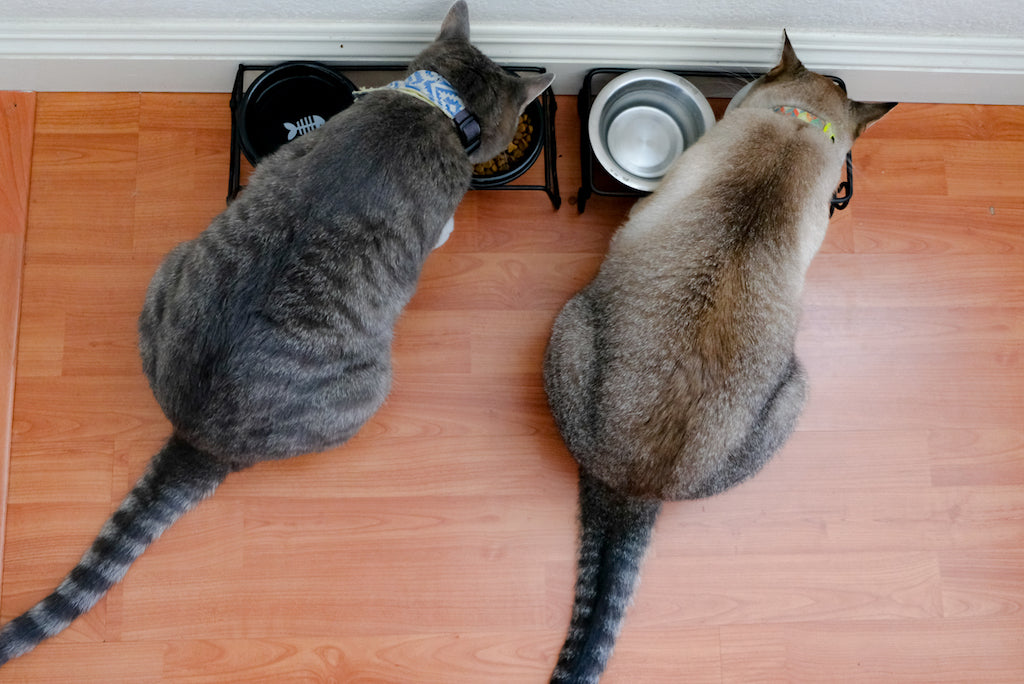
The causes of regurgitation in cats are their habit of "swallowing whole" and "eating quickly," and the "structure of the esophagus" where food tends to accumulate.
Let's consider measures to prevent cat regurgitation by focusing on how cats eat and the structure of their esophagus.
Increase meal frequency
If there's too much time between meals, your cat will "eat too fast" due to hunger.
Eating too quickly can lead to regurgitation, so try to alleviate their hunger by reducing the amount per meal and increasing the frequency, or by giving them snacks. Using an automatic feeder when you're away is also recommended.
Separate dining areas for cohabiting cats
In multi-cat households, competition with other cats can sometimes lead to "fast eating." Address this by separating their feeding areas or using different rooms.
Change cat food
While cats don't have a habit of chewing thoroughly, food with larger kibble can prevent regurgitation by making it harder for them to "swallow whole." Conversely, if the kibble is too large and causes regurgitation, try switching to smaller kibble to see how it goes.
Also, "regurgitation-reducing food" that quickly breaks down in the stomach is available commercially.
|
【関連記事はこちら】 |
Use a tall food bowl
When I spoke to cat owners concerned about their cats' regurgitation, they said that "using a tall food bowl" or "using a food bowl stand" was the most effective solution.
As mentioned earlier, food tends to accumulate in a cat's esophagus. So, when they eat in a downward-facing posture, their esophagus is lower than their stomach, making them more prone to regurgitation. Especially if a cat eats ravenously, food can flow back up.
However, using a tall food bowl with legs means they don't have to lower their head, which helps prevent regurgitation. Similarly, using a food bowl stand is also effective.
What to watch out for when a cat vomits
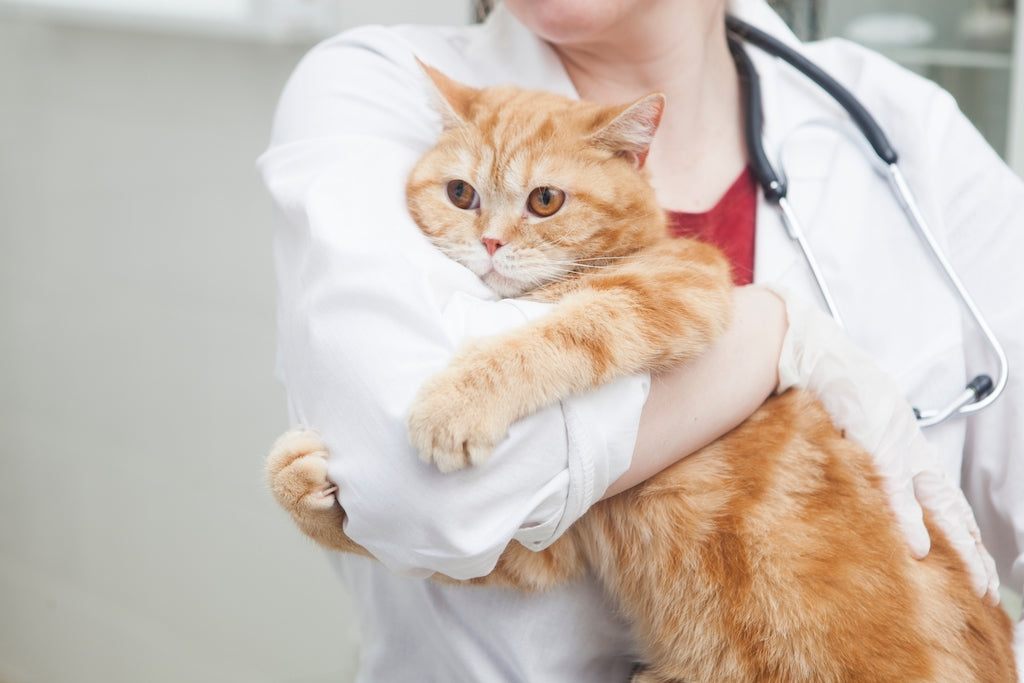
Cats vomit even when they are healthy. For example, it is well known that they swallow loose hair during grooming and then vomit up the hairballs that accumulate in their stomachs.
Also, if they go too long without eating, they may vomit yellow bile or stomach acid. They might also vomit if their food is suddenly changed. If they seem otherwise fine, there's no problem.
However, even if they seem distressed, do not rub their back. There is a risk of aspiration, so observe them closely. Furthermore, since vomiting can be caused by stomach or intestinal problems, refrain from giving them water or food immediately after they vomit.
When to visit the vet!
Vomiting can also be caused by illness. It's very important to observe what was vomited and the cat's condition. In the following cases, seek veterinary attention immediately:
● Vomiting clear liquid or white foam
Cats may vomit stomach acid if they are too hungry. If they can eat normally afterwards, there's no problem, but if they vomit repeatedly or daily, it could be a sign of poisoning or a digestive system disorder.
● Vomit mixed with blood
This could indicate an irritated esophagus or bleeding in the mouth. Blood can also be present if the cat has roundworm or has swallowed a foreign object, so check the contents of the vomit.
● Vomiting brownish material
This could be a sign of bleeding due to ulcers or tumors. Seek veterinary attention immediately.
● Also experiencing diarrhea, fever, or seizures
These could be symptoms of poisoning from food, plants, or chemicals.
● Difficulty vomiting, reduced food intake
If a foreign object is stuck in the esophagus, the cat may want to vomit but struggle to do so. Also, if only drooling is observed, it could be a hairball.
Summary
The reasons why cats regurgitate their cat food are their habit of "swallowing whole" and "eating quickly", and the "structure of the esophagus" where food tends to accumulate. While regurgitation is a physiological phenomenon and not necessarily problematic, it's hard to ignore a cat in distress.
"Reducing the amount of food per meal and increasing frequency," "separating feeding areas for cohabiting cats," and "switching to food that is difficult to swallow whole or breaks down easily in the stomach" can help prevent regurgitation caused by fast eating or swallowing whole.
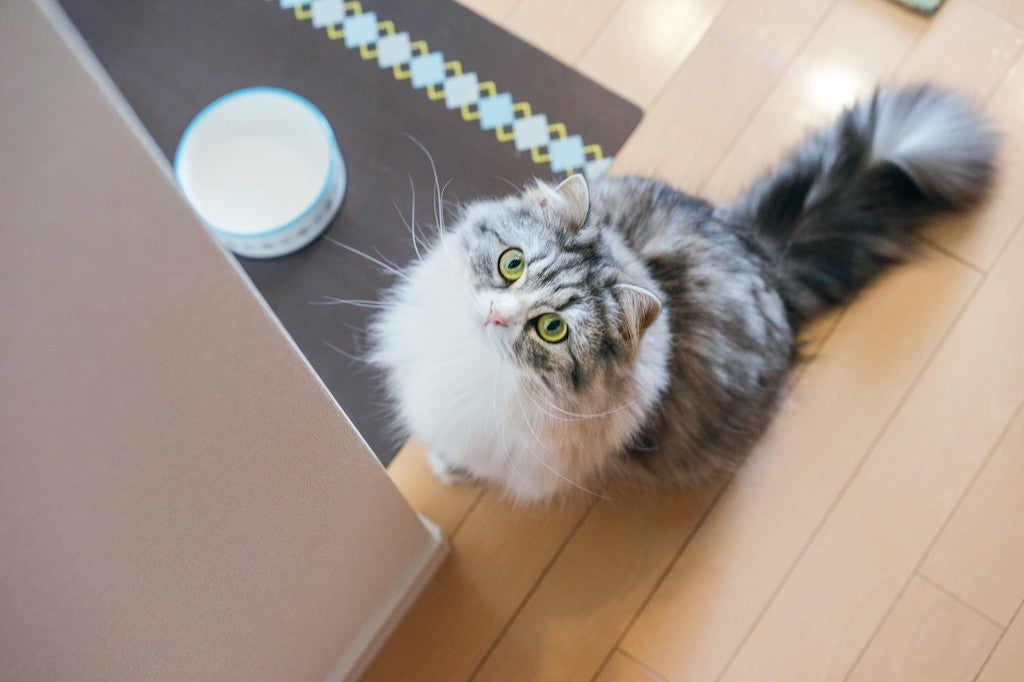
A recommended and easy measure to prevent regurgitation is "using a tall food bowl". This allows them to eat without lowering their head, preventing food from accumulating in the esophagus. Many cat owners have found this effective, so please give it a try.

![[Written by a Veterinarian] Why Are Cats Picky Eaters? A Thorough Explanation of Causes, Solutions, and Food Selection](http://www.poponeko.jp/cdn/shop/articles/shutterstock_2600037641_c61ac8f4-dd94-4d1e-9cec-6416a721a681.jpg?height=400&v=1756370137)
![[Written by a Veterinarian] What is Therapeutic Cat Food? Explaining How to Choose and Feed It](http://www.poponeko.jp/cdn/shop/articles/shutterstock_2146545975.jpg?height=400&v=1757055124)
![[Written by a Veterinarian] Celebrating Your Cat's Birthday! Choosing Safe "Cakes" and "Special Meals" and Things to Watch Out For](http://www.poponeko.jp/cdn/shop/articles/shutterstock_1968241969_aaed0797-0d45-43de-aed0-7c10696c4ce5.jpg?height=400&v=1784032801)
![[Set Product] Leaf Ribbon & Cat Collar "Champ de Fleurs" Pink](http://www.poponeko.jp/cdn/shop/files/DSC00100_cf7eae7a-b352-4d9f-ba35-9c34a715038e.jpg?v=1780663183&width=600 "[Set Product] Leaf Ribbon & Cat Collar \"Champ de Fleurs\" Pink")
![[Set] Leaf Ribbon & Scrunchie Cat Collar, Tartan Check, Trench Beige](http://www.poponeko.jp/cdn/shop/files/2606_00007.jpg?v=1785759845&width=600 "[Set] Leaf Ribbon & Scrunchie Cat Collar, Tartan Check, Trench Beige")
![[Set Product] Leaf Ribbon & Scrunchie Cat Collar - Tartan Check Black Watch](http://www.poponeko.jp/cdn/shop/files/2606_00011.jpg?v=1785759845&width=600 "[Set Product] Leaf Ribbon & Scrunchie Cat Collar - Tartan Check Black Watch")
![[Set] Leaf Ribbon & Scrunchie Cat Collar: Sunny Mimosa](http://www.poponeko.jp/cdn/shop/files/2608_00412_15b3d5d4-db6f-4704-a2bc-cfcf4a47d898.jpg?v=1790033858&width=600 "[Set] Leaf Ribbon & Scrunchie Cat Collar: Sunny Mimosa")
![[Set] Leaf Ribbon moda Sage Wood & Cat Collar Cotton Linen Green](http://www.poponeko.jp/cdn/shop/files/260618_00171.jpg?v=1784451813&width=600 "[Set] Leaf Ribbon moda Sage Wood & Cat Collar Cotton Linen Green")

とてもわかりやすくて参考になりました。
いろいろと勉強になりました。
わかりやすい解説で有難うございました。
吐き戻しの原因、大変勉強になりました。
勉強になりました!
猫リテラシーがレベルアップしました⤴️
Leave a comment