

Pickiness, playful eating, regurgitation... mealtime worries are an inevitable part of living with a cat. Many owners, in particular, seem to be unsure about the correct amount and method of feeding cat food.
To avoid wondering, "Should I give them as much as they want?" or "Is this really enough?", it's important to understand how many calories your cat needs per day.
The daily caloric needs and appropriate food quantity can be calculated with a simple formula. For your cat's health, please remember this cat food calorie calculation formula.
Formula for daily caloric needs
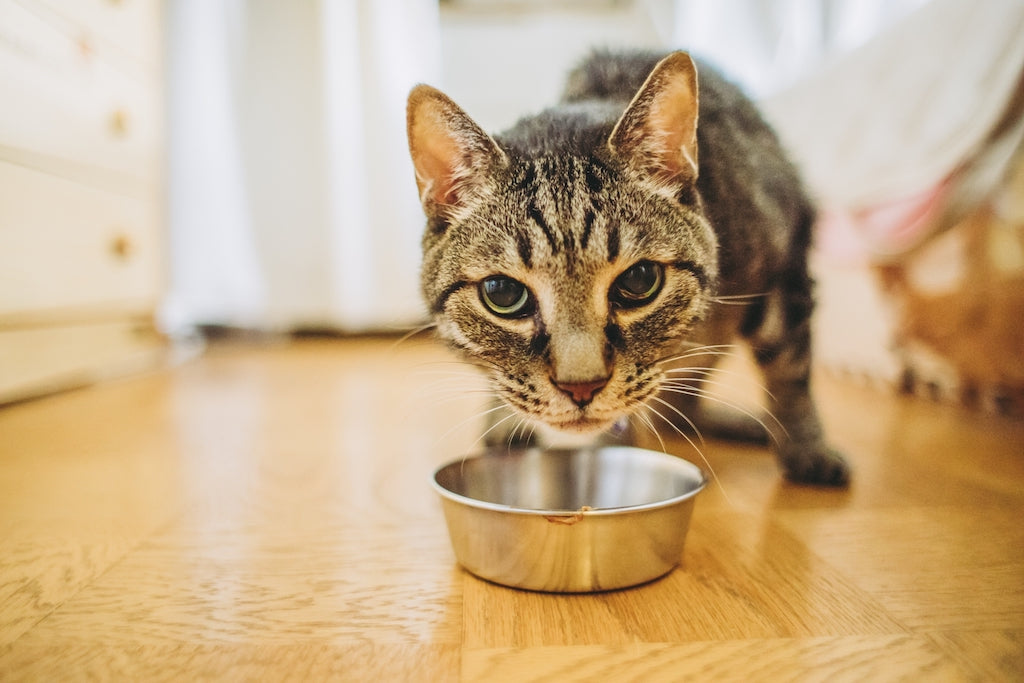
The appropriate amount of cat food to feed daily varies depending on your cat's age, weight, and living environment. Of course, the right amount of food also changes depending on the type of cat food you choose.
First, you need to accurately determine your cat's daily caloric needs.
Let's check the calorie calculation formula for the daily caloric needs at each life stage: kittenhood, adulthood, and senior years.
Calorie calculation formula for kittens (up to 1 year old)
Rapidly growing kittens require more calories than adult cats.
Kittens are fed breast milk or kitten formula until about 30 days old, but once their teeth start to emerge, they are given weaning food. From around 2 months old, they are gradually introduced to cat food.
The daily caloric needs for kittens at each month of age can be determined by the following formula. Since the amount per meal is not very large, divide the daily portion into 3-4 meals. Observe your cat carefully and adjust the meal amount while monitoring their weight.
|
Age |
Calorie Calculation Formula |
|
2 months |
210 kcal × weight (kg) |
|
3 months |
200 kcal × weight (kg) |
|
4 months |
175 kcal × weight (kg) |
|
6 months |
135 kcal × weight (kg) |
|
9 months |
100 kcal × weight (kg) |
Calorie calculation formula for adult cats (1-7 years old)
From around 6 months of age, when the cat reaches about 3 kg in weight, gradually switch to adult cat food.
The calories required for adult cats can generally be determined by the formula: "80 kcal × weight (kg)". Some cats are more active, some are less active, and some gain weight easily after spaying/neutering, so adjust according to your cat's condition.
Also, pregnant and lactating cats need much more nutrition than usual. Provide special food or increase their food intake after consulting with a veterinarian.
|
Age |
Calorie Calculation Formula |
|
1 year and older |
80 kcal × weight (kg) |
|
Highly active cats |
85 kcal × weight (kg) |
|
Less active cats |
70 kcal × weight (kg) |
Calorie calculation formula for senior cats (7 years and older)
As cats reach senior age, their activity levels decrease, and thus their daily caloric needs also decrease.
The calories required for senior cats can be determined by "60 kcal × weight (kg)". Some cats may maintain their appetite even with reduced activity, while others may lose their appetite and eat less.
It is important to adjust their food intake or choose senior-specific food while observing your cat's condition.
|
Age |
Calorie Calculation Formula |
|
7 years and older |
60 kcal × weight (kg) |
|
Less active cats |
40 kcal × weight (kg) |
How to weigh your cat
It is important to know your beloved cat's weight on a regular basis. While you can have them weighed at the vet, try weighing them at home too.
For kittens weighing less than 1 kg, you can use a kitchen scale with a basket placed on it.
For adult cats, simply pick up your cat, weigh yourself with them, and then subtract your own weight. Aim to check their weight once a week and make a note of it.
Proper way to feed cat food
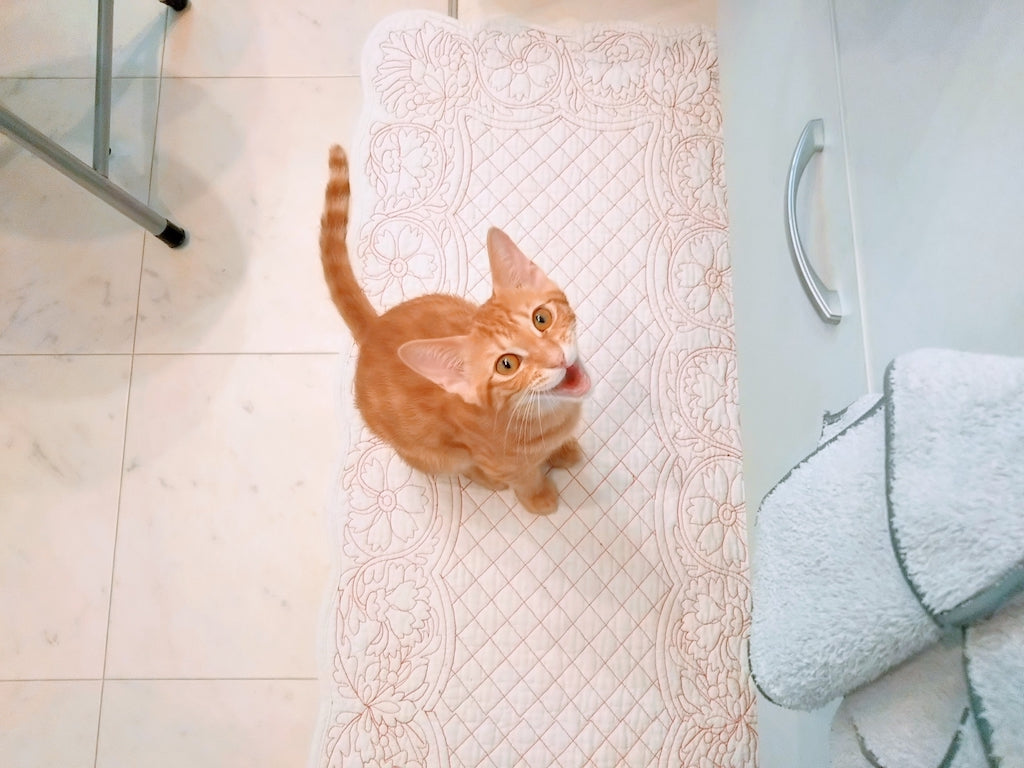
Your cat's primary diet should consist of dry food labeled as "complete and balanced nutrition."
Complete and balanced nutrition refers to food that provides all the necessary nutrients for a cat's health, meaning a cat can live on it alone with fresh water.
It is best to feed your cat at fixed times each day.
How to feed cat food
Once you've determined the daily caloric needs using the formula above, calculate the required amount based on the calories listed on the cat food package.
Daily food intake
= Daily caloric needs ÷ Calories per ○○g of food × ○○g
For example, let's say there's a cat food with 375 kcal per 100g.
An adult cat weighing 3kg needs 240 kcal, so the daily food intake would be 240 kcal ÷ 375 kcal × 100g = 64g. This amount should be divided into 2-3 meals.
What about combining with wet food?
Wet food can also be either "complete and balanced nutrition" or not.
When topping complete and balanced dry food with wet food, choose products labeled as "general food," "complementary food," or "side dish" to avoid disrupting the nutritional balance.
Wet food has a higher moisture content, so it's lower in calories. However, to prevent obesity, reduce the amount of dry food by the same caloric value as the wet food added.
How to give treats
Cat treats should ideally be within 20% of the total daily caloric intake. For example, a 3kg cat needs 240 kcal per day. The treat allowance would be 20%, which is 48 kcal.
Free-feeding is not recommended
Cats can be picky eaters or graze throughout the day. However, leaving cat food out all the time for "free-feeding" is not recommended.
Even dry food loses flavor when oxidized, and leaving food out after it has been touched can lead to bacterial growth. Another disadvantage is that it becomes difficult to manage their daily caloric intake.
Even for cats that eat slowly or are finicky eaters, set meal times and remove the dish after about 30 minutes to an hour. When you're away from home, consider using an automatic feeder or interactive food puzzle toys.
Beware of overeating and obesity!
Some cats, even after finishing their meal, still crave more food. Giving them treats and food as they desire can lead to obesity.
Obesity is not only a source of diseases such as diabetes and heart disease but also puts a strain on their joints. Be careful not to exceed their daily caloric needs.
BCS (Body Condition Score)
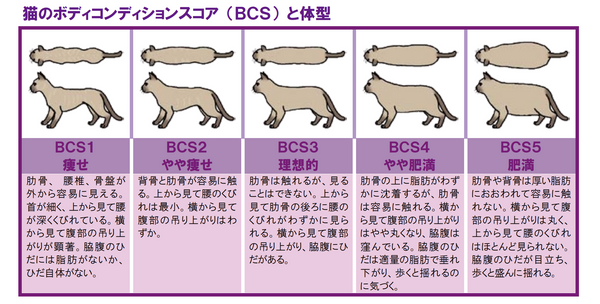
BCS (Body Condition Score) is a method of assessing body shape based on appearance and fat accumulation, evaluated on a 5-point or 9-point scale. BCS 3 is considered standard, so use it as a reference when checking your cat's body shape.
| Quote: From the Ministry of the Environment's "Pet Food Guidelines for Owners" |
Rapid dieting is dangerous
Even if your cat is a bit chubby, rapid dieting or allowing them to be hungry is dangerous. Aim for a gradual weight loss of 1-3% per week.
Try various approaches to dieting, such as giving diet cat food or combining it with wet food. If serious dieting is necessary, always consult a veterinarian.
Summary

The daily caloric needs for cats vary depending on their age and weight. It also changes based on their lifestyle, such as whether they are highly active or not.
Diet management is essential for your cat to live a healthy and long life. Calorie counting is also necessary to prevent obesity. However, what's important is finding what works best for your individual cat.
Work together with your cat and try different types and amounts of cat food, as well as various feeding methods, to find what suits them best.
Author Profile


![[Written by a Veterinarian] Why Are Cats Picky Eaters? A Thorough Explanation of Causes, Solutions, and Food Selection](http://www.poponeko.jp/cdn/shop/articles/shutterstock_2600037641_c61ac8f4-dd94-4d1e-9cec-6416a721a681.jpg?height=400&v=1756370137)
![[Written by a Veterinarian] What is Therapeutic Cat Food? Explaining How to Choose and Feed It](http://www.poponeko.jp/cdn/shop/articles/shutterstock_2146545975.jpg?height=400&v=1757055124)
![[Written by a Veterinarian] Celebrating Your Cat's Birthday! Choosing Safe "Cakes" and "Special Meals" and Things to Watch Out For](http://www.poponeko.jp/cdn/shop/articles/shutterstock_1968241969_aaed0797-0d45-43de-aed0-7c10696c4ce5.jpg?height=400&v=1784032801)
![[Set Product] Leaf Ribbon Moda Floribunda & Cat Collar Cotton Ox Carrot](http://www.poponeko.jp/cdn/shop/files/260618_00157.jpg?v=1784451813&width=600 "[Set Product] Leaf Ribbon Moda Floribunda & Cat Collar Cotton Ox Carrot")
![[Set product] Leaf ribbon & cat collar, gingham check, mint green](http://www.poponeko.jp/cdn/shop/files/DSC00110_5e9f619b-1b6f-4cfa-9add-f4ea49a52821.jpg?v=1780663890&width=600 "[Set product] Leaf ribbon & cat collar, gingham check, mint green")
![[Set] Leaf Ribbon & Cat Collar - Champ de Fleurs (Grey)](http://www.poponeko.jp/cdn/shop/files/DSC00103_d587ccde-94a5-4f05-91f3-f4c88b18ab90.jpg?v=1780663183&width=600 "[Set] Leaf Ribbon & Cat Collar - Champ de Fleurs (Grey)")
![[Set Item] Leaf Ribbon & Scrunchie Cat Collar, Petit Fleur, Pink](http://www.poponeko.jp/cdn/shop/files/2608_00405.jpg?v=1789946167&width=600 "[Set Item] Leaf Ribbon & Scrunchie Cat Collar, Petit Fleur, Pink")
![[Set] Leaf Ribbon & Cat Collar - Champ de Fleurs, Raspberry](http://www.poponeko.jp/cdn/shop/files/DSC00099_6b51f9b4-93c7-4c58-b439-108715aa361f.jpg?v=1780663183&width=600 "[Set] Leaf Ribbon & Cat Collar - Champ de Fleurs, Raspberry")
![[Set Item] Leaf Ribbon & Cat Collar: Vidro - Akane](http://www.poponeko.jp/cdn/shop/files/2608_00401.jpg?v=1789826564&width=600 "[Set Item] Leaf Ribbon & Cat Collar: Vidro - Akane")

Leave a comment