

If you're considering your cat's safety and health, "keeping them strictly indoors" is essential.
Allowing them to go outside freely poses a risk of accidents and injuries. There's also a risk of them fighting with other cats or contracting infectious diseases.
However, cats are creatures of strong curiosity. They are masters of escape, finding the slightest opportunity to slip out.
To protect your cat from danger, you first need to implement thorough escape prevention measures inside your home. In this article, we'll delve into "cat escape prevention measures," detailing them by escape route: entrances, windows, balconies, and screen doors.
Reasons and Causes for Cat Escapes

For strictly indoor cats, their territory is "inside the house." Patrolling their territory for any changes is part of their daily routine, and they generally dislike leaving it.
So, why do they escape then?
The Risk of Cat Escapes Is Always Present
The most common reason for cats escaping is "curiosity."
It seems that often, a window or front door is accidentally left open, and they just decide to go outside. They might also see birds, insects, or stray cats outside a window and impulsively run out.
Additionally, cats may escape when they are in heat and seeking a mate, if they have compatibility issues with a housemate cat, or if furniture has been rearranged. They might also bolt outside in surprise due to loud noises or earthquakes.
If you live with a cat, it's probably best to assume that "the risk of escape is always present."
Related Articles

Cat Escape Routes

To effectively implement cat escape prevention measures, it's important to know the dangerous escape routes. The most common are the four locations: front doors, windows, balconies, and screen doors.
Escaping through the front door when it's open
The most common escape route seems to be slipping out the front door the moment it opens. Be especially careful when you leave or return home, or when you have a delivery or guests. Your cat might be waiting for an opportunity to go outside.
Escaping by jumping from windows or balconies
Sometimes, cats jump out of windows or off balconies when they spot something interesting. Some cats even open windows themselves...
Cats' bodies are flexible, so they can squeeze through even the smallest gaps. Check all openings in your home, such as bathroom or toilet windows.
Escaping by tearing through screen doors
Even if your windows have "screen doors," don't let your guard down. Cats' front paws are surprisingly dexterous. They can smoothly open screen doors and escape. You also need to anticipate that they might tear through the screen door with their sharp claws.
From spring to summer, windows are often open, making cat escapes more likely. This is also a cat's mating season, so extra caution is needed.
【By Location】Cat Escape Prevention Measures

Cats are hunters that move silently and instantly catch their prey. Precisely because of their high physical abilities, "escape prevention measures" are absolutely necessary.
The most important thing is to limit your cat's range of activity. Focusing on the four key areas that tend to be escape routes—"entrance," "windows," "balconies," and "screen doors"—we'll introduce specific escape prevention measures that owners can implement immediately.
Entrance Escape Prevention Measures

The entrance is the most common place for cats to escape. With owners coming and going, deliveries, and visitors, the door opens multiple times a day, so if you're not careful, your cat can slip out in an instant.
First, take the following basic precautions:
- Do not leave the front door open.
- Always check that your cat is not nearby when opening or closing the door.
- When expecting a delivery or guests, move your cat to another room beforehand.
- Install a barrier in the hallway in front of the entrance to prevent your cat from approaching.
Additionally, installing an escape prevention gate at the entrance is recommended.
For example, Nekokobo's "Nyanguard" is an escape prevention gate that can be installed using a tension rod system. Since it can be custom-made to fit perfectly, even the most agile cats cannot slip through.
Many cat owners also DIY their escape prevention gates.
- Use two baby gates from Nitori or Iris Ohyama, stacked one on top of the other.
- Combine 100-yen store wire mesh, tension rods, and zip ties for an affordable solution.
- Install slatted panels to create a double barrier.
Even in rental properties where you can't drill holes in walls, tension-mounted options can be used without worrying about restoration. Choose a product that matches the height and gap-free requirements, considering the size of your entrance and your cat's jumping ability.
Window Escape Prevention Measures

Cats love to sunbathe by the window and watch the outside world. However, windows are one of the dangerous escape routes, alongside the front door.
- When opening windows for ventilation, move your cat to another room or put them in a carrier.
- Do not leave the window open and unattended.
- Use secondary locks or auxiliary locks to prevent your cat from opening the window themselves.
- Regularly check that windows in unused rooms are always locked.
- Install escape prevention grates or pet fences on windows.
In addition to these measures, pay attention to small windows that you might not normally think about, such as those in bathrooms, toilets, and bedrooms. Always ensure they are locked.
Balcony Escape Prevention Measures

On balconies, not only is escape a concern, but there's also a danger of falling.
- When opening sliding doors or doors leading to the balcony, have your cat wait in another room.
- Be especially careful when hanging or retrieving laundry, and make a habit of closing the door immediately.
- Regularly check for gaps in the balcony railing and damage to the partition between your unit and the next.
Similar to window escape prevention, careful measures are required for balconies.
Also, when your cat is sunbathing on the balcony, it's reassuring to install balcony nets or fences that cover the area from ceiling to floor without gaps.
Screen Door Escape Prevention Measures

Even with screen doors on windows or balconies, don't let your guard down. Cats' front paws are very nimble, and they can smoothly open screen doors and escape. They can also tear through the screen door itself with their sharp claws.
- When opening windows for ventilation, always install a screen door lock (screen door stopper).
- Regularly check if the screen door is torn or has claw marks.
- Replace with tear-resistant material (pet-friendly screen mesh).
- Install an escape prevention gate on the window.
Taking these measures will provide peace of mind.
Searching for escape prevention gate ideas on social media, you'll find that, as with entrances, many owners DIY by combining 100-yen store wire mesh, tension rods, and zip ties.
Some owners install tension shelves vertically or stylishly utilize garden trellises, which can be very insightful.
Preparing for Cat Escapes: "Cat Collars" and "Microchips"

Cats may escape due to owner oversight, but it's also possible they might escape due to unforeseen circumstances.
One common reason for escape is "earthquakes." Many cats, startled by the shaking or emergency alarms, bolt outside. No matter how many precautions you take at entrances, windows, and balconies, it's difficult to completely eliminate the risk of escape. That's why preparation for "after an escape" is crucial.
To prepare for such an escape, a cat collar can be very helpful.
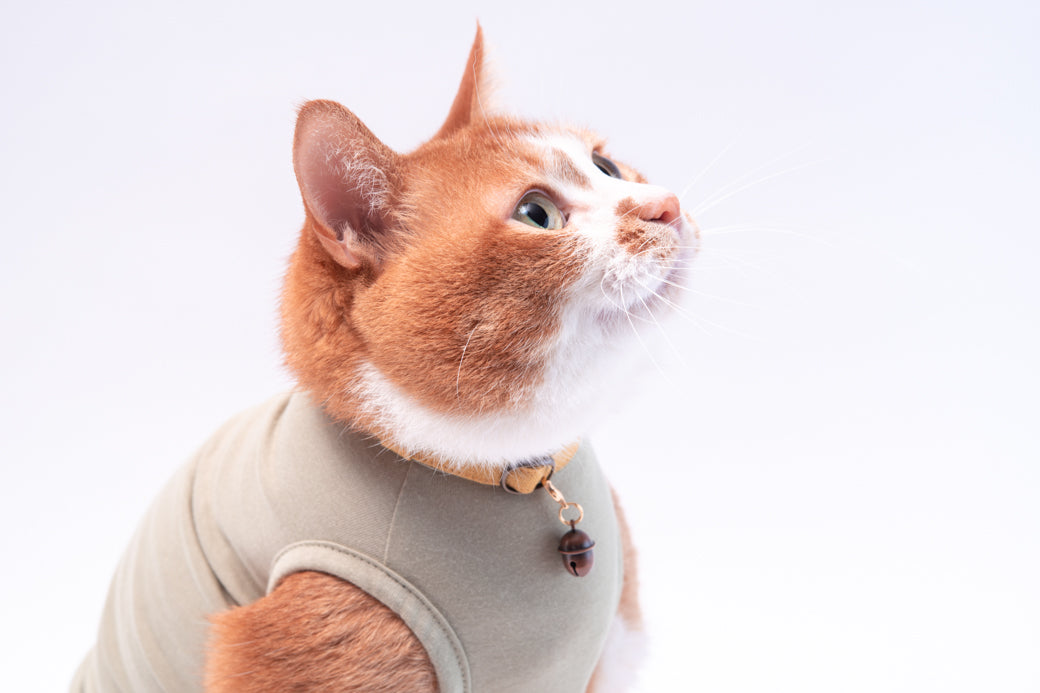
A cat collar is a sign that they are a "pet cat." If they are found and recognized as a pet, the chances of reunification increase significantly. Attaching a lost pet tag or name tag with the owner's contact information provides even more peace of mind.
Additionally, a cat collar has the advantage of making it easier to gather sightings.
While it might take some getting used to, wearing a cat collar regularly can also serve as an escape prevention measure.

▲ Attach a lost pet tag or name tag to your cat's collar!
Cat collars are designed to break away if force is applied. In case the collar comes off, we recommend also using a microchip.
Related Articles

Summary

While "keeping cats strictly indoors" is becoming the norm, some cats may feel that indoor life doesn't provide enough stimulation.
Cats generally dislike leaving their territory, but sometimes they may become interested in birds, insects, or stray cats outside the window and impulsively go out.
Few cats return immediately; many become too scared to come out from hiding or get lost.
Given the risks of traffic accidents and infections, cat escape prevention measures are essential.
The four particularly dangerous areas are the entrance, windows, balconies, and screen doors.
- Entrance: Implement escape prevention measures with escape prevention gates or baby gates.
- Windows: When opening, have your cat wait in another room, and add auxiliary locks or escape prevention grates.
- Balconies: Enclose them without gaps using nets or fences, and check for damage to partitions.
- Screen doors: Implement double measures with screen door locks and tear-resistant materials.
Combine measures appropriate for each location, and re-evaluate where in your home might become an escape route for your cat.
Also, regularly having your cat wear a collar can help prevent escapes. Choose a cat collar made of soft and light material, and gradually get your cat used to it to minimize stress.
Cats are very curious, so even the calmest cats are at risk of escaping. While making your indoor environment engaging for your cat, please review your escape prevention measures.
|
【Related Products】 |


![[Vet-supervised] Cat hates wearing a collar? Reasons why and how to get them used to it](http://www.poponeko.jp/cdn/shop/articles/a0fdc9ee82de7f01afb932f1e1e60236_da240718-be68-4e99-8a8c-64449f63d83e.jpg?height=400&v=1780975808)

![[Preservation Edition] Cat Evacuation and Disaster Preparedness Guide | How to Evacuate Together and a Checklist of Items You Need Now](http://www.poponeko.jp/cdn/shop/articles/shutterstock_2416909603_396ccf81-25ff-4b28-a40f-9b7ce9ae8797.jpg?height=400&v=1785383138)
![[Set] Leaf Ribbon & Scrunchie Cat Collar - Hannari Cherry Blossom Blue](http://www.poponeko.jp/cdn/shop/files/2608_00139.jpg?v=1789197917&width=600 "[Set] Leaf Ribbon & Scrunchie Cat Collar - Hannari Cherry Blossom Blue")
![[Set Item] Leaf Ribbon & Scrunchie Cat Collar - Petit Fleur - Mint](http://www.poponeko.jp/cdn/shop/files/2608_00417.jpg?v=1789946167&width=600 "[Set Item] Leaf Ribbon & Scrunchie Cat Collar - Petit Fleur - Mint")
![[Set] Leaf Ribbon & Scrunchie Cat Collar: Sunny Mimosa](http://www.poponeko.jp/cdn/shop/files/2608_00412_15b3d5d4-db6f-4704-a2bc-cfcf4a47d898.jpg?v=1790033858&width=600 "[Set] Leaf Ribbon & Scrunchie Cat Collar: Sunny Mimosa")
![[Slightly Damaged] Cat-Friendly Cat Warm Shirt, Border (Short Sleeve)](http://www.poponeko.jp/cdn/shop/products/DSC_7661.jpg?v=1675832922&width=600 "[Slightly Damaged] Cat-Friendly Cat Warm Shirt, Border (Short Sleeve)")
![[Set] Leaf Ribbon & Cat Collar - Gingham Check Orange](http://www.poponeko.jp/cdn/shop/files/DSC00109_9b2822dd-1b99-4744-982e-5a48c8c1f667.jpg?v=1780663891&width=600 "[Set] Leaf Ribbon & Cat Collar - Gingham Check Orange")
![[Set] Leaf Ribbon - Moda Old World Yuletide & Cat Collar - MUJI Cotton Plain Autumn Sky](http://www.poponeko.jp/cdn/shop/files/260618_00174.jpg?v=1784451812&width=600 "[Set] Leaf Ribbon - Moda Old World Yuletide & Cat Collar - MUJI Cotton Plain Autumn Sky")
Leave a comment