

"I tried to put a collar on my cat, and they panicked and thrashed about." "My cat hates collars, so I feel bad for them..."
Cat collars are something you want your cat to wear as a safety charm in case of an accidental escape or disaster. However, many owners worry because some cats show a strong negative reaction.
There are specific "reasons" unique to cats for why they dislike collars.
In this article, supervised by a veterinarian, we will explain in detail the reasons why cats dislike collars, how to deal with it, and how to choose a safe collar.
Is a collar even necessary for a cat?

For cat owners, the biggest worries are "escape" and "getting lost." No matter how careful you are with doors and windows, there is always a chance a cat might slip outside.
To prepare for such "just in case" scenarios, we recommend that even strictly indoor cats wear a collar on a daily basis.
- It lets people around know the cat has an owner if they escape.
- If you attach an ID tag, you can be contacted in an emergency.
- If you get separated during a disaster, the chances of reuniting significantly increase.
- It serves as a marker during a search.
- They are less likely to be targeted by animal abusers who prey on strays.
There are many benefits. For a cat, a collar is an important "amulet" that protects them when it matters most.
Why do they hate it? 5 reasons why cats find collars stressful

Of course, there are downsides to cat collars as well as benefits. The issue is that until they get used to it, a collar can be a source of stress.
Some cats dislike the collar so much that they try to scratch it off with their hind legs or panic. There is also the danger of them getting their jaw caught in the collar while trying to remove it.
There are five reasons why cats dislike collars or find them stressful.
1. Instinctive discomfort or fear
Cats in the wild survived by hunting. They possess supple, powerful bodies and honed senses. Therefore, they instinctively dislike having foreign objects attached to their bodies.
A cat wearing a collar for the first time may panic out of fear of the unknown.
2. Physical discomfort from the material (pain or itching)
Wearing collars made of hard materials like nylon, leather, or synthetic leather, or those with lace, can irritate the skin and cause pain or itching. In severe cases, this can lead to contact dermatitis.
3. Stress from the weight
For cats with slender necks, even a slight weight can be a significant burden. Depending on the material, the collar might be too heavy, causing stress. Be careful with collars that have excessive decorations or metal ID tags, as these are "in the way" for a cat.
4. Discomfort from sound
For cats, who have an exceptional sense of hearing said to be tens of thousands of times better than humans, the clinking of bells or metal parts can sound like a major "noise disturbance." If they really hate the collar, the bells or metal parts might be the cause.
5. Past bad memories
Past unpleasant experiences, such as wearing an Elizabethan collar (e-collar), may lead to a general dislike of anything around their neck.
[Important] Protect your cat! How to choose a safe collar

The most important thing when putting a collar on your cat is to choose a "safe collar."
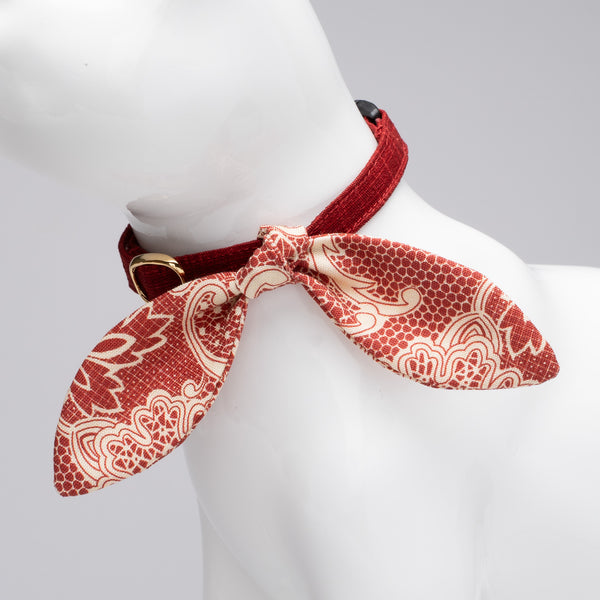
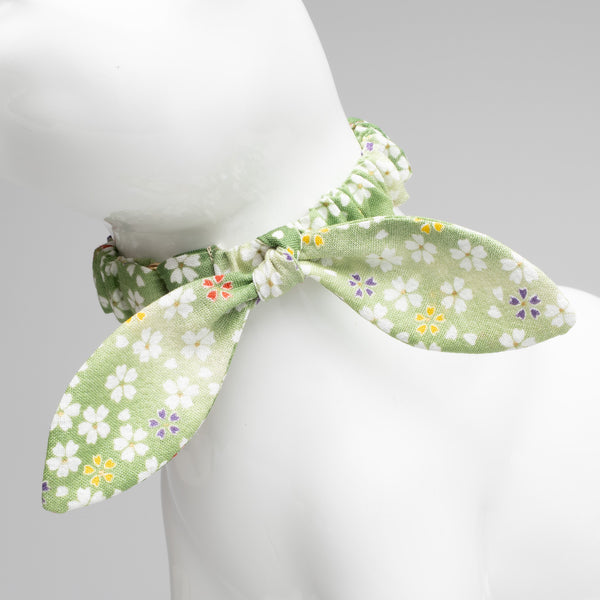
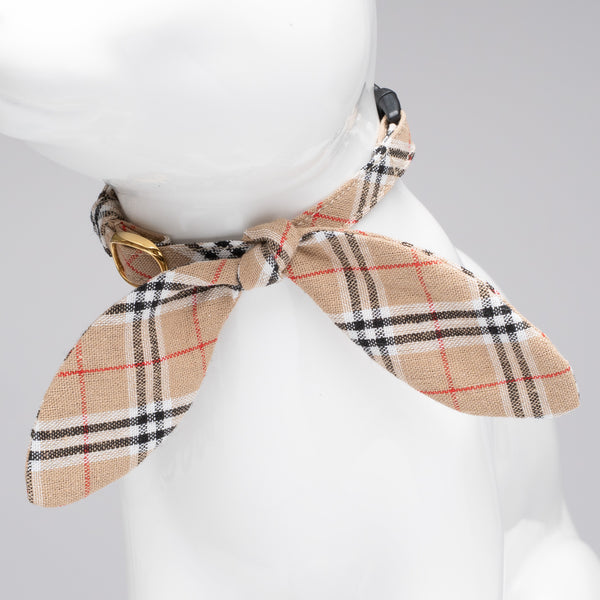
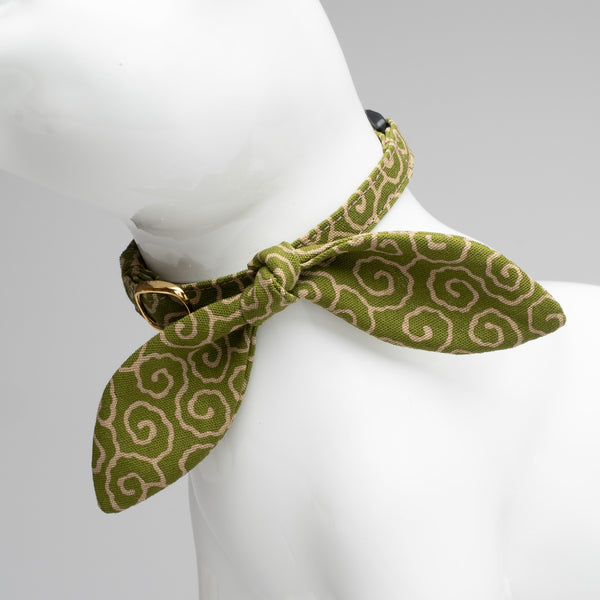
If you are putting a collar on your cat for the first time, make sure to choose a "cat-only" collar that is light, soft, and gentle on their skin and fur. Dog collars are too heavy and hard for cats and are unsuitable.
To minimize the burden on your cat, check the following 4 points.
Point 1: Choose a collar with safety features
A "safety adjuster (safety buckle)" is essential; it releases if a certain amount of force is applied, which is vital if the collar gets caught on curtain rails or furniture. This prevents worst-case scenarios like strangulation accidents.
Point 2: Choose light, soft materials
Light, soft materials like cotton or polyester that are gentle on the cat's skin and fur are recommended. Aim for something weighing 5g or less—the lighter, the better.
Point 3: Choose a simple design
Excessive decorations can cause unnecessary weight or cause the cat to become bothered and bite at them. Choose a design that is as simple as possible. Many cats also dislike bells, so try starting with a bell-free type.
Point 4: Sizing is also important
The appropriate size for a collar is one where you can fit about 2 to 3 of your fingers underneath. If it's too tight, it will cause sweating, which can lead to your cat disliking it and can negatively affect their skin and fur. Conversely, if it's too loose, it can be dangerous as it may get caught on things.
Don't rush! 3 steps to help them get used to a collar

When putting a collar on for the first time, the trick is to monitor your cat and help them get used to it little by little.
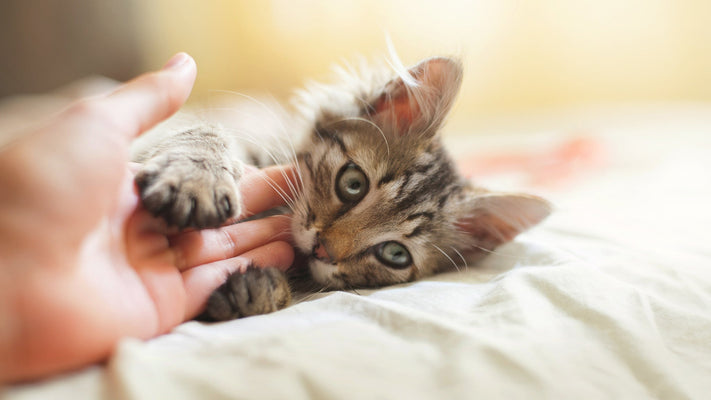
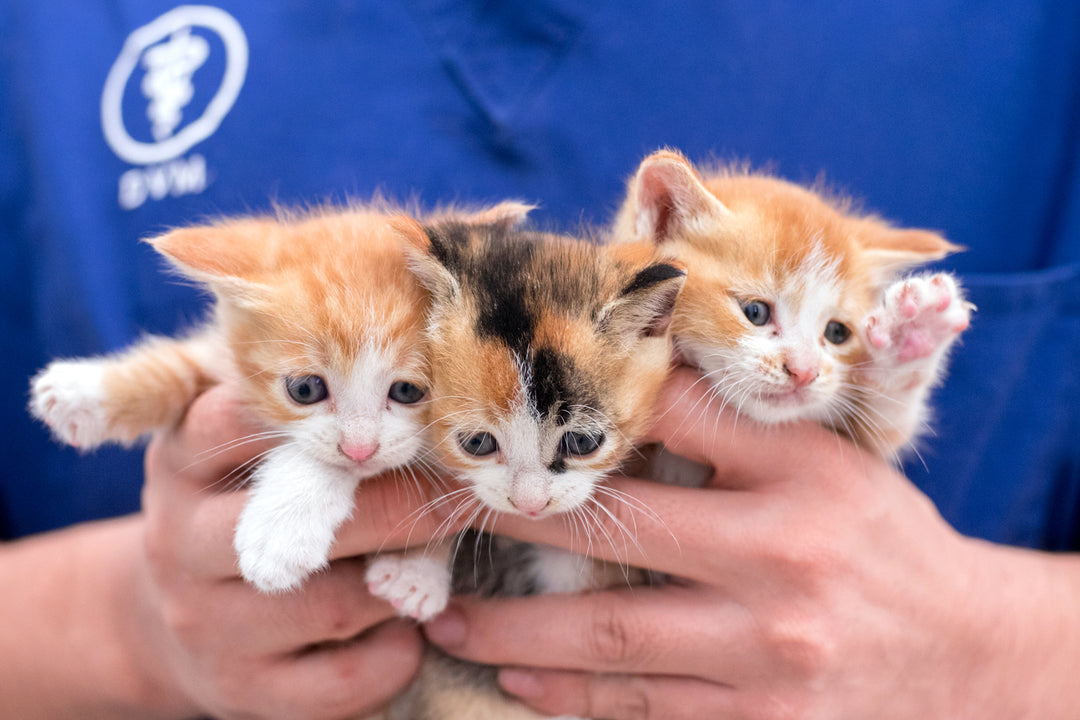
Kittens are highly adaptable and may get used to a collar in just one day. Try introducing it around 3 months of age, when their bodies are well-developed, so they can get accustomed to it.
However, most cats take 2 to 3 days to get used to a collar. Sensitive cats may even take 2 to 3 weeks, so be patient and don't rush the process.
Step 1: Start by "just looking" and "just sniffing"
Place the collar where the cat can see it so they become familiar with its presence. Encourage interest by letting them sniff it or using the collar like a toy.
Step 2: Try short periods of wearing
Try putting it on quickly when they are focused on something else, such as during mealtime or while they are playing. Start with just 30 minutes. If they show signs of disliking it, take it off immediately. It is crucial not to let them associate the collar with something "unpleasant."
Step 3: Gradually increase the wearing time
Once they can handle short periods, gradually increase the time they wear the collar. Repeat the process of putting it on and taking it off.
When they are wearing the collar, give them treats or play with them using a cat wand. Being distracted by "fun things" should make them stop worrying about the collar.
The key to success is to proceed patiently and slowly over several days to several weeks.
Summary

Many cat owners are troubled because their cats dislike collars.
You might feel bad for your cat when you see them reacting poorly, but it is important to patiently and slowly get them used to the collar by utilizing treats and toys effectively.
Depending on their constitution or personality, some cats may never get used to a collar. In such cases, do not force it and consider using a microchip instead.
Please use the "how to choose a safe collar" and the "3-step process to get them used to it" introduced here as a guide, and try to take it slowly at your cat's own pace.
Related Articles








色々と参考になります
7ヶ月の猫ちゃんが首輪をすると
暴れてパニックになります
何度か挑戦してみましたが
Leave a comment