

Japan's rainy season and summer are hot and humid. Even cats, who are said to be resistant to heat, are still at risk of heatstroke.
To stay healthy, air conditioning is essential. You want to make good use of the cooling and dehumidifying functions to maintain a comfortable environment.
We'll explain how to use air conditioners effectively, including the ideal room temperature and humidity for cats, and what to do if your cat dislikes air conditioning.
Ideal Air Conditioner Temperature Setting for Cats
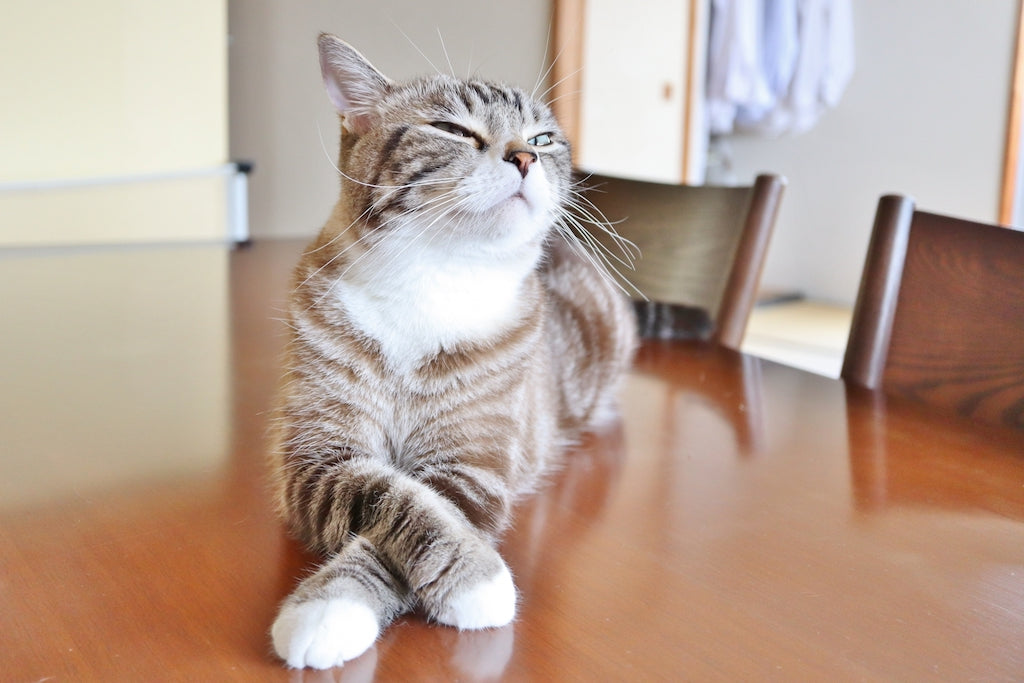
A cat's normal body temperature is approximately 38-39 degrees Celsius, which is slightly higher than a human's.
The comfortable room temperature for cats is also slightly higher than what we humans find comfortable. In the rainy season and summer, an ideal room temperature is around 27-30 degrees Celsius, and humidity is around 40-60%.
When turning on the air conditioner, try setting the cooling temperature to 26-28 degrees and check the room temperature. If using the dehumidification function, adjust the temperature while checking the room temperature and humidity.
If it's too cold, use the dehumidifier.
Since cool air from the air conditioner sinks, your cat might feel colder than the set temperature depending on the position of its cat bed. Also, be careful as the top of a cat tree might be directly exposed to the air conditioner's breeze.
Try adjusting by setting the air conditioner to silent mode or using the dehumidifier function.
Should the air conditioner be left on when you're out?
If you leave the room closed while you're out, both the temperature and humidity will rise more than you might expect. It's safer to leave the air conditioner on when your cat is home alone.
Cats with short noses and long-haired cat breeds are particularly susceptible to heatstroke, so extra caution is needed. Kittens and senior cats also have difficulty regulating their body temperature, so it's necessary to maintain a comfortable room temperature with air conditioning.
While electricity costs are a concern, a cat's life is priceless. Consider energy-saving measures such as setting the fan speed to "auto."
When to Start Using Air Conditioning
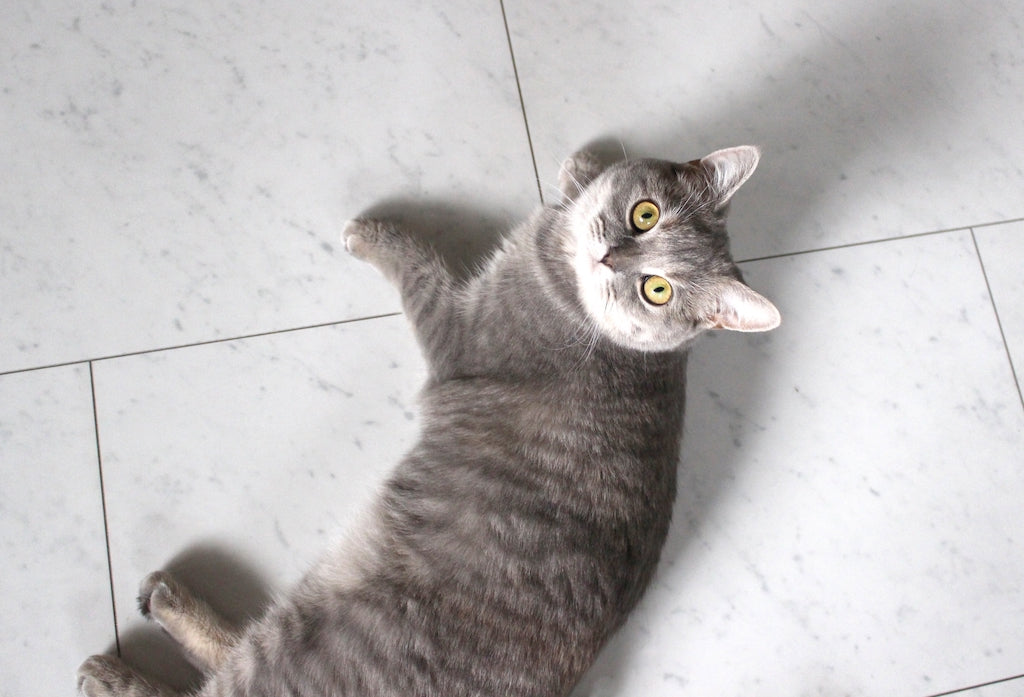
At what room temperature should you start using the air conditioner? Let's remember the right time to start using it.
When the room temperature reaches 26-28 degrees Celsius or higher
Even before the end of the rainy season, some days can be extremely hot. Turn on the air conditioner when the room temperature exceeds 26-28 degrees Celsius, or when you feel hot.
If your cat is hot
If your cat is sleeping with its belly exposed, or staying in cool places like on the flooring or in the bathroom, it's a sign that it feels hot. Make sure it stays hydrated and turn on the air conditioner to lower the room temperature.
If the humidity exceeds 60%
If your cat seems lethargic or spends most of its time sleeping, the humidity might be too high. Cats' ancestors lived in deserts, so they dislike damp and humid conditions more than heat. Their health can easily deteriorate, so make good use of the dehumidification function.
|
【Related articles】 |
Reasons Why Cats Dislike Air Conditioners
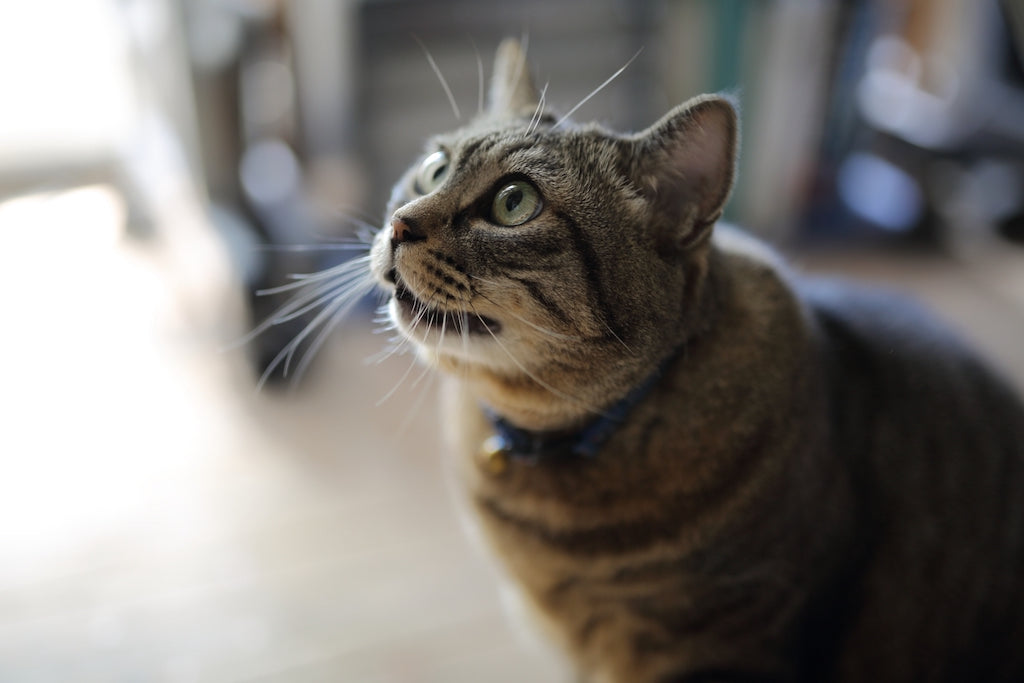
Many owners seem to have problems with their cats disliking the air conditioner and leaving the room, even when it's turned on with good intentions.
Let's consider the reasons why cats dislike air conditioners and how to deal with it.
Unpleasant operating noise of the air conditioner
Cats have much better hearing than humans, so much so that they can hear the faint footsteps of mice. It is said that they can distinguish sounds in a wide frequency range of 25 to 75,000 Hz.
Therefore, they may be bothered by the operating noise of the air conditioner, which is inaudible to humans.
Room temperature is too low and cold
Even if it's comfortable for you, your cat might find it cold. The actual room temperature might be colder than the air conditioner's set temperature.
Dislikes being in the breeze
Humans have sweat glands all over their bodies, so they feel cool when a breeze hits them. Cats only have sweat glands on their paw pads, so they don't feel cool when a breeze hits them, and they might find it annoying.
How to deal with cats who dislike air conditioning
If your cat truly dislikes the air conditioner, there are several methods you can try, such as using a window screen lock to open a window, using a cooling mat, installing blackout or heat-blocking curtains on windows, making a well-ventilated bathroom accessible (with the bath water drained), or creating a space where the air conditioner's breeze doesn't directly hit.
However, on extremely hot summer days, if you don't use the air conditioner, you, the owner, will also suffer. In such cases, it's best to allow your cat free access between the air-conditioned room and a non-air-conditioned room. You can do this by slightly opening the door and securing it with a door stopper.
Cats are adept at finding comfortable spots. Try to create an environment where your cat can choose its own place to be.
Precautions when using an air conditioner
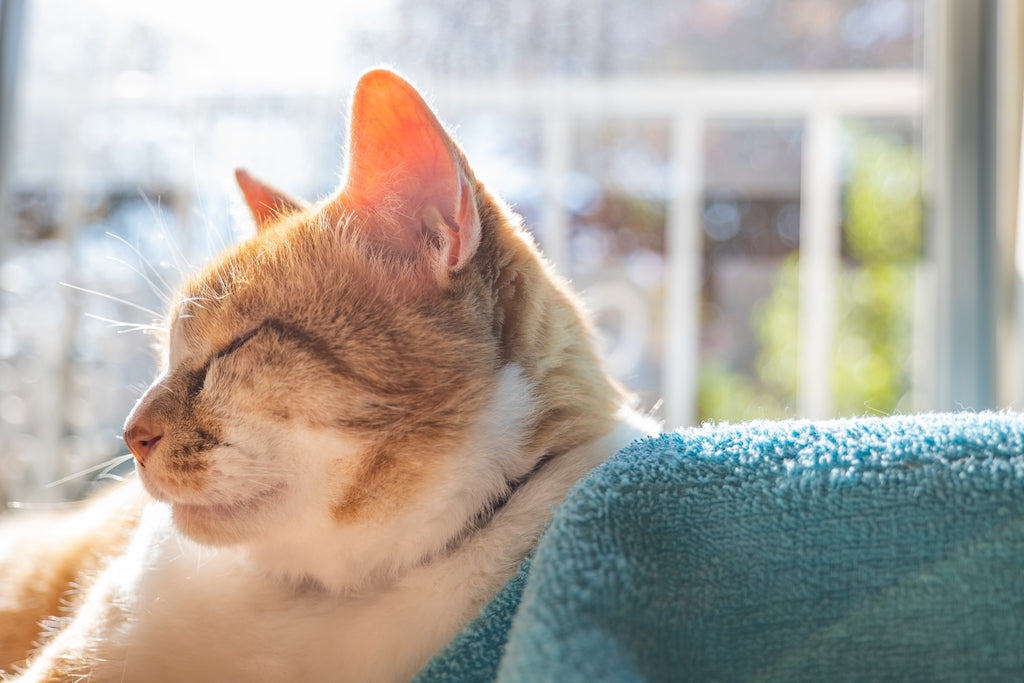
Leaving the air conditioner on is an effective way to prevent heatstroke in cats. However, some cats may dislike the air conditioner and go to another room, or stay in a favorite spot without moving.
This can lead to them drinking less water than usual, raising concerns about dehydration and heatstroke. It also puts a strain on their kidneys.
Make sure to provide multiple water sources so your cat can always drink fresh water. If your cat isn't drinking enough, try using a fountain-style automatic water dispenser.
Also, power outages or sudden breakdowns can cause the air conditioner to stop. Similar to the "How to deal with cats who dislike air conditioning" section, it's important to have other ways to combat the heat besides the air conditioner.
| 【Related articles】 |
Humidity Control for "Cat Collars"
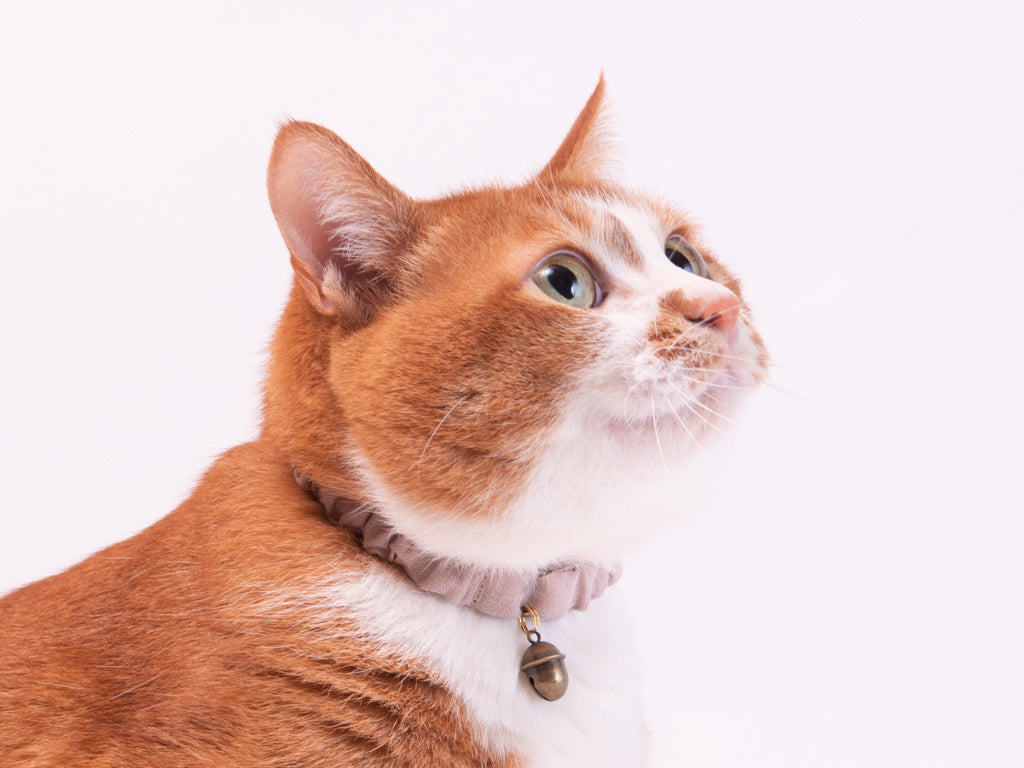
During the hot and humid rainy season and summer, it's also important to care for your cat's collar.
A cat collar is worn as a precaution in case of an accidental escape. However, high humidity can lead to the growth of bacteria and mold. Not only can this cause unpleasant odors, but it can also lead to dermatitis and "collar baldness."
For your cat's health, it's recommended to change collars 1-2 times a week during humid seasons.
It's a good idea to sterilize the cat collar your cat was wearing by applying steam from an iron. Disinfectant spray is also fine, but be sure to choose an "unscented" one.
Summary
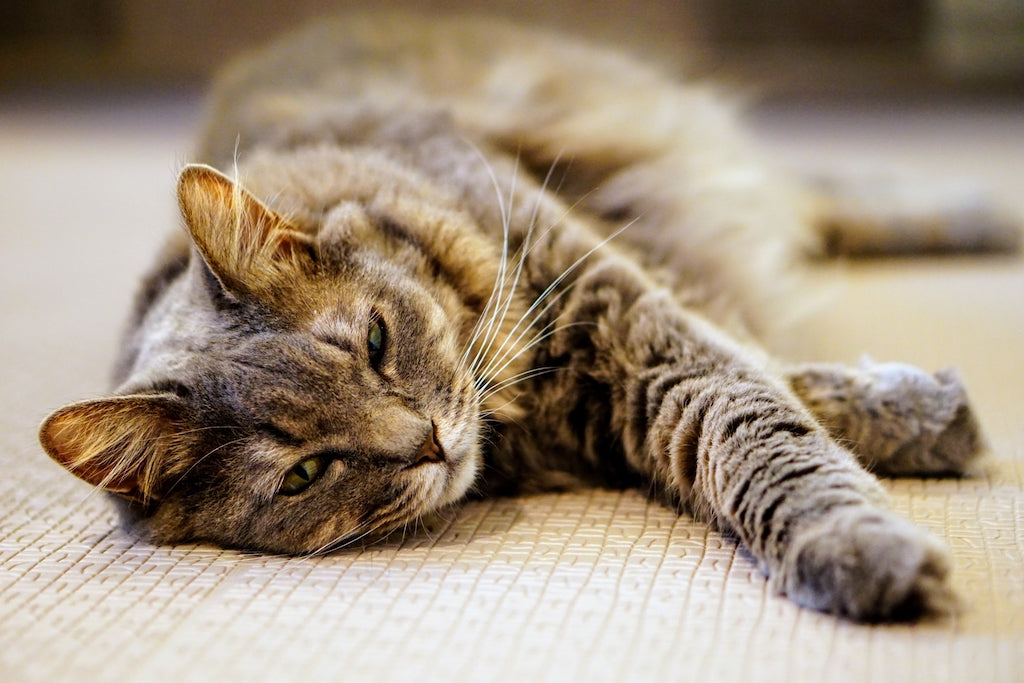
Many cat owners start checking the weather forecast once they live with a cat. What's particularly concerning is the day they have to leave their cat home alone. They worry about their cat getting heatstroke.
Japan's rainy season and summer are hot and humid, so an "air conditioner" is essential. Set the room temperature to around 27-30 degrees Celsius and humidity to around 40-60% to prevent your cat from getting heatstroke.
Many cats dislike air conditioning, so leave a door slightly open to allow them free access, and also prepare other heat counter-measures in addition to the air conditioner. This will also provide peace of mind in case of a power outage or air conditioner breakdown.
Also, don't forget to maintain your cat's collar. Mold and bacteria can cause dermatitis, which can worsen to "collar baldness." Change collars 1-2 times a week and clean them with steam from an iron or disinfectant spray.
Each cat has its own comfortable temperature and humidity. However, "heat" and "high humidity" are major enemies of a cat's health. Use the air conditioner wisely and try to find what your cat prefers.
Author Profile


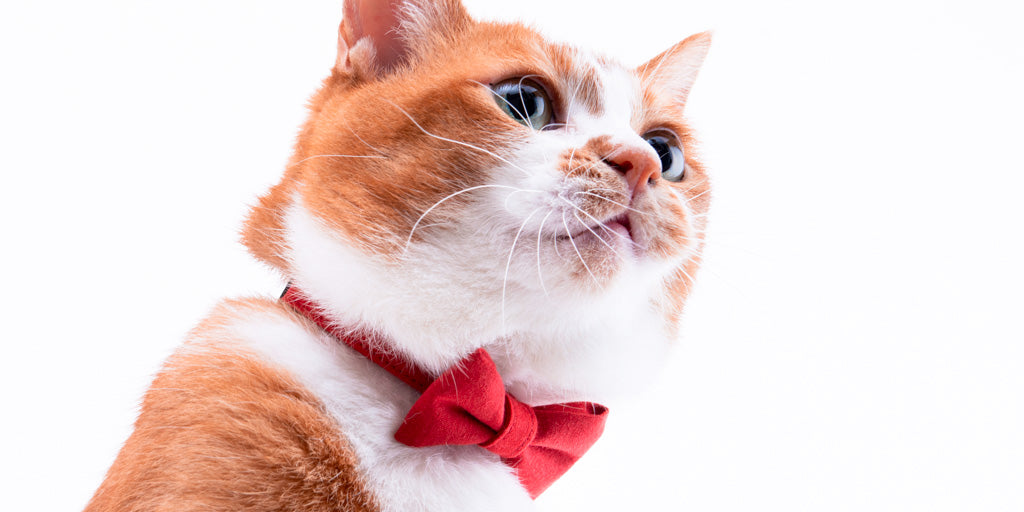
![[Vet-supervised] Cat hates wearing a collar? Reasons why and how to get them used to it](http://www.poponeko.jp/cdn/shop/articles/a0fdc9ee82de7f01afb932f1e1e60236_da240718-be68-4e99-8a8c-64449f63d83e.jpg?height=400&v=1780975808)

![[Set Product] Leaf Ribbon Moda Floribunda & Cat Collar Cotton Ox Carrot](http://www.poponeko.jp/cdn/shop/files/260618_00157.jpg?v=1784451813&width=600 "[Set Product] Leaf Ribbon Moda Floribunda & Cat Collar Cotton Ox Carrot")
![[Set] Leaf Ribbon & Cat Collar Gingham Check Blue](http://www.poponeko.jp/cdn/shop/files/DSC00106_035b8e99-fd67-47ef-9132-ff2da1afbc67.jpg?v=1780663891&width=600 "[Set] Leaf Ribbon & Cat Collar Gingham Check Blue")
![[Set Product] Leaf Ribbon & Scrunchie Cat Collar - Champ de Fleurs - Mustard](http://www.poponeko.jp/cdn/shop/files/DSC00090_e7a82019-68d6-4981-b52a-6e8c333c0f32.jpg?v=1780663183&width=600 "[Set Product] Leaf Ribbon & Scrunchie Cat Collar - Champ de Fleurs - Mustard")
![[Set] Leaf Ribbon & Scrunchie Cat Collar - Vidro Akane](http://www.poponeko.jp/cdn/shop/files/2608_00413.jpg?v=1789826564&width=600 "[Set] Leaf Ribbon & Scrunchie Cat Collar - Vidro Akane")
![[Set] Leaf Ribbon & Cat Collar: Petit Fleur, Blue](http://www.poponeko.jp/cdn/shop/files/2608_00407.jpg?v=1789946167&width=600 "[Set] Leaf Ribbon & Cat Collar: Petit Fleur, Blue")
![[Set] Leaf Ribbon & Tartan Check Cat Collar (Dress Green)](http://www.poponeko.jp/cdn/shop/files/2606_00017.jpg?v=1785759845&width=600 "[Set] Leaf Ribbon & Tartan Check Cat Collar (Dress Green)")
Leave a comment