

Your cat's weight is a barometer of their health. If you want to manage their health, weighing them is essential.
A sudden increase or decrease in weight can sometimes indicate an underlying illness. Furthermore, obesity increases the risk of various diseases.
This article will explain in an easy-to-understand way how to correctly weigh your cat and manage their weight.
How to weigh your cat

Weighing your cat is easy with a pet scale. However, cats don't stay still... You'll need some ingenuity to weigh your cat accurately at home.
Here's how to weigh your cat.
How to weigh a cat by holding them
If your cat likes to be held, it's easy to weigh them by having the owner hold them. Follow these steps to weigh your cat:
- Weigh yourself holding the cat.
- Put the cat down and weigh yourself.
- Subtract step 2 from step 1 to get your cat's weight.
How to weigh a cat using a carrier bag
If your cat dislikes being held, weigh them using a carrier bag. A digital scale that can measure weight precisely is recommended.
- Put the cat in the carrier bag and weigh them.
- Weigh only the carrier bag.
- Subtract step 2 from step 1 to get your cat's weight.
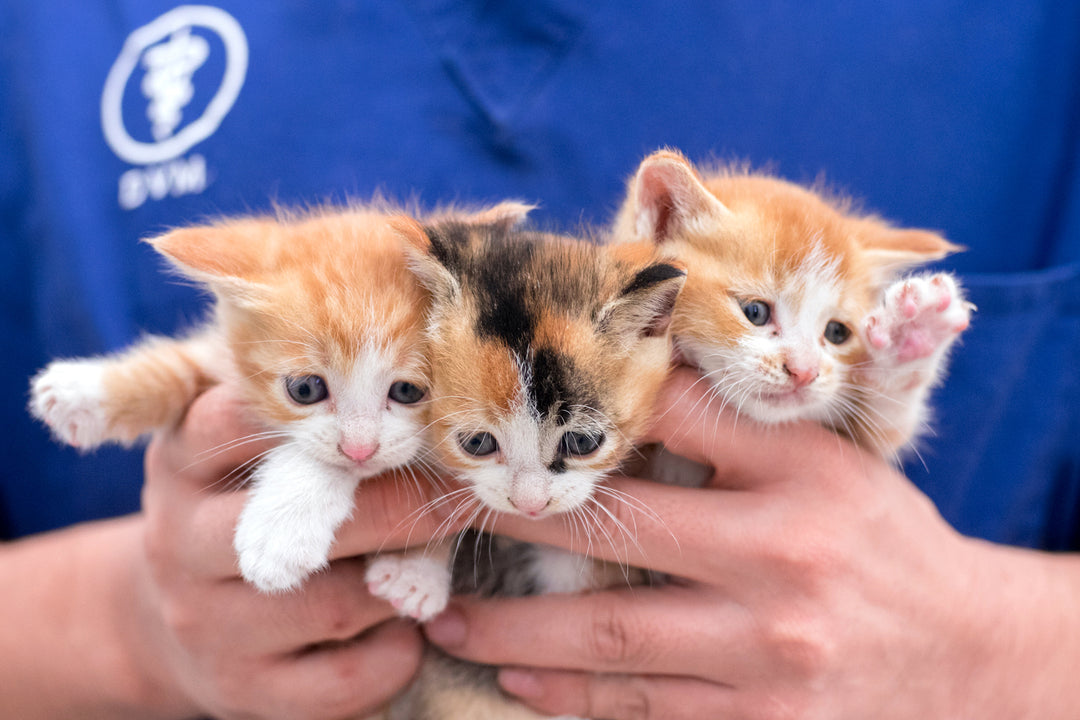
Kittens can be weighed with a kitchen scale
If you have a palm-sized kitten, you can weigh them with a kitchen scale. For safety, weigh them on a low surface like the floor, rather than a high place like a table.
- Place a bowl or basket on the kitchen scale.
- If there's a tare function, reset the display to 0.
- Place the cat in the container and weigh them.
How to weigh a cat using a hanging scale
For cats that dislike being held or can't stay still, using a hanging scale is recommended for weighing.
Have your cat get into a plastic shopping bag or paper bag, then use the hanging scale to weigh them.
You can use hanging scales not just for pets, but also those designed for human babies or luggage. Digital scales are convenient.
If your cat resists or struggles during weighing
Weighing a cat that dislikes being held or can't stay still is a struggle. If your cat is too rambunctious, you can try weighing them in a laundry net.
Try using treats as a reward, such as spreading paste-type treats on the scale or showing them treats to encourage them to step on the scale.
Frequency of weighing your cat

It is recommended to weigh your cat at least once a month. By weighing them on the same day each month, you can notice weight changes that may not be obvious visually.
Additionally, kittens under 6 months old, senior cats with reduced activity, and cats with chronic illnesses should be weighed once a week.
Illnesses that can be detected by cat weight measurements
If your cat is losing weight, illnesses such as hyperthyroidism, diabetes, or kidney failure may be present. Additionally, be aware of loss of appetite due to stress, parasites, or accidental ingestion.
Conversely, if your cat is gaining weight, tumors or ascites may be suspected. Some cat breeds are prone to obesity, so pay attention to their diet and exercise environment.
Be careful of obesity after spaying/neutering

Growing cats are active and less prone to obesity. However, they become more susceptible to obesity around their first birthday when growth stops.
Particular caution is needed after spaying or neutering. Due to hormonal imbalances, they are prone to obesity and can quickly gain weight if they overeat or don't get enough exercise.
Obesity can cause various diseases. Therefore, weighing your cat is very important to prevent obesity.
Cat obesity check
A cat's ideal weight varies depending on breed, gender, and build. Therefore, a cat's obesity level is assessed not by weight, but by their "BCS (Body Condition Score)".

| Citation:Ministry of the Environment, "Pet Food Guidelines" |
According to the above material, a BCS of 3 is considered the ideal body type. If you are concerned about obesity, you must put your cat on a diet. When dieting, always consult your veterinarian for advice on appropriate food portions and other recommendations.
|
[Related articles here] |
Summary

After weighing your cat, it is recommended to record any changes in their weight.
Poponeko's "Cat Health Notebook" allows you to record weight fluctuations in a graph. You can also make notes about small changes in their condition, which can be helpful for accurate diagnoses.
Recording your cat's weight is important for managing their health. Learn the correct way to weigh them and tips to help detect illnesses early.
|
[Related products here] |
Author Profile


![[Vet-supervised] Cat hates wearing a collar? Reasons why and how to get them used to it](http://www.poponeko.jp/cdn/shop/articles/a0fdc9ee82de7f01afb932f1e1e60236_da240718-be68-4e99-8a8c-64449f63d83e.jpg?height=400&v=1780975808)

![[Set Product] Leaf Ribbon & Scrunchie Cat Collar - Champ de Fleur Light Green](http://www.poponeko.jp/cdn/shop/files/DSC00088_9d993016-a552-497a-a7bd-05e1b7a11408.jpg?v=1780663183&width=600 "[Set Product] Leaf Ribbon & Scrunchie Cat Collar - Champ de Fleur Light Green")

![[Set] Leaf Ribbon & Scrunchie Cat Collar, Gingham Check, Yellow](http://www.poponeko.jp/cdn/shop/files/DSC00094_3cfceafb-3dec-4966-8fb0-98d2b6a0f857.jpg?v=1780663891&width=600 "[Set] Leaf Ribbon & Scrunchie Cat Collar, Gingham Check, Yellow")
![[Set] Leaf Ribbon & Scrunchie Cat Collar: Sunny Mimosa](http://www.poponeko.jp/cdn/shop/files/2608_00412_15b3d5d4-db6f-4704-a2bc-cfcf4a47d898.jpg?v=1790033858&width=600 "[Set] Leaf Ribbon & Scrunchie Cat Collar: Sunny Mimosa")

はじめまして。
うちは2匹の猫をかっていたのですがその1匹が4歳で腎臓病により亡くなりました。
もともと低体重でふわふわな毛並みだったのでどんどん痩せていくのに気づくのが遅れてしまい変化に気づけなく悔しく思います。
猫は病気を隠すと言われているので、ご飯や水、おしっこをチェックすると共に体重もこまめに確認しようと嫌がられながらも測っています。
毎回学ばされる内容で大変助かります。
今後も楽しく読ませていただきます。
Leave a comment