

Have you heard about cat spaying?
When you take your cat to the vet for the first time, you'll likely receive an explanation about spaying. In recent years, awareness of cat spaying has grown, and fewer people are reluctant to have the procedure done. However, when I examine cats at the vet, I still often hear opinions such as, "I don't want to operate on a healthy body," "She won't get pregnant because she doesn't go outside," or "It's not good to go against nature."
This time, I'll explain the important reasons for spaying your cat.
What is Cat Spaying?

Spaying involves surgically removing the uterus and ovaries, or just the ovaries, to prevent a female cat from getting pregnant. The surgery is performed under general anesthesia, with an incision of about 3 cm in the abdomen. Some veterinary hospitals may use laparoscopic surgery. Typically, veterinary hospitals perform the procedure after 6 months of age, but in the case of stray cats, it may be done a little earlier.
Cats are induced ovulators, meaning ovulation occurs when they mate, so they are almost certain to become pregnant. Cats have two breeding seasons a year, in spring and autumn, but indoor cats may have more. What happens if an unspayed female cat becomes pregnant?
The gestation period for cats is about 60 days. Kittens are born about two months after mating. The number of kittens born at once ranges from 1 to 8, but sometimes more than 10 can be born.
According to calculations by the Ministry of the Environment, if one female cat gives birth to kittens, the cat population can increase to over 20 in one year and over 2,000 in three years. If cats are not spayed and are in an environment where they can freely reproduce, their numbers will continue to grow.
Benefits of Cat Spaying
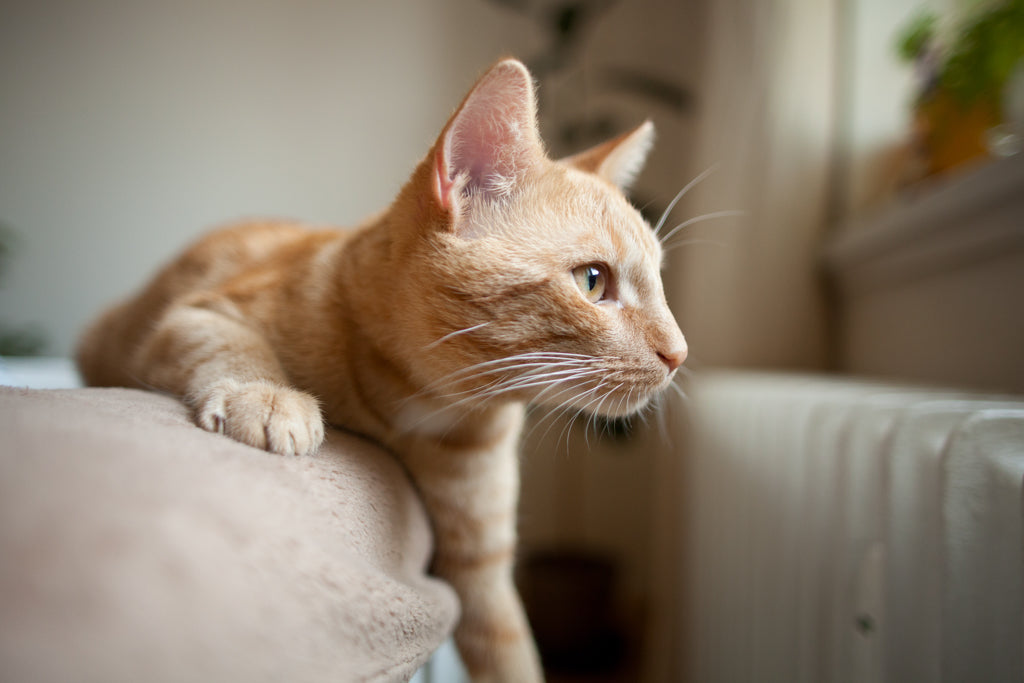
Spaying has various benefits. Let's explain each of them.
Prevents unwanted pregnancies
As mentioned earlier, cats are induced ovulators, making them highly prone to pregnancy. Even if kept indoors, it's not impossible for them to get outside. Especially during estrus, they are easily excitable and feel an urge to go outside. If she gets out and mates, kittens will be born in two months.
Even if owners are careful to keep them indoors, there's a possibility they could escape due to natural disasters or other circumstances. When reunited, she might already be pregnant.
Spaying prevents unwanted pregnancies.
Eliminates estrus-specific behaviors
When a cat is in heat, behavioral changes occur. A cat in heat will make a distinct, loud vocalization that sounds like a baby crying. They will also tend to want to go outside in search of a mate.
Cats in heat will often raise their hindquarters and tread with their back feet, and they will also roll around more.
Some cats may temporarily lose their appetite.
These behaviors are not only stressful for the cat but also very stressful for the owner who witnesses them.
Increased lifespan
This is arguably the biggest advantage of spaying. Previous research has reported that spayed cats live about twice as long as unspayed cats. The reason for the extended lifespan is believed to be due to reduced stress from estrus and a decrease in diseases caused by estrus. In fact, estrus is a tremendous source of stress.
Prevents mammary and reproductive organ diseases
Spaying can prevent mammary tumors and diseases of the uterus and ovaries. In particular, 90% of mammary tumors in cats are malignant, and it is not uncommon for them to have already metastasized by the time a lump is noticed. The occurrence of mammary tumors is influenced by sex hormones, so performing surgery within 6 months of birth reduces the risk by about 90%, and within 1 year of birth, an 86% preventive effect has been confirmed.
Furthermore, diseases of the uterus and ovaries, such as pyometra and ovarian tumors, can be prevented by surgically removing the uterus and ovaries.
Disadvantages of Cat Spaying

Spaying isn't without its downsides. There are disadvantages as well as advantages.
Cannot have offspring again
Once a cat is spayed, you cannot have kittens afterward. If you desire kittens, please discuss it thoroughly with your family.
Prone to weight gain
Spayed cats tend to gain weight because their calorie metabolism slows down. If they continue to eat the same type and amount of food as before the surgery, they will steadily put on weight. Therefore, it's necessary to switch to food for spayed cats or weight-loss food, and to recalculate feeding amounts. Weight gain after spaying can be prevented with proper management by the owner.
Risks of surgery and anesthesia
Since it involves general anesthesia and open-abdominal surgery, risks to the body are unavoidable. It is not unheard of for cats to pass away during or after surgery. To prevent such occurrences, we always explain the risks to owners before surgery. We also perform blood tests and X-rays, and if any abnormalities are found, we prioritize treatment and await recovery. Additionally, we administer intravenous fluids and antibiotics during surgery to prevent postoperative complications (infection, bleeding). However, even with all precautions, deaths can still occur.
Cost of Cat Spaying

The cost of spaying varies by veterinary clinic. As a guideline, it will be around 10,000 to 40,000 yen. The cost may include examination fees, anesthesia fees, and hospitalization fees in addition to the surgery fee.
Spaying is usually done on a day-trip basis, but some veterinary clinics may keep the cat overnight for observation. Also, if the veterinarian determines that hospitalization is necessary, such as in cases of excessive bleeding or poor recovery from anesthesia, the cat will be hospitalized.
Age for Cat Spaying

It is recommended to spay cats between 6 months and 1 year of age. Considering the occurrence of mammary tumors, it is better to perform the surgery after 6 months of age and before the first estrus.
Many owners mistakenly believe that there's no point in spaying a cat once it has gone into heat. However, the risk of mammary tumors increases with the number of heat cycles. To minimize this risk, it is recommended to spay as soon as possible after estrus.
Summary

I have explained about spaying. When comparing the pros and cons of spaying, I believe the advantages far outweigh the disadvantages. Spaying can prevent life-threatening diseases, allowing you to spend more time with your cat. If you are considering getting a cat, or if you already have one but haven't had her spayed, why not take this opportunity to reconsider spaying?


![[Written by a Veterinarian] Is Buying a Cat from a Pet Store a Good Idea? Pros, Cons, and Checkpoints for Identifying a Healthy Kitten](http://www.poponeko.jp/cdn/shop/articles/petshop_cat.jpg?height=400&v=1778304000)
![[Written by a Veterinarian] Before You Worry About Your Rescue Cat Not Warming Up to You: How to Build a Bond with a Skittish Cat and Train Them to Be More Sociable](http://www.poponeko.jp/cdn/shop/articles/shutterstock_2626846741_c3619e26-699b-4722-a0b0-0c99f5414d1b.jpg?height=400&v=1778305548)
![[Written by a Veterinarian] How to Prepare for a Successful Foster Cat "Trial Period": Environment and 2-Week Schedule](http://www.poponeko.jp/cdn/shop/articles/2_a624e34a-ac59-4dfe-88cb-6a373ea44e7d.jpg?height=400&v=1778305479)
![[Written by a Veterinarian] How to tell the age of a rescue cat: Identifying "estimated age" from teeth and eyes and care by age group](http://www.poponeko.jp/cdn/shop/articles/pixta_121706085_L_547a4397-8d02-4a59-804f-238d8151b72e.jpg?height=400&v=1783812906)
![[Slightly Imperfect] Cat-Friendly Skin Protection Suit (Coverall) for Cats](http://www.poponeko.jp/cdn/shop/files/DSC05845.jpg?v=1769403729&width=600 "[Slightly Imperfect] Cat-Friendly Skin Protection Suit (Coverall) for Cats")
![[Set] Leaf Ribbon & Cat Collar - Champ de Fleurs (Grey)](http://www.poponeko.jp/cdn/shop/files/DSC00103_d587ccde-94a5-4f05-91f3-f4c88b18ab90.jpg?v=1780663183&width=600 "[Set] Leaf Ribbon & Cat Collar - Champ de Fleurs (Grey)")

![[Set Item] Leaf Ribbon & Cat Collar: Vidro - Lapis Lazuli](http://www.poponeko.jp/cdn/shop/files/2608_00402.jpg?v=1789826564&width=600 "[Set Item] Leaf Ribbon & Cat Collar: Vidro - Lapis Lazuli")
![[Set] Leaf Ribbon & Cat Collar - Gingham Check Yellow](http://www.poponeko.jp/cdn/shop/files/DSC00108_0dcb125b-7ca2-4c51-a9c7-a1544ae1f9c9.jpg?v=1780663891&width=600 "[Set] Leaf Ribbon & Cat Collar - Gingham Check Yellow")


Leave a comment