
Have you ever considered neutering a male cat?
When owning multiple cats, you might think of it as a necessary procedure to prevent female cats from getting pregnant. However, many people who own only one cat believe it's unnecessary since there are no females to get pregnant. Also, since it involves operating on a healthy body, quite a few people feel reluctant, thinking, "I don't want to operate on a healthy body" or "It's cruel." Men, in particular, tend to show more resistance.
This time, we will explain the important reasons for neutering.
What is cat neutering?
Neutering involves surgically removing the testicles to prevent male cats from impregnating female cats. The surgery is performed under general anesthesia, where the scrotum is incised about 1 cm to remove the testicles. Typically, veterinary clinics perform this procedure after 6 months of age, though stray cats may undergo it earlier.
Cats are induced ovulators, meaning ovulation occurs upon mating. Cats have two breeding seasons a year, in early spring and autumn. When a female cat goes into heat, her pheromones stimulate male cats into heat. Male cats become more active and their roaming range increases. When they encounter a female, they mate, and mating almost certainly results in pregnancy.
As explained in the spaying article, the gestation period for cats is about 60 days. A litter typically consists of 1 to 8 kittens, but sometimes more than 10 can be born. While male cats don't give birth, unneutered males contribute to an increase in kittens. Furthermore, the behaviors associated with male cats in heat are often considered the biggest problem and can lead to conflicts with neighbors.
Benefits of cat neutering
Neutering offers various benefits. Let's explain each benefit.
Eliminates heat-specific behaviors
When in heat, changes in behavior occur. A male cat in heat performs spraying behavior, where he sprays highly odorous urine onto high places like walls. Due to its strong odor, the smell is not easily removed. This urine contains his information and serves as an appeal to female cats.
Male cats in heat expand their roaming range and want to go outside more than usual. As their range of movement increases, it's common for them to become unable to return home or get into traffic accidents. I recall a sad case involving a cat I previously handled who, because he wasn't neutered, ran out of the house and died in an accident right in front of his owner.
Also, because they fight with other male cats over females, they can suffer severe injuries or contract feline AIDS or feline leukemia.
Heat-specific behaviors are not only stressful for the cat but also extremely stressful for the owner. Neutering can help resolve these behaviors and lead to a calmer temperament.
Prevents unwanted pregnancies
During mating season, cats are easily excited and driven by the urge to go outside. Male cats are very strong and might open or tear screen doors to escape. If they get outside and mate, kittens will be born unknowingly.
Even if owners are absolutely careful to keep them inside, cats can still escape through small gaps or when the owner isn't looking. There's also a possibility of them escaping during natural disasters.
Increased lifespan
It has been scientifically proven that neutering can extend a cat's lifespan. Past research has shown that when comparing the lifespans of neutered/spayed cats and unneutered/unspayed cats, neutered/spayed cats lived approximately twice as long. The reasons for this extended lifespan are thought to include reduced stress from being in heat, fewer heat-related diseases, fewer injuries and infections from fights, and fewer traffic accidents.
Prevents reproductive organ diseases
Neutering can prevent testicular diseases. While testicular tumors are rare in cats, they do occur in unneutered cats.
Disadvantages of neutering
Neutering isn't without its downsides. There are disadvantages as well as advantages.
Cannot have offspring again
Since neutering a cat involves removing all testicles, having kittens after the surgery will not be possible. If you're raising a pair and wish for kittens, it's crucial to discuss thoroughly as a family whether you can care for kittens (e.g., providing milk if abandoned, committing to raising them for life, finding homes for them), whether you can afford the necessary expenses, and if it will cause stress to the cats.
Tendency to gain weight
Neutered cats tend to gain weight because their calorie metabolism decreases. Additionally, they become more placid than before the surgery, leading to reduced activity. Therefore, if you continue with the same type and amount of food after surgery, they will steadily gain weight. It's necessary to switch to food for neutered cats or weight-loss food, and recalculate feeding amounts. Weight gain after neutering can be prevented with proper management by the owner.
Risks of surgery and anesthesia
Neutering surgery itself is very quick, lasting about 5 minutes. However, because it also includes clipping hair and disinfection, the time under anesthesia is about 15 minutes. Therefore, the risks to the body from anesthesia are unavoidable. It is not uncommon for cats to die during or after surgery. To prevent such incidents, we always explain the risks to the owner before the surgery. We also perform blood tests and X-rays, and if any abnormalities are found, we prioritize treatment and wait for recovery. Additionally, intravenous fluids and antibiotics are administered during surgery to prevent postoperative complications (infection, bleeding). However, despite all precautions, deaths can still occur.
Cost of cat neutering
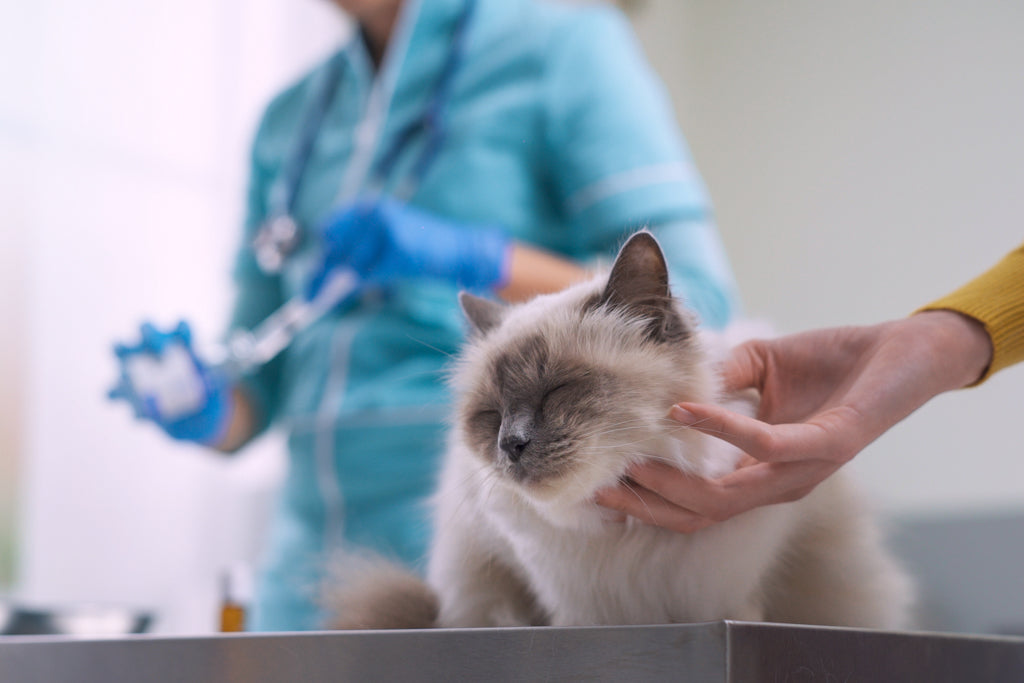
The cost of neutering varies depending on the veterinary clinic. As a guide, it can range from 5,000 to 30,000 yen. The fee includes not only the surgery itself but also examination fees and anesthesia costs.
Neutering is usually performed as a day procedure, but if the veterinarian determines that hospitalization is necessary due to excessive bleeding, slow recovery from anesthesia, etc., the cat will be admitted.
Age for cat neutering
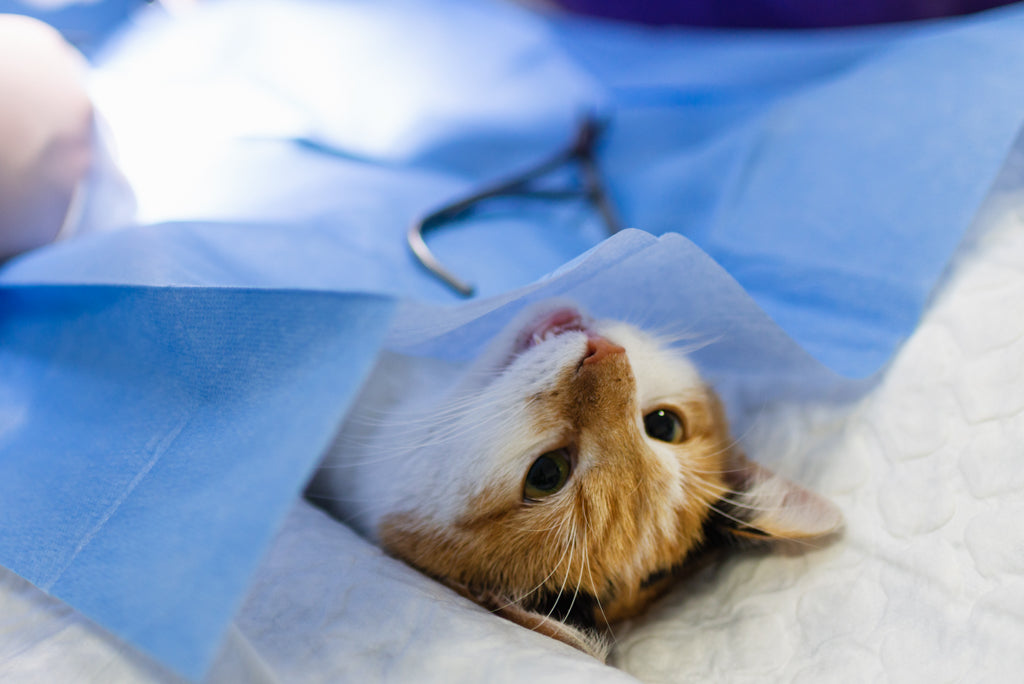
Neutering is ideally performed between 6 months and 1 year of age. Conversely, if done too early, it is thought that the urethra may not develop properly, making the cat more prone to lower urinary tract diseases.
Many owners believe that once a cat goes into heat, there is no point in performing the surgery. However, behaviors associated with being in heat, such as spraying, can also be stressful for owners. It is known that heat-related behaviors can subside after neutering. We recommend having the surgery as soon as possible after the cat goes into heat.
Summary
We've discussed neutering. Comparing the pros and cons, the benefits far outweigh the drawbacks. By undergoing neutering, cats experience less stress and are less likely to lose their lives due to unforeseen accidents or infections. For those who are about to welcome a cat, or already have one but haven't had them neutered, why not take a moment to reconsider neutering?

![[Written by a Veterinarian] Is Buying a Cat from a Pet Store a Good Idea? Pros, Cons, and Checkpoints for Identifying a Healthy Kitten](http://www.poponeko.jp/cdn/shop/articles/petshop_cat.jpg?height=400&v=1778304000)
![[Written by a Veterinarian] Before You Worry About Your Rescue Cat Not Warming Up to You: How to Build a Bond with a Skittish Cat and Train Them to Be More Sociable](http://www.poponeko.jp/cdn/shop/articles/shutterstock_2626846741_c3619e26-699b-4722-a0b0-0c99f5414d1b.jpg?height=400&v=1778305548)
![[Written by a Veterinarian] How to Prepare for a Successful Foster Cat "Trial Period": Environment and 2-Week Schedule](http://www.poponeko.jp/cdn/shop/articles/2_a624e34a-ac59-4dfe-88cb-6a373ea44e7d.jpg?height=400&v=1778305479)
![[Written by a Veterinarian] How to tell the age of a rescue cat: Identifying "estimated age" from teeth and eyes and care by age group](http://www.poponeko.jp/cdn/shop/articles/pixta_121706085_L_547a4397-8d02-4a59-804f-238d8151b72e.jpg?height=400&v=1783812906)
![[Set] Leaf Ribbon & Cat Collar - Gingham Check Tomato Red](http://www.poponeko.jp/cdn/shop/files/DSC00105_c3cf26db-19e7-4828-a848-34b8c51cbf24.jpg?v=1780663891&width=600 "[Set] Leaf Ribbon & Cat Collar - Gingham Check Tomato Red")
![[Set] Leaf Ribbon moda The Fleeting Outdoors & Cat Collar Stain-Resistant Water-Repellent Oil-Repellent Black](http://www.poponeko.jp/cdn/shop/files/260618_00173-2.jpg?v=1784452166&width=600 "[Set] Leaf Ribbon moda The Fleeting Outdoors & Cat Collar Stain-Resistant Water-Repellent Oil-Repellent Black")
![[Set Product] Leaf Ribbon & Cat Collar - Tartan Check Black Watch](http://www.poponeko.jp/cdn/shop/files/2606_00019.jpg?v=1785759844&width=600 "[Set Product] Leaf Ribbon & Cat Collar - Tartan Check Black Watch")
![[Set Product] Leaf Ribbon Moda Floribunda & Cat Collar Cotton Ox Carrot](http://www.poponeko.jp/cdn/shop/files/260618_00157.jpg?v=1784451813&width=600 "[Set Product] Leaf Ribbon Moda Floribunda & Cat Collar Cotton Ox Carrot")
![[Set] Leaf Ribbon moda Star Spangled & Cat Collar Denim Navy](http://www.poponeko.jp/cdn/shop/files/260618_00160.jpg?v=1784451813&width=600 "[Set] Leaf Ribbon moda Star Spangled & Cat Collar Denim Navy")
![[Set] Leaf Ribbon Fleurage Blue & Scrunchie Cat Collar Belgian Linen Mustard](http://www.poponeko.jp/cdn/shop/files/2608_00134.jpg?v=1789197487&width=600 "[Set] Leaf Ribbon Fleurage Blue & Scrunchie Cat Collar Belgian Linen Mustard")

Leave a comment