

Many people who own one cat may wonder, "Is my cat lonely?" or "Does my cat want a friend?"
It's not a good idea to casually add another cat to your household, thinking that there's no difference between one and two. In reality, multi-cat households can be quite challenging. For those considering owning multiple cats, we will explain important points to consider when bringing home a new cat.
Pros and Cons of Multi-Cat Households

Many people consider owning multiple cats. If the cats get along well, they can be great playmates. However, it's not uncommon for them to fight if their personalities clash. There are pros and cons to multi-cat households. If you can't handle these pros and cons, then a multi-cat household might not be suitable for you.
Benefits of Multi-Cat Households
One benefit of multi-cat households is that cats have playmates, which helps them relieve stress and get enough exercise. This can potentially reduce stress-related behaviors such as scratching, mischief, biting, and clawing.
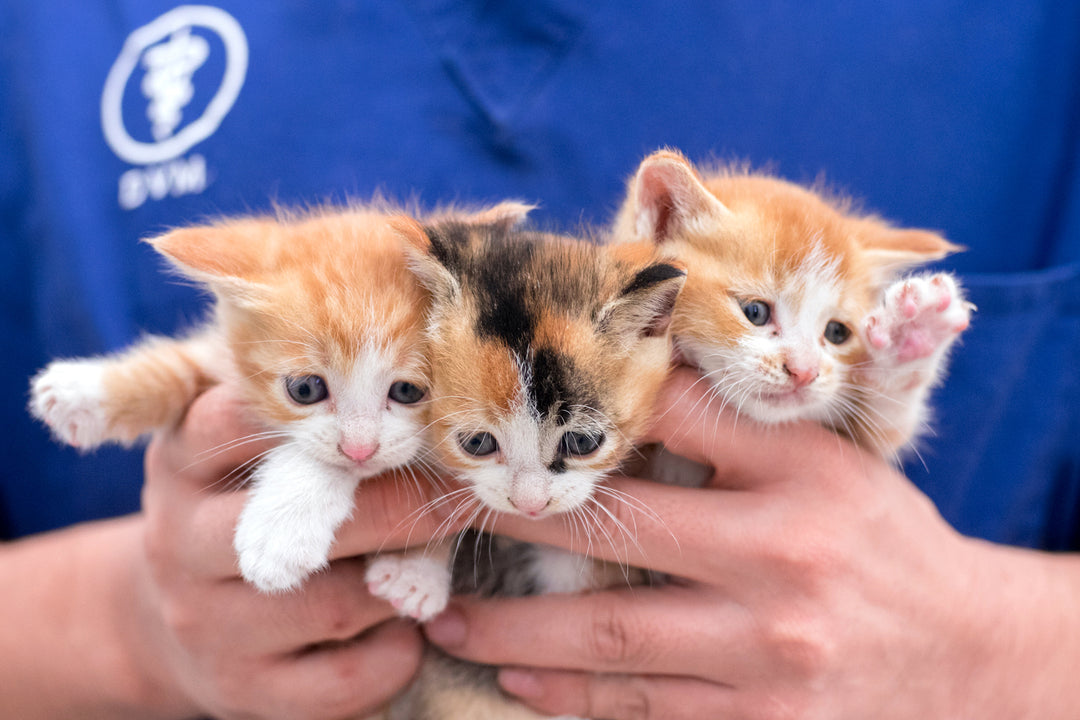
Furthermore, if your resident cat is nurturing, they might take care of the new cat. By interacting with each other, cats can learn social skills.
However, these benefits only apply if the cats get along well.
Disadvantages of Multi-Cat Households
First, the cost of ownership and veterinary expenses will double. Additionally, when a cat becomes ill, it can be difficult to determine which cat is experiencing problems. It's crucial to separate their meals properly, otherwise, one cat might eat the other's food, leaving one without enough to eat.
And if the cats don't get along, the relationship between the cats and even with the owner can deteriorate if their living spaces aren't separated.
What to Consider When Bringing Home a New Cat

When bringing home a new cat, you need to prepare in advance. Also, having multiple cats can be more challenging than you expect, so it's important to be mentally prepared.
Take Measures to Prevent Escapes
Both the resident cat and the new cat will naturally be surprised to see each other for the first time. No matter how much an owner tells their cat, "A new friend is coming," the cat won't understand. From the resident cat's perspective, an enemy has entered its territory, and from the new cat's perspective, it has suddenly been brought to an unfamiliar place. This situation makes panic more likely, increasing the risk of escape accidents.
Various escape prevention measures are necessary, such as not leaving windows open, locking windows, closing doors, and installing escape prevention gates at the entrance. In the case of kittens, they might even squeeze into crawl spaces. Make sure to repair such areas beforehand.
Prepare Essential Items Such as Litter Boxes and Bowls
If you already have a cat, you might think it's fine to share essential items. However, just as we humans might be hesitant to share items that others have used, the same applies to cats. They may not be pleased with items that carry the scent of another cat, and it's best to avoid sharing from a health and hygiene perspective. Always prepare dedicated bowls and other items for each cat. Litter boxes are especially important. You should have at least the number of cats you own plus one litter box.
Secure Living Space for Each Cat
When welcoming a new cat, it takes time for them to adapt to the new environment and to build a relationship with the resident cat. If you suddenly put cats in the same space, fights are bound to happen. To prevent this, it's necessary to have the new cat live in a cage for a while, or prepare a dedicated room for them.
After about two weeks of ownership, you can start introducing them, but initially, just let them see each other briefly and gradually increase the contact time. Even when the cats get used to each other, it's essential to secure space where they can escape from each other. If their personalities clash, forcing them to live together can lead to various problems. In such cases, it's necessary to consider separating rooms, or even floors, so they don't have to face each other.
If trial periods are available at adoption centers, it's a good idea to assess the cats' compatibility during this time. If they don't get along and you can't separate their living spaces, it's better to reconsider bringing home the new cat.
Perform a Health Check
If you are bringing a cat from a shelter or similar facility, they may have already undergone a health check (general condition, presence of infectious diseases like FIV, etc.). However, if not, make sure to get a health check. It's especially important to check for infectious diseases that could spread to your resident cat, such as feline immunodeficiency virus, feline leukemia virus, and cat flu. If there's a possibility of infection, you'll need to keep them separated to prevent contact between the cats.
Prioritize Your Resident Cat
When a new cat arrives, you might be tempted to lavish attention on it to help it settle in quickly. You might even spoil it. However, your resident cat might feel insecure, wondering if it's no longer wanted. The stress of a new cat arriving can lead to loss of appetite and energy, and even trigger pancreatitis or cystitis. Prioritize your resident cat over the new cat and spend more time with your resident cat.
Summary

While having multiple cats can be challenging, seeing them sleeping together will surely warm your heart. However, this is only if the cats get along well. Keep in mind that not all cats can be friends.
If you're considering a multi-cat household, carefully consider whether you can adhere to the precautions outlined in this article.


![[Written by a Veterinarian] Is Buying a Cat from a Pet Store a Good Idea? Pros, Cons, and Checkpoints for Identifying a Healthy Kitten](http://www.poponeko.jp/cdn/shop/articles/petshop_cat.jpg?height=400&v=1778304000)
![[Written by a Veterinarian] Before You Worry About Your Rescue Cat Not Warming Up to You: How to Build a Bond with a Skittish Cat and Train Them to Be More Sociable](http://www.poponeko.jp/cdn/shop/articles/shutterstock_2626846741_c3619e26-699b-4722-a0b0-0c99f5414d1b.jpg?height=400&v=1778305548)
![[Written by a Veterinarian] How to Prepare for a Successful Foster Cat "Trial Period": Environment and 2-Week Schedule](http://www.poponeko.jp/cdn/shop/articles/2_a624e34a-ac59-4dfe-88cb-6a373ea44e7d.jpg?height=400&v=1778305479)
![[Written by a Veterinarian] How to tell the age of a rescue cat: Identifying "estimated age" from teeth and eyes and care by age group](http://www.poponeko.jp/cdn/shop/articles/pixta_121706085_L_547a4397-8d02-4a59-804f-238d8151b72e.jpg?height=400&v=1783812906)
![[Set] Leaf Ribbon & Scrunchie Cat Collar Champ de Fleurs Pink](http://www.poponeko.jp/cdn/shop/files/DSC00086_92430f49-b816-4514-8687-7fd9a6e57988.jpg?v=1780663183&width=600 "[Set] Leaf Ribbon & Scrunchie Cat Collar Champ de Fleurs Pink")


![[Set Product] Leaf Ribbon & Scrunchie Cat Collar - Hannari Sakura Green](http://www.poponeko.jp/cdn/shop/files/2608_00140.jpg?v=1789197917&width=600 "[Set Product] Leaf Ribbon & Scrunchie Cat Collar - Hannari Sakura Green")
![[Set Item] Leaf Ribbon & Cat Collar, Petit Fleur, Pink](http://www.poponeko.jp/cdn/shop/files/2608_00405.jpg?v=1789946167&width=600 "[Set Item] Leaf Ribbon & Cat Collar, Petit Fleur, Pink")
![[Set Item] Leaf Ribbon & Scrunchie Cat Collar - Petit Fleur - Mint](http://www.poponeko.jp/cdn/shop/files/2608_00417.jpg?v=1789946167&width=600 "[Set Item] Leaf Ribbon & Scrunchie Cat Collar - Petit Fleur - Mint")

Leave a comment