

When you adopt a shelter cat or former stray, do you ever wonder, "How old is this cat, anyway?" Without knowing their approximate age, it's hard to know when to switch their food or schedule vaccinations. In this article, we'll explain how professionals estimate a cat's age based on their physical characteristics, and discuss appropriate care for each age group.
Why is it necessary? Knowing a shelter cat's "estimated age" is the first step in health management

To provide food appropriate for their life stage
The food you give a cat changes depending on their life stage. If you imagine it with humans, you'll understand that the type and amount of food differ for babies, growing teenagers, adults, and the elderly. Cats, like humans, have vastly different caloric and nutritional needs for growing kittens, adult cats in their maintenance phase, and senior cats who require special care. Food that isn't appropriate for their life stage can not only strain their digestive system and cause indigestion, but also lead to obesity or malnutrition. Therefore, knowing your cat's estimated age is crucial for providing them with the right food for their life stage.
For disease risk management and check-ups
After the age of 7, cats face an increased risk of age-related illnesses such as kidney disease, arthritis, and tumors. Knowing their estimated age allows you to plan preventative measures, such as when to start blood tests.
Veterinarians look here! Checkpoints for determining a cat's age: "teeth," "eyes," and "build"

Tooth eruption and condition
When veterinarians estimate a cat's age, we use their teeth, eyes, and build as clues. The condition of their teeth is particularly important for age assessment, especially for kittens, as it helps us estimate their monthly age.
Whether they have deciduous teeth, if their permanent teeth have fully erupted, and the amount of tartar buildup and wear (abrasion) are significant clues.
Eye color and coat condition
Eyes: At about one month old, kittens have blue eyes called "kitten blue," and their pigment gradually changes from there. Also, in senior cats, the lens may become cloudy white (nuclear sclerosis or cataracts).
Build and Coat Luster: Kittens are not very large, and their muscle and fat development are not very prominent. It is also common for kittens to have a distended belly. Young cats are active, so they tend to be muscular and have a good coat condition. As they age, their activity decreases, leading to muscle and fat loss, making their spine palpable. Due to insufficient grooming, their coat may lose its luster, become matted, and feel coarse.
Check at home! A guide to a cat's age based on their teeth

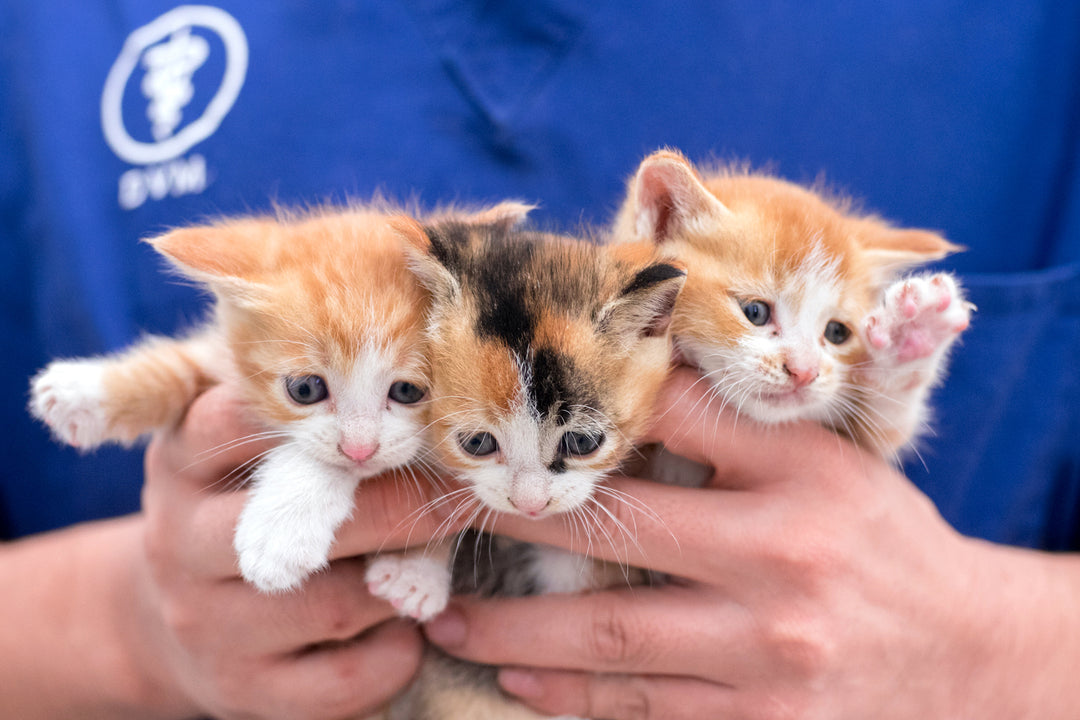
Kittenhood (0 to under 1 year old): Distinguishing by growth speed
2 weeks old: Deciduous teeth begin to emerge.
2 months old: All deciduous teeth have erupted.
3 to 6 months old: Period of deciduous tooth replacement with permanent teeth.
6 to 7 months old: All permanent teeth (30 teeth) have erupted. They are clean and white.
Adulthood (1 to 6 years old): Focus on tooth discoloration and yellowing
1 year old: Teeth are white and generally clean.
2 to 3 years old: Slight yellowing of teeth visible. Tartar begins to form.
3 to 5 years old: Generally yellowish, with noticeable tartar on molars.
5 years and older: Tips begin to round, and some teeth may be missing.
Seniorhood (7 years and older): Wear and tear and tooth loss
7 to 9 years old: Tips of teeth are rounded down from wear and tear. Missing teeth or noticeable gingivitis.
10 years and older: Severe tartar, and teeth may have fallen out.
No problem if the age is unknown! Optimal care and food selection tailored to life stage

If estimated to be a kitten or young cat (~1 year old)
Feed them "kitten food" which is highly nutritious, high in calories, and easy to digest, to ensure proper physical development.
Plan vaccinations (initial program) and spay/neuter surgery.
Incorporate dental care, such as brushing teeth, from a young age to prevent periodontal disease.
If estimated to be an adult cat (1 to 6 years old)
This is a period when they are prone to obesity. Especially if spayed or neutered, they tend to gain weight easily. Manage calorie intake with "adult cat food" or "post-spay/neuter food" and resolve lack of exercise through play.
For periodontal disease prevention, regular dental check-ups and tartar removal are recommended. Also, get annual health check-ups.
If estimated to be a senior cat (7 years and older)
Switch to "senior cat food" that is easy to digest and kidney-friendly. Additionally, as various diseases become more prevalent, therapeutic diets appropriate for treating illnesses may be necessary.
Since they spend more time sleeping, implement barrier-free measures such as reducing steps, and semi-annual health check-ups are recommended.
Summary

A shelter cat's age can be estimated to some extent from their teeth, eyes, and build. If their exact birthday is unknown, celebrate the day you welcomed them home as their birthday!
Providing your beloved cat with the care they need based on their estimated age is the surest way to a long and healthy life.
Related Articles



![[Written by a Veterinarian] Is Buying a Cat from a Pet Store a Good Idea? Pros, Cons, and Checkpoints for Identifying a Healthy Kitten](http://www.poponeko.jp/cdn/shop/articles/petshop_cat.jpg?height=400&v=1778304000)
![[Written by a Veterinarian] Before You Worry About Your Rescue Cat Not Warming Up to You: How to Build a Bond with a Skittish Cat and Train Them to Be More Sociable](http://www.poponeko.jp/cdn/shop/articles/shutterstock_2626846741_c3619e26-699b-4722-a0b0-0c99f5414d1b.jpg?height=400&v=1778305548)
![[Written by a Veterinarian] How to Prepare for a Successful Foster Cat "Trial Period": Environment and 2-Week Schedule](http://www.poponeko.jp/cdn/shop/articles/2_a624e34a-ac59-4dfe-88cb-6a373ea44e7d.jpg?height=400&v=1778305479)
![[Written by a Veterinarian] Why is a "Quarantine Period" Necessary to Protect Your Resident Cat? Infectious Disease Prevention and Introduction Steps When Welcoming a Rescued Cat](http://www.poponeko.jp/cdn/shop/articles/shutterstock_2659217389_cd401454-becb-4f9f-9a4e-177c842dd0bd.jpg?height=400&v=1778305345)
![[Set] Leaf Ribbon & Cat Collar - Gingham Check Yellow](http://www.poponeko.jp/cdn/shop/files/DSC00108_0dcb125b-7ca2-4c51-a9c7-a1544ae1f9c9.jpg?v=1780663891&width=600 "[Set] Leaf Ribbon & Cat Collar - Gingham Check Yellow")
![[Set product] Leaf Ribbon Fleurage Pink & Cat Collar Belgian Linen Pink Beige](http://www.poponeko.jp/cdn/shop/files/2608_00120.jpg?v=1789197487&width=600 "[Set product] Leaf Ribbon Fleurage Pink & Cat Collar Belgian Linen Pink Beige")
![[Set] Leaf Ribbon Fleurage Blue & Cat Collar Belgian Linen Orange](http://www.poponeko.jp/cdn/shop/files/2608_00122.jpg?v=1789197487&width=600 "[Set] Leaf Ribbon Fleurage Blue & Cat Collar Belgian Linen Orange")
![[Set] Leaf Ribbon "Fleurage" Pink & Scrunchie Cat Collar "Belgian Linen" Wine Rose](http://www.poponeko.jp/cdn/shop/files/2608_00132.jpg?v=1789197487&width=600 "[Set] Leaf Ribbon \"Fleurage\" Pink & Scrunchie Cat Collar \"Belgian Linen\" Wine Rose")
![[Set] Leaf Ribbon & Scrunchie Cat Collar, Gingham Check, Tomato Red](http://www.poponeko.jp/cdn/shop/files/DSC00091_c37cc8a7-d056-4cf1-a8ec-9defb7c0c502.jpg?v=1780663891&width=600 "[Set] Leaf Ribbon & Scrunchie Cat Collar, Gingham Check, Tomato Red")

Leave a comment