

When visiting a vet, you might sometimes see cats wearing an Elizabethan collar around their neck.
Elizabethan collars are designed to prevent cats from licking or scratching surgical wounds or injuries, which could worsen them. However, many cats dislike them and find them stressful.
Some owners, feeling sorry for their cats, even remove them...
Why do cats dislike Elizabethan collars? We'll provide a detailed explanation, including ways to reduce their stress and how to choose a collar that your cat won't mind.
What is an Elizabethan Collar?

An Elizabethan collar is a plastic or fabric protective device worn to prevent cats from licking or scratching surgical wounds after spaying/neutering, other injuries, or skin inflammations.
If a cat licks a wound or affected area, it can not only enlarge the wound but also introduce bacteria. Furthermore, licking off topical medications can be dangerous.
By wearing a cone-shaped Elizabethan collar, cats are prevented from licking below their neck or scratching their face with their paws. It's an essential item for cats recovering from illness, injury, or surgery.
Incidentally, the name "Elizabethan collar" is said to be derived from the Elizabethan ruff collars worn by Queen Elizabeth I of England in medieval times.
Reasons why cats dislike Elizabethan collars

When a cat wears an Elizabethan collar, they lose the freedom to lick and scratch. Furthermore, eating, grooming, and using the litter box become difficult.
- Hard and heavy, putting a strain on their neck
- Limited vision, unable to move as usual
- Fear of sounds and impacts when bumping into walls or furniture
- Unable to groom around their face, causing stress
- Bumping into things everywhere, unable to move freely
- Unable to relax and sleep
The reasons why cats dislike Elizabethan collars likely stem from the stress of having a foreign object on their body and being unable to move as usual.
While some cats adapt and go about their day as usual, others freeze and refuse to move as soon as they wear the collar, or panic trying to remove it. Their reactions vary.
How to get your cat used to an Elizabethan collar

Ideally, it's best to get your cat accustomed to the Elizabethan collar while they're healthy. To avoid rushing once surgery or a vet visit is scheduled, follow these steps to gradually introduce it.
Let them sniff it to reassure them
Instead of putting it on immediately, let your cat sniff the Elizabethan collar first. This helps ease their wariness by conveying, "This isn't a dangerous object."
Start with short periods of wear
Initially, put it on for just a few minutes, then gradually extend the time while observing their reaction. It's important to match your cat's pace, rather than leaving it on for extended periods.
Give them treats immediately after putting it on
Giving treats while the collar is on associates the Elizabethan collar with positive experiences. Repeating this can gradually reduce their aversion.
If they resist, remove it without forcing
If they thrash or panic, remove it temporarily and allow them to calm down. Forcing it will only increase their fear. Patience and a gradual approach are key.
How to choose an Elizabethan collar your cat won't dislike

In addition to getting them used to it, re-evaluating the Elizabethan collar itself can also be effective.
- Size: The tip of their nose should just reach the edge when worn. If it's too small, they might still reach the affected area, and if too large, it will hinder their movement. Leave a gap of one to two fingers around the neck.
- Weight/Material: Lighter and softer materials reduce the burden on their neck and dampen impact sounds when they bump into things.
- Visibility: Transparent types offer better visibility, helping prevent collisions with furniture and reducing stress.
It was with these points in mind that Poponeko's "Lightweight and soft cat Elizabethan collar with good visibility" was developed.
The transparent part allows for good visibility around them, preventing them from bumping into things. For cats who tend to fuss more if they can see their wound, the "Type where wounds are less visible" is also recommended.
Solutions when your cat dislikes the Elizabethan collar

It's natural for owners to feel sorry when they see their cat disliking the Elizabethan collar.
You might want to take it off, but it's important to resist that urge. The Elizabethan collar is necessary for your cat's well-being, so it shouldn't be removed prematurely.
Try to adjust their surrounding environment to make them as comfortable as possible.
- Make eating and drinking easier: Use elevated bowls or stands to raise the height.
- Remove the litter box lid: If using a covered litter box, remove the lid for easier access.
- Ensure clear pathways: Keep doors open and remove obstacles from corridors.
- Groom them: The owner can use a warm, damp towel to groom them.
If they absolutely refuse, consider a recovery suit
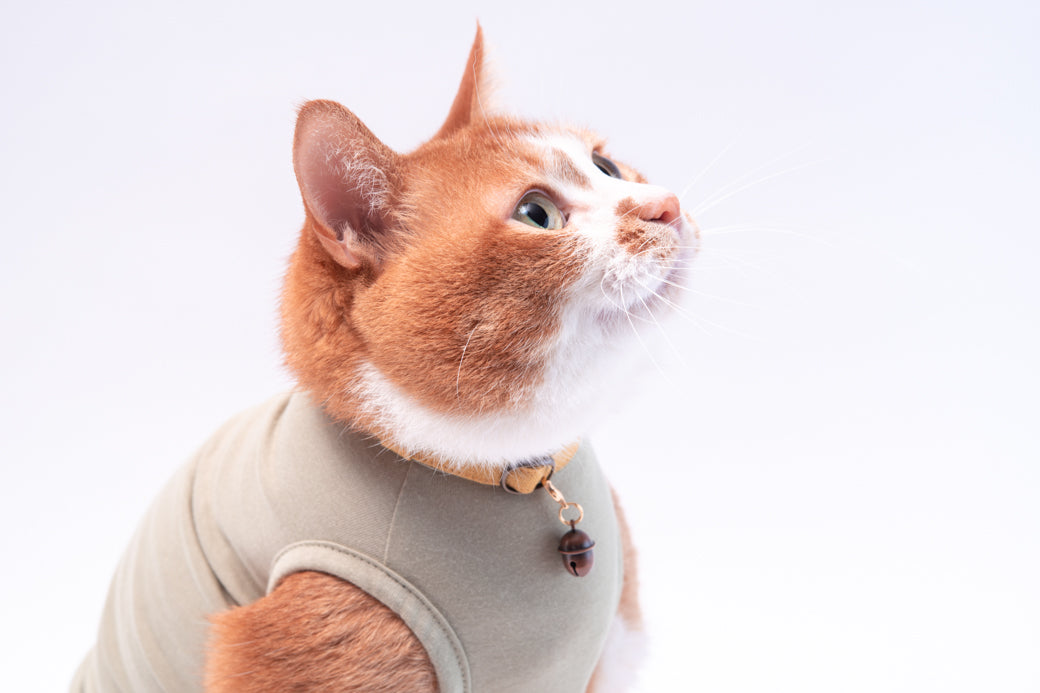
If your cat absolutely dislikes the Elizabethan collar, another option is to dress them in a recovery suit or protective clothing.
The key is to choose clothing that can properly cover the affected area, not just for fashion. There are many cases where cats disliked Elizabethan collars but were fine with recovery suits. It's also a good idea to consider using them in combination, depending on your cat's personality.
|
【Related Products】 |
How long is an Elizabethan collar necessary?

For spay/neuter surgery, stitches are typically removed about 1-2 weeks after the operation. The Elizabethan collar needs to be worn during this period. For skin inflammations or injuries, continue wearing it as instructed by your veterinarian.
The Elizabethan collar should remain on even when the owner is sleeping. If the collar is rigid, it can make it difficult for your cat to sleep, so provide soft blankets or cushions for them.
When you're away, ensure they can stay in a room with minimal steps to prevent accidents.
Summary

For cats, the Elizabethan collar can be unpleasant. However, it's a necessary item during recovery from spay/neuter surgery, injuries, or skin inflammation.
Cats must contend with the pain of their wounds or itchy skin while also enduring the discomfort of the Elizabethan collar. To reduce your cat's burden, consider reviewing options for lighter, softer materials or types with better visibility, or using it in conjunction with a recovery suit.
Above all, creating an environment where your cat can be as comfortable as possible is crucial.



![Why Does My Cat Need a Collar? [Disadvantages and Their Solutions]](http://www.poponeko.jp/cdn/shop/articles/DSC_9121-2_f7898a9b-8f8c-4864-921f-55ea7577a6b8.jpg?height=400&v=1764335616)

![[Set] Leaf Ribbon & Cat Collar Gingham Check Blue](http://www.poponeko.jp/cdn/shop/files/DSC00106_035b8e99-fd67-47ef-9132-ff2da1afbc67.jpg?v=1780663891&width=600 "[Set] Leaf Ribbon & Cat Collar Gingham Check Blue")
![[Set] Leaf Ribbon moda The Fleeting Outdoors & Cat Collar Stain-Resistant Water-Repellent Oil-Repellent Black](http://www.poponeko.jp/cdn/shop/files/260618_00173-2.jpg?v=1784452166&width=600 "[Set] Leaf Ribbon moda The Fleeting Outdoors & Cat Collar Stain-Resistant Water-Repellent Oil-Repellent Black")
![[Set] Leaf Ribbon Fleurage Blue & Cat Collar Belgian Linen Orange](http://www.poponeko.jp/cdn/shop/files/2608_00122.jpg?v=1789197487&width=600 "[Set] Leaf Ribbon Fleurage Blue & Cat Collar Belgian Linen Orange")
![[Set Product] Leaf Ribbon Fleurage Blue & Scrunchie Cat Collar Belgian Linen Orange](http://www.poponeko.jp/cdn/shop/files/2608_00135.jpg?v=1789197487&width=600 "[Set Product] Leaf Ribbon Fleurage Blue & Scrunchie Cat Collar Belgian Linen Orange")
![[Set Item] Leaf Ribbon & Cat Collar: Vidro - Akane](http://www.poponeko.jp/cdn/shop/files/2608_00401.jpg?v=1789826564&width=600 "[Set Item] Leaf Ribbon & Cat Collar: Vidro - Akane")

突然のコメントで失礼します。愛猫が15歳になります。ガンかもしれないと言われ手術を勧められたのですが、高齢なので手術が負担になるかもしれないとも言われました。病院に預けると食事も出来なくなるほど、環境の変化に敏感でストレスを感じる猫です。高齢だから、寿命まで治療せずにと思っていたのですが、お腹の腫瘍から膿が出て傷を舐めて広がってしまってます。エリザベスカラーも高齢で軽いものが良さそうだし、ロンパースも良さそうだなと拝見しました。ちょっと考えてみますあ
家の愛猫ちゃんも避妊手術後エリザベスカラーを着けていますがはずしたくてバックしたりします。食事もエリザベスカラーがお皿にあたって食べられないので私がいる時はお皿をエリザベスカラーの中に入れて食べさせてますが留守には困ります何か良い方法はと考えていますがもう少しなので一緒に頑張ります。
Leave a comment