

More and more cat owners are preparing a “cat harness” as a disaster preparedness measure.
While harnesses are generally associated with dog walks, there are times when a harness is necessary for cats to prevent escape or getting lost.
However, if a cat is not used to a harness, they may resist and struggle, or freeze and refuse to move. Eventually, they might even run away just at the sight of a harness.
This time, to help you make use of a cat harness when it matters most, we'd like to introduce solutions for the problem of "cats running away when shown a harness."
Why cats resist and run away from harnesses
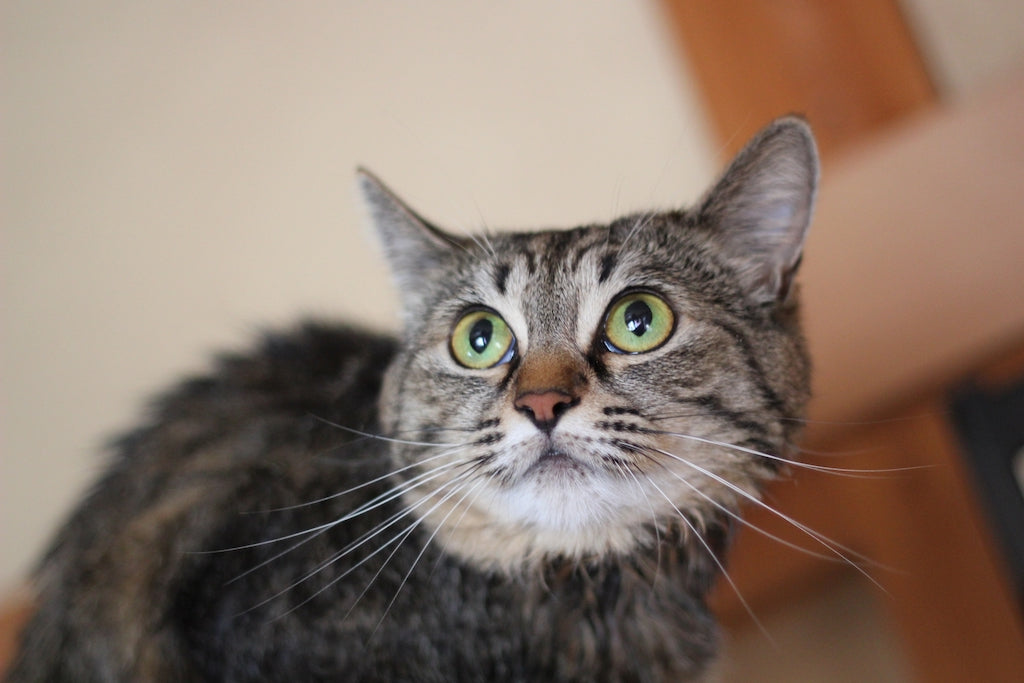
There could be several reasons why your cat resists and runs away from a harness. Let's try to understand your cat's feelings first.
Cat's instincts
Cats are creatures that have lived by hunting, so their entire body functions like a highly sensitive sensor. Because of this, they strongly dislike having foreign objects on their body or having their fur disheveled. Since a harness is a "large foreign object," many cats seem to dislike it and run away.
Fear of the harness itself
For cats, a harness is a "frightening object that restricts their freedom of movement." When a harness is first put on, it might be too small and uncomfortable, or designed in a way that restricts movement, causing the cat to become afraid of the harness itself and run away.
Poor harness application
If a harness is complicated to put on, the cat may not only be restrained for a long time but also be forced into an uncomfortable position, causing them to perceive it as "something unpleasant that happens." This creates wariness towards the harness, leading them to run away just at the sight of it.
What to do if your cat runs away when you show them a harness
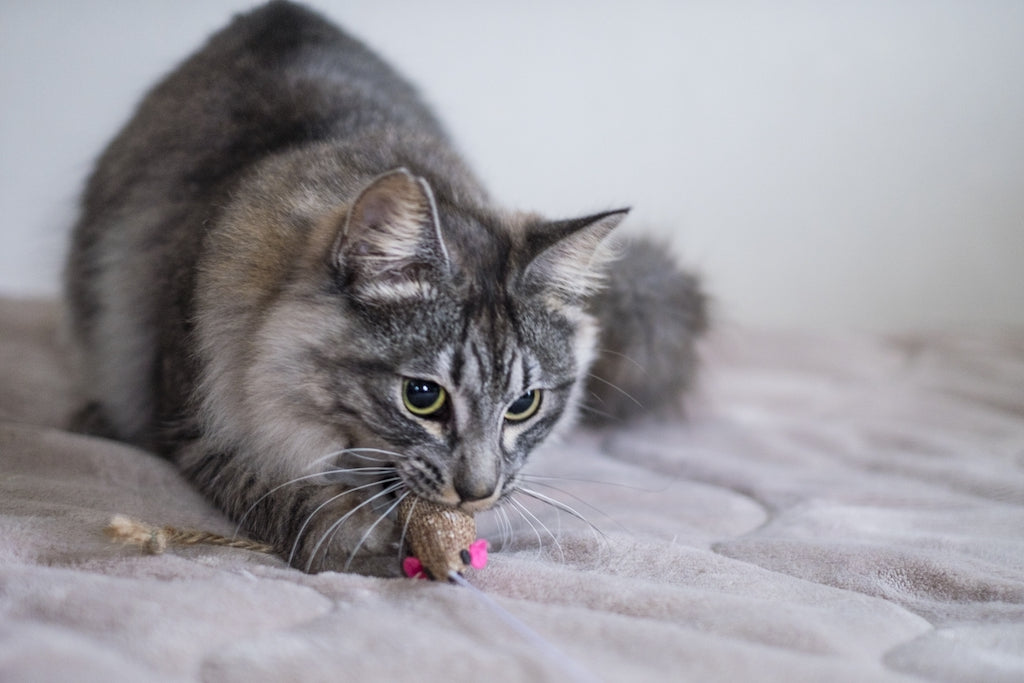
Cats have a very high sense of danger and tend to remember things they dislike or find scary very well.
So, if a cat associates "putting on a harness with unpleasant things happening, and harnesses as scary," they will start running away just at the sight of it.
Overcoming this harness "trauma" will take some time. To regain your cat's trust, take your time and gradually accustom them to it.
First, let them get used to the presence of the harness
Place the harness casually in your cat's path. The goal is to let them get used to the smell and presence of the harness, so there's no need to force them to wear it.
It can also be effective to play with the harness as a toy. If your cat remains wary, try wrapping the harness in a blanket your cat uses to transfer your cat's scent to it.
Eat meals and snacks near the harness
To help your cat associate the harness with positive feelings, feed them meals or treats near it.
Initially, just place it nearby. Once they're used to that, try holding the harness while giving them treats. Gradually bring the harness closer to their body while giving treats, slowly acclimating them. Continue patiently until they no longer resist when the harness touches their body.
Try putting on the harness
The trick is to make your cat think, "Something good happens when I wear the harness."
Once you put on the harness, give them a treat and immediately take it off. At first, just putting their arm through it is fine. Gradually increase the time they wear the harness through training.
Hold them and go outside
Many cats freeze and cannot walk when wearing a cat harness. Train them indoors until they can eat, use the litter box, and nap without discomfort.
Once your cat is used to the harness, try taking them outside while holding them. If they don't seem scared, attach the leash and let them down on the ground.
When harness training outdoors, choose a quiet place with few people or cars, and be careful to avoid contact with other cats.
|
【Related Articles】 |
Precautions when walking with a cat harness
Cats are creatures that dislike leaving their territory. You might think, "It's a shame they're only cooped up inside," but going outside can actually be stressful for them. There are also risks of escape and infectious diseases.
However, depending on the cat's personality, going outside for a walk can sometimes be a stress reliever. Also, many owners want to conduct disaster evacuation drills.
In such cases, always put the cat first. Try taking them for a walk without putting too much strain on your cat.
Do not forcibly pull the leash
Cat harnesses are meant to prevent escape. Unlike with dogs, they are not for pulling or training.
Cats are tense when they're in an unfamiliar outdoor environment. Even if they freeze and don't move, it's not okay to forcibly pull the leash. Gradually accustom them to it at their own pace.
Beware of slipping out of the harness
Cats are flexible and can sometimes slip out of their harnesses like ninjas. When purchasing a harness, the key to preventing escapes is to measure your cat accurately and choose a perfectly fitting size.
If you have an adjustable harness, make sure to adjust it snugly to your cat's body. A snug fit with about 1-2 fingers' worth of room is ideal.
It's also important to take measures against escape and getting lost. Don't forget to use a cat collar + ID tag and a microchip.
|
【Related Articles】 |
Don't forget vaccinations and flea/tick prevention
Since your cat might come into contact with other cats, vaccinations and flea/tick prevention are essential. Also, getting them spayed or neutered can prevent conflicts with other cats and unwanted pregnancies.
While getting your annual health check-up, ask about vaccinations and flea/tick prevention.
Summary
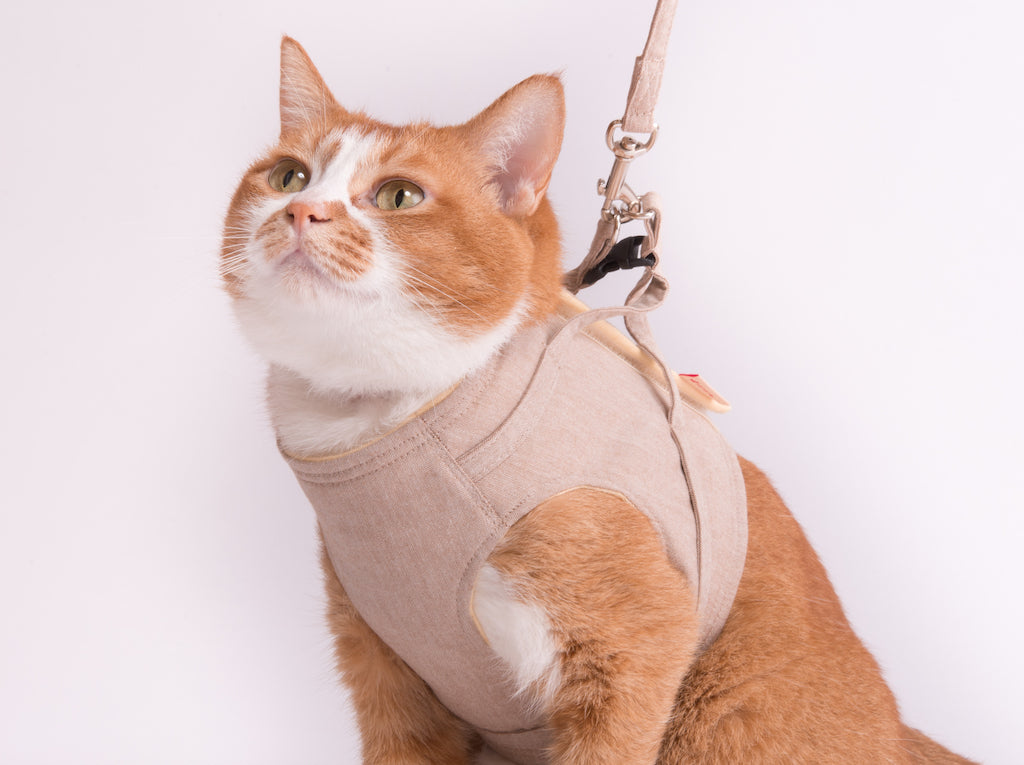
A cat harness is an escape prevention item that is useful not only for outings such as vet visits but also during disasters. In an emergency, you won't have time to chase your cat around.
If your cat runs away when shown a harness, try training them.
First, just show it to them, let them smell it. Play with the harness or hold it while giving treats to teach them that it's not scary.
If your cat doesn't mind the harness touching their body, try putting it on. At this point, too, give them a treat once the harness is on, to help them associate "harness on = something good happens."
Also, it's important to choose a harness that fits perfectly and is comfortable for your cat, so they can wear it without discomfort. Enjoy communicating with your cat while trying out harness training.
|
【Related Products】 |
Author Profile




![[New Product] The joy of choosing for you, gentle comfort for your beloved cat. Graphic cat collars are here!](http://www.poponeko.jp/cdn/shop/articles/090600107_93c9c9e5-aa57-4ec7-bbdc-23c6ff1f104b.jpg?height=400&v=1751956036)
![[New Product] Improved fit & feel! Our cotton corduroy cat collars have been renewed!](http://www.poponeko.jp/cdn/shop/articles/240900219_fe07798b-62e5-4c12-9b56-7f12cde11ae1.jpg?height=400&v=1763642459)
![[Set] Leaf Ribbon & Scrunchie Cat Collar Champ de Fleurs Pink](http://www.poponeko.jp/cdn/shop/files/DSC00086_92430f49-b816-4514-8687-7fd9a6e57988.jpg?v=1780663183&width=600 "[Set] Leaf Ribbon & Scrunchie Cat Collar Champ de Fleurs Pink")
![[Set] Leaf Ribbon - Moda Old World Yuletide & Cat Collar - MUJI Cotton Plain Autumn Sky](http://www.poponeko.jp/cdn/shop/files/260618_00174.jpg?v=1784451812&width=600 "[Set] Leaf Ribbon - Moda Old World Yuletide & Cat Collar - MUJI Cotton Plain Autumn Sky")
![[Set] Leaf Ribbon Fleurage Blue & Cat Collar Belgian Linen Mustard](http://www.poponeko.jp/cdn/shop/files/2608_00121.jpg?v=1789197487&width=600 "[Set] Leaf Ribbon Fleurage Blue & Cat Collar Belgian Linen Mustard")
![[Set] Leaf Ribbon & Cat Collar - Hannari Sakura Blue](http://www.poponeko.jp/cdn/shop/files/2608_00126.jpg?v=1789197917&width=600 "[Set] Leaf Ribbon & Cat Collar - Hannari Sakura Blue")
![[Set Product] Leaf Ribbon by Moda Salutations & Cat Collar by MUJI Cotton Plain - Koubai](http://www.poponeko.jp/cdn/shop/files/260618_00176.jpg?v=1784451813&width=600 "[Set Product] Leaf Ribbon by Moda Salutations & Cat Collar by MUJI Cotton Plain - Koubai")
![[Set Product] Leaf Ribbon & Scrunchie Cat Collar - Tartan Check - Dress Green](http://www.poponeko.jp/cdn/shop/files/2606_00009-2.jpg?v=1785759892&width=600 "[Set Product] Leaf Ribbon & Scrunchie Cat Collar - Tartan Check - Dress Green")

Leave a comment