

When your beloved cat escapes, it's easy to panic and desperately want to find them as soon as possible.
But in such situations, it's important to stay calm. Instead of searching blindly, you should employ "search methods" that offer a higher chance of finding them.
To help lost cats safely reunite with their owners, we've created a "Complete Guide to Finding Lost Cats."
How to Find a Lost Cat
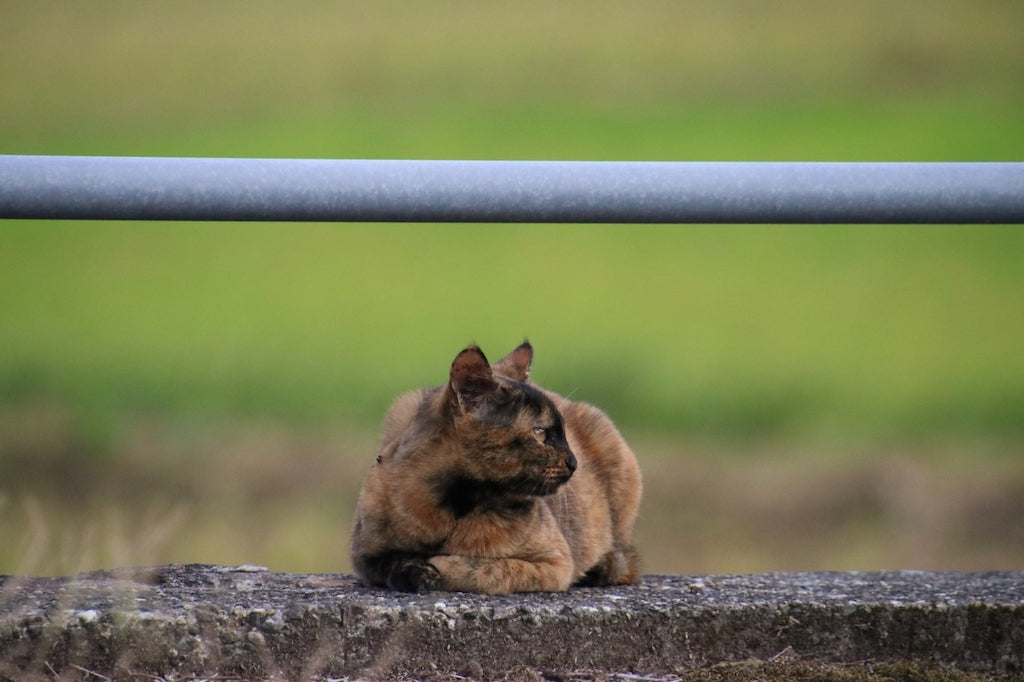
The longer a cat is lost, the harder it becomes to find them. It's crucial to act quickly and use efficient search methods.
If you realize your cat has escaped or is lost, start your search with the following steps:
STEP 1: Search the immediate surroundings
STEP 2: File reports
STEP 3: Ask for search cooperation
STEP 4: Distribute lost cat flyers
STEP 5: Capture the cat
When searching for your cat, it's helpful to bring their usual food/treats, a flashlight, a laundry net or bath towel, your smartphone with their photo, and if possible, a carrier bag.
STEP 1: Immediately after escape, search around your home

Cats that have accidentally gotten outside are usually very close to home. They are likely hiding in the shadows out of fear, so search thoroughly.
The first 2-3 days are crucial. It's important to act immediately without waiting to see what happens.
Show them the way home
Even if your cat gets outside, they might find their way back on their own. Leave the front door or a window slightly ajar and put out their usual food or treats. Scattering used cat litter can also be effective.
If you have another cat living with you, just placing their used litter around the house is enough.
Call their name
When searching for your cat, do not shout loudly or run around. This will only scare them more. Try calling your cat's name in your normal voice. You might also try calling out things like "Dinner time!" or "Treats!" to make your cat feel safe.
First, search within a 50m radius
Cats that are usually kept indoors often remain hidden and still for a while.
They tend to move along walls, so thoroughly search places within a 50m radius of your home where they might hide. Pay close attention to dark and narrow spaces, such as under cars, under air conditioner outdoor units, gaps between buildings, behind sheds, and under plants.
Ask your neighbors for permission to search their property as well.
Expand the search area
After about 2-3 days, a frightened cat that was hiding may become accustomed to the outdoor environment and start moving to find water and food. If they are not found on the day of escape, expand the search radius to 100m. If still not found, expand it further to 500m.
The time of day you search is also important, as cats often move during warm daytime hours in winter, or cool early mornings and evenings in summer.
STEP 2: File reports with the police, health center, and animal welfare center
If your lost cat is not found immediately, there's a chance they might have been taken in somewhere. File a report for a lost cat with your local police, health center, and animal welfare center.
Gather information such as the date and location your cat went missing, their characteristics, microchip number, and a photo, then contact these organizations.
First, contact local police box (koban) / police station
If a stray cat is found, it might be reported as "lost property" to a police box or police station. Also, if you file a "lost property report," you will be contacted if your cat is found.
Submit a lost pet report to the health center and animal welfare center
Cats without owners are sometimes taken in by health centers or animal welfare centers. Additionally, people who find cats may file a protection report.
You can find your local health center and animal welfare center on the website below. Since there is a time limit for how long they are held, submit a "lost pet report" the day after your cat goes missing.
▶Ministry of the Environment Animal Sheltering Data Search Site
Consider the possibility of injury
There is a possibility that your cat was injured somewhere and taken to a veterinary hospital. Inquire with nearby veterinary clinics.
Unfortunately, if your cat passed away due to an accident, their remains might have been collected by the local sanitation office. Prepare for the worst-case scenario and contact your nearest sanitation office.
STEP 3: Ask for search cooperation by all means possible

As mentioned earlier, the first 2-3 days are critical. Search thoroughly within a 50m radius, then gradually expand the search area.
However, as the search area expands, there will be areas and times that a single owner cannot cover. Ask family, friends, and neighbors to cooperate, and search with as many people as possible.
Create lost cat posters and flyers
Create lost cat posters and flyers with a picture of your cat, their name, fur color, distinguishing features, and your contact information to gather sightings.
Lost cat posters and flyers can be handwritten or created using free templates online. Be sure to print in color so that your cat's fur color and collar color are clearly visible.
Gather lost cat sighting information
To ensure as many people as possible see it, ask nearby convenience stores, supermarkets, post offices, banks, gas stations, veterinary clinics, and pet salons to display your lost cat poster.
However, an application may be required to post lost cat posters on utility poles or notice boards. Please do not post them without permission.
Ask for help from people familiar with cats
Try asking for help from volunteers who care for community cats. They might have information about someone who has taken in a cat, whether they've seen an unfamiliar cat, or advice on where cats tend to hide and how to search.
To gather sightings from early morning when cats are most likely to be active, give lost cat flyers to newspaper delivery personnel and ask for their cooperation.
STEP 4: Expand the search network by distributing lost cat flyers

When searching beyond a 50m radius, distributing lost cat flyers is effective.
Prepare a residential map and start by distributing flyers to homes within a 100m radius. While searching for your cat, expand the area where you distribute flyers.
If you receive a sighting, go to that location as soon as possible and search intensively.
Prepare at least 500 lost cat flyers
When distributing flyers, prepare 500 to 1000 lost cat flyers. You can color copy them at convenience stores, but online printing is more cost-effective.
Lost Pet.net allows you to order lost pet posters and flyers designed to effectively aid in your search.
|
【関連記事はこちら】 |
Use lost cat bulletin boards and social media to call for cooperation
Make full use of the internet. In addition to lost cat and rescued cat bulletin boards, social media platforms like Twitter and Facebook are also good for gathering information, so post images of your lost cat poster there.
Also, cats found as strays might be listed on adoption websites. If your cat is friendly, they might even have been taken in by another family. Keep collecting information diligently, considering such possibilities.
It would be ideal to divide tasks between a cat search team and an internet team.
STEP 5: Capture the cat

Once you find your cat, it's time to capture them!
Your cat is likely feeling anxious and fearful in the unfamiliar outdoor environment. Their wariness will be heightened, so do not rush towards them or try to grab them forcefully. They might run away, so proceed cautiously.
If the cat is calm, capture them directly
Relax, lower your posture, and call your cat's name. Sit nearby and show them their usual food or treats.
Even if they approach, don't touch them immediately. First, let them sniff your fingertips. If your cat is calm and seems okay with being touched, gently pick them up and secure them.
To prevent them from struggling, wrap them in a bath towel or put them in a carrier bag to bring them home.
If they are wary, don't rush
If your cat is wary, do not try to force a capture. Take your time to close the distance. It may be necessary to leave food and treats and observe from a distance, stepping away for a while.
If they run away when you get close, consider a humane trap
If it seems difficult to catch them by hand, consider using a "humane trap."

A humane trap is designed to safely secure a cat by closing its door once the cat enters. You can borrow one from health centers, animal welfare centers, veterinary clinics, or community cat volunteers, but they can be tricky to handle.
Also, if you set up a humane trap, you will need permission from the landowner. Do not take your eyes off the trap, observe from a distance so you can secure the cat as soon as it enters.
It's important to consider the cat's habits and personality to effectively set the trap, so it's best to seek advice from an experienced person if possible.
|
【関連記事はこちら】 |
Consider relying on a cat detective
If you absolutely can't find or catch your cat, hiring a cat detective is another option. You can rest assured as they handle everything from the search to the capture.
Take your cat to the vet after catching them
Once you're safely reunited with your cat, quietly hold them. You can also wrap them in their favorite blanket.
Avoid overwhelming them or scolding them. Instead, let them rest at home with food and water.
If your cat seems calm, it's a good idea to have them checked by a vet for fleas, ticks, and infections as a precaution. If you have other cats in the house, it's better for the returning cat to spend time in a separate room initially.
Summary

Lost cats are often found nearby. However, they can also be hiding in unexpected places, so the cooperation of many people is essential.
Once your cat is safely found, be sure to inform everyone who helped you that they have been found. You can also write "Found" on the lost cat posters and leave them up for a while.
Many people must have been hoping for your cat's safe return, just like you.
To prevent future escapes, review your escape prevention measures for doors and windows. Additionally, it's safer to take precautions such as implanting a microchip, attaching an ID tag to their collar, implementing flea and tick prevention/vaccinations, and considering spaying/neutering.
It's also important to regularly take photos of your cat. Make sure to capture clear pictures that show their features well, including front and back views.
While it's crucial to implement escape prevention measures on a daily basis, also prepare strategies to increase the chances of your cat safely returning home if they do get lost.
|
【関連商品はこちら】 |





![Graphic Cat Collar - Ironeko - Dusty Blue [Limited Model]](http://www.poponeko.jp/cdn/shop/files/250200291.jpg?v=1741354228&width=600 "Graphic Cat Collar - Ironeko - Dusty Blue [Limited Model]")


![Graphic Cat Collar - Botanical Halloween, Night Mocha [Limited Model]](http://www.poponeko.jp/cdn/shop/files/2608_00015.jpg?v=1787927045&width=600 "Graphic Cat Collar - Botanical Halloween, Night Mocha [Limited Model]")


うちの猫は17日夕方にノラ猫と遊ばせようといつもは家の中なのに
その日天気が良くなり玄関に出したら逃げてしまいました
いつも拝見してます。うちの子も数回脱走してしまい大変でしたので猫柵を設置しました。
Leave a comment