

When you live with a cat, you become very concerned about safety measures around your home.
Even if your cat is kept strictly indoors, the risk of danger is not zero. One household accident to be careful of is "electrocution." There are many cases of cats chewing on electrical cords and getting electrocuted.
In this article, we will explain clearly the causes and prevention methods for cat electrocution accidents, as well as first aid measures for emergencies.
Causes of Electrocution in Cats
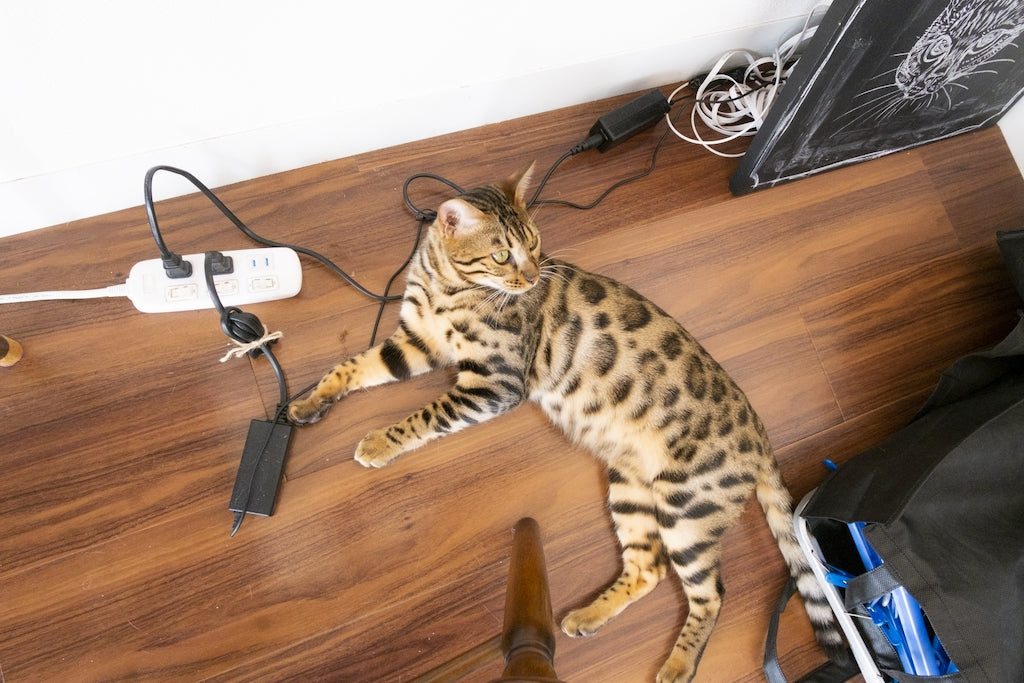
Electrocution refers to the shock received when an electric current flows through the body.
When electricity passes through the body, heat is generated, causing "burns." If the current is strong, it can damage not only the mouth, tongue, and skin but also internal organs. In the worst-case scenario, it can lead to cardiac arrest.
Electrocution accidents are very frightening. However, it seems that cats often get electrocuted by chewing on "electrical cords" out of curiosity.
For example...
- Playing with and biting the electric cord of a kotatsu (heated table)
- Chewing on a smartphone charging cord
- Mistaking a hairdryer's electric cord for a toy
These are some possible causes.
In addition,
- Putting a paw into an electrical outlet
- Electrical leakage in a wet area
It's important to remember that the risk of electrocution can be found in common places.
Symptoms of Electrocution in Cats

If your cat is "lethargic near an electrical appliance" or has "burns around their mouth or on their tongue," electrocution may be suspected.
Mild cases may only result in numbness or burns, but severe cases can be life-threatening. If you notice electrocution or its symptoms, consult a veterinarian.
Suspected Electrocution? Head to the Vet
Even if electrocuted, it may not be immediately apparent. If there is damage to internal organs or muscles, symptoms may appear some time later.
If your cat exhibits the following symptoms and there are bite marks on an electrical cord, there is a possibility that your cat has been electrocuted.
- Numbness
- Burns
- Lethargy
- Limping
- Unconsciousness
- Heart attack
- Cardiac arrest
- Arrhythmia
- Pulmonary edema
Even if your cat seems fine, always take them to the vet.
First Aid for Cat Electrocution

If you find your cat lethargic near an electrical appliance after being electrocuted, what should you do? It's important to know how to administer first aid.
First, turn off the power
If you touch a cat immediately after it has been electrocuted, you, the owner, could also be electrocuted. If the cat has urinated, be careful as the urine may also be electrified.
First, turn off the electrical appliance. If that's not possible, unplug the cord from the outlet or trip the circuit breaker.
Move to a safe place
Wear rubber gloves or plastic bags, or any other non-conductive material on your hands, and move your cat to a safe place. If your cat is in a panic, gently stroke them to calm them down.
Check the mouth and tongue
Check your cat's mouth, tongue, and skin for burns. Even if your cat is unconscious, do not perform cardiac massage or artificial respiration unnecessarily; instead, call a veterinarian immediately and follow their instructions.
Preventing Cat Electrocution
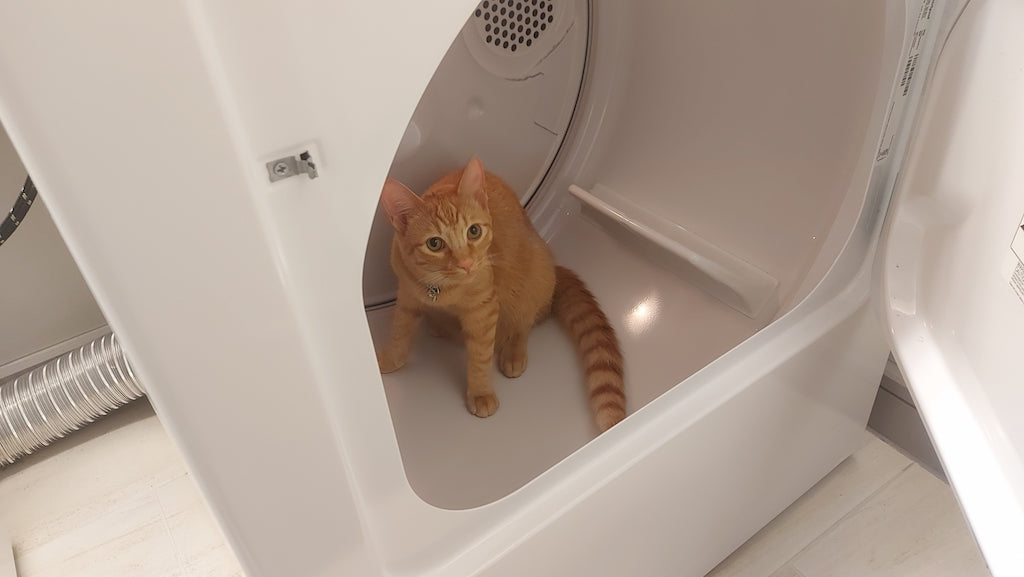
For cats, electrical cords are string-like toys that stimulate their curiosity. Make sure to take thorough measures to prevent your cat from chewing on electrical cords.
Unplug electrical cords from outlets
When not using electrical appliances, unplug their cords from the outlet. Also, don't leave smartphone charging cables plugged in; tidy them up regularly.
Put covers on electrical cords
It's a good idea to put commercially available covers on electrical cords to prevent your cat's teeth from reaching them if they chew. These can be found at home centers, 100-yen shops, and baby product stores.
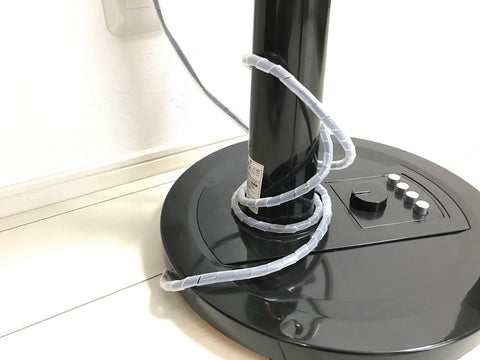
▲Example of an electrical cord cover
Also, you can take measures against cat electrocution with a little DIY.
The easiest way is to completely hide electrical cords with plastic wire covers. If you bundle electrical cords in a corner of the room, it will also look neat and tidy.
Areas behind computers and TVs where electrical cords are concentrated are favorite spots for cats. Store them in an electrical cord storage case or use tension rods to create a barrier to prevent your cat from getting in. You can also DIY with plastic cases or install tension shelves to prevent your cat from entering.
Install outlet covers
Install covers on outlets to prevent your cat from accidentally putting their paws into them. Outlet covers can also be found at home centers, 100-yen shops, and baby product stores.
Replace old electrical cords
Old electrical cords can be dangerous if the vinyl insulation is peeled off. They can also cause fires, so replace them with new ones.
Summary

Compared to cats that go outside, indoor-only cats are said to live longer. However, there are still risks of accidents in the home, such as electrocution.
It would be great if we could train cats not to chew on electrical cords, but it's not that easy.
Especially when using electrical appliances for heat or cold protection, caution is necessary. Measures such as using covers or hiding electrical cords to prevent chewing are essential.
When leaving curious kittens or mischievous cats alone, it might be safer to keep them in a cage.
To ensure your cat can live safely, make sure to take proper measures to prevent electrocution from electrical cords!
Author Profile




![Feline Infectious Peritonitis (FIP) Treatment Guide [2024 Edition]: Latest Information and Treatment Options](http://www.poponeko.jp/cdn/shop/articles/shutterstock_1633580878.jpg?height=400&v=1727181737)


![[Set Item] Leaf Ribbon & Cat Collar, Petit Fleur, Pink](http://www.poponeko.jp/cdn/shop/files/2608_00405.jpg?v=1789946167&width=600 "[Set Item] Leaf Ribbon & Cat Collar, Petit Fleur, Pink")
![[Set Item] Leaf Ribbon & Cat Collar, Petit Fleur, Mint](http://www.poponeko.jp/cdn/shop/files/2608_00406.jpg?v=1789946167&width=600 "[Set Item] Leaf Ribbon & Cat Collar, Petit Fleur, Mint")
![[Set Item] Leaf Ribbon & Cat Collar - Petit Fleur - Pastel Pink [Limited Color]](http://www.poponeko.jp/cdn/shop/files/2608_00409.jpg?v=1789946167&width=600 "[Set Item] Leaf Ribbon & Cat Collar - Petit Fleur - Pastel Pink [Limited Color]")
![[Set] Leaf Ribbon & Cat Collar - Petit Fleur - Pastel Blue [Limited Color]](http://www.poponeko.jp/cdn/shop/files/2608_00410.jpg?v=1789946167&width=600 "[Set] Leaf Ribbon & Cat Collar - Petit Fleur - Pastel Blue [Limited Color]")
![[Set] Leaf Ribbon & Scrunchie Cat Collar, Gingham Check, Yellow](http://www.poponeko.jp/cdn/shop/files/DSC00094_3cfceafb-3dec-4966-8fb0-98d2b6a0f857.jpg?v=1780663891&width=600 "[Set] Leaf Ribbon & Scrunchie Cat Collar, Gingham Check, Yellow")
![[Set Product] Leaf Ribbon & Scrunchie Cat Collar - Champ de Fleur Light Green](http://www.poponeko.jp/cdn/shop/files/DSC00088_9d993016-a552-497a-a7bd-05e1b7a11408.jpg?v=1780663183&width=600 "[Set Product] Leaf Ribbon & Scrunchie Cat Collar - Champ de Fleur Light Green")



Leave a comment