

When living with cats, "flea and tick control" becomes a concern.
Ideally, we want to prevent fleas and ticks from getting on our cats. But what should we do if our cats do get fleas or ticks? Are there effective prevention methods or medications?
This article will explain flea and tick prevention and extermination methods for cats, as well as the symptoms if your cat is bitten.
Basic knowledge of fleas and ticks

Both fleas and ticks are small, blood-sucking parasites. Fleas have six legs and are insects, while ticks have eight legs and are arachnids (related to spiders).
Being bitten can cause not only itching but also a risk of infection with viruses or other parasites. Some can even infect pet owners.
First, as basic knowledge, let's look at the characteristics and differences between fleas and ticks.
About fleas
The flea that infests cats is called the "cat flea." It is about 1.5 mm long but can grow to about 3 mm after sucking blood.
Cat flea larvae do not suck blood, but adults suck blood and lay eggs. They reproduce explosively when conditions are right, such as temperatures above 13°C and comfortable humidity.
About ticks
The ticks that infest cats are "hard ticks" and "sarcoptic mites."
Hard tick larvae also suck blood. They bite with strong jaws and continue to suck blood, growing from 2-4 mm to over 1 cm in size.
Sarcoptic mites are almost invisible to the naked eye but burrow into the cat's skin and reside there.
Symptoms of flea and tick bites

What symptoms appear when fleas or ticks infest cats? Many people may not know that there are symptoms other than itching.
To quickly notice your cat's discomfort, it's important to know the symptoms of flea and tick bites.
Symptoms caused by cat fleas
Cat flea bites can cause itching and dermatitis. Also, cat flea saliva can act as an allergen, leading to flea allergy dermatitis.
They also transmit infections such as "Dipylidium caninum" and "cat scratch disease."
Symptoms caused by hard ticks
Infestation by hard ticks can cause not only itching and dermatitis but also anemia.
They also transmit various bacteria and viruses, which can be dangerous for pet owners.
In addition to "feline hemobartonellosis," "Lyme disease," and "Q fever," they can also transmit "SFTS (Severe Fever with Thrombocytopenia Syndrome)," which can be life-threatening.
For more details on infections transmitted by hard ticks, please refer to the Ministry of Health, Labour and Welfare website.
Symptoms caused by sarcoptic mites
Sarcoptic mites burrow into the skin, creating tunnels, which causes intense pain. This is also accompanied by symptoms such as itching, hair loss, scabs, and dandruff.
It often starts on the head, face, and ears, leading to "scabies." Additionally, mites that live in the ears are called "ear mites" and cause ear-related symptoms such as "otitis externa" and "ear scabies."
Flea and tick extermination methods
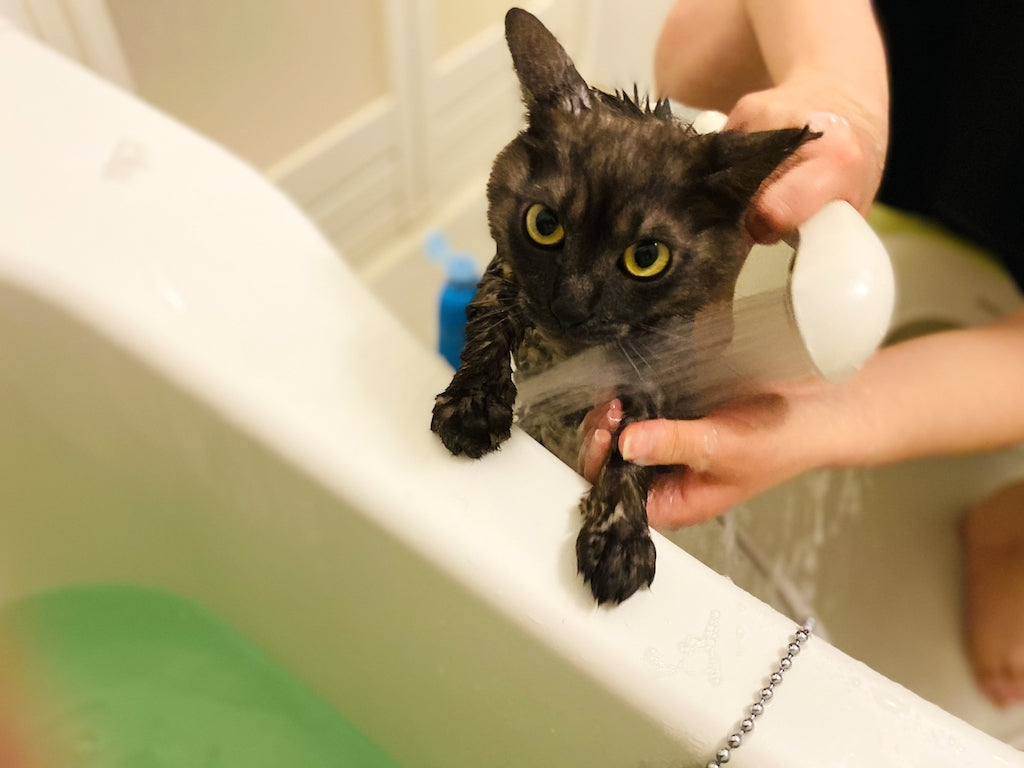
If you find fleas or ticks on your cat, you'll want to remove them immediately.
However, incorrect removal can worsen symptoms or lead to infections, so caution is necessary.
If you find fleas or ticks, visit a vet and get a prescription for flea medication, such as oral medicine, spray, or a spot-on treatment applied to the neck.
Flea extermination methods
If you see black specks on your cat's skin, it might be cat flea feces. If you place them on a wet tissue, they'll turn red, so observe carefully.
Even if you find fleas, do not crush them. There is a risk of eggs scattering or contracting infections. Instead, submerge them in diluted mild detergent water or trap them between adhesive tape without crushing them.
Fleas are vulnerable to water, so as a first aid measure, you can use flea shampoo. After shampooing, use a flea comb to catch and dispose of the fleas.
In any case, do not self-diagnose; visit a vet.
Also, if even one flea is found, there is a possibility that fleas are lurking indoors. Vacuum thoroughly and spray with flea and tick insecticide. Since fleas develop from egg to adult in about two weeks, clean meticulously for at least three weeks.
Hard tick extermination methods
Hard ticks burrow their jaws deep into the skin and do not detach easily. If you pull them forcefully, only the body may come off, leaving the jaws embedded in the body.
Similar to fleas, crushing them is also not recommended due to the high risk of bacterial and viral infections.
If you find a hard tick, absolutely do not touch it; visit a vet to have it removed.
Can flea collars exterminate fleas?
Over-the-counter flea collars are repellents, not exterminators. They can weaken fleas but cannot eliminate them. Also, note that they are not effective against ticks.
For more information, please refer to the article below.
|
[Related articles here] |
Flea and tick prevention methods

To protect your cat from fleas and ticks, implement these three prevention measures:
- Keep them indoors exclusively
- Maintain a clean indoor environment
- Prevent with medication
Keeping your cat exclusively indoors can reduce the risk of fleas and ticks.
Furthermore, maintaining a clean living environment also contributes to flea and tick control. Regularly wash your cat's bed and blankets.
The most important thing is prevention with flea and tick medication. Spot-on prevention applied to the back of the neck is easy and effective.
While "Frontline Plus" is well-known for flea and tick prevention, "Revolution" and "Broadline" are recommended as they also prevent heartworm.
To protect your cat from serious diseases, visit a vet once a year and always implement flea and tick control.
|
[Related articles here] |
Summary
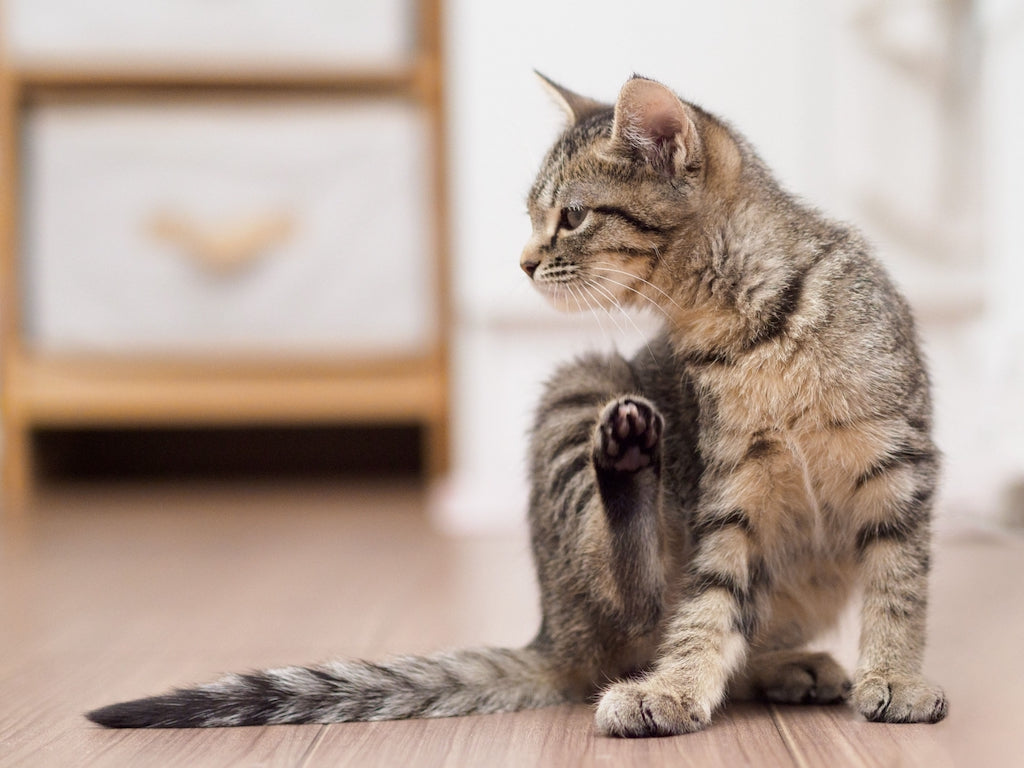
Fluffy cats provide a comfortable environment for fleas and ticks. Even with indoor-only cats, regular prevention is necessary as they are not entirely immune to fleas and ticks.
Spot-on prevention is convenient for flea and tick control. It's applied to the back of the neck once a month, minimizing stress on the cat.
The necessary preventive medicine and the duration of administration vary depending on the cat's living environment, so always consult a veterinarian.
To ensure you don't forget the monthly medication schedule, mark it on a calendar or in a cat-specific health record book.
Only owners can protect their cats' health. Check for fleas and ticks while brushing or during other interactions.
|
[Related products here] |
Author Profile




![Feline Infectious Peritonitis (FIP) Treatment Guide [2024 Edition]: Latest Information and Treatment Options](http://www.poponeko.jp/cdn/shop/articles/shutterstock_1633580878.jpg?height=400&v=1727181737)


![[Set] Leaf Ribbon & Cat Collar - Arabesque Swirl, Red](http://www.poponeko.jp/cdn/shop/files/2608_00117.jpg?v=1789044775&width=600 "[Set] Leaf Ribbon & Cat Collar - Arabesque Swirl, Red")
![[Set] Leaf Ribbon & Cat Collar Gingham Check Blue](http://www.poponeko.jp/cdn/shop/files/DSC00106_035b8e99-fd67-47ef-9132-ff2da1afbc67.jpg?v=1780663891&width=600 "[Set] Leaf Ribbon & Cat Collar Gingham Check Blue")

![[Set] Leaf Ribbon & Scrunchie Cat Collar, Arabesque Swirl, Teal](http://www.poponeko.jp/cdn/shop/files/2608_00131.jpg?v=1789044775&width=600 "[Set] Leaf Ribbon & Scrunchie Cat Collar, Arabesque Swirl, Teal")
![[Set] Leaf Ribbon & Cat Collar: Petit Fleur, Blue](http://www.poponeko.jp/cdn/shop/files/2608_00407.jpg?v=1789946167&width=600 "[Set] Leaf Ribbon & Cat Collar: Petit Fleur, Blue")




Leave a comment