
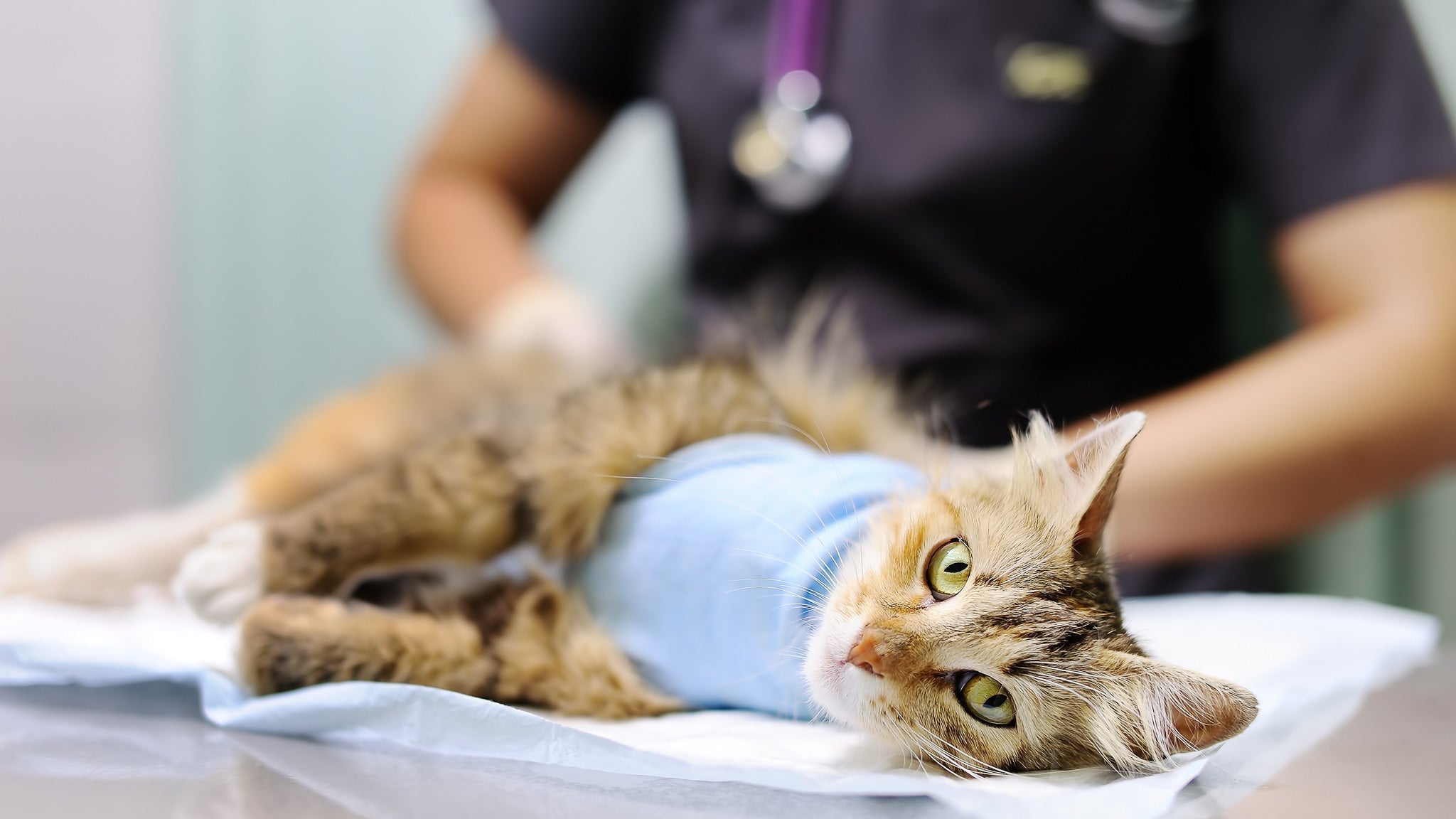
Thanks to improvements in living environments and advancements in veterinary medicine, the lifespan of cats has extended to about 15 years. This is equivalent to approximately 76 human years. Consequently, cancer in older cats has increased and is now among the top three causes of death.
This article will provide a detailed explanation of cancer in cats.
What is Feline Cancer? Incidence and Common Types

Difference between Benign and Malignant Tumors
The term "tumor" often carries a negative connotation, but its definition is "a condition in which cells normally present in one's own body autonomously, aimlessly, and excessively proliferate." In other words, it refers to the abnormal increase of normal cells for some reason. Tumors can be either benign or malignant, with malignant tumors often referred to as "cancer."
The crucial difference between benign and malignant tumors is the presence or absence of metastasis. Benign tumors also grow as cells proliferate, but their boundaries with surrounding tissue are clear, they grow slowly, and they do not metastasize. Malignant tumors, on the other hand, grow by destroying surrounding tissue, increase rapidly in size, and can metastasize. A significant difference is their very high potential for recurrence even after treatment.
Incidence of Feline Cancer
While rare in young cats, the incidence of cancer in cats tends to increase after age 5. For cats aged 10, the incidence rate is about 5%.
Various factors contribute to feline cancer, including the accumulation of genetic errors due to aging, decreased immunity, chronic inflammation due to obesity, viral infections (such as feline leukemia virus), hormonal influences, and exposure to chemical substances.
Although cancer is often associated with older age, cats infected with feline leukemia virus can develop cancer at a younger age.
Types of Cancer Common in Cats
Common cancers in cats include lymphoma, mammary gland tumors, mast cell tumors, squamous cell carcinoma, and fibrosarcoma. Lymphoma, in particular, accounts for up to 20% of all tumors.
Main Symptoms of Feline Cancer and Abnormalities Owners Should Watch Out For

Loss of appetite or weight loss, vomiting, diarrhea
Cancer grows by drawing blood and nutrients from its surroundings. Therefore, one of the initial symptoms can be "losing weight despite having an appetite." Additionally, many feline cancers occur in the intestinal tract, which can lead to loss of appetite, increased vomiting, or diarrhea. Cats may also refuse to eat due to pain.
How to Check for Lumps and Swellings
Cancers that tend to develop on the skin may be discovered as lumps. Mast cell tumors, squamous cell carcinomas, and fibrosarcomas can appear as skin lumps. Additionally, some types of lymphoma cause generalized lymph node swelling, which may be detected as a lump on the jaw.
Regularly feel your cat's body for any prominent swellings. If there's an area your cat constantly licks, it's also a good idea to check there.
Oral abnormalities such as bad breath, drooling, and bleeding
Squamous cell carcinoma and other oral cancers can cause abnormalities in the mouth. Symptoms include severe bad breath, drooling, bleeding from the gums, and inability to close the mouth.
Irregular breathing and decreased vitality
As cancer progresses, it can metastasize throughout the body. Fluid may accumulate in the chest or abdomen, leading to difficulty breathing. Additionally, bleeding, destruction of red blood cells, or decreased production can cause anemia, which may also result in labored breathing or reduced activity.
Feline Cancer Diagnosis and Treatment Methods

Diagnosis with Blood Tests, X-rays, and Ultrasounds
Many feline cancers, such as lymphoma and leukemia, can often be detected through blood tests. X-rays and ultrasounds are also crucial for cancer diagnosis, not only for pinpointing the location of the cancer but also for assessing whether fluid has accumulated in the abdomen or chest.
Necessity of CT and MRI Scans
The accuracy of X-ray and ultrasound examinations can vary depending on the experience and skill of the diagnosing veterinarian. Additionally, it can be challenging to examine the head and spinal cord with X-rays and ultrasounds, making advanced imaging tests like CT and MRI sometimes necessary.
Options for Surgery, Radiation Therapy, and Chemotherapy (Anticancer Drugs)
The primary treatment choice varies depending on the type of cancer. For blood cancers such as lymphoma and leukemia, chemotherapy is the first-line treatment. For mast cell tumors and fibrosarcomas, surgical removal is the primary choice. Radiation therapy may be used for certain cancers, such as nasal adenocarcinoma. Many cancers are treated with a combination of these therapies.
Palliative Care and Symptomatic Treatment
Cancer treatment includes not only curative therapy aimed at treating the cancer itself, but also palliative care focused on improving the patient's quality of life (QOL). Palliative care is often initiated when cancer has spread throughout the body or when metastasis has occurred. It may involve surgery, chemotherapy, or radiation to reduce the size of the cancer. Additionally, symptomatic treatment is combined to alleviate distressing symptoms such as vomiting and pain.
Feline Cancer Prevention and Early Detection Tips

Importance of Regular Health Check-ups for Cats
Cancer progresses quickly, and it's not uncommon for it to have already metastasized by the time it's discovered. Therefore, regular health check-ups are crucial. Feline cancer tends to increase around age 5. For this reason, it's advisable to have your cat examined at least once a year, preferably twice a year. While health check-up items vary by veterinary clinic, it is recommended to undergo X-ray and ultrasound examinations if possible.
|
【Related Articles】 |
Importance of Cat Diet and Weight Control
Cats can obtain the necessary energy and nutrients to maintain their bodies from cat food and water. Human food often contains high levels of salt or additives, which can cause health problems for cats. This can lead to various illnesses, not just cancer.
Most indoor cats today are well-nourished and tend to be obese. Obesity is known to cause inflammation in the body, which has been implicated in cancer. Review the quality and quantity of your cat's food to maintain a healthy weight.
Vaccination
Some cancers, such as lymphoma, are known to be caused by the feline leukemia virus. Cancers related to viruses tend to develop at a young age. Feline leukemia is particularly common in outdoor cats. There is a vaccine for feline leukemia virus, so cats that go outdoors should be vaccinated.
The World Small Animal Veterinary Association's vaccination guidelines recommend intervals of 3 years or more for adult cats. This is because vaccine efficacy lasts for over 3 years, and there is a risk of vaccine-associated fibrosarcoma developing at the injection site.
Vaccine-associated fibrosarcoma forms a lump that deeply roots in the affected area, but it is a type of cancer that is less likely to metastasize. Therefore, it is recommended to inject the vaccine into the hind leg so that the affected area can be surgically removed (amputated) if cancer develops. Regularly touch the vaccination site to check for any lumps.
Key Points for Owners to Conduct Daily Health Checks
Cancer is often advanced by the time it is noticed, and feline cancer is often incurable. Early detection and early treatment are crucial. Regularly touch your cat to check for lumps, weight loss, or signs of pain. Also, closely observe their appetite and energy levels.
Summary

Cancer tends to be more common in older cats. Early detection and early treatment are key to successful outcomes. To facilitate early detection, ensure your cat has regular health check-ups and visit the vet for even minor abnormalities.


![Feline Infectious Peritonitis (FIP) Treatment Guide [2024 Edition]: Latest Information and Treatment Options](http://www.poponeko.jp/cdn/shop/articles/shutterstock_1633580878.jpg?height=400&v=1727181737)


![[Set] Leaf Ribbon Fleurage Purple & Scrunchie Cat Collar Belgian Linen Turquoise](http://www.poponeko.jp/cdn/shop/files/2608_00136.jpg?v=1789197487&width=600 "[Set] Leaf Ribbon Fleurage Purple & Scrunchie Cat Collar Belgian Linen Turquoise")
![[Set] Leaf Ribbon & Scrunchie Cat Collar, Gingham Check, Yellow](http://www.poponeko.jp/cdn/shop/files/DSC00094_3cfceafb-3dec-4966-8fb0-98d2b6a0f857.jpg?v=1780663891&width=600 "[Set] Leaf Ribbon & Scrunchie Cat Collar, Gingham Check, Yellow")
![[Set] Leaf Ribbon Moda Fab-Boo-Lous & Cat Collar Cotton Oxford Orchid](http://www.poponeko.jp/cdn/shop/files/260618_00166.jpg?v=1784451812&width=600 "[Set] Leaf Ribbon Moda Fab-Boo-Lous & Cat Collar Cotton Oxford Orchid")
![[Slightly Damaged] Cat-Friendly Cat Warm Shirt, Border (Short Sleeve)](http://www.poponeko.jp/cdn/shop/products/DSC_7661.jpg?v=1675832922&width=600 "[Slightly Damaged] Cat-Friendly Cat Warm Shirt, Border (Short Sleeve)")
![[Set Product] Leaf Ribbon & Cat Collar - Champ de Fleurs Mustard](http://www.poponeko.jp/cdn/shop/files/DSC00104_6c37e71d-120f-40d9-a773-9a5b7e885760.jpg?v=1780663183&width=600 "[Set Product] Leaf Ribbon & Cat Collar - Champ de Fleurs Mustard")
![[Set] Leaf Ribbon moda Lydia Lace & Cat Collar Ayakasuri Akane](http://www.poponeko.jp/cdn/shop/files/260618_00159.jpg?v=1784451813&width=600 "[Set] Leaf Ribbon moda Lydia Lace & Cat Collar Ayakasuri Akane")

Leave a comment