

Even though cats are supposed to be clean, if your cat has bad breath... It might not be due to a lack of teeth brushing, but a sign of illness.
Of particular concern is bad breath caused by kidney disease. Cats are prone to kidney disease, so it's crucial not to overlook this.
In this article, we'll explore possible illnesses that cause bad breath in cats and how to address it. We'll also delve into the relationship between bad breath and kidney disease in cats.
Possible illnesses when a cat has bad breath

Cats generally have very little body odor. If your cat's breath is bad, it indicates something abnormal is happening in their body.
To avoid missing signs of illness, it's important to be aware of the possible conditions that cause severe bad breath in cats.
Bad breath caused by periodontal disease
If there's a smell like rotting garbage or a fishy, foul odor, it might be bad breath caused by periodontal disease. If food residue or plaque remains on the teeth, bacteria proliferate and produce volatile sulfur compounds. This substance is the cause of bad breath. It can also lead to tartar and periodontal disease, so be careful.
Bad breath caused by stomatitis
When there is stomatitis, the breath also has a fishy odor, similar to when it's caused by periodontal disease. Stomatitis can also be caused by internal organ diseases or infections. Observe your cat for any unusual behavior and consult a veterinarian.
Bad breath caused by diabetes
Cats can also develop diabetes. This is a disease where the pancreas's function declines, leading to an inability to properly secrete insulin, which controls blood sugar levels. When blood sugar levels remain high, it results in a distinctive sweet and sour smelling urine or breath.
Bad breath caused by kidney disease
When kidney function declines, waste products cannot be excreted in the urine and accumulate in the blood. Urine-like breath odor, or strong ammonia-like breath, known as "uremic breath," is a sign that kidney disease is progressing.
How to deal with a cat's bad breath

If you notice your cat has bad breath, it's important to identify the cause and address it appropriately.
If your cat's bad breath is due to poor oral hygiene, it can be improved with regular brushing. If the bad breath is caused by an illness, treatment such as medication will be necessary.
However, it is very difficult to diagnose an illness based solely on bad breath.
If you notice your cat has bad breath, consult a vet immediately. It's also important to find a trusted veterinarian whom you can comfortably consult with about anything.
Make brushing a habit
To avoid overlooking bad breath caused by illness, make teeth brushing a habit.
Keeping your cat's mouth clean regularly eliminates the possibility of bad breath caused by poor oral hygiene, such as periodontal disease, and allows you to detect illness sooner.
Many cats dislike brushing their teeth, but for their health management, daily brushing is recommended. Also, make good use of dental care sprays and supplements.
The relationship between cat kidney disease and bad breath
For cats, kidney disease is almost an "inevitable fate," a condition that is hard to avoid.
However, the cause of kidney disease is not well understood. While "concentrated urine" and "insufficient hydration" are thought to strain the kidneys, there is no definitive prevention method.
To detect kidney disease in cats early, there are things you should know about the relationship between kidney disease and bad breath.
What is feline kidney disease?
Feline kidney disease includes "acute kidney disease" and "chronic kidney disease (renal failure)."
Acute kidney disease is caused by dehydration, heart failure, poisoning, infection, or urinary stones. It progresses rapidly, but can be cured if treated in its early stages.
What is common in cats is "chronic kidney disease (renal failure)." It is a disease where the kidneys become inflamed and their function gradually declines, eventually ceasing to function. Unfortunately, kidney function cannot be restored.
Symptoms of chronic kidney disease (renal failure)
Kidney disease often progresses without symptoms, so many owners notice an abnormality due to a strong, urine-like or ammonia-smelling breath.
The kidneys play a crucial role in filtering waste products from the body and excreting them as urine. When kidney function declines, waste products accumulate in the body, leading to strong ammonia-like bad breath.
As the condition progresses, it can lead to uremia and even death. For early detection, it is important not to miss the initial symptoms.
[Early symptoms of chronic kidney disease (renal failure)]
- Strong ammonia-like bad breath
- Drinks a lot of water at once
- Increased frequency or amount of urination
- Urine no longer smells
- Urine color has become lighter
- Loss of appetite
- Lacks energy
- Vomiting/diarrhea
- Weight loss
- Dull coat
Prevention methods for chronic kidney disease (renal failure)
There is no specific prevention method for chronic kidney disease...
However, it is believed that feeding "high-quality complete and balanced food in appropriate amounts" and "ensuring access to plenty of fresh water" can reduce the burden on the kidneys.
Hydration is especially important. Many cat owners find it challenging to get their cats to drink water, so they are trying various methods. By adjusting the freshness and temperature of the water, and the shape of the water bowl, you can help your cat hydrate effectively.
|
【Related articles】 |
Early detection of feline kidney disease is crucial!

Cats are at a very high risk of developing kidney disease. Therefore, early detection and early treatment are paramount.
However, kidney disease can progress without symptoms. Moreover, cats are creatures that hide their illnesses. Even if they are in pain, they won't show it and will endure it until the last moment.
By the time owners notice "something is off," the disease may already be quite advanced.
Observe your cat's behavior regularly to be able to detect the early symptoms of kidney disease.
Also, health check-ups can help in the early detection of kidney disease. Get a health check-up, including blood and urine tests, once a year. For senior cats, check-ups every six months are recommended.
Summary
A cat's bad breath can be caused not only by insufficient oral care like brushing but also by underlying illnesses.
For example, ammonia-smelling breath may indicate kidney disease, sweet and sour breath may indicate diabetes, and breath smelling like rotting garbage may indicate periodontal disease. Your cat's bad breath is a barometer of their health.
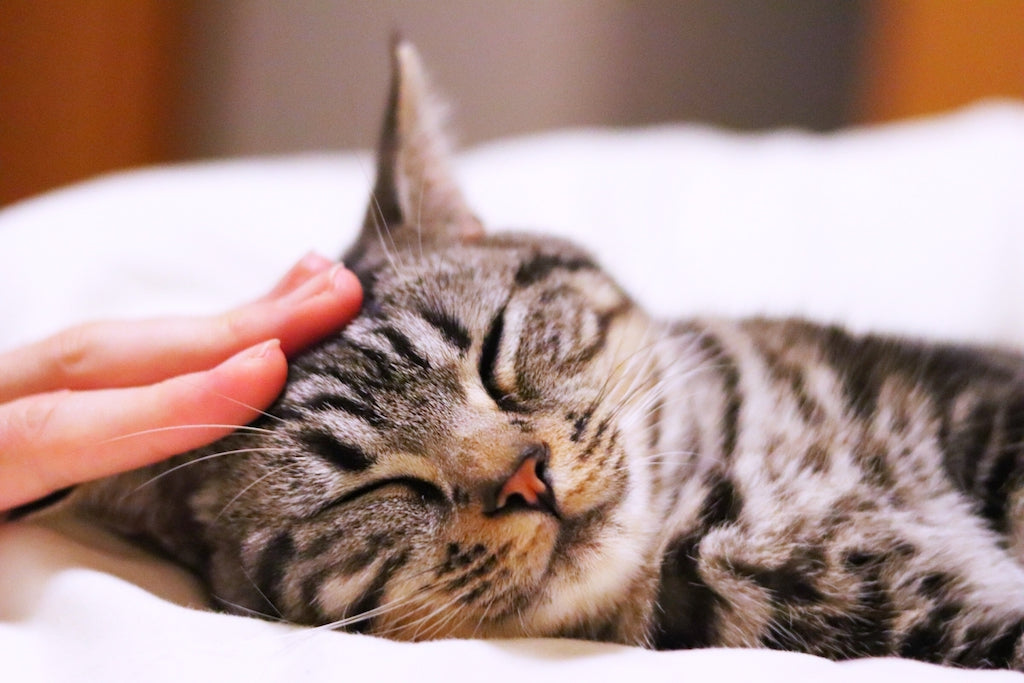
To notice even subtle changes in breath odor, making teeth brushing a habit is very important. Additionally, physical affection can also help with health checks.
While enjoying time with your cat, also pay attention to their breath.
Author profile



![Feline Infectious Peritonitis (FIP) Treatment Guide [2024 Edition]: Latest Information and Treatment Options](http://www.poponeko.jp/cdn/shop/articles/shutterstock_1633580878.jpg?height=400&v=1727181737)


![[Set Product] Leaf Ribbon & Cat Collar - Tartan Check Black Watch](http://www.poponeko.jp/cdn/shop/files/2606_00019.jpg?v=1785759844&width=600 "[Set Product] Leaf Ribbon & Cat Collar - Tartan Check Black Watch")
![[Slightly Damaged] Cat-Friendly Cat Warm Shirt, Border (Short Sleeve)](http://www.poponeko.jp/cdn/shop/products/DSC_7661.jpg?v=1675832922&width=600 "[Slightly Damaged] Cat-Friendly Cat Warm Shirt, Border (Short Sleeve)")
![[Set] Leaf Ribbon & Cat Collar - Arabesque Swirl, Teal](http://www.poponeko.jp/cdn/shop/files/2608_00118.jpg?v=1789044775&width=600 "[Set] Leaf Ribbon & Cat Collar - Arabesque Swirl, Teal")
![[Set] Leaf Ribbon & Cat Collar - Tartan Check Trench Beige](http://www.poponeko.jp/cdn/shop/files/2606_00015.jpg?v=1785759845&width=600 "[Set] Leaf Ribbon & Cat Collar - Tartan Check Trench Beige")
![[Set] Leaf Ribbon & Cat Collar - Hannari Sakura Blue](http://www.poponeko.jp/cdn/shop/files/2608_00126.jpg?v=1789197917&width=600 "[Set] Leaf Ribbon & Cat Collar - Hannari Sakura Blue")
![[Set] Leaf Ribbon & Cat Collar - Hannari Sakura Purple](http://www.poponeko.jp/cdn/shop/files/2608_00128.jpg?v=1789197917&width=600 "[Set] Leaf Ribbon & Cat Collar - Hannari Sakura Purple")

Leave a comment