

As spring approaches, many people may find themselves suffering from "hay fever."
Repeated sneezing, a runny nose, itchy eyes, and itchy skin can be quite miserable.
In fact, humans are not the only ones who can get hay fever. Cats can also suffer from hay fever.
Hay fever can be tough on cats too. In this article, we'll explain in detail the causes, symptoms, and treatments for feline hay fever. It's also important to understand prevention and countermeasures for cat hay fever.
Can cats get hay fever?
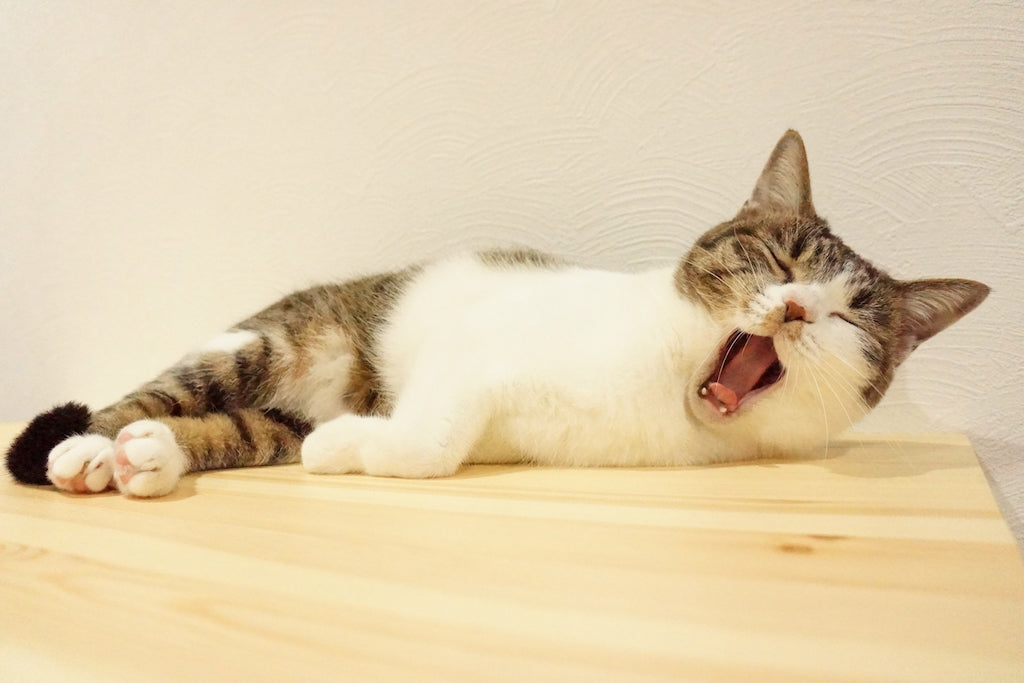
In recent years, it has become known that cats can also exhibit hay fever-like symptoms.
What exactly is hay fever?
Hay fever refers to allergic symptoms such as sneezing, runny nose, and itchy eyes that occur as an immune response to pollen entering the nose and eyes.
When pollen attaches to the mucous membranes of the nose and eyes, antibodies are produced in the body and attach to mast cells, which have a defense function. When pollen invades again, allergy-inducing substances such as histamine are released, which is the mechanism of hay fever in humans.
Causes of hay fever in cats
In cats, hay fever is thought to be caused by an innate allergy to certain plants. When they come into contact with allergenic pollen, they develop hay fever-like allergic symptoms as an immune response.
For example, if allergic symptoms such as dermatitis worsen during pollen season, it is likely that an abnormal immune response to pollen is occurring.
When do cats get hay fever?
The specific pollen that acts as an allergen for cats is still not fully understood.
Some cats seem to experience allergic symptoms not only from February to May when cedar and cypress pollen are dispersed, but also from August to November when ragweed pollen is dispersed.
Symptoms of hay fever in cats
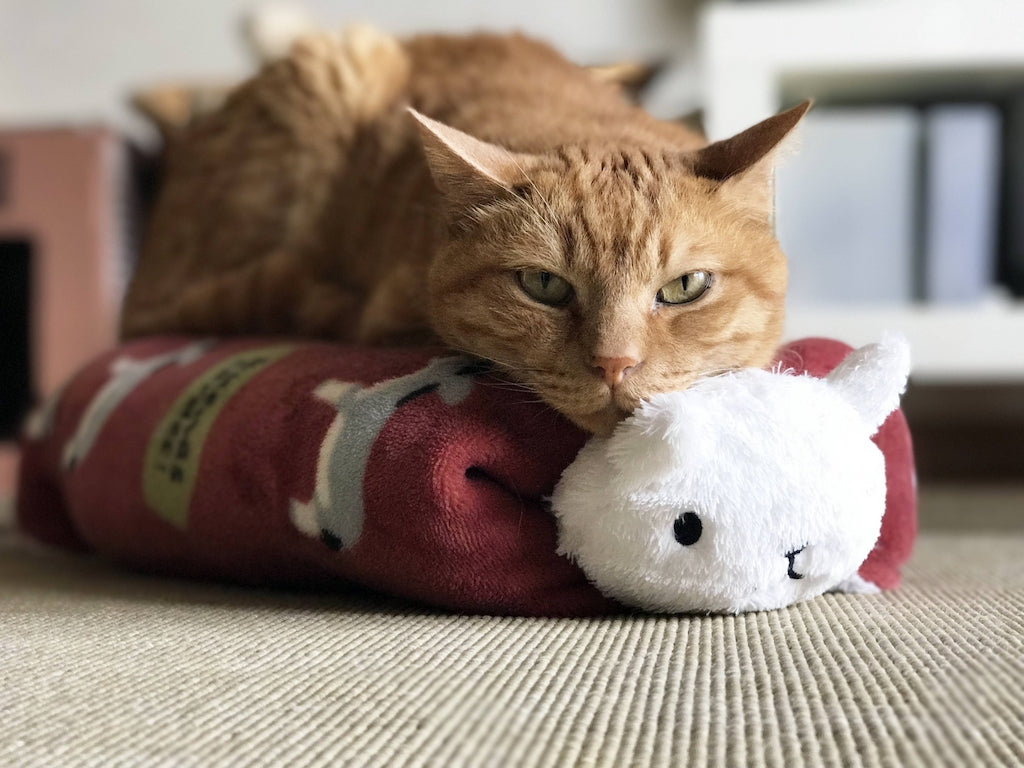
The symptoms of hay fever in cats are similar to those in humans. If you suspect your cat may have hay fever, the first step is to consult a veterinarian.
Repeated sneezing
Even without hay fever, cats sneeze when they inhale dust, etc.
However, if your cat suddenly starts sneezing repeatedly, sneezes when you open a window, or sneezes when you return home from outside, it could be an allergic reaction due to hay fever.
Runny nose
When foreign substances like pollen enter the nose, the nasal mucous membrane becomes inflamed, leading to a clear, watery runny nose. Since cats primarily breathe through their nose, gently wipe their nose with a soft cloth or tissue to prevent breathing difficulties.
Itchy eyes, discharge, and tears
Just like human hay fever, cats can develop allergic reactions in their eyes. Be cautious if you notice your cat frequently scratching around its eyes, squinting with watery eyes, or an increase in eye discharge.
Dermatitis
Pollen can act as an allergen, leading to allergic dermatitisaccompanied by itching and rashes. This can affect not only the body but also the ears, causing otitis externa.
Treatment methods and medications for cat hay fever

The most common symptom of hay fever in cats is said to be "dermatitis."
If diagnosed with allergic symptoms due to pollen, treatment will involve steroids and antihistamines to alleviate the allergic symptoms.
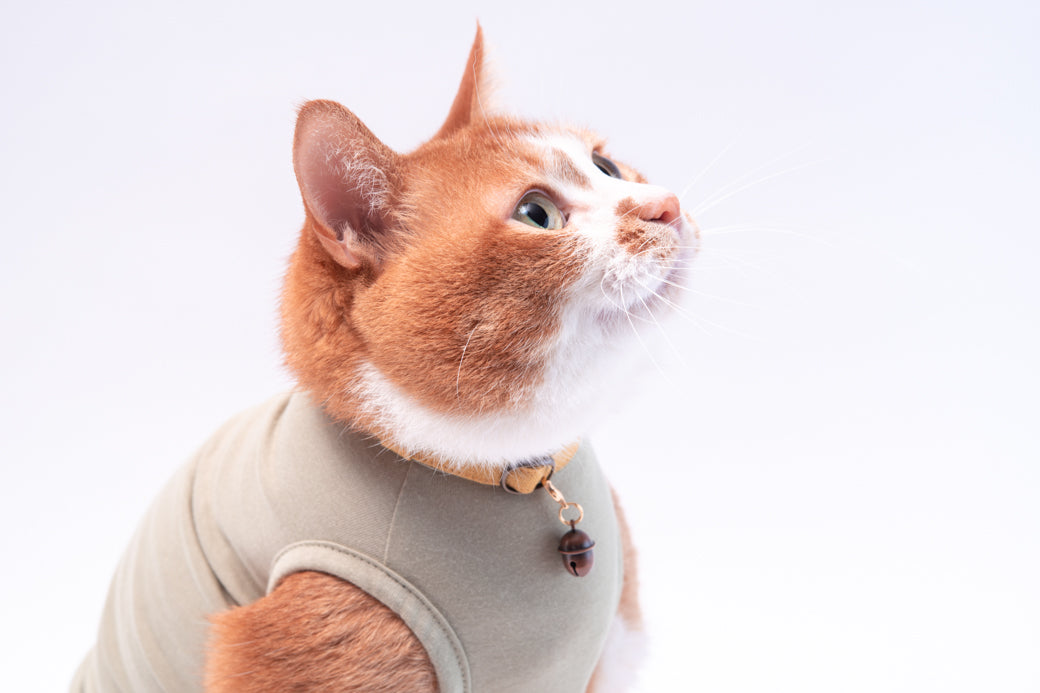
Excessive licking or scratching of the affected area due to itching can worsen the condition. Sometimes, they may even pull out their fur, leading to bald spots. In such cases, in addition to medication, an Elizabethan collar or protective clothing may be used.
Also, a runny nose and sneezing could be caused by "cat flu."
Observe your cat's condition carefully for symptoms such as thick, yellow or green nasal discharge, fever, or loss of appetite.
How to prevent hay fever in cats

There are two key measures for preventing hay fever in cats: "preventing pollen from entering indoors" and "preventing pollen from scattering indoors." These are the same as human hay fever prevention measures.
Hay fever can be miserable for cats. For your cat's sake, it's important to know how to prevent and manage hay fever.
Prevent pollen from entering indoors
First, don't let your cat go outside. Even if your cat is used to going for walks, it's best to avoid it during pollen season.
Also, prevent yourself from bringing pollen indoors. When you enter the house, use a cleaner or lint roller to remove pollen clinging to your clothes.
Pollen also sticks to laundry hung outside, so shake it thoroughly before bringing it in. Using pollen-blocking laundry detergent is also recommended.
Prevent pollen from spreading indoors
Clean the indoor area frequently and, if possible, use an air purifier.
Instead of immediately vacuuming, which can stir up pollen, first wipe surfaces with a wet sheet or damp cloth before vacuuming. Cleaning in the "early morning" when pollen has settled on the floor is recommended. Also, wash your cat's bed and blankets frequently.
Pollen can also stick to the cat itself. This is especially true for long-haired cats, where pollen seems to cling easily. Be sure to brush them thoroughly and wipe them down with cat-specific body wipes.
Summary
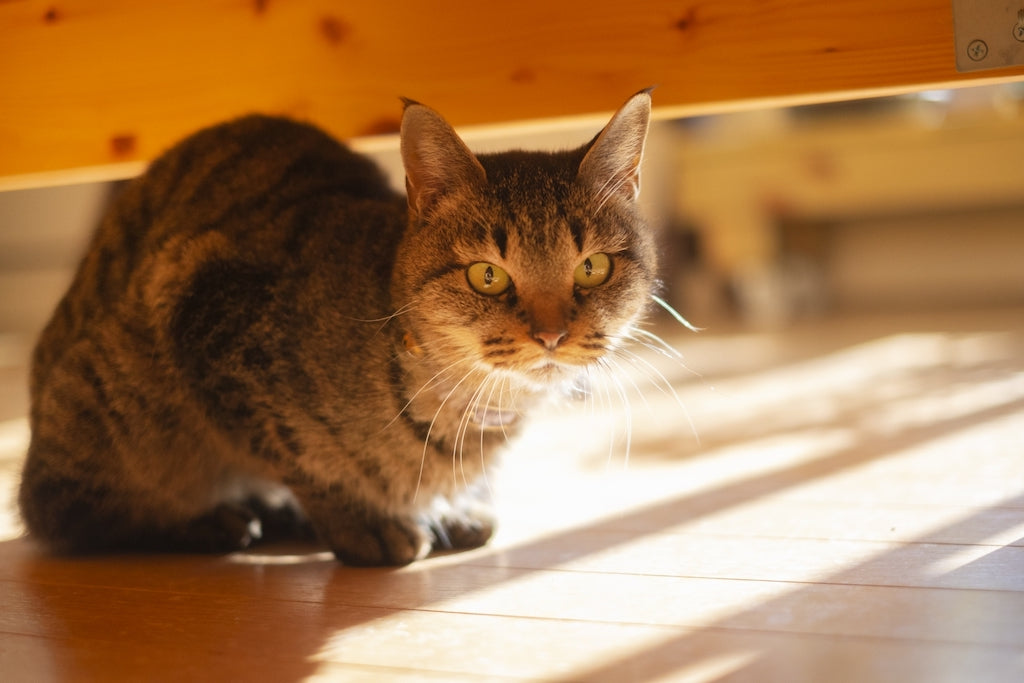
If your cat suddenly starts sneezing repeatedly or scratching its skin during pollen season, it could be "feline hay fever."
Just like humans, cats can get hay fever. If you notice allergic symptoms such as sneezing, a runny nose, itchy eyes, or dermatitis, consult your veterinarian first.
Just like with human hay fever prevention, you can effectively prevent hay fever by keeping pollen out of your home and preventing it from scattering indoors.
Try to adjust your cat care routine according to the season and your cat's constitution so that your cat can live comfortably all year round.
Author Profile



![Feline Infectious Peritonitis (FIP) Treatment Guide [2024 Edition]: Latest Information and Treatment Options](http://www.poponeko.jp/cdn/shop/articles/shutterstock_1633580878.jpg?height=400&v=1727181737)


![[Set product] Leaf Ribbon Fleurage Pink & Cat Collar Belgian Linen Pink Beige](http://www.poponeko.jp/cdn/shop/files/2608_00120.jpg?v=1789197487&width=600 "[Set product] Leaf Ribbon Fleurage Pink & Cat Collar Belgian Linen Pink Beige")
![[Slightly Imperfect] Cat-Friendly Skin Protection Suit (Coverall) for Cats](http://www.poponeko.jp/cdn/shop/files/DSC05845.jpg?v=1769403729&width=600 "[Slightly Imperfect] Cat-Friendly Skin Protection Suit (Coverall) for Cats")

![[Set] Leaf Ribbon - Moda Old World Yuletide & Cat Collar - MUJI Cotton Plain Autumn Sky](http://www.poponeko.jp/cdn/shop/files/260618_00174.jpg?v=1784451812&width=600 "[Set] Leaf Ribbon - Moda Old World Yuletide & Cat Collar - MUJI Cotton Plain Autumn Sky")
![[Set] Leaf Ribbon & Cat Collar - Champ de Fleurs (Grey)](http://www.poponeko.jp/cdn/shop/files/DSC00103_d587ccde-94a5-4f05-91f3-f4c88b18ab90.jpg?v=1780663183&width=600 "[Set] Leaf Ribbon & Cat Collar - Champ de Fleurs (Grey)")
![[Set] Leaf Ribbon moda Sweet and Plenty & Cat Collar Cotton Linen Turquoise](http://www.poponeko.jp/cdn/shop/files/260618_00170.jpg?v=1784451813&width=600 "[Set] Leaf Ribbon moda Sweet and Plenty & Cat Collar Cotton Linen Turquoise")
Leave a comment