

You may have seen "flea collars" for cats at pet shops and home improvement stores.
They are inexpensive and seem convenient, but are they actually effective? Could they have side effects for your cat? It’s enough to make you worry.
In this article, I will explain in detail the effectiveness and necessity of flea collars.
How Cat Flea Collars Work

Cat flea collars are collars infused with flea repellent, designed to work simply by being worn around your cat’s neck.
The main active ingredient is a pyrethroid insecticide, which gradually leaches out from the collar and spreads over the entire body. Its effect lasts for 3 to 6 months.
The collar material itself is often made of polyvinyl chloride (PVC). Some flea collars can be cut with scissors to adjust the size, and some are designed to break if a strong force is applied.
In addition to PVC collars infused with volatile oils, there are also types where the pesticide is applied as a powder as the collar rubs against the body.
Are Cat Flea Collars Effective?

We sometimes hear from Poponeko customers who say, "My cat had a flea collar on, but they were still covered in fleas."
Unfortunately, commercial flea collars cannot exterminate fleas.
Flea collars purchased at home improvement stores or pet shops are classified as "quasi-drugs", which contain ingredients that have a "repellent" effect on fleas. While they may weaken or repel fleas, they cannot eliminate them.
Furthermore, the effect is limited only to the area around the neck. They are ineffective unless the fleas come into contact with the collar, and they often cannot eliminate fleas that have already infested the cat.
Please remember that while commercial flea collars can be expected to have a preventative effect by keeping fleas away, they have no effect in completely exterminating them.
Flea Collars Do Not Work on Mites
"Scabies," which causes severe itching in the ears and head, is caused by tiny mites called Sarcoptes scabiei. While they often infest cats outdoors, flea collars cannot prevent them.
Dangers of Hair Loss and Side Effects from Flea Collars

Is there any negative impact on a cat wearing a collar soaked in insecticide?
While flea collars have the benefits of being cheap and easy to use, let's also look at their drawbacks.
Allergic Reactions Can Occur
The most common side effect of flea collars is "dermatitis." Allergic reactions causing eczema or inflammation can occur at the point of contact with the collar.
In severe cases, it can even cause seizures, so cats with allergic constitutions should not use them. Also, it is best not to take your eyes off your cat while they are wearing a flea collar so you can notice any changes.
Causes of "Collar Baldness"
Flea collars are often made of a plastic called polyvinyl chloride (PVC). Compared to 100% cotton cat collars, the drawback is that they are heavier and stiffer.
Heavy, stiff, and poorly ventilated collars are a source of skin trouble. They can cause humidity and itching, or lead to "collar baldness" where the hair falls out, causing stress for your cat.
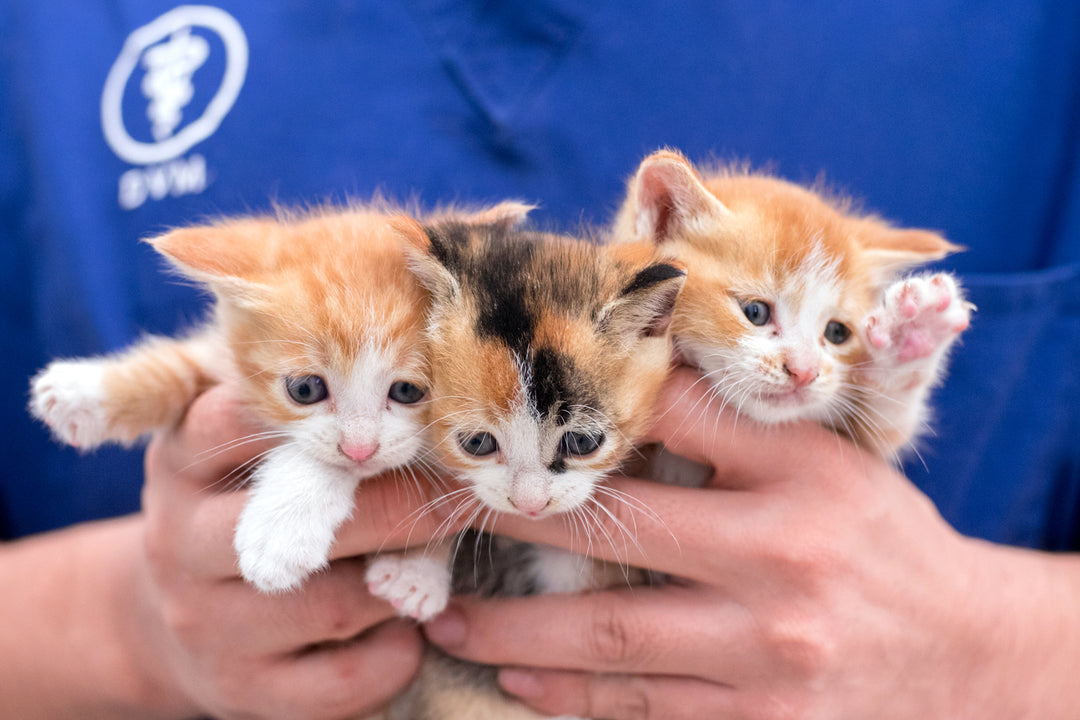
Do Not Use on Kittens or Senior Cats!
The ingredients contained in flea collars can cause side effects such as vomiting and diarrhea.
Therefore, we do not recommend using flea collars on kittens under 3 months old or senior cats with low stamina.
If you live with kittens or senior cats, you also need to be careful to ensure they do not lick or chew on the collar.

Effective Ways to Eliminate Fleas on Cats

The fleas that infest cats are called "cat fleas." Cat fleas love feline blood. They infest the body surface to feed, lay eggs, and multiply.
When bitten by cat fleas, the flea's saliva can cause an allergic reaction, resulting in severe itching. Your cat may scratch excessively, leading to secondary infections from the wounds.
Although the cat flea breeding season is from spring to summer, they can breed year-round indoors. Since they multiply in the blink of an eye, you must thoroughly exterminate them to stop the damage caused by cat fleas.
Go to the Vet First
If you find fleas on your cat or in your home, first take them to a veterinary clinic.
Saying "let's wait and see with a flea collar" is a bad idea. Commercial flea collars alone cannot completely exterminate fleas.
Flea control medication prescribed at a veterinary clinic is a "veterinary medicinal product," which uses highly effective ingredients.
"Quasi-drugs" like commercial flea collars can only be expected to have a repellent-like effect, but "veterinary medicinal" flea treatments are effective in killing not only adult fleas but also flea eggs and pupae.
"Spot-on" flea treatments that are dripped onto the back of the neck are the mainstream option and have almost no risk of side effects. There are also spray types and oral flea medications.
"Frontline Plus" is a famous spot-on treatment. By applying it once a month, you can eliminate fleas, ticks, and lice, and even prevent the development of eggs and larvae.
Since veterinary flea medications require regular application, please be sure to follow your veterinarian's instructions.
Removing Fleas with a Flea Comb and Shampoo
For cats that roam freely or newly rescued former strays that are heavily infested with fleas, shampooing can help wash away adult fleas and eggs.
If shampooing is difficult, there is also the method of using a flea comb. Combing your cat's fur will remove fleas, which you can then kill by dropping them into a bucket of water. It's a task that takes some courage if you're not fond of insects, though...
In any case, since they are effective when used in combination with flea treatment prescribed by a vet, proceed with extermination while consulting with your veterinarian.
Clean Thoroughly
Since cat fleas reproduce not only on your cat's body but also on carpets and sofas, it is important to clean your home thoroughly.
The lifespan of a cat flea is 1–2 months, but their reproductive power is very strong and they are stubborn. They hatch 2–3 days after laying eggs, turn into pupae in about 1–3 weeks, and become adults in a few days to a few weeks.
Therefore, careful cleaning is required for at least 3 weeks. Take measures such as using acaricidal vacuum bags and spraying flea treatment after vacuuming.
Also, wash the beds and blankets your cat uses about once a week and be sure to sun-dry them.
Ensure Strictly Indoor Living
If your cat lives strictly indoors, there isn't much to worry about regarding flea infestation.
Allowing them to roam freely can cause cat fleas to attach to them, so try to ensure strictly indoor living. You should also avoid contact with outdoor cats, as fleas can be transmitted through contact with infested cats.
Summary

While you see flea collars for cats often, they actually have almost no effect in exterminating fleas.
Conversely, wearing a flea collar can lead to side effects such as allergic reactions like dermatitis, as well as diarrhea and vomiting. Also, because flea collars are made of hard, heavy material, they can cause "collar baldness."
If you want to completely exterminate fleas, use a spot-on flea treatment prescribed by a veterinary clinic. It will cost more than a flea collar, but it is highly effective and safe, giving you peace of mind.
Keeping your cat strictly indoors to avoid contact with other cats is the best way to prevent flea infestation. However, there is always a risk of escape for any cat, and in the event of a disaster, you might be forced to live communally with other cats.
Regular flea control is necessary even for strictly indoor cats. For the sake of your cat's health, choose flea medication prescribed by a vet rather than a flea collar. Creating an environment that keeps fleas away is also important.
Protect your cat's comfortable life through proper "extermination" and "prevention" of fleas.

Author Profile











こんにちは♪初めましてです☆
猫ノミの検索でお目にかかりました。
うちの猫は多分8歳くらいになるとおもうんですけど…
3年前からノミが大量に発生して
それから毎年家中にノミが発生して悩まされています。
今年も5月の中旬くらいから私がボツボツ痒みがあったので
今年は蚊の発生が早いと聞いていたので蚊と思っていたら味しお一粒のくらいのノミを発見💡それから身体中が凄いことになってます。
猫ちゃんは2年前きけらいから別部屋で1人のうのうの暮らしております笑
バルサンを焚きまくり、猫にフロントラインしても効かず途方に暮れてる毎日です。今日もシャンプーしたのに
乾いたらもぅノミいた😭
15歳になります。たまに脱走して主人に迷惑を掛けています。1ヶ月前くらいから首周りにかさぶたができ、昨日動物病院で(ノミ)と言われ人生で初めての事でショックでし
た。記事を読んて大変参考になりました。ノミ駆除頑張ります。39
Leave a comment