

Hello, this is Kuriyama from Poponeko. The terms "shelter cat" and "community cat" have become widely known recently, haven't they?
Although you might have an image of them as stray cats, shelter cats and community cats are felines rescued from euthanasia.
While the number of euthanized cats is on a downward trend, it is still higher than dogs and not zero. This time, I would like to consider the current situation and challenges of cat euthanasia.
The Current State of Cat Euthanasia in 2021

Can you imagine how many cats are euthanized annually? According to the Ministry of the Environment, the number of euthanized animals in Japan in fiscal year 2019 was 5,635 dogs and 27,108 cats.
Number of Euthanized Dogs and Cats [Graph of Trends from 2011 to 2020]
![Number of Euthanized Dogs and Cats [Graph of Trends from 2011 to 2020]](https://cdn.shopify.com/s/files/1/0414/1583/5812/files/chart_1024x1024.png?v=1630762014)
*Source: Created by Poponeko based on the Ministry of the Environment's"Status of Dog and Cat Intake and Disposal from FY2004 to FY2019"
As the trend graph shows, the number of euthanized cats is on the decline.
Compared to the 1970s and 1980s, when over 1 million dogs and cats were euthanized annually, the number has significantly decreased, but it is still far from zero.
Approximately 20% are abandoned by their owners.
In fiscal year 2019, 53,342 cats were taken in, and of those, 10,403 were brought to public health centers or animal welfare centers by their owners. It's very sad, but approximately 20% of cats areabandoned.
They are brought to public health centers or animal welfare centers because "they can no longer be kept," and if a new owner isn't found, they are euthanized... This should not happen.
Over half of the cats euthanized are kittens.
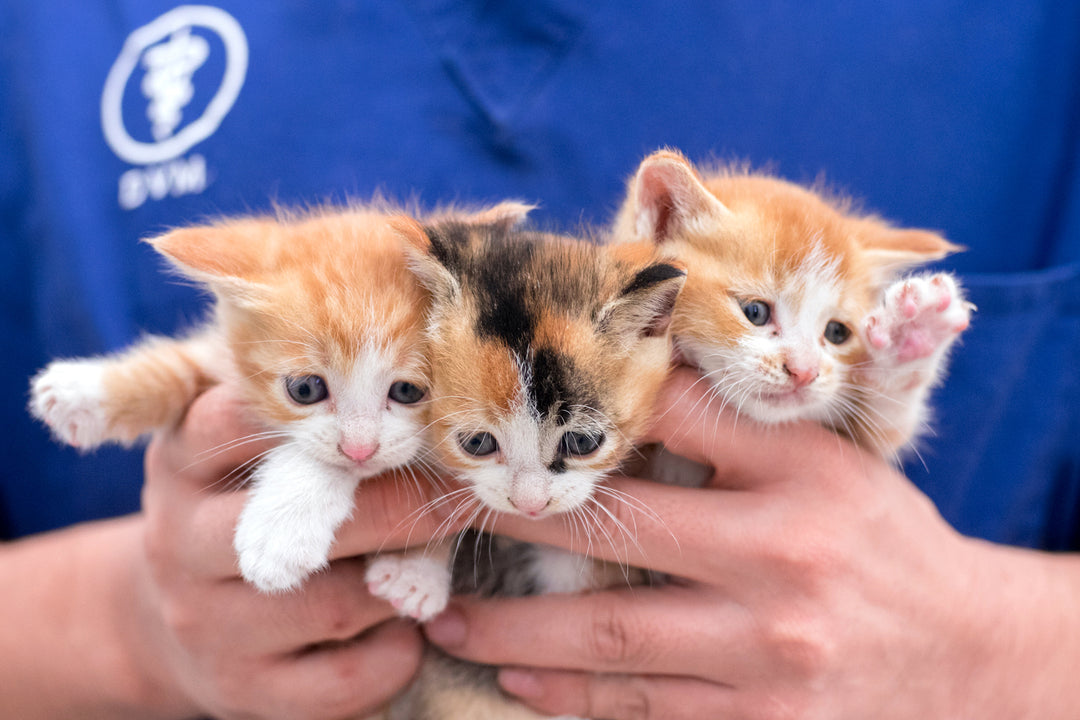
Cats are highly reproductive creatures. They can give birth more than twice a year, so unless they are spayed or neutered, their numbers will continue to increase. For this reason, kittens are brought to public health centers and animal welfare centers for various reasons, such as pet cats giving birth to kittens that can't be kept, or people being troubled by stray cats giving birth to kittens.
In fiscal year 2019, 53,342 cats were taken in, of which 35,777 were kittens. It is heartbreaking to know that 18,176 of the 27,108 euthanized cats were kittens. The high number of euthanized kittens is due to the fact that they are often brought in already in a weakened state and require meticulous care.
If they are still unweaned, they need to be fed milk every few hours and encouraged to excrete. It is very difficult for public health center and animal welfare center staff alone to manage them, which leads to a higher proportion of kitten euthanasia.
Reasons why more cats are euthanized than dogs
From the perspective of rabies prevention, stray dogs were always captured, so the number of ownerless dogs is very small to begin with.
In the case of cats, the Rabies Prevention Law does not apply. As a result, they were not captured and multiplied rapidly, leading to an overwhelmingly higher number of "ownerless cats" being euthanized.
Challenges to be addressed for zero cat euthanasia

The number of cat euthanizations has significantly decreased over the past decade. However, it has not reached zero because the challenges surrounding cat euthanasia present a major obstacle.
1. Strict adherence to lifelong care

Approximately 20% of cats brought to public health centers and animal welfare centers are due to owners abandoning their pets. Moving, not bonding, getting too big – such irresponsible reasons for abandonment are a major problem.
The 2012 revision of the Animal Welfare Act clearly states the "responsibility of lifelong care," allowing public health centers and animal welfare centers to refuse such self-serving requests for surrender.
It is not enough to simply find them "cute" to take on a life.We believe that a system and mechanism are needed where pets are not simply bought at pet shops, but only those who can take responsibility until the very end can own them.
Stray prevention is also the owner's responsibility.
Among the cats housed at public health centers and animal welfare centers, some are strays whose owners cannot be found. Even in such cases, euthanasia is performed.
Cats are masters of escape. Even if you keep your cat indoors, don't be complacent; equip them with acat collar, alost pet tag, and a microchip to ensure thorough stray prevention. This serves as proof that they are a "pet cat" and also helps in their search.
2. Promotion of TNR

There is an activity called TNR. This involves spaying or neutering stray cats and returning them to their original living environment. It is also known as "community cat activity."
By implementing TNR, excessive breeding of stray cats can be prevented. In other words, the number of kittens taken into public health centers and animal welfare centers can be reduced.
Cats after TNR are called community cats or Sakura Neko (cherry blossom cats), and they live out their one-time lives under the care of volunteers. Since they no longer go into heat, problems such as loud meowing, fighting, and smelly urination can be eliminated.
TNR is mainly undertaken by private organizations, such as the "Animal Fund" which Poponeko also supports. Activity funds come from volunteers' private funds and donations. Surgeries are performed by veterinarians who support the activity.To systematically promote TNR, much more support is still needed.
|
[Related articles here] |
Preventing multiple pet hoarding collapse through spaying/neutering of pet cats
Cats have strong reproductive capabilities, and it is difficult for amateurs to control breeding systematically. If you keep multiple cats without spaying or neutering them, or allow them to go outside freely, they will likely experience unwanted pregnancies.
It is clear that repeatedly allowing pregnancies and births "as nature intended" will quickly lead to the collapse of multiple pet households. Considering the stress during estrus and the risk of illness, we still recommend spaying or neutering.
3. Finding foster homes to prevent euthanasia

To prevent cats sheltered at public health centers and animal welfare centers from being euthanized, it is necessary to find "foster parents."
This initiative is called "shelter cat activity," where volunteers take in sheltered cats, care for them at their homes or at shelter cat facilities, and then seek new owners.
Of course, adoption events are also held by public health centers and animal welfare centers. The challenge is significant: can we make the option of adopting a shelter cat, rather than buying from a pet shop, more commonplace?
Online adoption events born during the COVID-19 pandemic
There is a problem that adoption events cannot be held due to the COVID-19 pandemic. Shelter cat facilities are full. It is not possible to take in new shelter cats. It is a very difficult situation.
In such circumstances, the idea arose to hold online adoption events through video streaming and social media, if in-person meetings are not possible.
|
[Related articles here] |
"Milk volunteer" saving the lives of kittens
Volunteers who care for kittens until they are weaned and then seek adoptive homes are calledmilk volunteers. While caring for kittens is challenging, some kittens are saved through milk volunteering.
Supporting Protection Cat Cafes
There is a type of establishment called a"Protection Cat Cafe"that doubles as a shelter for protection cats and a cat cafe. It serves as a place for protection cats and potential adopters to meet, and also as a way to raise funds for the care of protection cats.
Even if you cannot adopt, simply visiting a protection cat cafe helps reduce euthanasia.
Summary

Many people have been working on the issue of cat euthanasia for many years.
Results are starting to show from practicing lifelong care, preventing stray cat breeding (TNR), and finding foster homes for shelter cats. Nevertheless, the current situation is still far from achieving zero cat euthanasia.
There are still many challenges to overcome, including systems, funding, and changing mindsets. However, I hope this article will serve as an opportunity for you to learn more about community cat activities and shelter cat activities.
|
[Products introduced in this article] |

![Poponeko Selected as Furusato Nozei Gift [Toride City, Ibaraki Prefecture]](http://www.poponeko.jp/cdn/shop/articles/010f7540ce751ae3bb42785d6423e019.jpg?height=400&v=1765802143)

![[Written by a Veterinarian] How to Work in an Animal Hospital: Essential Qualifications, Job Responsibilities, and Traits of Suitable Candidates](http://www.poponeko.jp/cdn/shop/articles/shutterstock_2399480085.jpg?height=400&v=1755261095)
![[Set Item] Leaf Ribbon & Cat Collar - Petit Fleur - Purple](http://www.poponeko.jp/cdn/shop/files/2608_00408.jpg?v=1789946167&width=600 "[Set Item] Leaf Ribbon & Cat Collar - Petit Fleur - Purple")
![[Set] Leaf Ribbon & Scrunchie Cat Collar, Gingham Check, Blue](http://www.poponeko.jp/cdn/shop/files/DSC00092_346b4b0c-da46-4b7b-b5e9-8ab3dafb6534.jpg?v=1780663891&width=600 "[Set] Leaf Ribbon & Scrunchie Cat Collar, Gingham Check, Blue")
![[Set Product] Leaf Ribbon & Cat Collar "Champ de Fleurs" Pink](http://www.poponeko.jp/cdn/shop/files/DSC00100_cf7eae7a-b352-4d9f-ba35-9c34a715038e.jpg?v=1780663183&width=600 "[Set Product] Leaf Ribbon & Cat Collar \"Champ de Fleurs\" Pink")
![[Set Item] Leaf Ribbon & Cat Collar - Tartan Check Royal Red](http://www.poponeko.jp/cdn/shop/files/2606_00014.jpg?v=1785759845&width=600 "[Set Item] Leaf Ribbon & Cat Collar - Tartan Check Royal Red")
![[Set] Leaf Ribbon & Scrunchie Cat Collar - Hannari Cherry Blossom Blue](http://www.poponeko.jp/cdn/shop/files/2608_00139.jpg?v=1789197917&width=600 "[Set] Leaf Ribbon & Scrunchie Cat Collar - Hannari Cherry Blossom Blue")
![[Set] Leaf Ribbon & Cat Collar: Vidro - Shion](http://www.poponeko.jp/cdn/shop/files/2608_00403.jpg?v=1789826564&width=600 "[Set] Leaf Ribbon & Cat Collar: Vidro - Shion")

Leave a comment