

"When I tried to put a collar on my cat, it panicked and struggled." "It's a pity my cat dislikes collars..."
Cat collars are something we want our cats to wear as a charm, in case they escape or there's a disaster. However, some cats show strong rejection, which causes concern for many owners.
There are specific "reasons" why cats dislike collars.
This article, supervised by a veterinarian, explains in detail why cats dislike collars, countermeasures, and how to choose a safe collar.
Do cats even need collars?

For cat owners, the biggest worries are "escape" and "getting lost." No matter how careful you are with opening and closing doors and windows, cats can sometimes slip outside in a moment of carelessness.
To prepare for such "emergencies," we recommend that even indoor-only cats wear collars regularly.
- Lets others know it's a pet cat if it escapes
- If it has an ID tag, you can be contacted in an emergency
- Significantly increases the chance of reunion if separated during a disaster
- Serves as a marker during searches
- Less likely to be targeted by animal abusers who target stray cats
These are just some of the many benefits. For cats, a collar is an important "amulet" that protects them in an emergency.
Why do they dislike it? 5 reasons why collars stress cats

Of course, cat collars have disadvantages as well as advantages. That is, until the cat gets used to it, the collar can be a source of stress for them.
Some cats dislike collars and try to scratch them off with their hind legs, or even panic. Trying to remove the collar can even lead to a dangerous "harness" situation.
There are five reasons why cats dislike collars and find them stressful.
1. Instinctive discomfort/fear
In the wild, cats lived by hunting. They possess supple, strong bodies and keen senses. Therefore, they instinctively dislike foreign objects attached to their bodies.
A cat wearing a collar for the first time may panic due to fear of the unfamiliar object.
2. Discomfort due to material (painful/itchy)
Wearing a cat collar made of stiff materials like nylon, leather, or synthetic leather, or one with lace, can irritate the skin and cause pain or itching. In severe cases, it can lead to contact allergies.
3. Stress from weight
For cats with slender necks, even a slight weight can be a significant burden. Depending on the collar material, it might be too heavy and cause stress. Collars with excessive embellishments or metal ID tags should be avoided. For cats, these are a nuisance.
4. Discomfort from sound
For cats, who have excellent hearing said to be tens of thousands of times better than humans, the jingle-jangle of bells or metal parts can feel like a loud noise. If your cat strongly dislikes its collar, a bell or metal parts might be the cause.
5. Unpleasant past experiences
Unpleasant past experiences, such as wearing an Elizabethan collar, may have led to a general aversion to anything around the neck.
[Important] How to choose a safe collar to protect your beloved cat!

The most important thing when putting a collar on your cat is to choose a "safe collar."
If you're putting a collar on your cat for the first time, choose a "cat-specific" collar that is light, soft, and gentle on your cat's skin and fur. Dog collars are too heavy and stiff for cats and are not suitable.
To minimize your cat's burden, check the following four points:
Point 1: Choose a collar with a safety feature
A "safety adjuster (safety buckle)" that releases the buckle when a certain force is applied, should the collar get caught on a curtain rail or furniture, is essential. This prevents the worst-case scenario of strangulation.
Point 2: Choose a lightweight and soft material
Lightweight and soft materials like cotton or polyester that are gentle on your cat's skin and fur are recommended. Aim for a weight of 5g or less, choosing the lightest possible option.
Point 3: Choose a simple design
Excessive decorations can add weight or cause your cat to notice and chew on them. Choose a simple design as much as possible. Many cats dislike bells, so try a no-bell type first.
Point 4: Size selection is also important
The collar should be sized so that two to three human fingers can fit underneath it. If it's too tight, it can get sweaty and cause your cat discomfort, and it's also bad for their skin and fur. Conversely, if it's too loose, it can get caught on something, which is dangerous.
Don't rush! 3 steps to get your cat used to a collar

When putting on a cat collar for the first time, the trick is to gradually accustom your cat to it while observing their reaction.
Kittens are highly adaptable and can get used to a collar in just a day. It's a good idea to introduce them to collars around 3 months old, when their bodies are well-developed, to get them accustomed to it.
However, most cats take 2 to 3 days to get used to a collar. Sensitive cats can take 2 to 3 weeks, so slowly and patiently get them used to the collar.
Step 1: First, just "look" and "sniff"
Place the collar where your cat can see it, allowing them to get used to its presence. Let your cat sniff the collar or use it as a toy to pique their interest.
Step 2: Try short-term wear
Try putting it on quickly when your cat is focused on something, like mealtime, snack time, or when they're engrossed in play. Start with just 30 minutes. If they show any signs of discomfort, remove it immediately. It's important not to let them associate "collar" with "something unpleasant."
Step 3: Gradually extend wearing time
Once your cat can tolerate short periods of wear, gradually increase the time they wear the collar. Repeat the process of putting it on, taking it off, and putting it on again after a break.
While your cat is wearing the collar, give them treats or play with them using toys like cat wands. They should get distracted by the "fun activities" and become less bothered by the collar.
The key to success is to proceed slowly and patiently over several days to several weeks.
Summary

Many cat owners struggle with their cats disliking collars.
You might feel sorry for your cat when they show discomfort, but it's important to use treats and toys effectively and patiently help them get used to the collar without rushing.
Some cats, due to their constitution or personality, may never get used to wearing a collar. In such cases, do not force it, and consider microchipping instead.
Refer to the "How to choose a safe collar" and "3 steps to help them get used to it" introduced in this article, and try it slowly at your cat's pace.
Related articles


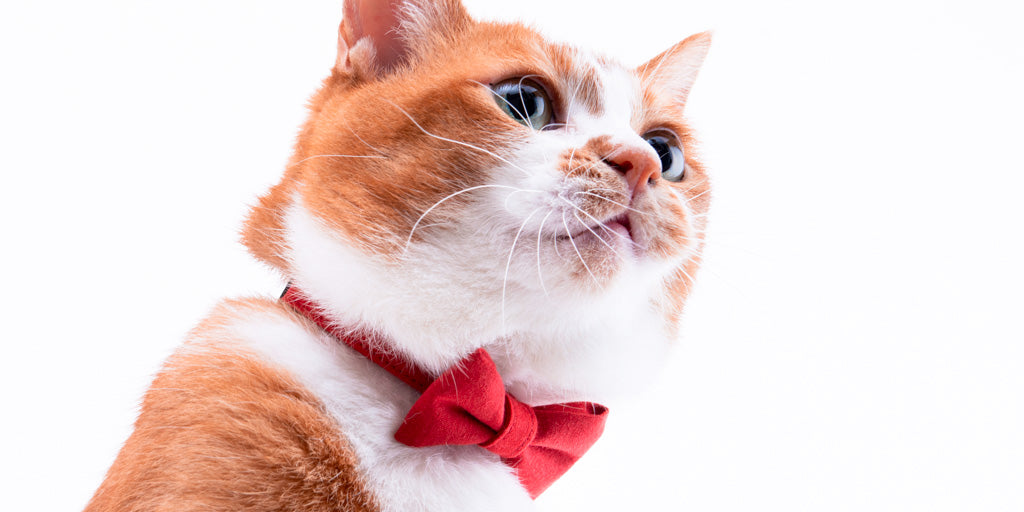

![[Preservation Edition] Cat Evacuation and Disaster Preparedness Guide | How to Evacuate Together and a Checklist of Items You Need Now](http://www.poponeko.jp/cdn/shop/articles/shutterstock_2416909603_396ccf81-25ff-4b28-a40f-9b7ce9ae8797.jpg?height=400&v=1785383138)

![[Set Product] Leaf Ribbon & Cat Collar - Champs de Fleurs Light Green](http://www.poponeko.jp/cdn/shop/files/DSC00102_e084695b-e8f0-442d-89e1-43de838500c2.jpg?v=1780663183&width=600 "[Set Product] Leaf Ribbon & Cat Collar - Champs de Fleurs Light Green")
![[Set Product] Leaf Ribbon & Cat Collar - Champ de Fleurs Mustard](http://www.poponeko.jp/cdn/shop/files/DSC00104_6c37e71d-120f-40d9-a773-9a5b7e885760.jpg?v=1780663183&width=600 "[Set Product] Leaf Ribbon & Cat Collar - Champ de Fleurs Mustard")
![[Set] Leaf Ribbon "Fleurage" Pink & Scrunchie Cat Collar "Belgian Linen" Pink Beige](http://www.poponeko.jp/cdn/shop/files/2608_00133.jpg?v=1789197487&width=600 "[Set] Leaf Ribbon \"Fleurage\" Pink & Scrunchie Cat Collar \"Belgian Linen\" Pink Beige")
![[Set] Leaf Ribbon & Cat Collar - Gingham Check Tomato Red](http://www.poponeko.jp/cdn/shop/files/DSC00105_c3cf26db-19e7-4828-a848-34b8c51cbf24.jpg?v=1780663891&width=600 "[Set] Leaf Ribbon & Cat Collar - Gingham Check Tomato Red")
![[Set] Leaf Ribbon & Scrunchie Cat Collar, Tartan Check, Trench Beige](http://www.poponeko.jp/cdn/shop/files/2606_00007.jpg?v=1785759845&width=600 "[Set] Leaf Ribbon & Scrunchie Cat Collar, Tartan Check, Trench Beige")
![[Set Item] Leaf Ribbon & Scrunchie Cat Collar - Petit Fleur - Mint](http://www.poponeko.jp/cdn/shop/files/2608_00417.jpg?v=1789946167&width=600 "[Set Item] Leaf Ribbon & Scrunchie Cat Collar - Petit Fleur - Mint")
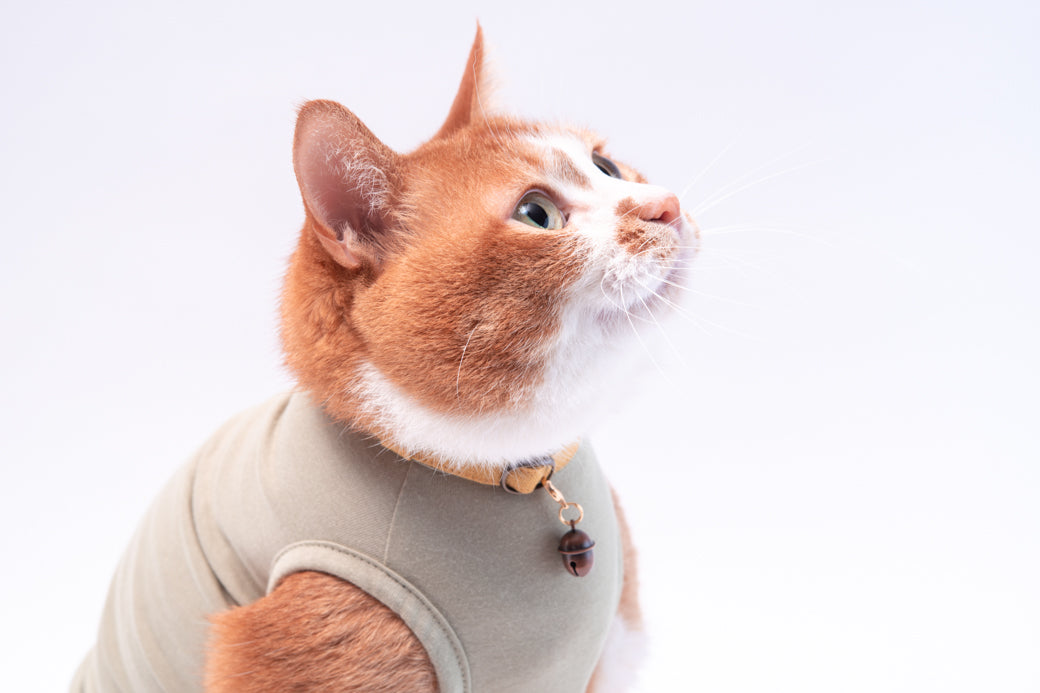

色々と参考になります
7ヶ月の猫ちゃんが首輪をすると
暴れてパニックになります
何度か挑戦してみましたが
Leave a comment