

Disasters such as earthquakes and typhoons can strike at any time. For households living with cats, it is essential to be well-prepared for "cat evacuation" and "cat disaster prevention" separately from human preparations.
When leaving home during a disaster, the general rule is to evacuate with your cat, known as "co-evacuation."
However, evacuation centers are not equipped for cats, and cat food or litter may not necessarily be delivered as relief supplies. Therefore, it is crucial for pet owners to prepare cat disaster prevention supplies in advance.
What do you need for a cat evacuation kit? To avoid panic in an emergency, we have compiled a checklist of items to take when evacuating with your cat and important points to note.
When to Evacuate with Your Cat

Remember that evacuees with cats are considered "disaster vulnerable."
Because it takes more time than evacuating alone, the golden rule is to start evacuating when the alert level is 2-3, without fear of a false alarm. This is because by the time evacuation advisories or orders are issued, there may not be enough time to prepare your belongings.

*Source: Cabinet Office website "Guidelines for Evacuation Information (Revised March 2026)"
The first step in cat disaster preparedness is to foster an awareness of "acting early." Check your home's disaster risk on a hazard map and share evacuation timings with your family.
What is Life Like in an Evacuation Center with a Cat?

The Ministry of the Environment recommends "co-evacuation," which means going to government-designated evacuation centers with your pet. You can bring your cat to an evacuation center.
However, while your nearest elementary or junior high school is often designated as an evacuation center, facilities not designated by the government may refuse to accept pets. Check the pet acceptance status and rules of your nearest evacuation center.
Carrier Bags Are Essential for Travel to Evacuation Centers
When evacuating with your cat, you will travel "on foot." Depending on road conditions, it may not be possible to evacuate smoothly by car or pet stroller.
And your cat must always be in a "carrier bag" when evacuating. Avoid evacuating by carrying your cat in your arms, as there is a risk of escape due to panic. Since you will have other belongings, a backpack-style carrier bag that leaves both hands free is convenient.
To prevent them from jumping out, attach a harness and leash.
At the Evacuation Center, Stay in a Cage or Carrier Bag
At the evacuation center, your cat will stay in a cage or carrier bag. The rules vary by evacuation center as to whether it is "accompanied evacuation" or "same-room evacuation," where the cat stays in the same room as you, or "separate-room evacuation," where the cat is isolated in a different room.
In the case of "accompanied evacuation" or "same-room evacuation," since there will be other evacuees in the same room, consideration for your cat's odor, shedding, and meows is necessary. Cover the cage or carrier bag with a towel to create a comfortable space for your cat.
In the case of "separate-room evacuation," a dedicated pet space will be provided outdoors or in a separate room, and you will be instructed to place the cage there. The owner will go to the dedicated pet space to care for their pet.
Evacuation centers have many people, including cat lovers, cat haters, and those with allergies. Remember to be considerate of those around you and adhere to manners.
Cat Evacuation Supplies and Disaster Preparedness Checklist [Required Items Checklist]

When a disaster strikes, you must survive on your own for at least 3 days until rescue arrives. Since human relief supplies will be prioritized, it is safe to prepare 1 week's worth of cat food for each cat.
Pack your evacuation supplies in an emergency grab bag and keep it near the entrance.
The maximum weight that can be carried safely during an evacuation is said to be about 10kg for women and about 15kg for men. Select only the bare essentials and check once to see if you can actually carry them.

Reference image: "Yomiuri Shimbun (morning edition)" dated April 13, 2022, Disaster Prevention Nippon
Essential Items for Cat Evacuation
The absolute necessities are food, water, a carrier, and toilet supplies. Since food and water have expiration dates, use a "rolling stock method" to rotate your stock regularly, ensuring that you always have items within their expiration date.
● Dry Food
Small packets are convenient. You can also store individual meal portions in plastic bags.
● Prescription Food/Medication
Prescription food can be hard to obtain, so it's best to stock up on it.
● Water
Always use soft water. Prepare about three 500ml plastic bottles.
● Dishes
Collapsible dishes are convenient. Paper plates covered with plastic wrap can also be used as a substitute.
● Carrier Bag
Make the carrier bag a familiar place for your cat. Keep a laundry net nearby so you can secure your cat in an emergency.
● Litter Box/Pet Sheets
A simple portable litter box is convenient.
● Cat Litter
Choose the lightest material possible. Mixing in a little used cat litter can help your cat feel more at ease.
● Harness/Leash
Life in an evacuation center can be stressful for cats. There's also a risk of escape, so use a harness and leash when feeding, using the litter box, or exercising. Remember to be considerate of others, as some people in evacuation centers may not be fond of cats.
● Cat Health Handbook
Gather your cat's photo, microchip ID, care manual, vaccination history, chronic illnesses, past medical history, personality, regular veterinary clinic, and emergency contact information. This is a high-priority item among disaster preparedness supplies, as it allows you to quickly convey your cat's information at an evacuation center or to a foster volunteer.
Disaster Preparedness Supplies You Should Consider Bringing
These are items you should consider bringing in addition to the bare essentials for evacuation. In particular, cages are not typically provided at evacuation centers, so owners must bring their own.
● Cage/Temporary Cage
Evacuation centers do not provide cages. It is advisable to bring a cage if possible, so your cat can use the litter box and exercise freely. Prepare a collapsible temporary cage.
● Wet Food
Single-serving retort pouches are convenient. It's reassuring to have them as they also help with hydration.
● Treats
For when your cat is hesitant to eat. Paste-form treats can also help with hydration.
● Towel
Can be used as a blanket or to create privacy. Bring one with your cat's scent on it.
● Brush
Keep one for shedding control and bonding.
● Toys
For stress relief. It's good to have a favorite toy.
● Newspaper
Can be used for insulation and cleaning. Also as a substitute for cat litter.
● Cardboard
As a substitute for a litter box, bed, or cage.
● Other convenient items
Wet wipes, plastic wrap, duct tape, plastic bags, deodorizing spray, a cutter, and a lint roller are also useful to have.
Immediate Cat Disaster Preparedness Measures

In addition to evacuation supplies, there are disaster prevention measures you should undertake regularly. Make sure to check them thoroughly so you don't panic in an emergency.
● Spaying/Neutering
There will be many other cats in evacuation centers. Spraying by male cats, fights, and mating calls during estrus can cause problems. Since it can also prevent unwanted pregnancies and illnesses, consider spaying or neutering once your cat reaches 6 months of age.
● Microchipping
You'll want to avoid your beloved cat running away in a panic during a disaster, escaping from an evacuation center, or getting lost. If your cat has a microchip, you will be contacted when it is found. Always ensure your cat is microchipped.
● Acclimating to a Collar
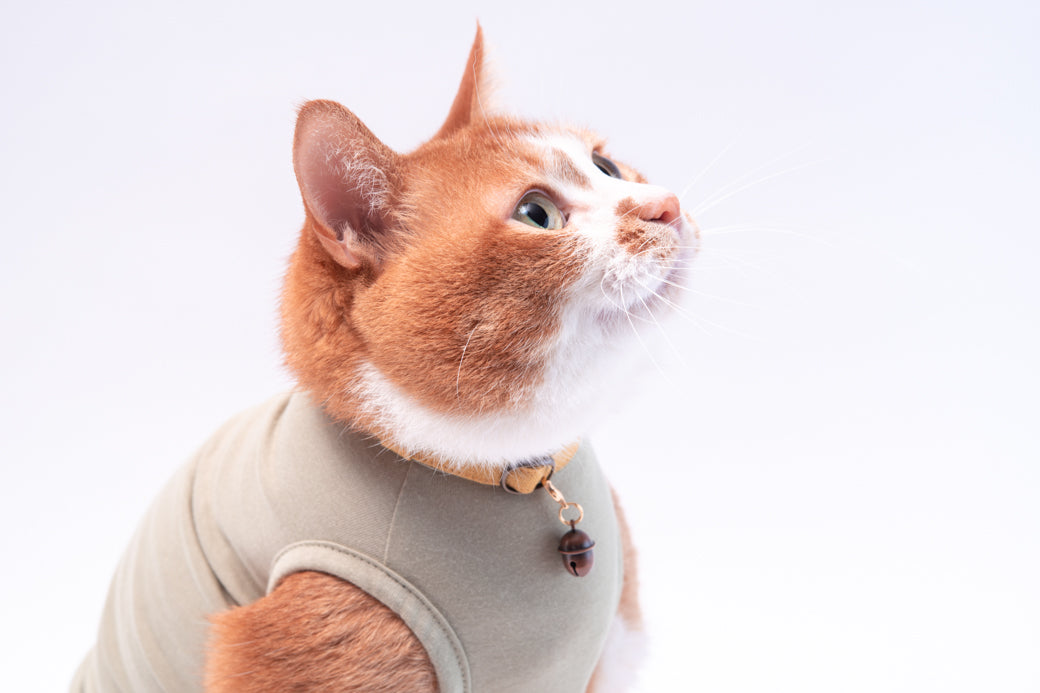
Your cat might get lost in the chaos of a disaster. Get your cat used to wearing a collar regularly and attach an identification tag or sticker.
● Acclimating to a Harness and Leash
Evacuation centers are large, increasing the risk of your cat escaping. To prevent escape during care, it's reassuring to have a harness and leash on. Many cats dislike harnesses and leashes, so gradually accustom them to it, and ensure they can eat, use the litter box, and exercise while wearing them.
● Parasite Prevention/Vaccination
Since there will be other cats in evacuation centers, there is a risk of infection. Furthermore, if your cat is not up-to-date on parasite prevention or vaccinations, they may not be allowed into evacuation centers or be eligible for foster care, so make sure to take these precautions.
● Health Check-ups
Even if your cat has no chronic illnesses, it's a good idea to have a health check-up once a year. If your cat falls ill during a disaster, their regular health data can help with diagnosis. For cats with chronic illnesses, ask your regular veterinarian for emergency contact information.
Summary

Evacuating with a cat means more belongings and takes longer to get to an evacuation center than evacuating alone.
Remember that evacuees with cats are "disaster vulnerable" and prioritize early action to protect lives.
During an evacuation, you will need carrier bags, cages, food, water, cat litter, and other evacuation supplies for each cat. Since there is a limit to the amount of supplies you can carry, make sure to pack only the bare essentials in a backpack.
Getting your cat accustomed to a collar, harness, and leash on a daily basis is also a disaster preparedness measure. Gradually incorporating necessary preparations for evacuation into your daily life will help you avoid panicking in an emergency.
You can read personal accounts of cat owners who have evacuated with their cats on blogs, so please use them as a reference.



![[Vet-supervised] Cat hates wearing a collar? Reasons why and how to get them used to it](http://www.poponeko.jp/cdn/shop/articles/a0fdc9ee82de7f01afb932f1e1e60236_da240718-be68-4e99-8a8c-64449f63d83e.jpg?height=400&v=1780975808)


![[Set] Leaf Ribbon & Scrunchie Cat Collar, Tartan Check, Royal Red](http://www.poponeko.jp/cdn/shop/files/2606_00006.jpg?v=1785759845&width=600 "[Set] Leaf Ribbon & Scrunchie Cat Collar, Tartan Check, Royal Red")
![[Set] Leaf Ribbon & Cat Collar - Gingham Check (Raspberry)](http://www.poponeko.jp/cdn/shop/files/DSC00111_50fa7dfb-0b92-465f-96f3-373274a75e62.jpg?v=1780663890&width=600 "[Set] Leaf Ribbon & Cat Collar - Gingham Check (Raspberry)")
![[Set] Leaf Ribbon & Scrunchie Cat Collar, Arabesque Swirl, Red](http://www.poponeko.jp/cdn/shop/files/2608_00130.jpg?v=1789044775&width=600 "[Set] Leaf Ribbon & Scrunchie Cat Collar, Arabesque Swirl, Red")
![[Set] Leaf Ribbon & Scrunchie Cat Collar, Gingham Check, Blue](http://www.poponeko.jp/cdn/shop/files/DSC00092_346b4b0c-da46-4b7b-b5e9-8ab3dafb6534.jpg?v=1780663891&width=600 "[Set] Leaf Ribbon & Scrunchie Cat Collar, Gingham Check, Blue")

![[Set Item] Leaf Ribbon & Cat Collar, Petit Fleur, Mint](http://www.poponeko.jp/cdn/shop/files/2608_00406.jpg?v=1789946167&width=600 "[Set Item] Leaf Ribbon & Cat Collar, Petit Fleur, Mint")

Leave a comment