

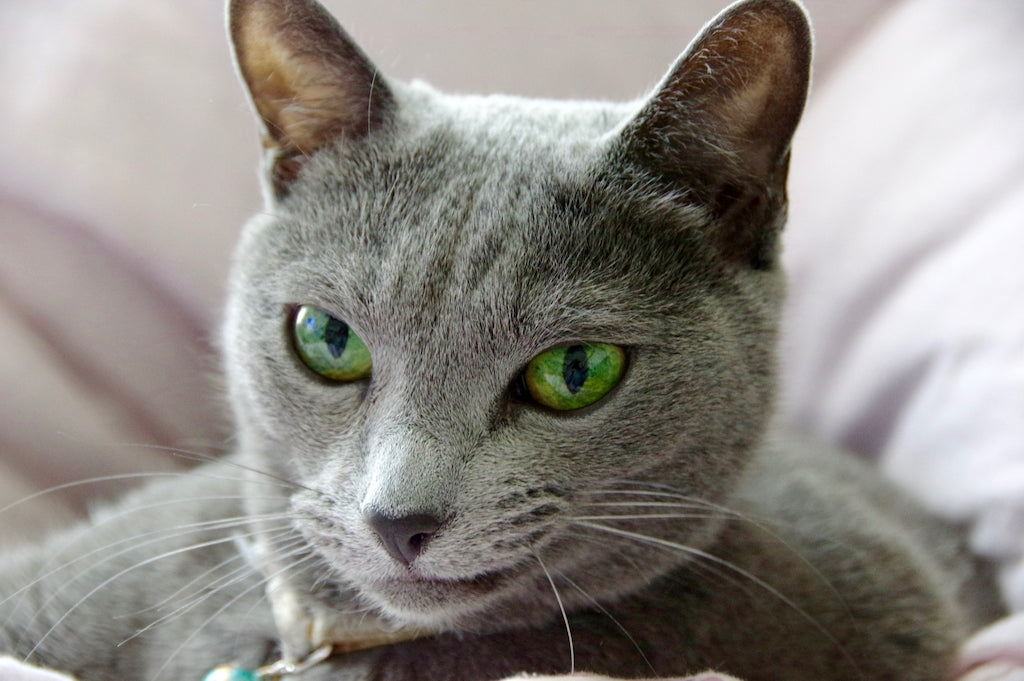
The Russian Blue is characterized by its beautiful gray coat. With its round emerald-green eyes, lovable smiling face, and lithe, graceful appearance, this cat is very popular.
Because of their cool demeanor, Russian Blues are often thought to be "difficult and not affectionate" or "neurotic," but what is their true personality like?
This article will delve into the roots of the Russian Blue and explain its unique physical characteristics and personality in detail.
Characteristics of the Russian Blue
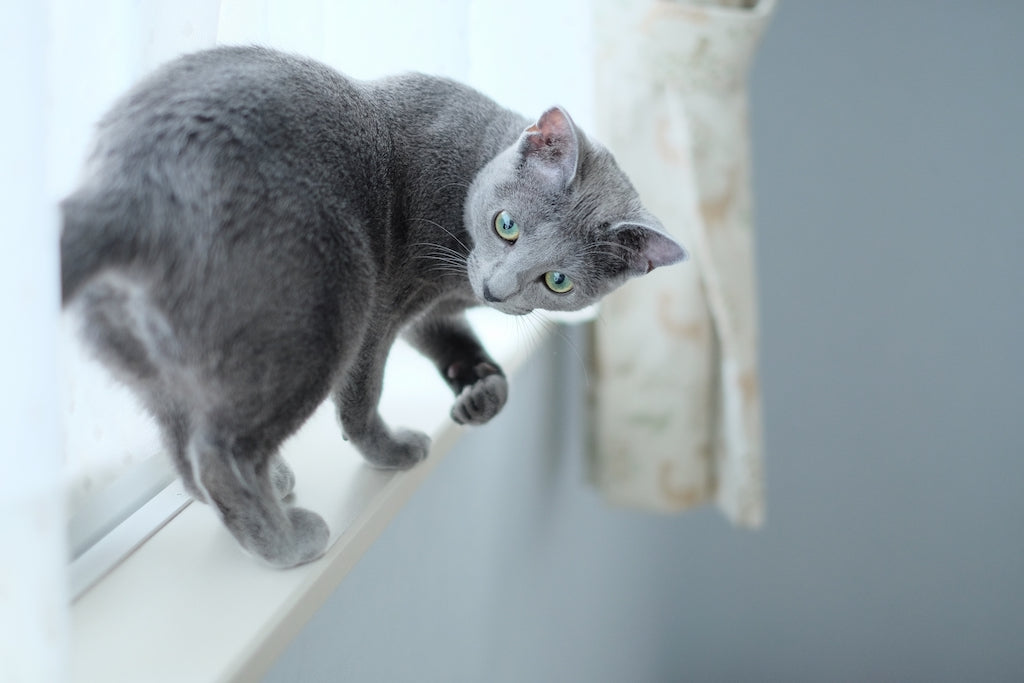
The Russian Blue is a cat that originated in Russia.
"Blue" refers to its deep gray coat color. Also known as ash blue, its unique deep hue is a beauty exclusive to the Russian Blue. Its lustrous coat creates an elegant gradation with every movement.
It is as smooth as silk to the touch. Its fine, soft fur is dense, and like a cat from Russia, it has a plentiful undercoat.
Coat Color is "Blue" Only
The Russian Blue's coat color is exclusively "blue," and all are short-haired. Further enhancing the beauty of its coat are its large, round, "emerald green" eyes. Due to its noble appearance, it is called the "Archangel Cat" in Europe and has many admirers.
Russian Smile
If you look closely at a Russian Blue's face, you'll notice an adorable expression that seems to be smiling. Many people are captivated by its upward-curving mouth, which is called the "Russian Smile."
Long Limbs and Slender Body
The average weight of a Russian Blue is about 3 to 5 kg. It is a slender, muscular cat. Its long limbs and tail are very elegant, and even when playing actively, it maintains an air of grace.
The "Big Three" Blue Cats
The Russian Blue is considered one of the "Big Three" blue cats, alongside the Chartreux from France and the Korat from Thailand. Cats with a solid blue coat are quite rare.
History of the Russian Blue
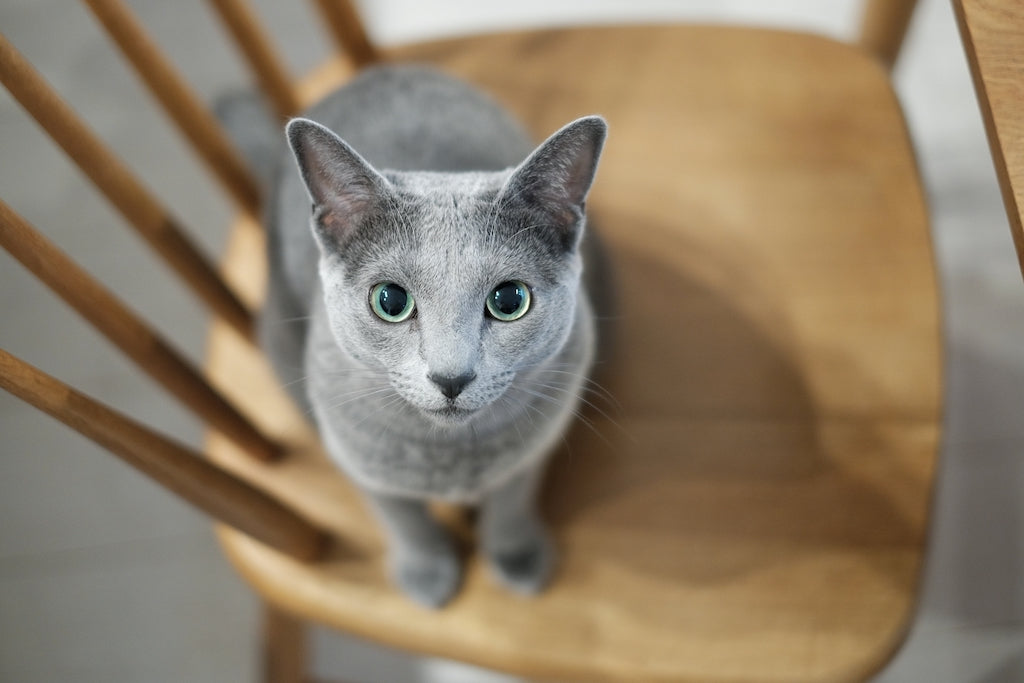
The Russian Blue is believed to have originated naturally in a port city in northern Russia.
In the 1860s, they were brought to England on merchant ships and quickly became very popular for their beautiful ash-blue, silk-like coats and dignified appearance. Many members of the royal family and aristocracy were fans of the Russian Blue.
Systematic breeding by breeders in England and Sweden led to its registration as a "Russian Blue" in 1912. Although their numbers drastically declined during the two World Wars, they were preserved by breeders and continue to thrive today.
Personality of the Russian Blue
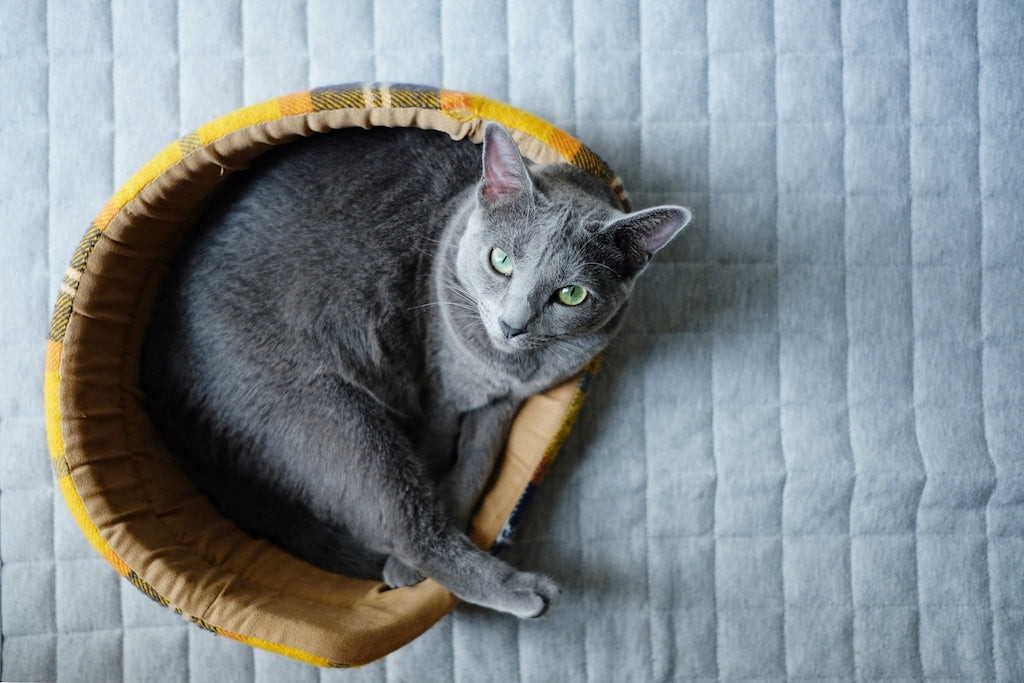
In a word, the Russian Blue's personality is "affectionate yet a bit shy."
Russian Blues are obedient to their owners and are said to have a dog-like personality. They will follow their owners around and have a spoiled side that seeks physical affection. Sometimes, they can even get jealous.
They also possess the intelligence to change their demeanor towards different family members, thinking, "This person is fine, but that person... not so much." While they tend to show strong affection towards those they recognize, they are also a bit introverted. Many are shy around strangers and may hide when new people are around.
Despite their shyness, Russian Blues love to play. With their muscular and slender physique, they are very active and require a lot of exercise. Be sure to spend plenty of time playing with them using toys.
Things You Should Know About Russian Blues
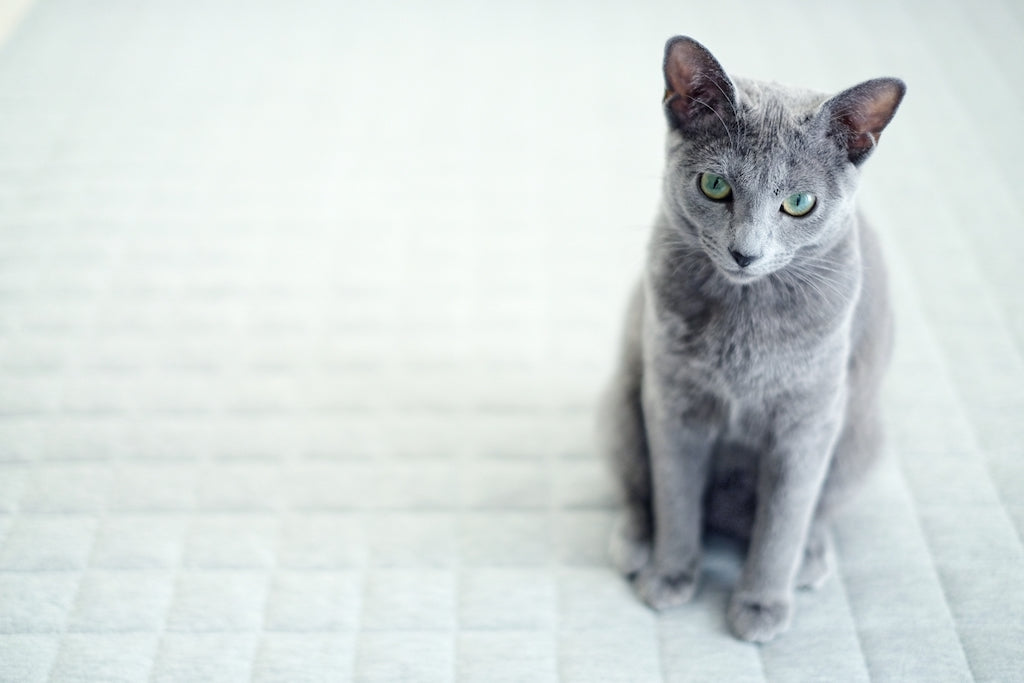
While the Russian Blue is beautiful with its ash-blue coat and lithe body, there are things to be mindful of when living with one.
These are "weight management" and "skin conditions."
Russian Blues have a muscular and slender build, but if they don't get enough exercise, they can become obese.
Obesity in cats increases the risk of diabetes, heart disease, urinary stones, and arthritis. Be careful not to overfeed them treats and ensure they get plenty of playtime.
Furthermore, Russian Blues have a double coat with fine, dense fur. During shedding season, brushing is essential to remove the winter undercoat.
Brushing not only maintains a lustrous coat but also helps prevent skin conditions, so make it a habit to brush them as a form of bonding.
Summary
Russian Blues are slightly shy and reserved, but they are obedient and affectionate cats towards their owners. They are not fond of strangers, so try to gradually accustom them to new people.
Additionally, Russian Blues rarely meow and are known as "voiceless cats." While they are popular as easy-to-keep cats, weight management is important.
To maintain their muscular and slender physique, a moderate amount of exercise is necessary. If they become obese, the risk of diseases such as diabetes, heart disease, urinary stones, and arthritis increases, so be careful not to overfeed them and play with them often.
Enjoy life with your loving Russian Blue, with its beautiful ash-blue coat, emerald green eyes, and adorable Russian Smile!
Author Profile




![[New Product] The joy of choosing for you, gentle comfort for your beloved cat. Graphic cat collars are here!](http://www.poponeko.jp/cdn/shop/articles/090600107_93c9c9e5-aa57-4ec7-bbdc-23c6ff1f104b.jpg?height=400&v=1751956036)
![[New Product] Improved fit & feel! Our cotton corduroy cat collars have been renewed!](http://www.poponeko.jp/cdn/shop/articles/240900219_fe07798b-62e5-4c12-9b56-7f12cde11ae1.jpg?height=400&v=1763642459)
![[Set Product] Leaf Ribbon & Scrunchie Cat Collar - Tartan Check Black Watch](http://www.poponeko.jp/cdn/shop/files/2606_00011.jpg?v=1785759845&width=600 "[Set Product] Leaf Ribbon & Scrunchie Cat Collar - Tartan Check Black Watch")
![[Set] Leaf Ribbon & Scrunchie Cat Collar, Elegant Cherry Blossom, Red](http://www.poponeko.jp/cdn/shop/files/2608_00137.jpg?v=1789197917&width=600 "[Set] Leaf Ribbon & Scrunchie Cat Collar, Elegant Cherry Blossom, Red")
![[Set] Leaf Ribbon - Moda Old World Yuletide & Cat Collar - MUJI Cotton Plain Autumn Sky](http://www.poponeko.jp/cdn/shop/files/260618_00174.jpg?v=1784451812&width=600 "[Set] Leaf Ribbon - Moda Old World Yuletide & Cat Collar - MUJI Cotton Plain Autumn Sky")
![[Set Product] Leaf Ribbon Fleurage Blue & Scrunchie Cat Collar Belgian Linen Orange](http://www.poponeko.jp/cdn/shop/files/2608_00135.jpg?v=1789197487&width=600 "[Set Product] Leaf Ribbon Fleurage Blue & Scrunchie Cat Collar Belgian Linen Orange")
![[Set] Leaf Ribbon (Moda Agatha Road) & Cat Collar (MUJI Belgian Linen Orange)](http://www.poponeko.jp/cdn/shop/files/260618_00169.jpg?v=1784451812&width=600 "[Set] Leaf Ribbon (Moda Agatha Road) & Cat Collar (MUJI Belgian Linen Orange)")
![[Set] Leaf Ribbon & Scrunchie Cat Collar - Petit Fleur - Purple](http://www.poponeko.jp/cdn/shop/files/2608_00419.jpg?v=1789946167&width=600 "[Set] Leaf Ribbon & Scrunchie Cat Collar - Petit Fleur - Purple")
Leave a comment