

The wild-looking Bengal is just like a small leopard. It is a cat with the exotic charm of a wild cat.
While they give the impression of having a slender, supple, sprinter-like physique, just how big are they in reality?
In this article, we would like to explain everything you’re curious about regarding the "size" of the Bengal, including their average weight and body length.
Bengal Size
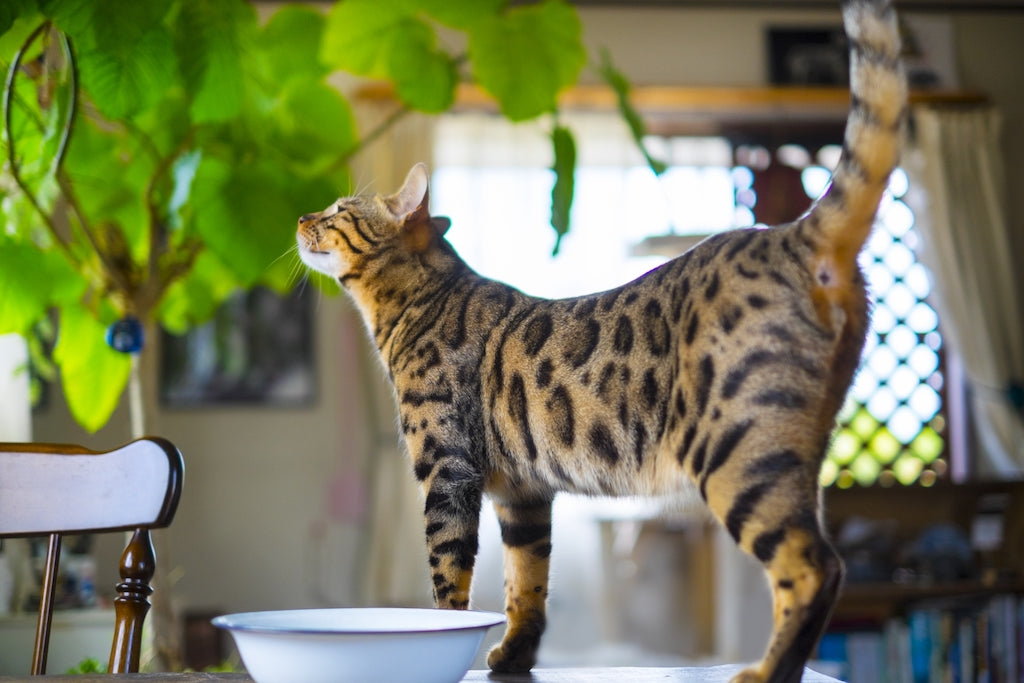
The ancestor of the Bengal is the "Asian Leopard Cat," which lives in the forests of Southeast Asia, such as in India and Thailand. It is a beautiful wild cat with spotted markings.
Bengal cats (the wild species) are also called leopard cats, and the Iriomote cat and Tsushima leopard cat are considered subspecies. The weight of an Asian leopard cat is 3–6 kg, so they are not much different in size from a regular domestic cat.
Given those roots, just how heavy and long do Bengals get, and how much do they grow?
A Powerful and Robust Body
The Bengal is categorized as "Long & Substantial," which is characterized by a thick-boned, robust physique. Typical large cat breeds like the Norwegian Forest Cat, Maine Coon, and Ragdoll also belong to the Long & Substantial type.
Average Weight of a Bengal
The average weight of an adult Bengal is 3–5 kg for females and 3–6 kg for males. While they may look heavy, their weight is about the same as that of a typical domestic cat.
Bengal Body Length
The body length of a Bengal (from chest to rump) is about 30–50 cm. They are slightly larger cats. However, because Bengals have small heads and long, slender limbs, they have an outstanding figure. Their lean, muscular, and supple body gives them a wild feel not found in ordinary house cats.
|
[Related Articles] |
Growth Process of a Bengal
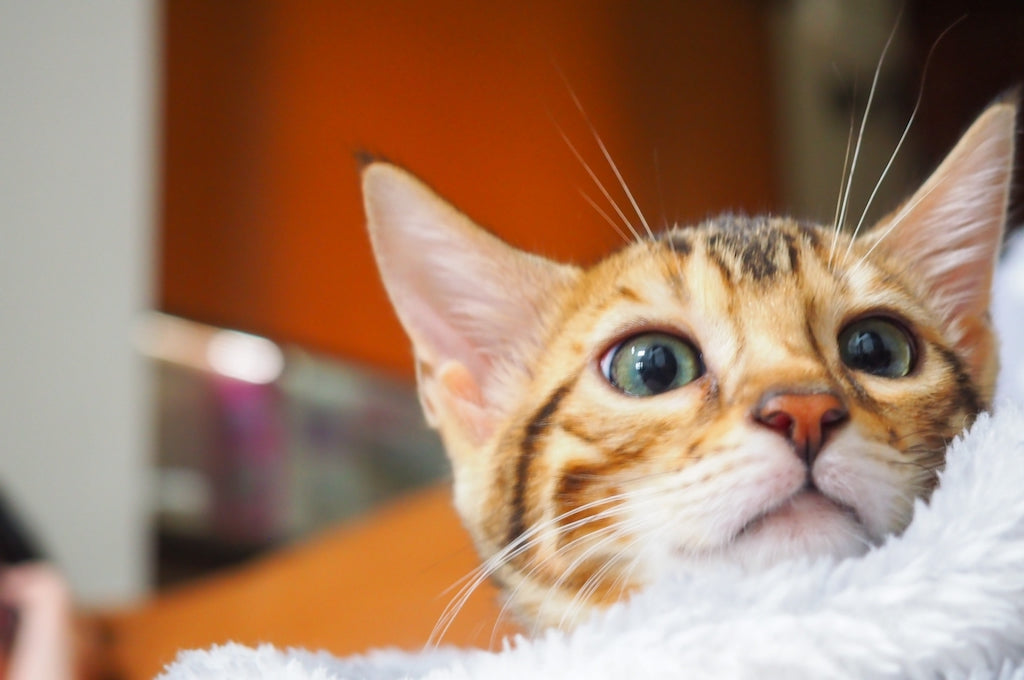
When you think of a Bengal, their leopard-like leopard markings are their main attraction.
Bengal coat colors come in three types: "brown," "silver," and "snow (white)," which all have darker markings. There are also specific names for these patterns: a leopard-like print is called spotted, a two-tone spotted pattern is called rosette, and a swirl pattern is called marble.
The markings are not very clear when they are first born, and they gradually become darker starting around 1 to 2 months of age.
A 3-month-old Bengal weighs about 1–1.5 kg, which is an average size. By around 6 months, they grow to 2.5–3 kg and start showing their mischievous, playful side.
By around 1 year of age, their characteristically muscular and supple physique is complete. Males tend to be larger, and some can exceed 8 kg.
Bengals Have Outstanding Athletic Ability
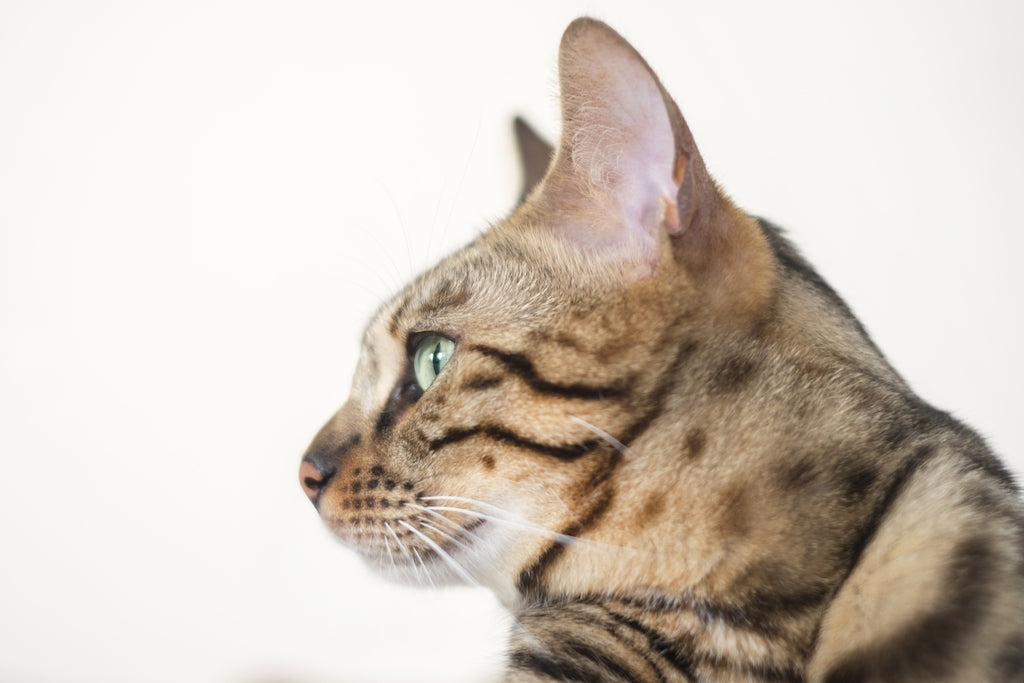
Since Bengals carry the blood of a wild species, their physical capabilities are exceptionally high.
If you look closely at a Bengal's build, their hind legs are longer than their front legs. They run with a powerful, bounding motion. Their jumping ability is also incredible; they can easily jump up onto their owner's shoulders.
Built specifically for hunting, Bengals are very playful. Even after becoming adults, they play energetically and remain as lively as innocent kittens forever.
Because they look wild, people often think they are ferocious and unfriendly, but they are actually very affectionate. That, too, is part of the Bengal's charm.
Beware of Lack of Exercise
Because Bengals are very active cats, there is little concern about them becoming obese. However, you should be careful about "overfeeding" and "lack of exercise."
Feed them the appropriate amount according to their weight and provide an environment where they can exercise, such as cat trees or cat walks. Also, weight gain is common after neutering or spaying, so you may want to consider switching to a lower-calorie food.
|
[Related Articles] |
Summary
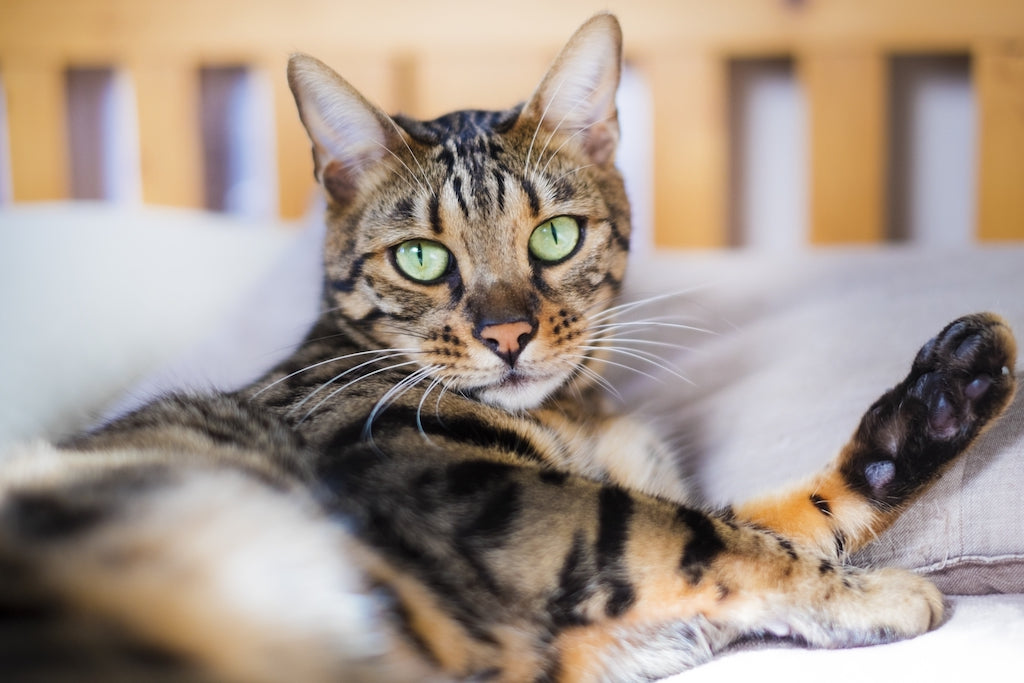
The Bengal, which inherits the blood of a wild species, is cool with its leopard-like markings and wild expression.
The average weight of an adult is 3–5 kg for females and 3–6 kg for males, making them standard-sized cats. They look smart, but are very muscular. They play powerfully using their spring-like, supple muscles.
Their growth stops at about 1 year of age, but a kitten-like, innocent personality is another characteristic of the Bengal.
Bengals are not all that big, but because their physical capabilities are exceptionally high, it is a good idea to provide them with a tall cat tree.
However, what they love most is playing with their owner. Since they also have an affectionate side, be sure to enjoy plenty of physical contact and playtime together.
Author Profile







Leave a comment