
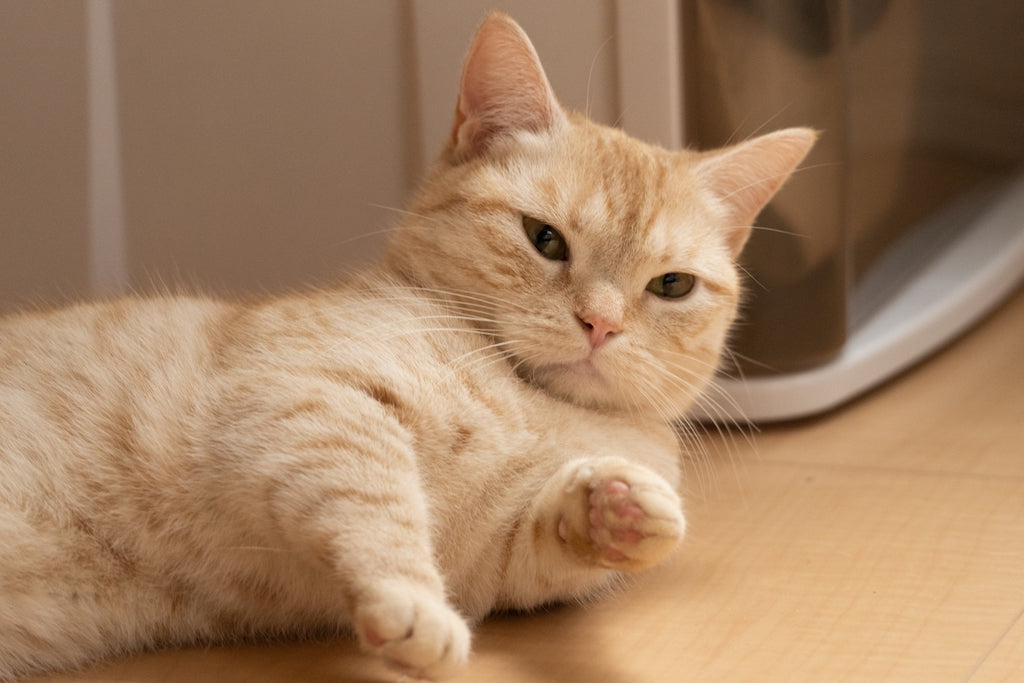
Munchkins are adorable with their short legs and waddling gait. They are bright and gentle cats that get along well with other cats and people other than their owners.
While they may appear to move slowly and gracefully, their athleticism is exceptional. Like a low-slung sports car, they can dart around quickly despite their short legs.
While many Munchkins are smaller than other cat breeds, how big do they actually get? This time, we will focus on the "size" of Munchkins, including their weight, body length, and growth process.
Munchkin Size
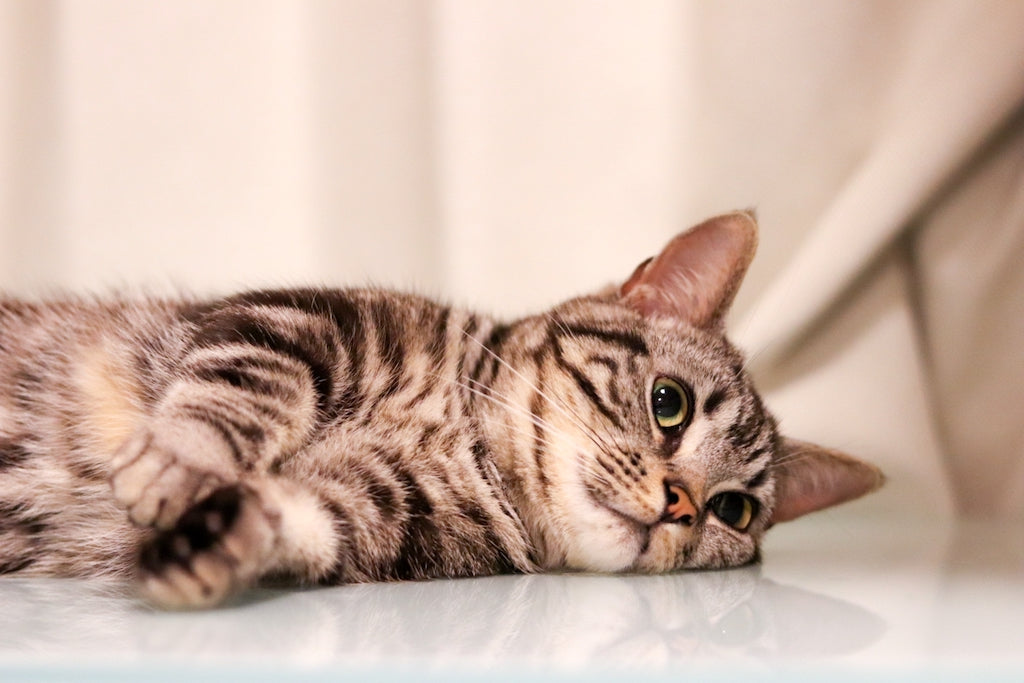
Munchkins do not have specific coat colors or patterns, and some have short hair while others have long hair. They are so unique that it is said no two Munchkins have the same pattern.
Their most distinctive feature is their "short legs."
The name "Munchkin" is said to be derived from "munchkin," meaning "small" or "short."
Munchkins are often imagined as small cats with short legs, but how big are they actually?
Sturdy and Muscular Build
The Munchkin's body type is classified as "semi-foreign." They are cats with a slightly elongated body and a solid bone structure.
American Curls and Ocicats also have a semi-foreign body type, but Munchkins have extremely short legs. However, they are actually very muscular. They move quickly and can easily jump to high places.
Incidentally, "foreign" refers to slender cats characterized by a long body and long limbs. Russian Blue and Somali cats are classified as foreign types.
|
[Related Articles] |
There are 3 types of Munchkin short legs
Munchkin legs are said to be about 10 cm long even in adult cats. However, not all Munchkins have short legs.
The probability of a short-legged Munchkin being born is about 20-30% of the total, and some have long legs, while others have slightly shorter legs. They are classified into three types: short-legged (standard), medium-legged (super short), and long-legged (raghagger).
Average Weight of Munchkins
The average weight of an adult Munchkin is 2 to 4 kg. Since the average weight of a typical cat is about 3 to 5 kg, Munchkins are relatively small cats.
However, since their leg lengths vary, there are individual differences in their weight as adult cats. Long-legged Munchkins tend to have an average weight of about 3 to 5 kg, similar to typical cats.
Munchkin Body Length and Height
The body length (from chest to rump) of a Munchkin is about 30 cm for both males and females. They have a slightly longer body.
Their body height (from the ground to the back) is about 16 to 20 cm. Since the average body height of a typical cat is about 26 cm, their short legs are a very distinct feature. There are also very large individual differences in body height, with long-legged cats having an average height of about 26 cm.
Munchkin Growth Process
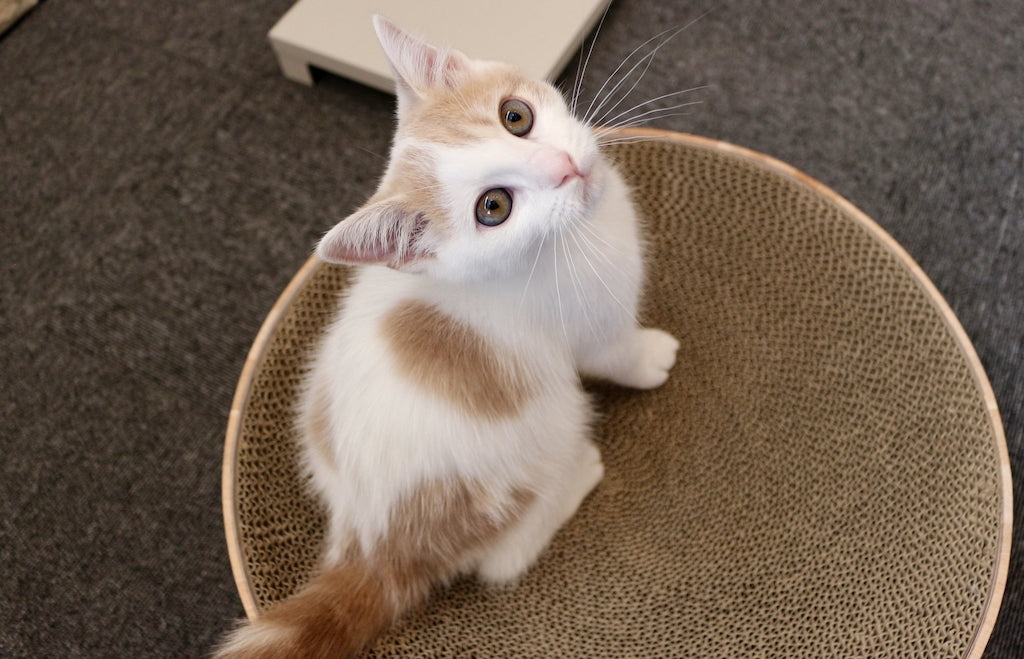
Munchkins have a slightly small and rounded build, but they are surprisingly muscular and sturdy cats.
While they are active and have a good appetite, they are also prone to obesity. It is important to manage their weight appropriately, using their weight at 1 year old as a benchmark.
Munchkin Weight Trend
The average weight at around 3 months old is approximately 1 to 1.3 kg. At 6 months, it's about 1.7 to 2 kg, and at 9 months, it's about 2.6 to 2.9 kg. By around 1 year old, their skeletal structure is almost fully formed, and their growth stops at a weight of 2 to 4 kg.
Munchkins are prone to obesity
Munchkins are prone to obesity, so it's especially important to manage their food intake after spaying or neutering.
Because Munchkins support their bodies with short legs, obesity can lead to joint problems and intervertebral disc herniation. It also increases the risk of diabetes.
It's important to weigh them regularly and understand the appropriate amount of food to prevent overfeeding.
Also, check their obesity level with the BCS (Body Condition Score), and if you think they're getting fat, incorporate diet food effectively.
|
[Related Articles] |
Is a collar necessary for a Munchkin?

Short-legged Munchkins are often thought to be slow-moving, but they are active cats that run around like sports cars.
Of course, there is a high risk of escape. To prepare for an accidental escape, basic escape prevention measures, such as locking doors and windows, are essential.
Additionally, even for indoor cats, we recommend putting a "cat collar" on them to increase the chances of reunion if they do escape.
If a cat outside is wearing a collar, people will know it's a "pet cat." Furthermore, if you write your contact information on an ID tag, anyone who finds your cat should be able to contact you.
Ideally, start practicing wearing a cat collar from kittenhood, around 3 months old, when their body develops.
| [Related Articles] |
|
[Related Products] |
What size collar for a Munchkin?
Munchkins are lighter than average cats. However, despite their small size, they have a muscular and sturdy build, so their neck circumference is also thicker.
If you choose a cat collar size based solely on weight, it might feel too tight. Conversely, if it's too loose, it can be dangerous.
There is considerable individual variation in Munchkin weight and neck circumference. Always measure before choosing a cat collar size.
How to choose a cat collar size
Poponeko cat collar sizes are indicated by the cat's "nude size." The nude size refers to the exact measurement of the narrowest part of the cat's neck.
Measure with a tape measure or string, and add 2-4 cm (about 1-2 human fingers) for a comfortable fit. For long-haired cats, add 5 cm (about 2-3 human fingers) for extra room.
|
[Related Articles] |
Summary
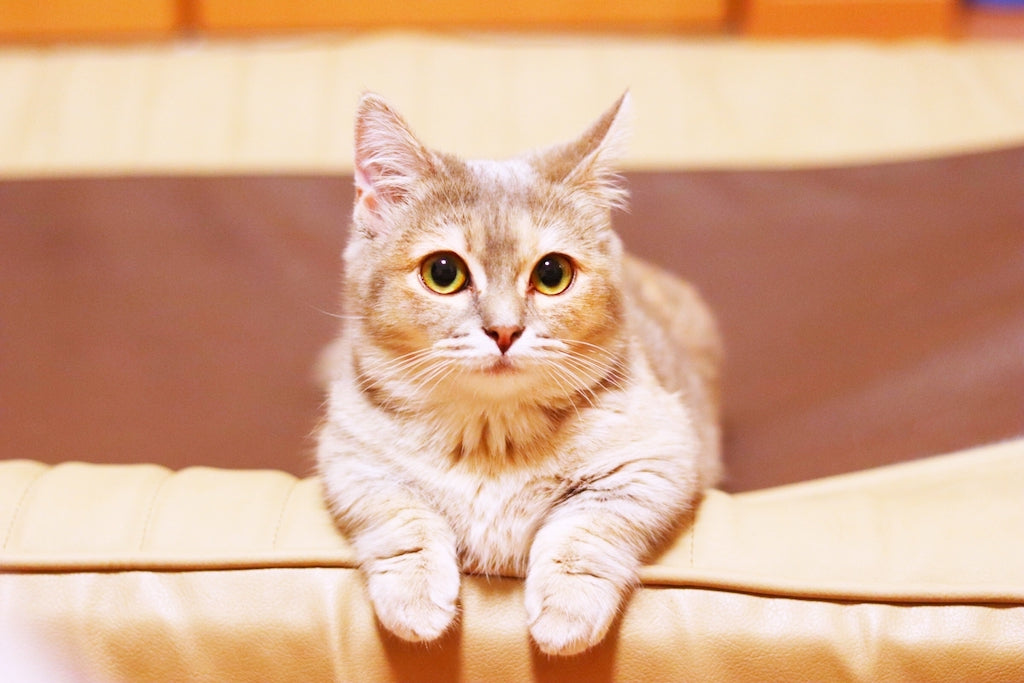
Munchkins are characterized by their short legs, earning them the nickname "dachshunds of the cat world."
Their waddling gait and "Munchkin stand" where they stand on two legs are adorable characteristics unique to short-legged Munchkins.
Despite their short legs, their athleticism is on par with other cats. They are skilled at the cat-like "loaf position" and possess excellent jumping and dashing abilities.
They are by no means slow-moving cats, so care must be taken to prevent them from escaping.
Also, like short-legged dachshunds, they are prone to intervertebral disc herniation. It is necessary to manage their diet to prevent obesity and reduce the burden on their legs and back.
Be careful not to overeat and play a lot. Enjoy a life full of love with your comforting Munchkin!
Author Profile




![[New Product] The joy of choosing for you, gentle comfort for your beloved cat. Graphic cat collars are here!](http://www.poponeko.jp/cdn/shop/articles/090600107_93c9c9e5-aa57-4ec7-bbdc-23c6ff1f104b.jpg?height=400&v=1751956036)
![[New Product] Improved fit & feel! Our cotton corduroy cat collars have been renewed!](http://www.poponeko.jp/cdn/shop/articles/240900219_fe07798b-62e5-4c12-9b56-7f12cde11ae1.jpg?height=400&v=1763642459)
![[Set] Leaf Ribbon & Cat Collar - Gingham Check Tomato Red](http://www.poponeko.jp/cdn/shop/files/DSC00105_c3cf26db-19e7-4828-a848-34b8c51cbf24.jpg?v=1780663891&width=600 "[Set] Leaf Ribbon & Cat Collar - Gingham Check Tomato Red")
![[Set Item] Leaf Ribbon & Scrunchie Cat Collar, Petit Fleur, Pink](http://www.poponeko.jp/cdn/shop/files/2608_00405.jpg?v=1789946167&width=600 "[Set Item] Leaf Ribbon & Scrunchie Cat Collar, Petit Fleur, Pink")
![[Set Product] Leaf Ribbon & Cat Collar - Tartan Check Classic Red](http://www.poponeko.jp/cdn/shop/files/2606_00018.jpg?v=1785759845&width=600 "[Set Product] Leaf Ribbon & Cat Collar - Tartan Check Classic Red")
![[Set] Leaf Ribbon Fleurage Purple & Scrunchie Cat Collar Belgian Linen Turquoise](http://www.poponeko.jp/cdn/shop/files/2608_00136.jpg?v=1789197487&width=600 "[Set] Leaf Ribbon Fleurage Purple & Scrunchie Cat Collar Belgian Linen Turquoise")
![[Set] Leaf Ribbon - Sunny Mimosa & Scrunchie Cat Collar - MUJI Belgian Linen - Mustard](http://www.poponeko.jp/cdn/shop/files/2608_00411_b02e5118-d247-450a-94cd-97dbd7e27b54.jpg?v=1790033858&width=600 "[Set] Leaf Ribbon - Sunny Mimosa & Scrunchie Cat Collar - MUJI Belgian Linen - Mustard")
![[Set] Leaf Ribbon Fleurage Blue & Cat Collar Belgian Linen Mustard](http://www.poponeko.jp/cdn/shop/files/2608_00121.jpg?v=1789197487&width=600 "[Set] Leaf Ribbon Fleurage Blue & Cat Collar Belgian Linen Mustard")
Leave a comment