
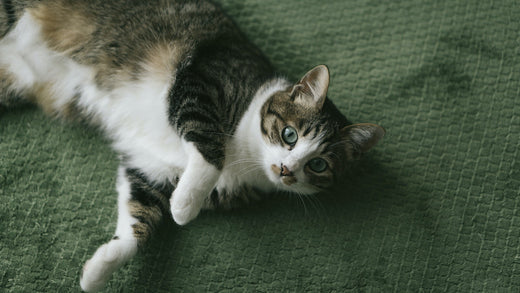
When cats enter their heat cycle, they become restless and unsettled. Furthermore, they begin to exhibit problematic behaviors, such as calling out loudly and urine spraying in various places.
However, because these heat-related behaviors are driven by reproductive instincts, scolding your cat will not make them stop.
How can you deal with these behavioral problems? We will explain in detail everything you need to know about your cat's heat cycle, including what you can do and what you must avoid.
When and How Long Cats are in Heat

The first heat cycle typically occurs at around 6–8 months of age for female cats and 9–12 months for males. Individual differences are significant, so it is possible for them to reach this stage even earlier.
Cats are "seasonally polyestrous", meaning they experience heat during seasons when it is easier to raise kittens: spring (February to April) and summer (June to August). When the weather warms up, you might hear their characteristic yowling coming from outside.
Typically, the female cat begins by emitting unique, noisy cries. She will then start urine spraying in various locations.
This behavior is intended to attract male cats, which react to the female's vocalizations and pheromones by entering their own state of excitement.
Until what age does a cat's heat cycle last?
A cat's heat cycle continues throughout their entire life. While it varies by individual, female cats can generally conceive and give birth up until around 8 years old. Male cats typically remain fertile until they are about 15 years old.
Duration of the heat cycle
The estrous cycle of a female cat consists of the "proestrus," "estrus," "interestrus," and "diestrus" phases, which repeat in sequence.
The period from "proestrus" to "interestrus," when heat-related behaviors are observed, lasts for about 14 to 21 days. If mating does not occur during this period, the next heat cycle will typically begin in two to three weeks.
For your information, a cat's pregnancy lasts about two months. After giving birth, the mother can become pregnant again just two months later, once the kittens are weaned. In other words, cats are highly prolific creatures capable of giving birth multiple times in a single year.
Precautions during your cat's heat cycle

Indoor-only cats will still experience heat cycles.
Even inside the house, they will hear the howling calls of others and smell the scent of females in heat carried on the breeze. Their urge to go outside intensifies, so you must be vigilant about escaping.
There are risks not only of traffic accidents but also of injury from fighting with other cats. Additionally, there is the risk of infectious diseases transmitted through mating.
Of course, it is also not acceptable to let your cat outside just because they are noisy.
During the spring and summer heat seasons, be extra careful about preventing escapes, and ensure they have a collar and an identification tag just in case they do get lost.
|
[Related Articles] |
What NOT to do with a cat in heat
During heat, cats often exhibit noticeable behavioral issues such as loud, howling vocalizations, urine spraying everywhere, and becoming aggressive. Sometimes they may even continue to cry throughout the entire night.
However, even if you want to stop these behaviors, there are things you absolutely must not do to a cat in heat.
Scolding or startling them with loud noisesYou cannot stop the noisy calling or urine spraying by scolding them. Starting them with shouting or loud noises will only increase their stress, so please avoid this.
Giving them silver vine (Matatabi)
While some suggest giving silver vine to distract them, excessive amounts can lead to breathing difficulties. It can also increase their excitement and aggression, so it is not recommended.
Stimulating them with a cotton swab
Female cats ovulate after mating, which brings the heat cycle to an end. Information circulates about stimulating a female cat's genitals with a damp cotton swab to end the heat cycle early; however, this is an extremely dangerous practice. Do not ever attempt this.
Countermeasures for your cat's heat cycle

Once a cat's heat cycle begins, all you can really do is watch over them until it subsides naturally. Even though these are behavioral problems, they are based on instinct and cannot be simply "stopped."
To coexist peacefully during this time, keep these effective measures in mind.
Avoid contact with other cats
Even indoor cats can be easily triggered to enter heat by reacting to other cats outside. You should take measures such as covering windows with curtains or moving cat trees away from windows to prevent contact with other cats.
Play with them often
Cats in heat are emotionally unstable and suffer from frustration. To help distract them, provide toys that pique their curiosity. Engaging them in lots of play during the day to burn off energy can help reduce nighttime howling.
Increase the number of scratching posts
Cats tend to scratch and mark their territory more than usual during heat. Increase the number of scratching posts so they can scratch to their heart's content.
Don't over-attend to them
Female cats in heat may become more clingy than usual. While it may seem cute, giving them too much attention can sometimes worsen their problematic heat behaviors. During this time, try not to coddle them; if they come to you for affection, gently move away.
Managing urine spray
Cats have a habit of continuing to mark areas where they have already urine-sprayed, so clean thoroughly so that no scent remains. We recommend applying pet sheets or waterproof pads to these areas if possible.
Consider spaying or neutering if you do not plan to breed

The behavioral issues and emotional stress associated with the heat cycle can be mitigated by undergoing a spay or neuter surgery.
It prevents unwanted pregnancies and can reduce the strong, distinct odor of their urine. It is also said to mellow out the aggressive tendencies of male cats.
Above all, it helps prevent hormone-related diseases such as breast cancer, ovarian cancer, pyometra (uterine infection), testicular cancer, and prostate enlargement.
Note, however, that spaying or neutering does not guarantee that 100% of heat-related behaviors will vanish.
While there are risks associated with general anesthesia and the downside of a potential tendency to gain weight, the long-term benefits of the surgery for a happy life together are substantial.
If possible, consider having the surgery performed before their first heat cycle, around 6–8 months of age.
|
【Related Articles】 |
Summary

Cats go into heat twice a year—usually in spring and summer—with each cycle lasting approximately 14 to 21 days. They typically experience their first heat around 6 months of age, and continue to experience cycles throughout their lives.
The "noisy calling" and "urine spraying" characteristic of heat are problematic behaviors for humans. However, these cannot be stopped by scolding, nor can they be brought to an end prematurely.
The most important measure during the heat cycle is to prevent escape. Other helpful strategies include limiting their view of the outdoors, exhausting them through play, and not giving them excessive attention while waiting for the cycle to conclude.
The heat cycle is also a very stressful phenomenon for cats. If you do not plan to breed, spaying or neutering is the most effective way to manage the heat cycle. For the sake of your cat's mental and physical health, please consider scheduling the procedure as soon as possible.









メス猫ひきとることになったのだが
ずっとついてきてずっとくっついてくるのだが
これは発情なのだろうか
避妊手術は危険なのですかね?
今 発情期 真っ只中で1日中 鳴いてうるさいです❗️ある年齢になったら無く成る、、💦と自分 勝手に 思っていましたが そうでは無いのですね~😅勉強になりました 有り難うございます❗️🙏
とても参考になりました。猫ちゃんの発情期にやっていいこといけないこと他のには書いてないことがたくさん書いてありとても参考になりました。ありがとうございます。
可愛そうでしょうがないですが去勢まで見守りたいと思います
愛猫のゆきみ(♀生後7ヶ月)の行動がいつもと全然違って、もしかしたら発情かも、と思い調べていたらこちらの記事に辿り着きました。
ゆきみも私も初めてのことなので不安でいっぱいでしたが、とても参考になり、安心できました。
早速動物病院の受診をしようと思います。
ありがとうございます!
Leave a comment