
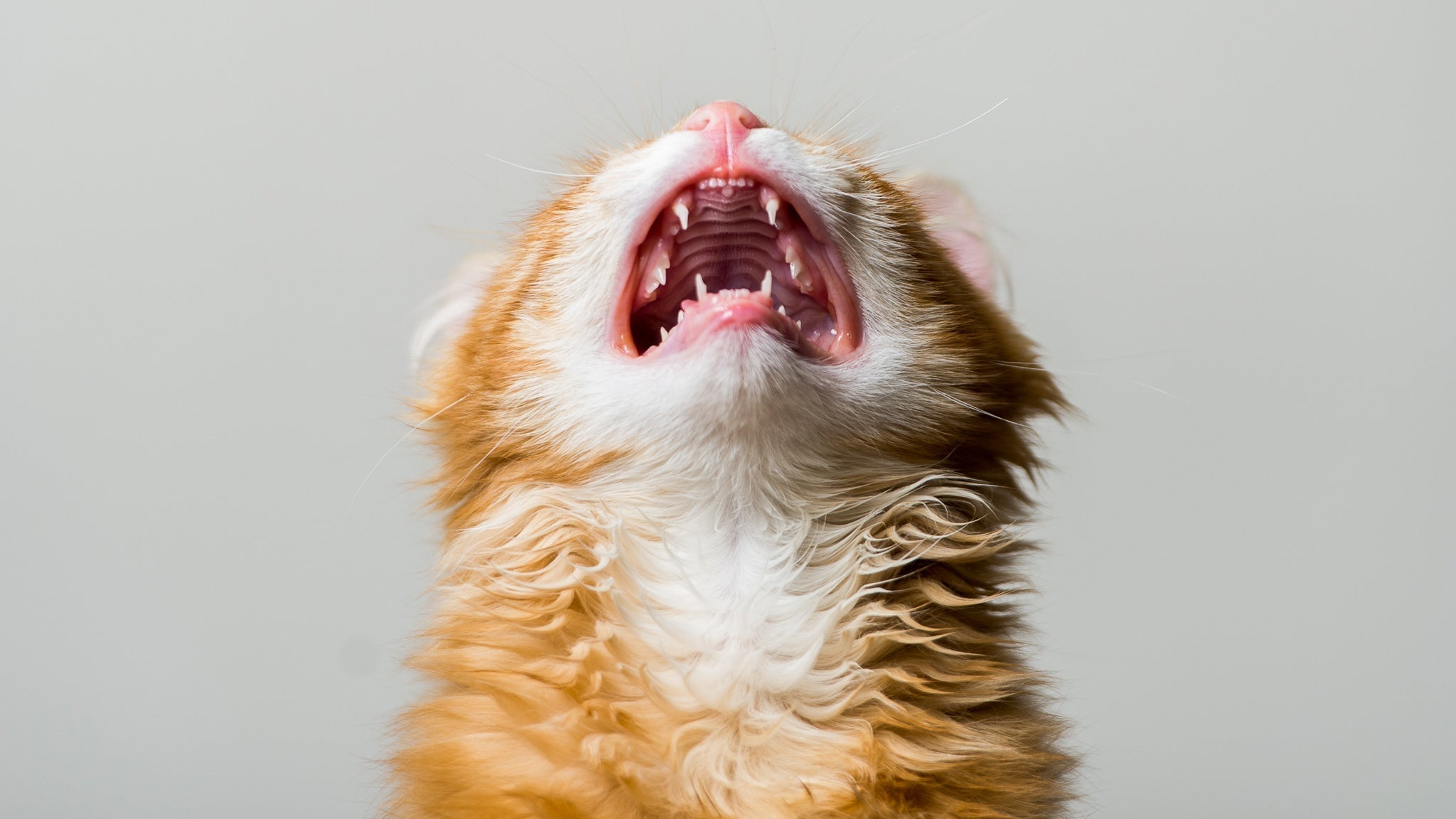
Aside from "meow," cats make various other sounds.
In fact, cats don't primarily use vocalizations for communication. Communication between cats is done through body language (ears, whiskers, back, tail height).
While kittens use vocalizations to communicate with their mothers, pet cats tend to vocalize frequently because they see their owners as parents (or offspring).
This article will explain the different types of cat vocalizations.
What are the different types of cat vocalizations?
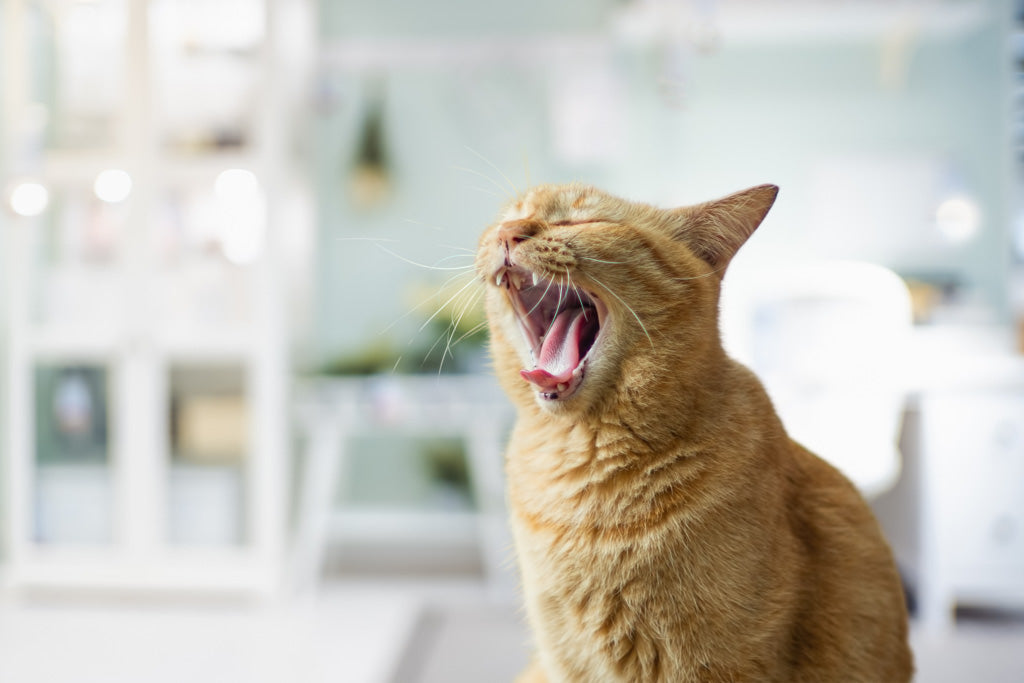
In addition to "meow," cats are believed to have about 10 different types of vocalizations. It might be interesting to listen closely, as you can sometimes understand a cat's feelings from its cries.
"Nyat" / "Nyat-nyat"
A short "nyat" is like saying "hi" or greeting you, or it's a sound they make when they're in a good mood. This vocalization can be considered very affectionate.
"Nyao" / "Nyaan"
These vocalizations are made when the cat is trying to get something from its owner or is being affectionate. For example, when they want to convey "I want food" or "Play with me," they will meow sweetly with a "nyaan."
If you give in to their demands too much just because they're cute, your cat might become spoiled.
"Nyao~n" / "Aoo~n"
When a cat makes a very loud "nyao~n" sound, it means they are in heat and calling for a mate. They make unique, loud vocalizations to reach distant cats, which often surprises owners. It is said that this vocalization subsides after spaying or neutering.
"Shaaa" / "Hoo"
If a cat hisses "Shaaa!" with its back arched and fur bristling, it indicates intimidation or aggression. Approaching them in this state could lead to an attack, even by their owner.
Also, if a cat is curled up small, with its ears flattened back, and making a "hoo" sound, it is in a state of intense fear or anxiety. Do not force contact; leave the cat alone until it can move on its own.
"Aa-oh"
When a cat is extremely scared, it may continuously emit a deep "Aa-oh!" sound. This vocalization is distinctly different from its usual meows, and if the cat is hiding and vocalizing this way, it indicates severe fear.
"Nyanya-nyat" / "Kakaka"
This is called "chattering" and is the sound a cat makes when it's stalking prey. Cats have a hunting instinct, so they recognize birds and insects outside as prey, but it's also said that indoor cats vocalize this way out of frustration because they can't hunt.
"Gorogoro" / "Guruguru"
Cats may purr "gorogoro" or "guruguru" when they are being held or petted. These sounds indicate that they are feeling safe, relaxed, and content. Kittens can purr from a very young age, and it is used for communication with their mother.
Cats may also purr when they are in extreme fear, severe pain, or just before they pass away. A cat's purr is believed to have relaxing and pain-relieving effects not only for the cat itself but also for its owner.
"Silent Meow"
A "silent meow" is when a cat opens its mouth as if meowing, but no sound is heard. It's believed that cats are vocalizing at a frequency that humans cannot hear, but other cats can. Kittens sometimes use silent meows with their mothers, which can be interpreted as an affectionate gesture.
|
[Related Articles] |
Is a cat meowing constantly a sign of stress?
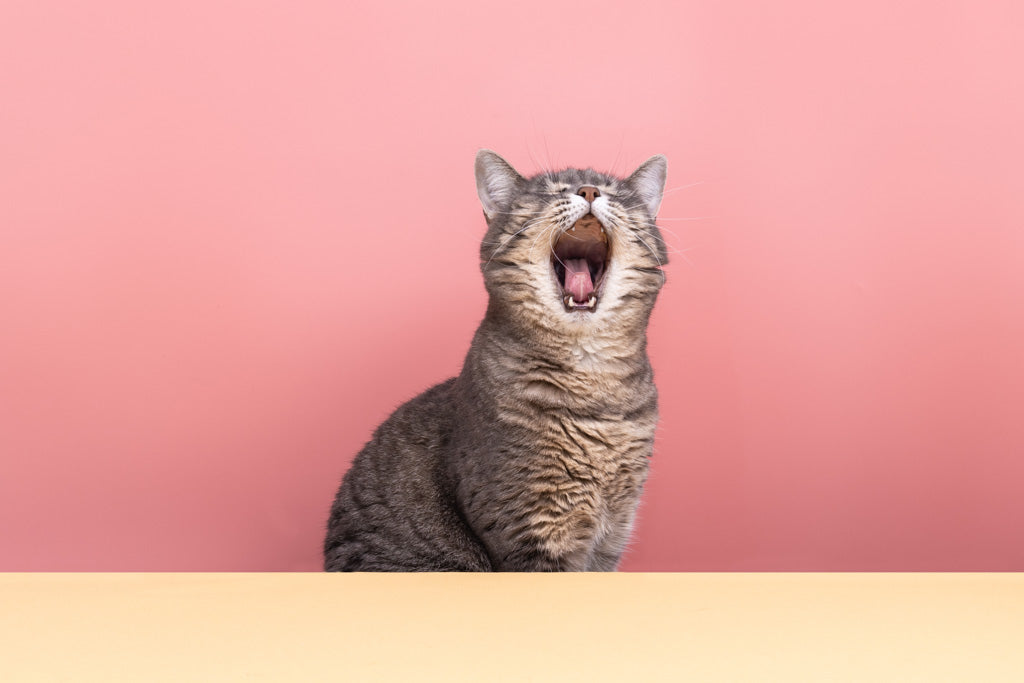
Cats don't usually vocalize much. Pet cats vocalize to cuddle with or beg from their owners. A happy "meow" is likely not a sign of stress.
When a cat vocalizes, it's important to remember that it could be experiencing pain or discomfort. Additionally, unspayed female cats may continuously make loud vocalizations characteristic of their heat cycle. Furthermore, in elderly cats, dementia can cause them to become disoriented, leading to persistent vocalizations due to anxiety.
If a cat that usually doesn't vocalize much starts meowing constantly, it's a source of stress for both the cat and the owner. It's rarely without a cause; usually, there's an underlying reason for the persistent vocalization. Therefore, the stress from the underlying cause is likely greater.
If your cat is meowing constantly, observe if there are any other symptoms or unusual behaviors, and consult a veterinarian. If the cause is resolved, the persistent meowing should stop. Even in cases of dementia-related vocalizations, anti-anxiety medications or sedatives can help control the meowing.
Observe not just their meows but also their gestures.
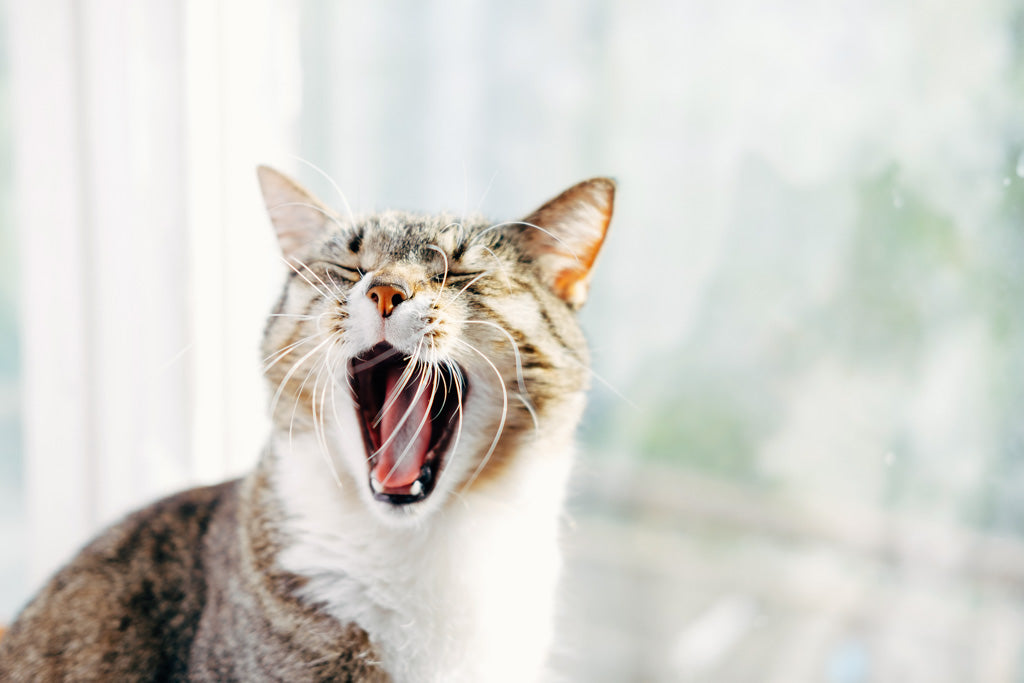
When a cat feels fear or anxiety, it makes sounds like "hoo" or "shaa." Besides vocalizations, you can also read a cat's emotions from its ears, back, tail, whisker direction, and pupil dilation. If your cat seems anxious or scared, you need to provide hiding places or remove the source of their fear.
Most of the time, a cat meows continuously because of some problem. However, some cats suppress their meows. Observe their appetite, excretion, water intake, and behavior closely, and if you notice anything unusual, take them to the vet.
Summary
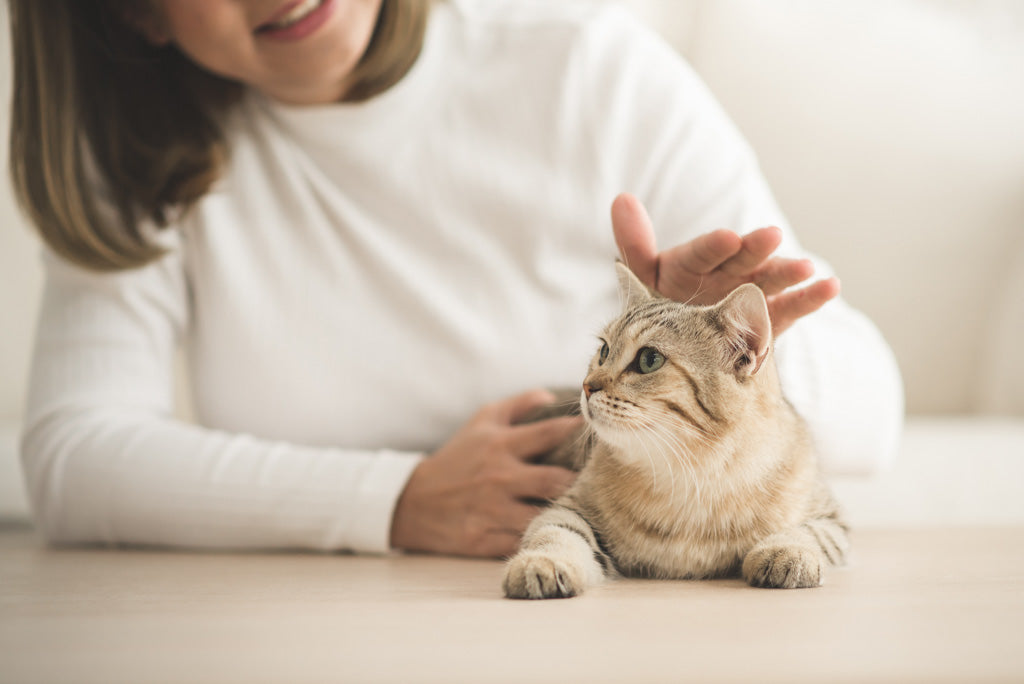
A cat's "meow" is very cute. Each vocalization has a meaning. We hope you listen carefully to what your cat is trying to tell you and build a trusting relationship.
Also, a meow due to discomfort is different from the usual meow. If you notice anything out of the ordinary, it's important to consult a vet immediately.

![[Veterinarian's Guide] Cat Escape Prevention Measures: Creating a Safe and Comfortable Environment](http://www.poponeko.jp/cdn/shop/articles/shutterstock_2035199633.jpg?height=400&v=1725783884)
![[Veterinarian's Guide] Preparing Your Cat for a Safe Time Alone at Home](http://www.poponeko.jp/cdn/shop/articles/shutterstock_1398782681.jpg?height=400&v=1726749748)
![Feline Infectious Peritonitis (FIP) Treatment Guide [2024 Edition]: Latest Information and Treatment Options](http://www.poponeko.jp/cdn/shop/articles/shutterstock_1633580878.jpg?height=400&v=1727181737)

![[Set] Leaf Ribbon moda Sage Wood & Cat Collar Cotton Linen Green](http://www.poponeko.jp/cdn/shop/files/260618_00171.jpg?v=1784451813&width=600 "[Set] Leaf Ribbon moda Sage Wood & Cat Collar Cotton Linen Green")
![[Set Product] Leaf Ribbon & Scrunchie Cat Collar - Hannari Sakura Green](http://www.poponeko.jp/cdn/shop/files/2608_00140.jpg?v=1789197917&width=600 "[Set Product] Leaf Ribbon & Scrunchie Cat Collar - Hannari Sakura Green")
![[Set] Leaf Ribbon & Scrunchie Cat Collar, Arabesque Swirl, Red](http://www.poponeko.jp/cdn/shop/files/2608_00130.jpg?v=1789044775&width=600 "[Set] Leaf Ribbon & Scrunchie Cat Collar, Arabesque Swirl, Red")
![[Set] Leaf Ribbon & Cat Collar: Petit Fleur, Blue](http://www.poponeko.jp/cdn/shop/files/2608_00407.jpg?v=1789946167&width=600 "[Set] Leaf Ribbon & Cat Collar: Petit Fleur, Blue")
![[Set Item] Leaf Ribbon & Scrunchie Cat Collar, Petit Fleur, Pink](http://www.poponeko.jp/cdn/shop/files/2608_00405.jpg?v=1789946167&width=600 "[Set Item] Leaf Ribbon & Scrunchie Cat Collar, Petit Fleur, Pink")
![[Set Product] Leaf Ribbon & Cat Collar - Champs de Fleurs Light Green](http://www.poponeko.jp/cdn/shop/files/DSC00102_e084695b-e8f0-442d-89e1-43de838500c2.jpg?v=1780663183&width=600 "[Set Product] Leaf Ribbon & Cat Collar - Champs de Fleurs Light Green")
うちの猫(♀、1歳)は割とよく鳴く方だと思います。いろいろな声で感情を伝えてくるのでその度「この子は何が言いたいのかな」と注意して聞き分けるようにしています。
病気になったときの声がきちんと分かるかが心配です。少しでも異変に敏感になって、病院で診察してもらおうと思います。
Leave a comment