
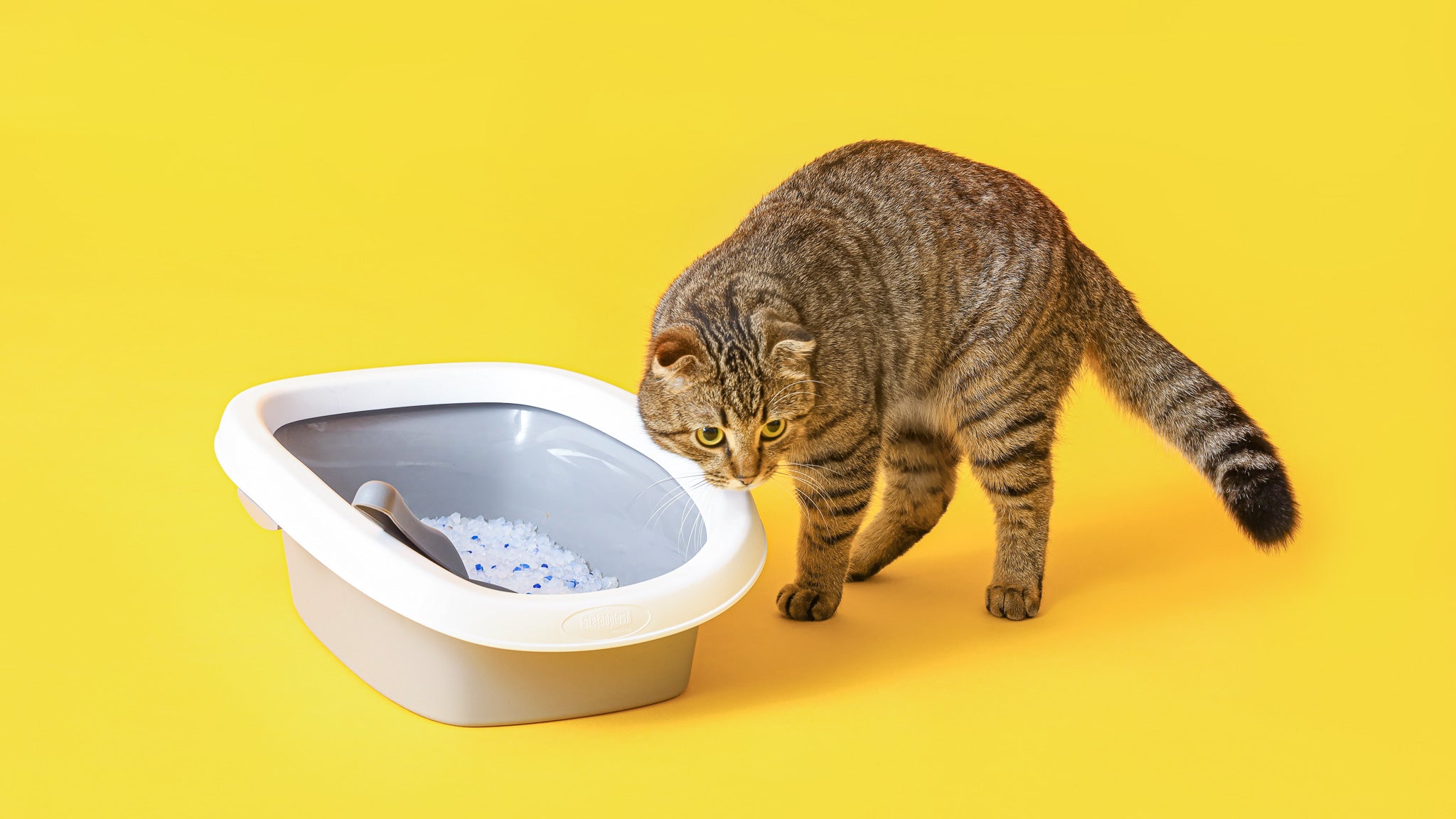
Elderly cats not only experience physical decline, but also an increase in litter box accidents due to diseases such as chronic kidney disease. This article will provide a detailed explanation of litter box issues in elderly cats.
What are the main reasons why elderly cats struggle with the litter box?

Elimination problems due to joint pain and muscle weakness
Approximately 70% of cats aged 12 and older suffer from arthritis. Osteoarthritis is the most common type of arthritis seen in elderly cats. Osteoarthritis is often found in joints such as the elbows, shoulders, knees, ankles, and hips, and can also occur in the spine (spondylosis deformans). Osteoarthritis causes pain due to inflammation in the joints and the formation of bone spurs. When in pain, cats become reluctant to move, leading to muscle weakness.
Cats with arthritis may find it difficult to step over even slight differences in height. Most commercially available cat litter boxes have a step at the entrance or require the cat to step over to enter. As a result, elderly cats may not be able to enter such litter boxes, leading to an increase in accidents outside the box.
Also, they may eliminate very close to their living space because they don't want to walk much.
Impact of dementia and stress on litter box behavior
Elderly cats may forget the location of their litter box due to cognitive decline, or become stressed if they cannot find it even after a slight change in furniture arrangement. If they cannot use the litter box, they will have accidents nearby.
|
【関連記事】 |
Litter box accidents as a sign of health issues
Litter box accidents can be a sign of various diseases. Common diseases include chronic kidney disease, diabetes, cystitis, urolithiasis, megacolon, osteoarthritis, and tumors.
These diseases lead to litter box accidents because the cat "produces more urine and cannot hold it," "cannot urinate," "cannot defecate," "defecates frequently," or "cannot walk to the litter box."
How to choose a litter box suitable for elderly cats

Recommendation for litter boxes with low, easy-entry openings
Most commercially available cat litter boxes have a step or high entrance. This design is to prevent litter and excrement from scattering outside. However, for elderly cats, stepping over this difference in height becomes difficult. Therefore, we recommend litter boxes with a low entrance. Those designed based on cat behavior or even dog litter boxes can be good alternatives.
Tips for litter box size and placement
Ideally, a cat's litter box should be 1.5 times the size of the cat's body and large enough so that the cat doesn't go outside the box even when turning around. Furthermore, it is necessary to have one more litter box than the number of cats. Especially for elderly cats, it is desirable to have a litter box within their range of movement.
How owners can respond to litter box accidents

Identify the reason why the cat isn't using the litter box
If an elderly cat has a litter box accident, you should absolutely not scold them. There is a reason for such accidents. Often, litter box accidents in elderly cats are a sign of illness, so it's important to identify why they can't use the litter box and consult a veterinarian early.
One reason a cat might not use the litter box is if it's dirty. Clean it at least once a day. Elderly cats may produce more urine due to kidney disease, so it's a good idea to clean it frequently. Also, pain or difficulty moving can prevent them from reaching the litter box. Observe their usual walking and jumping habits carefully.
Urinary problems or constipation can create unpleasant memories associated with the litter box, leading to repeated accidents. Observe if your cat is eliminating properly every day, checking the quantity, color, consistency, and whether they cry out during elimination.
Health clues from checking excrement
As cats age, they become more susceptible to various diseases.Key points for checking excrement include quantity, color, frequency, and behavior during elimination.
Most elderly cats develop chronic kidney disease, a symptom of which is increased excretion of dilute urine. Similarly, diabetes can also cause an increase in dilute urine. Kidney disease and diabetes can also trigger cystitis, leading to frequent urination and hematuria. Urinary stones can also cause urinary problems, resulting in pain during urination, producing only a small amount of urine, or no urine at all.
Diarrhea or constipation indicates a gastrointestinal abnormality. As cats age, chronic kidney disease or tumors can lead to diarrhea or constipation. These conditions will not improve without treatment.
|
【関連記事】 |
Don't get angry if they have a litter box accident
Cats instinctively recognize sandy areas as their toilet. Therefore, even kittens can naturally use a litter box without much teaching. Litter box accidents in elderly cats occur because they forget where the litter box is or cannot make it to the litter box in time. Since cats do not intentionally have accidents, never scold them. It is important to understand the cause of the accidents and have the patience to accept them.
In cases of cognitive decline, it may be necessary to place a litter box within the cat's range of movement, put tissues with the scent of excrement in it, and take the cat to the litter box at the appropriate time. This takes a considerable amount of time, but you should patiently guide them.
Care to prevent elimination problems in elderly cats

Diet and hydration management
As cats age, they often develop kidney disease, which may necessitate a change to therapeutic diets. Additionally, many cats with arthritis are overweight, and a weight-loss therapeutic diet might be suggested. In old age, activity levels decrease, making it easy to consume excess calories. Even without illness, it's necessary to switch to food formulated for senior cats.
Water intake is also crucial. Cats are not naturally big drinkers, but their water intake further decreases as they age. Due to cognitive decline or muscle loss, they may no longer be able to reach their usual watering spots. Place food and water closer to the cat's living space and increase the number of watering stations.
While food and water intake may decrease, leaving food and water out can lead to bacterial growth. Even if there's leftover, change it several times a day.
Regular health check-ups for early detection of abnormalities
Cats aged seven and older are considered senior. While they may still seem young, at this age, the incidence of diseases such as chronic kidney disease, diabetes, and tumors increases. Cats tend to avoid veterinary visits, and by the time symptoms appear, it is not uncommon for the disease to be in an advanced stage. Therefore, regular health check-ups are important. Especially for cats aged seven and older, twice-yearly health check-ups are recommended. Even in apparently healthy cats, early-stage diseases can sometimes be discovered. It is advisable to start regular health check-ups from a young age.
Creating an environment to reduce stress
Elderly cats may lose their way to the litter box due to cognitive decline. Additionally, redecorating a room can cause stress and make it difficult for them to find the litter box. Therefore, in their senior years, it is best to avoid stressing them as much as possible and to refrain from redecorating rooms.
Some owners adopt new kittens or puppies "for the exercise of their elderly cat." However, introducing a new animal can be a major stressor for an elderly cat and may cause them to become unwell. If you absolutely must get another pet, ensure you prepare the environment, such as by separating rooms, before bringing them home.
When is veterinary treatment necessary?

Possibility of urinary tract disease
If an elderly cat produces a lot of diluted urine, it may have chronic kidney disease. Unfortunately, there is no effective cure for chronic kidney disease in current veterinary medicine, and only symptomatic treatment is available. There are usually few initial symptoms, but as the disease progresses, large amounts of diluted urine are produced. At this stage, kidney function is significantly impaired, and immediate treatment may be necessary.
If your cat has difficulty urinating, frequent urination, blood in the urine, or no urine at all, it could be a sign of urinary stones or cystitis. If a cat tries to urinate but produces no urine for more than half a day, it can lead to kidney dysfunction. This is a life-threatening condition, so do not wait and visit a veterinarian immediately.
|
【関連記事】 |
When chronic constipation or diarrhea persists
Elderly cats are prone to constipation and diarrhea not only due to decreased digestive function and muscle weakness, but also due to illness. In severe cases of constipation, they may be unable to defecate on their own, leading to vomiting and loss of appetite. In such cases, enemas or anesthesia may be required to manually remove the feces.
If diarrhea persists for a long time, it can lead to dehydration and malnutrition. Additionally, the anus may become inflamed, causing discomfort to the cat. Medications to stop diarrhea or IV fluids may be necessary.
Treatment and daily support for feline dementia
Some elderly cats experience cognitive decline, exhibiting symptoms similar to human dementia. These can include crying at night, wandering, and inappropriate elimination. While there is no cure for feline dementia, anti-aging supplements can help maintain their condition. If night crying is severe and impacts the owner's quality of life (QOL), veterinarians may prescribe sedatives for the cat. To prevent injuries from wandering, it may be advised to let the cat live in a confined space.
Summary

Litter box issues in elderly cats can arise from pain, illness, or cognitive decline. Instead of scolding them for accidents, it's crucial to identify the root cause and provide support to prevent future occurrences.

![[Veterinarian's Guide] Cat Escape Prevention Measures: Creating a Safe and Comfortable Environment](http://www.poponeko.jp/cdn/shop/articles/shutterstock_2035199633.jpg?height=400&v=1725783884)
![[Veterinarian's Guide] Preparing Your Cat for a Safe Time Alone at Home](http://www.poponeko.jp/cdn/shop/articles/shutterstock_1398782681.jpg?height=400&v=1726749748)


![[Set] Leaf Ribbon & Scrunchie Cat Collar, Petit Fleur, Pastel Blue [Limited Color]](http://www.poponeko.jp/cdn/shop/files/2608_00421.jpg?v=1789946167&width=600 "[Set] Leaf Ribbon & Scrunchie Cat Collar, Petit Fleur, Pastel Blue [Limited Color]")
![[Set] Leaf Ribbon & Scrunchie Cat Collar, Tartan Check, Dress Red](http://www.poponeko.jp/cdn/shop/files/2606_00008.jpg?v=1785759844&width=600 "[Set] Leaf Ribbon & Scrunchie Cat Collar, Tartan Check, Dress Red")
![[Set] Leaf Ribbon "Fleurage" Pink & Cat Collar "Belgian Linen" Wine Rose](http://www.poponeko.jp/cdn/shop/files/2608_00119.jpg?v=1789197487&width=600 "[Set] Leaf Ribbon \"Fleurage\" Pink & Cat Collar \"Belgian Linen\" Wine Rose")
![[Set] Leaf Ribbon & Cat Collar - Champ de Fleurs, Raspberry](http://www.poponeko.jp/cdn/shop/files/DSC00099_6b51f9b4-93c7-4c58-b439-108715aa361f.jpg?v=1780663183&width=600 "[Set] Leaf Ribbon & Cat Collar - Champ de Fleurs, Raspberry")
![[Set] Leaf Ribbon & Cat Collar - Petit Fleur - Pastel Blue [Limited Color]](http://www.poponeko.jp/cdn/shop/files/2608_00410.jpg?v=1789946167&width=600 "[Set] Leaf Ribbon & Cat Collar - Petit Fleur - Pastel Blue [Limited Color]")
![[Slightly Damaged] Cat-Friendly Cat Warm Shirt, Border (Short Sleeve)](http://www.poponeko.jp/cdn/shop/products/DSC_7661.jpg?v=1675832922&width=600 "[Slightly Damaged] Cat-Friendly Cat Warm Shirt, Border (Short Sleeve)")
Leave a comment