

After adopting a rescue cat, you might find yourself struggling with their nighttime crying. Nighttime crying can disturb your sleep and cause stress.
Is it unavoidable because cats are nocturnal?
There are reasons why cats cry at night. We will explain these reasons and how to address them.
About a cat's daily routine
Before explaining the reasons for a cat's nighttime crying, let's look at a cat's daily routine.
Adult cats sleep for about 16 hours a day. As natural hunters, they rest and conserve energy when not hunting.
Cats don't stay awake all night; they exhibit a behavior pattern called "crepuscular" where they are active during dawn and dusk when the sky is dim. Therefore, they may start moving actively or meowing during these times.
Many rescue cats have lived outdoors and tend to be active at night when human activity is minimal.
Reasons for a cat's nighttime crying
Nighttime crying in cats is not solely due to the behavior patterns mentioned earlier. These cries are not continuous throughout the night and usually subside after some time.
The main causes of nighttime crying that are severe enough to keep owners awake are stress, demands, heat, illness, and cognitive dysfunction. We will explain each of these.
Stress
When a rescue cat first arrives home, they experience significant stress. While individual differences exist, it can take over two weeks for adult cats to adjust, and sometimes more than a year. During this period, rescue cats may feel heightened anxiety and meow loudly day and night.
Demands
Once a rescue cat becomes accustomed to its new home, it may meow to demand food, playtime, or litter box cleaning. While this can be endearing as a sign of a developing bond, demand meowing can persist. Especially with younger cats, their high activity levels might not be adequately expended in an indoor environment, leading to nighttime crying out of demand.
Heat
Many rescue cats are adults and may not have undergone spaying or neutering.
During breeding season, unspayed/unneutered cats become active at night in search of a mate. When in heat, they emit characteristic mating calls to attract the opposite sex. These vocalizations can be surprisingly loud and jarring.
Even spayed/neutered cats who have experienced heat before may become restless during breeding season.
Illness
Nighttime crying can be caused by illness. There are many diseases that can cause nighttime crying, so we will focus on hyperthyroidism, which frequently leads to it.
・Hyperthyroidism
The thyroid gland is located in the throat and secretes thyroid hormones. When the thyroid gland enlarges or develops tumors, it secretes an abnormally large amount of thyroid hormones. This is hyperthyroidism.
Thyroid hormones stimulate the body, so hyperthyroidism leads to excessive activity. As a result, cats may lose weight despite eating and their fur may lose its luster. Previously calm cats may become irritable. They also become active at night, leading to nighttime crying.
In addition to this, tumors and kidney disease can also cause nighttime crying. These conditions often cause severe pain and nausea, leading cats to cry out of discomfort. They tend to cry both day and night.
Furthermore, if a cat has impaired hearing or vision, nighttime crying is also common.
Cognitive dysfunction
As cats age, they can develop cognitive dysfunction. Symptoms of cognitive dysfunction include nighttime crying, wandering, and elimination issues. Cats with cognitive dysfunction tend to sleep longer, which can disrupt their day-night cycle, leading them to become active at night.
Additionally, older cats may experience a decline in their vision and hearing. As these senses weaken, they may cry loudly out of anxiety. When they wake up at night and cry loudly, this is often the most stressful aspect of caring for an elderly cat.
Dealing with nighttime crying
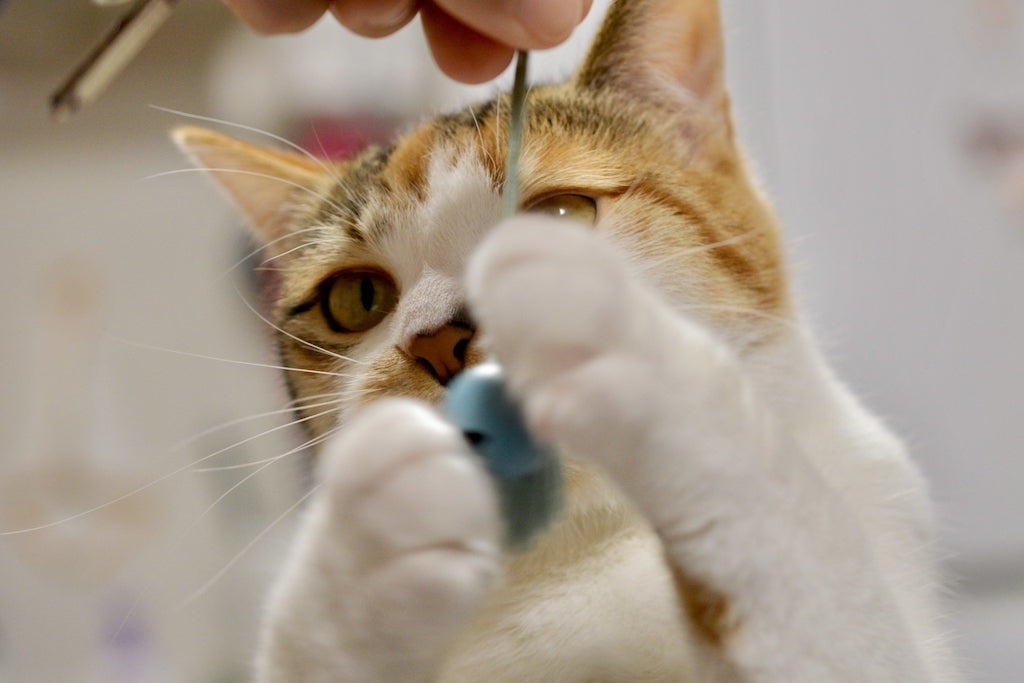
We've listed five main causes of nighttime crying. Nighttime crying can be very stressful for owners, so it needs to be addressed promptly. Let's discuss the countermeasures.
Eliminate anxiety
Rescue cats may experience significant anxiety for some time after arriving, potentially leading to nighttime crying. To alleviate anxiety, cover their cage with a towel to block their view.
Veterinary hospitals offer medications, supplements, and pheromone diffusers to reduce anxiety in cats. Using such products may help rescue cats calm down and improve their nighttime crying.
Pay attention to food and litter box cleaning
If the amount of food is insufficient or the litter box is not cleaned properly, your cat may wake you up at night.
The feeding amounts listed on food bags are merely guidelines; the actual amount should be determined based on your cat's body shape, activity level, and bowel movements. If your cat demands food at night, they might not be getting enough. One option is to give them a small amount of food before bedtime. However, giving treats before bed might also encourage more demands.
Cats demand litter box cleaning if previous waste remains. Many cats use the litter box while their owners sleep, and they might wake you up each time. To prevent urinary system diseases, clean the litter box frequently, especially thoroughly before you go to bed.
Play a lot
Younger cats generally have higher activity levels throughout the day and may not be able to expend enough energy in an indoor environment. This can lead to them becoming excited, meowing, and running around at night. It's like a big nighttime sports festival.
Play with your cat thoroughly for about 15 minutes before bedtime. The key is for you to play together. Cats don't enjoy playing alone. Move the toys lively.
Since cats are hunters, they are highly satisfied when you stimulate their instincts by not just waving toys around, but by moving them slowly, suddenly speeding them up, or moving them from behind cover.
For households where owners are often away during the day, using puzzle toys that dispense food or treats when rolled can help cats enjoy their time alone.
Perform spaying/neutering surgery
Since nighttime crying is likely to occur due to estrus, it is recommended to perform spaying/neutering surgery as early as possible.
The benefits of spaying/neutering surgery include not only improving nighttime crying but also preventing spraying behavior (spraying smelly urine on walls) and escaping during estrus. Research also shows that spayed/neutered cats tend to live longer than unspayed/unneutered cats. Performing surgery at a young age can also prevent diseases of the mammary glands and reproductive organs.
However, surgery under general anesthesia always carries risks. Also, in adult cats that have already experienced estrus, behaviors associated with estrus may not improve even after surgery. In such cases, anti-anxiety medications may be used.
Consult a veterinarian
A cat's nighttime crying could be a symptom of illness or cognitive dysfunction. Many rescue cats are adults whose age is unknown. It's not uncommon for them to already be in their senior years (7 years or older) when adopted.
As cats enter their senior years, various illnesses can emerge. Hyperthyroidism, neoplastic diseases, and kidney disease, as previously discussed, also tend to develop in older cats. Visiting a veterinarian early may lead to the discovery of an illness. Treatment could potentially alleviate the nighttime crying itself.
For cognitive dysfunction, also consult a veterinarian. While cognitive dysfunction is not curable, supplements can be prescribed to help manage symptoms. If nighttime crying is severe, sedatives may sometimes be used.
Summary
A cat's nighttime crying can be a significant source of stress due to disrupted sleep.
There is always a reason behind nighttime crying. Understanding the cause helps determine the appropriate action. First, check for stress or demands, and assess if they are getting enough playtime. If your cat hasn't been spayed or neutered, consider doing so as soon as possible.
Nighttime crying can also be due to illness. It is recommended to have your cat examined by a veterinarian.
While dealing with nighttime crying can be difficult, remember not to bear the burden alone.
Related articles



![[Written by a Veterinarian] Why isn't my rescue cat using the litter box, or making messes? Choosing litter that suits the habits of former strays, and training to correct inappropriate urination.](http://www.poponeko.jp/cdn/shop/articles/Gemini_Generated_Image_e9fs03e9fs03e9fs_6ff92c1b-24f9-4823-872d-30f35b071d67.jpg?height=400&v=1778304357)
![[Veterinarian's Guide] Cat Escape Prevention Measures: Creating a Safe and Comfortable Environment](http://www.poponeko.jp/cdn/shop/articles/shutterstock_2035199633.jpg?height=400&v=1725783884)
![[Veterinarian's Guide] Preparing Your Cat for a Safe Time Alone at Home](http://www.poponeko.jp/cdn/shop/articles/shutterstock_1398782681.jpg?height=400&v=1726749748)


![[Set] Leaf Ribbon & Scrunchie Cat Collar - Vidro (Aster)](http://www.poponeko.jp/cdn/shop/files/2608_00415.jpg?v=1789826564&width=600 "[Set] Leaf Ribbon & Scrunchie Cat Collar - Vidro (Aster)")
![[Set] Leaf Ribbon - Moda Old World Yuletide & Cat Collar - MUJI Cotton Plain Autumn Sky](http://www.poponeko.jp/cdn/shop/files/260618_00174.jpg?v=1784451812&width=600 "[Set] Leaf Ribbon - Moda Old World Yuletide & Cat Collar - MUJI Cotton Plain Autumn Sky")
![[Set] Leaf Ribbon Moda Fab-Boo-Lous & Cat Collar Cotton Oxford Orchid](http://www.poponeko.jp/cdn/shop/files/260618_00166.jpg?v=1784451812&width=600 "[Set] Leaf Ribbon Moda Fab-Boo-Lous & Cat Collar Cotton Oxford Orchid")
![[Set] Leaf Ribbon "Fleurage" Pink & Cat Collar "Belgian Linen" Wine Rose](http://www.poponeko.jp/cdn/shop/files/2608_00119.jpg?v=1789197487&width=600 "[Set] Leaf Ribbon \"Fleurage\" Pink & Cat Collar \"Belgian Linen\" Wine Rose")
![[Set] Leaf Ribbon - Sunny Mimosa & Scrunchie Cat Collar - MUJI Belgian Linen - Mustard](http://www.poponeko.jp/cdn/shop/files/2608_00411_b02e5118-d247-450a-94cd-97dbd7e27b54.jpg?v=1790033858&width=600 "[Set] Leaf Ribbon - Sunny Mimosa & Scrunchie Cat Collar - MUJI Belgian Linen - Mustard")

隣の飼い主が亡くなり、放し飼いされていた猫が可哀想で妻が家で面倒をみることにしましたが、一晩中大きな声で泣き続ける為、睡眠不足に陥ってしまっています。動物病院に連れていった方がいいのでしょうか?自分は限界で家から追い出したい気持ちでいっぱいです
3日前、5年間毎日餌をやり続けた猫をついに捕獲し連れてきたのですが、毎夜、夜泣きが酷く、1秒おきに泣きます。抱っこしたり、布団の中に入れて寝ても泣き止みません。仲間に会いたいのでしょうか?元に戻した方が猫にとっては良いのでしょうか?年齢は8歳位だと思います。
Leave a comment