

Cats love looking outside, don't they?
Many cat owners, seeing their feline friends fascinated by the outside world—birds, insects, stray cats—might think, "They look bored, I want to take them for a walk," "I want to go for a drive with them," or "I want to play in a park full of nature."
When taking an indoor-only cat outside, a cat harness is an absolute must-have.
This time, for all cat owners considering taking their cat for a walk, we'd like to explain in detail how to use a cat harness and what precautions to take.
Do cats need walks?

Not long ago, it was common for cats to roam freely. However, for their safety, the general rule now is "indoor-only."
Fundamentally, cats prefer vertical movement, like on a cat tree, rather than running around a large space. Unlike dogs, walks are not necessarily essential for cats.
Some cats are homebodies, others are adventurers
Cats that have grown up indoors from birth tend to be scared of going outside. However, some cats do meow to go out, don't they?
Cats also have their "homebodies" and "adventurers."
Homebody cats can feel terror just by stepping onto a balcony or into a garden. Going outside can cause them stress, so there's no need to take them for walks.
Conversely, some cats feel restless just staying indoors. This can lead to behavioral problems like over-grooming or escaping due to lack of exercise or stress. For adventurous cats like these, going outside for a walk can be beneficial.
Walks can relieve lack of exercise and stress
The outside world offers many stimuli not found indoors. Exposure to bird sounds, the smell of wind and leaves, and flying insects can help relieve your cat's stress. For cats who are a little overweight, walks might even be a way to address their lack of exercise.
Familiarize your cat with the outside air through walks
When it's time to go to the vet or groomer, cats often resist. Leaving their territory is terrifying for them. But when you do need to take them out, you want it to be a smooth process, right?
In such cases, try carrying your cat into the garden or onto the balcony, or taking them for a walk in a pet stroller, to gradually acclimate them to the outside air. Of course, implement thorough escape prevention measures. Wearing a cat harness will give you peace of mind.
A harness is an essential item for outings with your cat

Cats have flexible bodies and small heads, so they can slip out of just a collar and leash, unlike dogs.
If you're taking your cat out, a harness is an essential item.
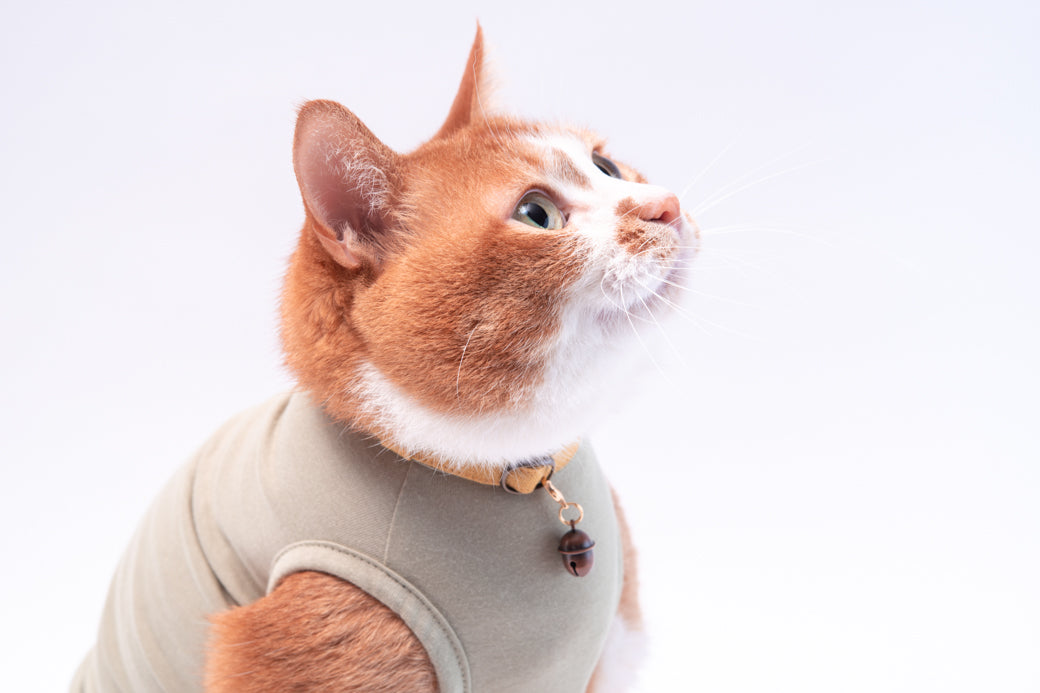
There are two types of harnesses: "strap type" and "vest type," but we recommend the "vest type" as it securely holds your cat's body.

▲Vest-type cat harness
Cat harnesses are necessary not just for walks but also in emergencies
Recently, the demand for cat harnesses has been increasing significantly as part of pet disaster preparedness.
If you end up in an evacuation shelter during a disaster, you can't keep your cat confined to a carrier the whole time. If your cat is accustomed to wearing a harness, you can feed them and let them use the litter box without worrying about them escaping.
Even if you don't plan to take your cat for walks, a cat harness is an item worth having.
Precautions for safe use of a cat harness

Using a cat harness is very simple. Just put their front paws through and fasten the Velcro or buckle on their back.
The challenge is getting your cat used to the harness.
A cat wearing a harness for the first time will likely struggle quite a bit. For your cat's safety, it's important to patiently practice until they can walk while wearing the harness.
Precautions when choosing a cat harness
When purchasing a harness, always choose one specifically designed for cats. While a harness for small dogs might seem adaptable, cats and dogs have different body structures. For safe use, select a harness made for cats.
Also, sizing is crucial. Make sure to measure your cat and choose a harness that fits their body properly.
|
Related articles: |
Precautions when familiarizing your cat with a harness
Before taking your cat for a walk with a harness, make sure to acclimate them indoors. Follow these steps patiently and unhurriedly:
◆ How to get your cat used to the harness
First, place the harness where your cat can see it, so they get used to its presence. Once they're accustomed to it, try putting the harness on, but never force it. If they resist, stop.
While they're wearing the harness, give them their favorite treats and gradually increase the time they wear it. Once they can move around with the leash attached, try going outside.
◆ How to get your cat used to walks
Since suddenly being outside can be confusing, try carrying your cat in your arms with the harness and leash on, and go out into the garden or onto the balcony. If your cat seems okay based on their demeanor and expression, put them down and gradually extend the leash.
Once they're more accustomed, exploring a park might be a good stimulus. Parks with few stray cats or dogs are recommended. Just like with dogs, make sure to properly clean up any waste.
Things to prepare before taking a walk
If you're going to walk your cat, escape prevention (microchip, ID tag), vaccinations, flea and tick prevention, and spaying/neutering are essential. Prepare thoroughly to ensure your cat can walk safely and happily.
Summary

Walks are not always necessary for cats. However, for cats who are curious about the outside world or who lack exercise, walks can sometimes provide good stimulation.
Nonetheless, it's crucial to be very careful about escapes. When taking your cat out for a walk, always use a harness.
If you put a harness on a cat suddenly, most will resist and struggle. They might even slip out of the harness, so it's important to get them used to it beforehand.
Always go at your cat's pace, without rushing.
The first time with a harness might be a bit challenging for both you and your cat. However, if your cat is accustomed to a harness, it can reduce the anxiety of escapes or getting lost during outings or emergencies.
Make the most of a cat harness to prepare for "what if" scenarios and enjoy life with your cat.
Author Profile




![Why Does My Cat Need a Collar? [Disadvantages and Their Solutions]](http://www.poponeko.jp/cdn/shop/articles/DSC_9121-2_f7898a9b-8f8c-4864-921f-55ea7577a6b8.jpg?height=400&v=1764335616)
![[Set] Leaf Ribbon & Cat Collar - Gingham Check Orange](http://www.poponeko.jp/cdn/shop/files/DSC00109_9b2822dd-1b99-4744-982e-5a48c8c1f667.jpg?v=1780663891&width=600 "[Set] Leaf Ribbon & Cat Collar - Gingham Check Orange")
![[Set] Leaf Ribbon & Cat Collar - Champ de Fleurs (Grey)](http://www.poponeko.jp/cdn/shop/files/DSC00103_d587ccde-94a5-4f05-91f3-f4c88b18ab90.jpg?v=1780663183&width=600 "[Set] Leaf Ribbon & Cat Collar - Champ de Fleurs (Grey)")
![[Set] Leaf Ribbon "Fleurage" Pink & Cat Collar "Belgian Linen" Wine Rose](http://www.poponeko.jp/cdn/shop/files/2608_00119.jpg?v=1789197487&width=600 "[Set] Leaf Ribbon \"Fleurage\" Pink & Cat Collar \"Belgian Linen\" Wine Rose")
![[Set] Leaf Ribbon & Scrunchie Cat Collar, Arabesque Swirl, Green](http://www.poponeko.jp/cdn/shop/files/2608_00129.jpg?v=1789044775&width=600 "[Set] Leaf Ribbon & Scrunchie Cat Collar, Arabesque Swirl, Green")

Leave a comment