

Hello, this is Kuriyama from Poponeko. Ten years have passed since the Great East Japan Earthquake. In this milestone year, I would like to consider "pets and disaster preparedness" to protect the lives of our beloved cats.
The first topic is "Preparing for disasters."
When a disaster inevitably strikes, what should cat owners prepare and how should they get ready to survive together with their cats?
Preparing for joint evacuation
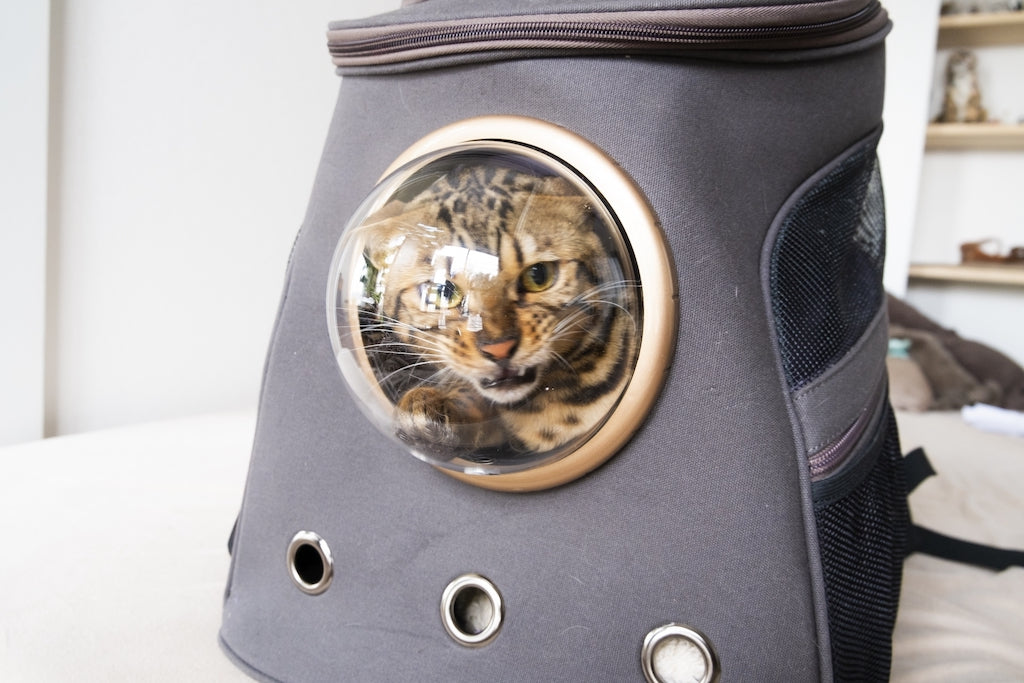
In the event of a disaster, "joint evacuation" with your cat is recommended.
Evacuation with cats is based on "self-help."You must be able to rescue your cat, evacuate, and protect yourself on your own.
Please remember that without prior preparation, your cat's safety cannot be guaranteed.
Accustoming your cat to a carrier bag
During joint evacuation, your cat will need to travel in a carrier bag. It will also serve as a temporary place for your cat in the evacuation shelter, so be sure to have one ready.
However, it's not always easy to get a cat into a carrier bag on short notice. Accustoming your cat to a carrier bag beforehand is also a form of disaster preparedness.
By using the carrier bag as a bed, a relaxing space where your cat can be alone, or a place to eat treats, you can reduce stress during travel.
To prevent your cat from escaping the carrier bag during evacuation, take measures such as putting on a harness and leash, sealing the door with duct tape, or putting the cat in a laundry net.
Checking evacuation shelters and routes
Discuss with your family how to confirm safety, evacuation destinations, and evacuation routes in case of a disaster. You should also check how pets are handled at nearby evacuation shelters.
Although joint evacuation is recommended, the policy regarding whether you can stay with your cat in the same room, or if they will be isolated in a separate room or outdoors, varies by evacuation shelter.
You can check on local government websites, and it's also recommended to gather information from neighboring cat owners and veterinarians to build a cat network.
Preparing disaster preparedness goods
Evacuation shelters do not stock cat supplies. It will take at least three days for relief supplies such as cat food and litter to arrive. Therapeutic food will be even harder to obtain.
You will need one week's worth of cat food and supplies per cat. Since cat food and water have expiration dates, use a rolling stock method to always keep in-date supplies on hand.
Also, many evacuation shelters do not provide pet cages. It would be good to have a pop-up portable cage so your cat can use the litter box and exercise freely.
【Essential items for evacuating with cats】
- Dry food
- Therapeutic food and medicine
- Water (soft water)
- Dishes
- Carrier bag
- Portable litter box and pet sheets
- Cat litter
- Harness and leash
- Cat health record book (including cat's photo, vaccination history, chronic illnesses, medical history, etc.)
【Items you should try to bring if possible】
- Cage or portable cage
- Wet food and treats
- Towels
- Brushes
- Toys
- Cardboard boxes
- Newspaper, wet wipes, deodorizing spray, sticky rollers, etc.
Evacuation drills
Once your cat's disaster supplies are ready, put them in a bag and place it in an easily accessible location, such as near the entrance.
Don't forget to actually carry your cat's disaster supplies and the carrier bag with your cat inside. Add your own disaster supplies and walk the evacuation route to see if you can carry everything during an evacuation drill.
| 【Related articles】 |
Preparing for shelter life

Although joint evacuation is recommended during disasters, it's not always possible to have "cohabitation evacuation" where you can stay in the same room with your pet at an evacuation shelter.
In many shelters, pets will be housed in a separate room, or in cages outdoors in places like bicycle parking areas.
Since many cats will be gathered together, basic training, not resisting being in a cage, and infection control measures are essential.
Accustoming your cat to a cage
It's important to accustom your cat to living in a cage so they don't panic and can use the litter box properly. If you purchase a new pop-up portable cage, be sure to have your cat use it beforehand.
Vaccinations and flea/tick control
Even for indoor-only cats, vaccinations and flea/tick control are essential. Some diseases can be transmitted to humans, so some evacuation shelters may require proof of vaccinations and flea/tick control as a condition for entry.
Accustoming your cat to a harness
During shelter life, if you want your cat to exercise or use the litter box, a harness and leash can prevent escapes. Accustom your cat to a harness and leash from an early age, and train them to eat, use the litter box, and exercise while wearing them.
Also, to prevent panic during sudden shelter life, it's a good idea to occasionally take your cat for a walk with a harness and leash.
|
【Related products】 |
Spaying and neutering
Urine spraying, fighting, and estrus vocalizations in male cats can cause problems. Considering life in an evacuation shelter, spaying and neutering has greater benefits.
During the Great East Japan Earthquake, there was an explosive increase in the number of stray cats and dogs. To prevent an increase in unfortunate kittens and puppies, it is advisable to spay or neuter your pet.
Annual health check-ups
Even if your cat doesn't have any particular health problems, please get them a health check-up once a year. If your cat falls ill during a disaster, data on their usual health condition will be useful for diagnosis.
If your cat has a chronic illness, it's a good idea to consult your regular veterinarian about regular medication and emergency procedures.
Preparing for escape and getting lost
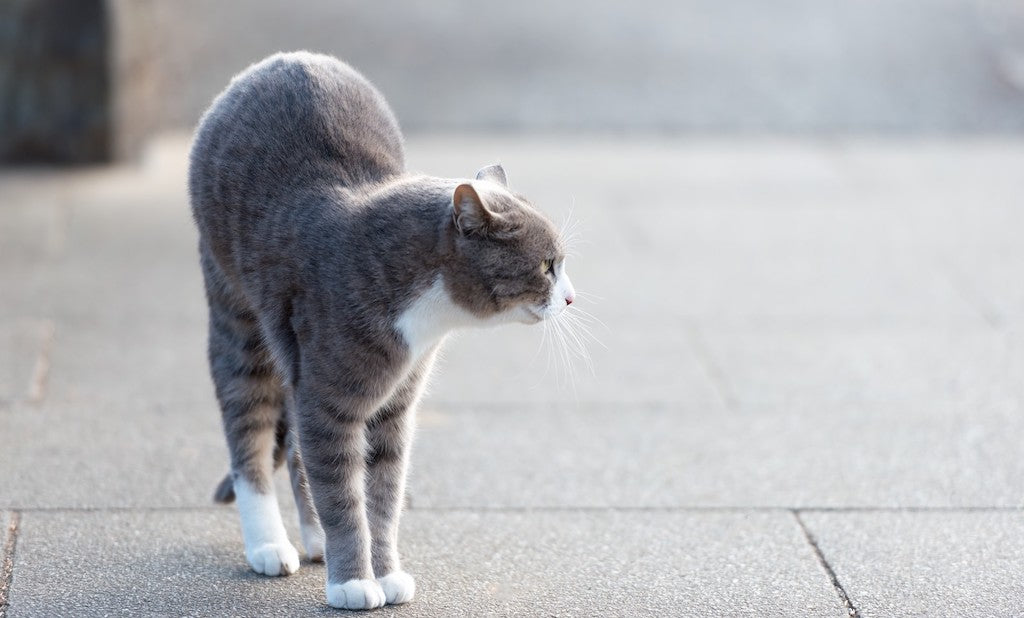
Many cats bolt out of the house in surprise during earthquakes or emergency alert alarms. They might also escape through broken windows or damaged doors.
During the Great East Japan Earthquake, many pets were separated from their owners, and reunification was difficult. One of the reasons for this was "the absence of owner identification."
To reunite with a pet that has become separated, you must identify the owner with a "microchip" and "ID tag", and further prove that it is your cat.
Microchips are essential
Microchips contain owner information and are implanted under the skin with a special injector, so they will not fall off even in a disaster.
When a cat is protected by an animal welfare center or veterinary hospital, scanning the microchip reveals the owner. Although the owner's location may be unknown and contact difficult during a disaster, it is certain that the chances of reuniting with your cat will significantly increase.
Accustoming your cat to a collar and ID tag
To make it clear at a glance that your cat is a pet, they should wear a "cat collar + ID tag." A cat collar also serves as a distinguishing mark and helps gather sighting information.
I recommend using both a microchip and a collar for preparedness in case of accidental escape.
|
【Related articles】 |
Proof of cat ownership
Pets rescued during a disaster are returned to their owners through the efforts of public health centers, animal welfare centers, and volunteers.
In such cases, having a "cat health record book" with your cat's vaccination history and "photos of your cat with you" can help prove ownership smoothly.
|
【Related products here】 |
Guidelines for disaster preparedness for people and pets
In the 2011 Great East Japan Earthquake, there was a problem of "inability to evacuate with pets." Few owners knew about joint evacuation, and there were few evacuation shelters equipped to accept pets.
Furthermore, even when lost dogs and cats were protected, there was a problem that owners could not be identified because no ID tags or microchips were attached.
My heart ached every time I saw news reports about owners desperately searching for their beloved dogs and cats.
To address the challenges of "pet disaster preparedness" revealed by the 2011 Great East Japan Earthquake and the 2016 Kumamoto Earthquake, the Ministry of the Environment has compiled "Guidelines for Disaster Preparedness for People and Pets."
It details everyday preparations and actions during a disaster, so be sure to have all family members read it.
Summary
To protect your pet's life, you, the owner, must be safe. For that reason, basic disaster preparedness, such as securing furniture and checking emergency supplies, is essential.
Disasters like earthquakes can happen at any time. Even with all the preparations, you might panic in a real emergency. I don't even have confidence that I can act calmly.
However, an owner's anxiety and impatience can be transmitted to their cat.
To act calmly, it's essential to regularly simulate emergencies and conduct evacuation drills.
And the preparations necessary for "joint evacuation," "shelter life," and "escape/lost cat measures" are also vital for your cat's safety even if a disaster doesn't occur. Let's review your cat's disaster preparedness once more.

|
【Related articles】 |


![Poponeko Selected as Furusato Nozei Gift [Toride City, Ibaraki Prefecture]](http://www.poponeko.jp/cdn/shop/articles/010f7540ce751ae3bb42785d6423e019.jpg?height=400&v=1765802143)

![[Written by a Veterinarian] How to Work in an Animal Hospital: Essential Qualifications, Job Responsibilities, and Traits of Suitable Candidates](http://www.poponeko.jp/cdn/shop/articles/shutterstock_2399480085.jpg?height=400&v=1755261095)
![[Set] Leaf Ribbon & Cat Collar - Hannari Sakura Purple](http://www.poponeko.jp/cdn/shop/files/2608_00128.jpg?v=1789197917&width=600 "[Set] Leaf Ribbon & Cat Collar - Hannari Sakura Purple")
![[Set] Leaf Ribbon & Scrunchie Cat Collar - Vidro (Aster)](http://www.poponeko.jp/cdn/shop/files/2608_00415.jpg?v=1789826564&width=600 "[Set] Leaf Ribbon & Scrunchie Cat Collar - Vidro (Aster)")
![[Set Item] Leaf Ribbon & Cat Collar, Petit Fleur, Pink](http://www.poponeko.jp/cdn/shop/files/2608_00405.jpg?v=1789946167&width=600 "[Set Item] Leaf Ribbon & Cat Collar, Petit Fleur, Pink")
![[Set Item] Leaf Ribbon & Cat Collar - Petit Fleur - Purple](http://www.poponeko.jp/cdn/shop/files/2608_00408.jpg?v=1789946167&width=600 "[Set Item] Leaf Ribbon & Cat Collar - Petit Fleur - Purple")
![[Set product] Leaf ribbon & cat collar, gingham check, mint green](http://www.poponeko.jp/cdn/shop/files/DSC00110_5e9f619b-1b6f-4cfa-9add-f4ea49a52821.jpg?v=1780663890&width=600 "[Set product] Leaf ribbon & cat collar, gingham check, mint green")
![[Set] Leaf Ribbon moda Star Spangled & Cat Collar Denim Navy](http://www.poponeko.jp/cdn/shop/files/260618_00160.jpg?v=1784451813&width=600 "[Set] Leaf Ribbon moda Star Spangled & Cat Collar Denim Navy")

Leave a comment