

Not long ago, it was standard to let cats roam freely, but "keeping cats strictly indoors" is now the mainstream practice.
After all, traffic accidents are terrifying, and infectious diseases, accidental ingestion of dangerous items or food, and kidnapping are also concerns. If you care about your cat's health and safety, keeping them strictly indoors is an ironclad rule.
However, even if you are diligent about keeping your cat strictly indoors, the risk of traffic accidents cannot be reduced to zero.
In this article, we will take a look at the risks of traffic accidents lurking in our lives with cats and how to prevent them.
Why there are many traffic accidents involving cats
According to the Ministry of the Environment's "Statistics on the Custody and Disposal of Dogs and Cats," 11,226 injured cats were taken into custody in fiscal year 2019.
While traffic accidents are not the only cause, this number far exceeds the 735 dogs recorded. What are the reasons for this?
Cat behavior
Cats have a tendency to freeze when they feel scared or surprised. There are many cases where a cat is startled by the sound or lights of a car, freezes in place, and is subsequently involved in a traffic accident.
Also, jumping out into the road due to curiosity about prey or other cats is another contributing factor.
How cats are kept
While dogs are taken for walks by their owners, cats often roam alone, which is another reason for the high number of "cat traffic accidents."
Compared to cats kept strictly indoors, cats that are free to go outside—as well as stray cats—are more likely to be involved in traffic accidents.
Even indoor cats are at risk of traffic accidents

According to the "2020 National Survey on Dog and Cat Ownership" by the Japan Pet Food Association, the average lifespan of an indoor cat is 16.13 years, while the average lifespan of a cat that goes outside is 13.57 years.
The difference in average lifespan based on whether a cat goes outside or not is surely due to the dangers of traffic accidents and infectious diseases.
To prevent traffic accidents involving your cat, I strongly recommend keeping them "strictly indoors." However, even if you are strict about indoor living, the risk of traffic accidents cannot be zero if you cannot prevent "escape."
In addition to being thorough with anti-escape measures like locking doors and installing escape-prevention gates, it is also important to be aware of the situations in everyday life where escapes are most likely to occur.
Escaping during heat
When an unspayed or unneutered cat enters heat, they may escape in search of a mate. You need to be careful, as they may tear through screen doors or jump out through gaps you never thought possible.
|
[Related article here] |
Escaping while visiting the vet
When going out in a carrier or crate—such as for a trip to the vet—a cat might get startled by the change in environment and bolt. There are also cases where the carrier door was faulty, leading to an escape.
Escaping during a car ride
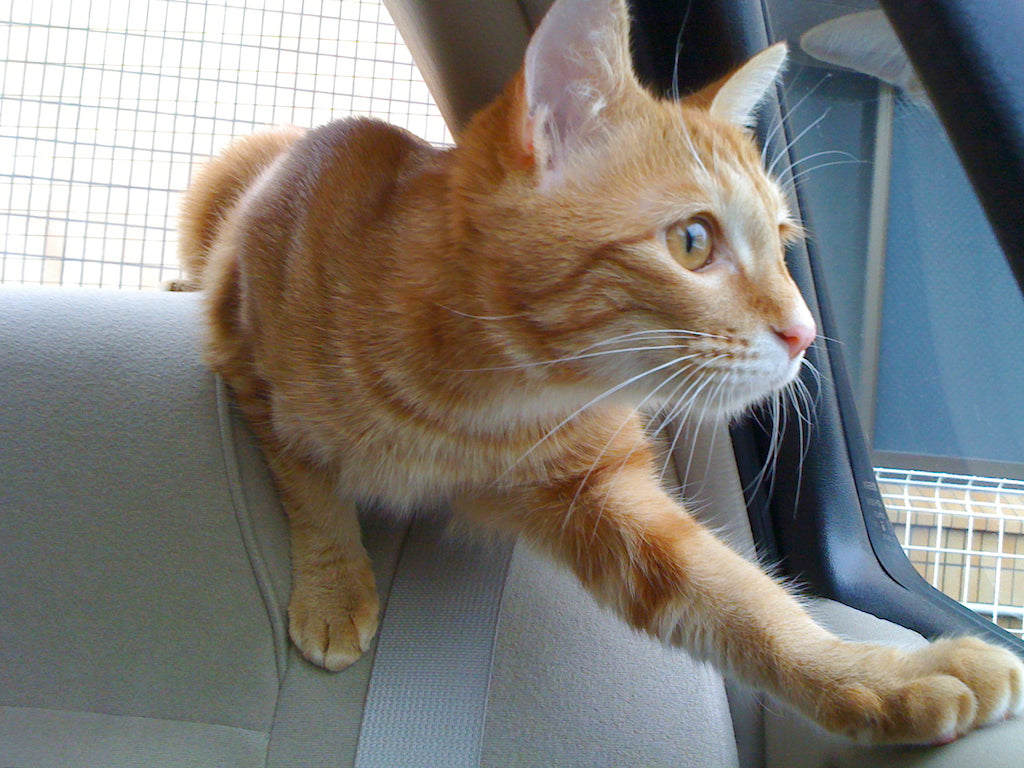
You may sometimes take your cat for a drive or on a trip home. It is easy to assume they are safe while inside the car, but it is surprisingly common for a cat to escape the moment a door is opened at a service area.
Preventing traffic accidents starts with preventing escapes
To prevent traffic accidents involving your cat, you must be thorough in your "anti-escape measures."
While measures to prevent escape from doors and windows are essential, you should be particularly careful about "going out." The most important thing is to prevent escape in the first place, and to be prepared in the event of an escape or if your cat goes missing.
Using a cat harness
The moments "outside your cat's territory"—such as when visiting the vet or going out by car—are the most dangerous.
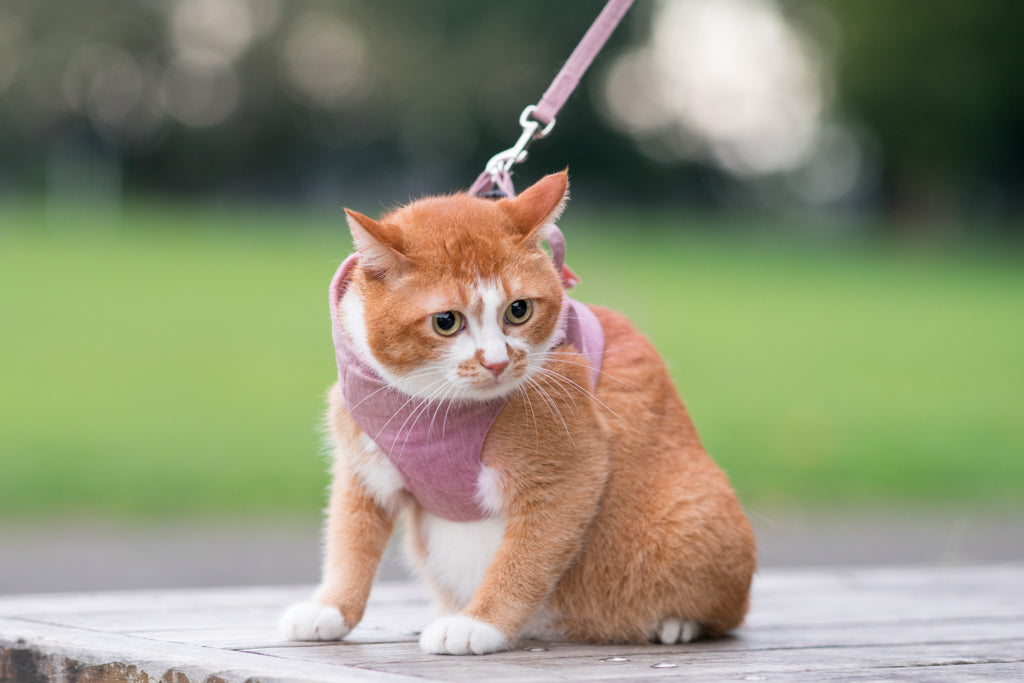
Even when traveling in a carrier or crate, there is always the chance your cat could jump out. As an anti-escape measure, use a "harness" and "leash."
When enjoying a drive, do not keep the cat on your lap; keep them inside a carrier or crate. Even when you are at a service area for a meal or a bathroom break, please ensure they are wearing a harness and leash.
Getting your cat used to a harness and leash in advance will also be helpful for evacuation in case of a disaster.
▲ Crocco's drive. This cat loves going for drives while wearing a Poponeko harness.
|
[Check details of products featured in this article]  |
Using a cat collar and ID tag
In preparation for the unlikely event that your cat does escape, make sure they are wearing a "cat collar" and an "ID tag."
A cat collar makes it clear at a glance that the cat has an owner, and serves as a landmark if you are searching for them. An ID tag may also allow someone who finds your cat to contact you.
A "cat collar" and "ID tag" are vital items for helping a cat and owner reunite.
|
[Check details of products featured in this article] |
Microchipping
In case your cat's collar or ID tag comes off, have your cat fitted with a "microchip." Microchips contain a registration number, and using a specialized scanner allows someone to find your contact information.
In June 2022, the amendment of the Animal Welfare Act made it a "duty of effort" for pet owners to have their dogs and cats microchipped.
Please consider microchipping your cat on this occasion.
|
[Related article here] |
Summary
To prevent traffic accidents involving cats, "keeping them strictly indoors" is the best method.
However, the risk of escape increases significantly during outings, such as vet visits or other trips.
When taking your cat outside their territory, use a cat harness and leash to prevent accidental escape. Even when they are inside a carrier or crate, a harness and leash provide extra peace of mind.
Be careful when going for a drive as well. Watch out for escapes when opening doors or windows, and make sure to use a harness and leash when giving your cat a meal or a bathroom break.
Furthermore, a "cat collar," "ID tag," and "microchip" are essential items for anti-escape protection. Start taking these measures now so you can be reunited with your precious cat if the worst happens.
Author Profile













Leave a comment