

As introduced in "Why do cats vomit? Explaining the reasons why cats vomit and diseases to be aware of," cats are animals that vomit frequently.
If it's just "regurgitation" where they bring up undigested food, there's not much to worry about. However, if it's due to "gastroenteritis," caution is necessary.
This time, we'd like to provide an easy-to-understand explanation of cat gastroenteritis, including its symptoms, causes, necessary treatments, and preventive measures.
What are the symptoms of gastroenteritis in cats?

Gastroenteritis in cats is a condition where the mucous membranes of the stomach or intestines become inflamed due to some cause, leading to digestive symptoms such as vomiting and diarrhea. It's the same as human gastroenteritis.
Gastroenteritis can be acute or chronic.
Acute gastroenteritis symptoms usually resolve within a few days to a week. If symptoms persist for more than a week, it becomes chronic gastroenteritis.
What are the symptoms of acute gastroenteritis?
Acute gastroenteritis causes severe symptoms such as repeated vomiting and diarrhea.
If your cat was energetic just a moment ago but is now vomiting repeatedly, acute gastroenteritis might be the cause.
They might also vomit yellow bile or bile mixed with blood, and lose their appetite. Since diarrhea is also a symptom, they might be lethargic due to dehydration.
|
[Related articles] |
What are the symptoms of chronic gastroenteritis?
Chronic gastroenteritis refers to a condition where acute symptoms seem to subside but vomiting and diarrhea continue at regular intervals.
Furthermore, symptoms such as weight loss, dull coat, and lethargy may also be observed.
Causes of gastroenteritis in cats

There are various causes of gastroenteritis in cats. While food is often the cause, infections, stress, and accidental ingestion of foreign objects can also lead to gastroenteritis.
Gastroenteritis caused by food
Eating spoiled food, cold food, unfamiliar food, or human food can cause gastroenteritis. Overeating can also lead to indigestion.
Gastroenteritis caused by infection
Gastroenteritis can be caused by infections such as viruses and bacteria. In particular, "feline parvovirus infection" is also known as feline viral enteritis or feline panleukopenia, and is a life-threatening disease.
Parasites can also be a cause, so observe what your cat vomits and their stool carefully.
Gastroenteritis caused by stress
Many cases of gastroenteritis are caused by stress. Although it depends on the cat's personality, sudden changes in environment can be a major source of stress.
For example, being left at a pet hotel, moving or redecorating that changes their living environment, construction work nearby, an increase in family members, having visitors, or an increase in cohabiting cats are all major events for cats.
A prolonged state of tension can lead to a loss of appetite and digestive symptoms such as vomiting and diarrhea.
Gastroenteritis caused by accidental ingestion
Accidental ingestion of foreign objects can also cause gastroenteritis.
If string toys are swallowed, they can get stuck in the digestive tract and cause severe symptoms. Similarly, be careful of "hairballs" that accumulate in the stomach.
Also, be careful of poisoning from ingesting plants, human medicines, or chemicals.
What is the treatment for gastroenteritis in cats?

It can be worrying if your cat is vomiting painfully or has diarrhea for days and is lethargic.
Mild cases of gastroenteritis may resolve naturally, but we certainly don't want them to suffer. If you notice your cat is unwell, take them to the vet as soon as possible.
First, administer anti-emetics and anti-diarrheals
Anti-emetics and anti-diarrheals will be prescribed to alleviate severe symptoms. If vomiting is severe and oral medication cannot be taken, medication will be administered via IV drip or injection. If there are symptoms of dehydration, fluid therapy will be performed via subcutaneous drip.
Sometimes, a low-fat, easily digestible therapeutic diet is fed to rest the digestive system.
Furthermore, treatment according to symptoms
In addition to the symptomatic treatments mentioned above, the cat's overall condition will be assessed through blood tests, X-rays, and ultrasound examinations, and then treatment will be administered according to the cause.
If a foreign object has been ingested, it will be removed by endoscopy or surgery. If hairballs are the cause, brushing will be done, and medication to help expel the accumulated hair will be prescribed.
If parasites are the cause, deworming will be performed, and if an infection is suspected, it will be treated with antibiotics.
Can feline gastroenteritis be transmitted to humans?
Viruses from cats cannot be transmitted to owners, but caution is needed regarding infections caused by bacteria and parasites.
When cleaning up vomit or the litter box, and after touching your cat, be sure to wash your hands thoroughly.
How to prevent gastroenteritis in cats?

Gastroenteritis in cats can be prevented by thoroughly understanding its causes. Let's take thorough measures for your cat's health.
Always keep dishes and drinking water clean
Wet food spoils easily, so be extra careful during the humid rainy season and summer. Be careful not to leave it out. Also, be aware that bacteria can easily grow in bowls and drinking water.
When changing food, do it gradually over about two weeks, and carefully observe your cat's condition and stool.
|
[Related articles] |
Don't forget vaccinations and parasite prevention
Feline parvovirus infection can almost always be prevented by vaccination. The feline parvovirus vaccine is one of the core vaccines and is included in the trivalent vaccine.
Furthermore, thorough prevention against fleas, ticks, and heartworms can reduce the possibility of gastroenteritis caused by parasites.
Viruses and parasites can also be brought in from outside by owners, so even indoor cats require regular preventive measures.
|
[Related articles] |
Try to reduce stress as much as possible
Many cats get stressed by going out or having visitors. They are also very sensitive to changes in their environment.
Since it's difficult to completely eliminate going out or having visitors, gradually accustom them. Use treats effectively to make them associate "going out/visitors" with "something good," and patiently work with them.
Keep your cat's living environment tidy
To prevent your cat from accidentally ingesting foreign objects or food, always keep their living space tidy.
Store food, medicine, and detergents out of reach so they don't accidentally ingest them. Especially for feathered toys and string-like objects, only take them out when playing.
|
[Related articles] |
Summary
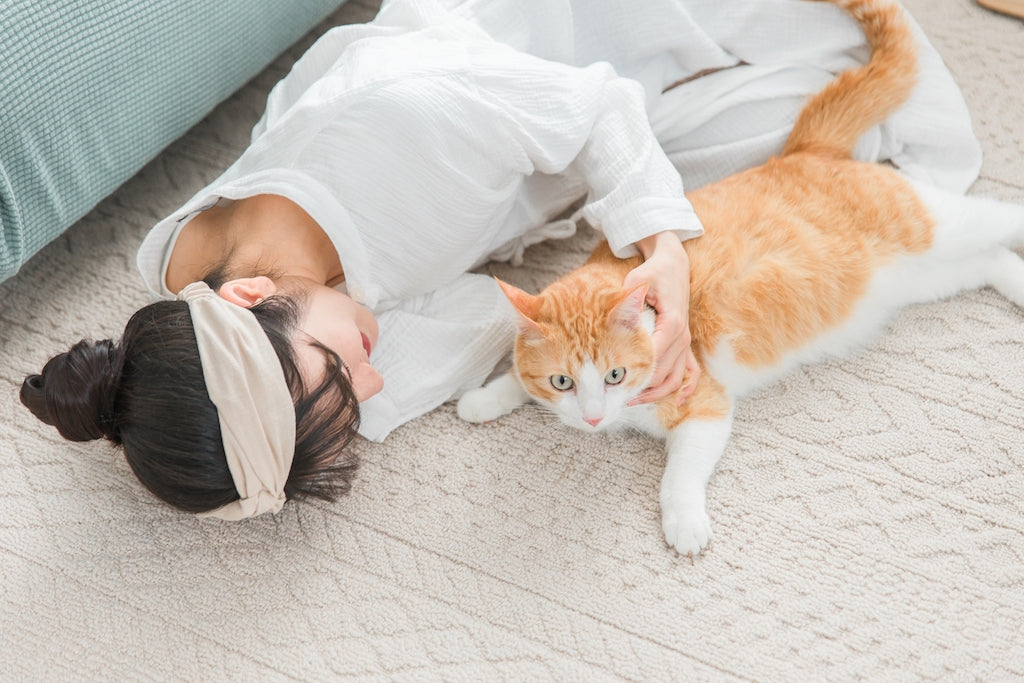
Just like humans, cats can also get gastroenteritis due to food, stress, or infections.
It's easy to panic when your cat is suffering, but it's also important to observe your cat's condition carefully. This is because information from the owner can help with an accurate diagnosis.
Be sure to tell the veterinarian about symptoms such as when your cat started feeling unwell, how they vomited and how often, what they vomited, and if they have diarrhea.
Poponeko's original Cat Health Handbook is a convenient notebook that allows you to record vaccination and parasite prevention history, as well as jot down anything you notice immediately.
Why not delve deeper into your cat's health with a notebook specifically designed for feline health management?
|
[Related products] |
Author Profile



![Feline Infectious Peritonitis (FIP) Treatment Guide [2024 Edition]: Latest Information and Treatment Options](http://www.poponeko.jp/cdn/shop/articles/shutterstock_1633580878.jpg?height=400&v=1727181737)


![[Set] Leaf Ribbon moda Star Spangled & Cat Collar Denim Navy](http://www.poponeko.jp/cdn/shop/files/260618_00160.jpg?v=1784451813&width=600 "[Set] Leaf Ribbon moda Star Spangled & Cat Collar Denim Navy")
![[Set product] Leaf ribbon & cat collar, gingham check, mint green](http://www.poponeko.jp/cdn/shop/files/DSC00110_5e9f619b-1b6f-4cfa-9add-f4ea49a52821.jpg?v=1780663890&width=600 "[Set product] Leaf ribbon & cat collar, gingham check, mint green")
![[Slightly Damaged] Cat-Friendly Cat Warm Shirt, Border (Short Sleeve)](http://www.poponeko.jp/cdn/shop/products/DSC_7661.jpg?v=1675832922&width=600 "[Slightly Damaged] Cat-Friendly Cat Warm Shirt, Border (Short Sleeve)")
![[Set Product] Leaf Ribbon & Cat Collar - Champ de Fleurs Mustard](http://www.poponeko.jp/cdn/shop/files/DSC00104_6c37e71d-120f-40d9-a773-9a5b7e885760.jpg?v=1780663183&width=600 "[Set Product] Leaf Ribbon & Cat Collar - Champ de Fleurs Mustard")
![[Set Product] Leaf Ribbon & Cat Collar - Tartan Check Classic Red](http://www.poponeko.jp/cdn/shop/files/2606_00018.jpg?v=1785759845&width=600 "[Set Product] Leaf Ribbon & Cat Collar - Tartan Check Classic Red")
Leave a comment