
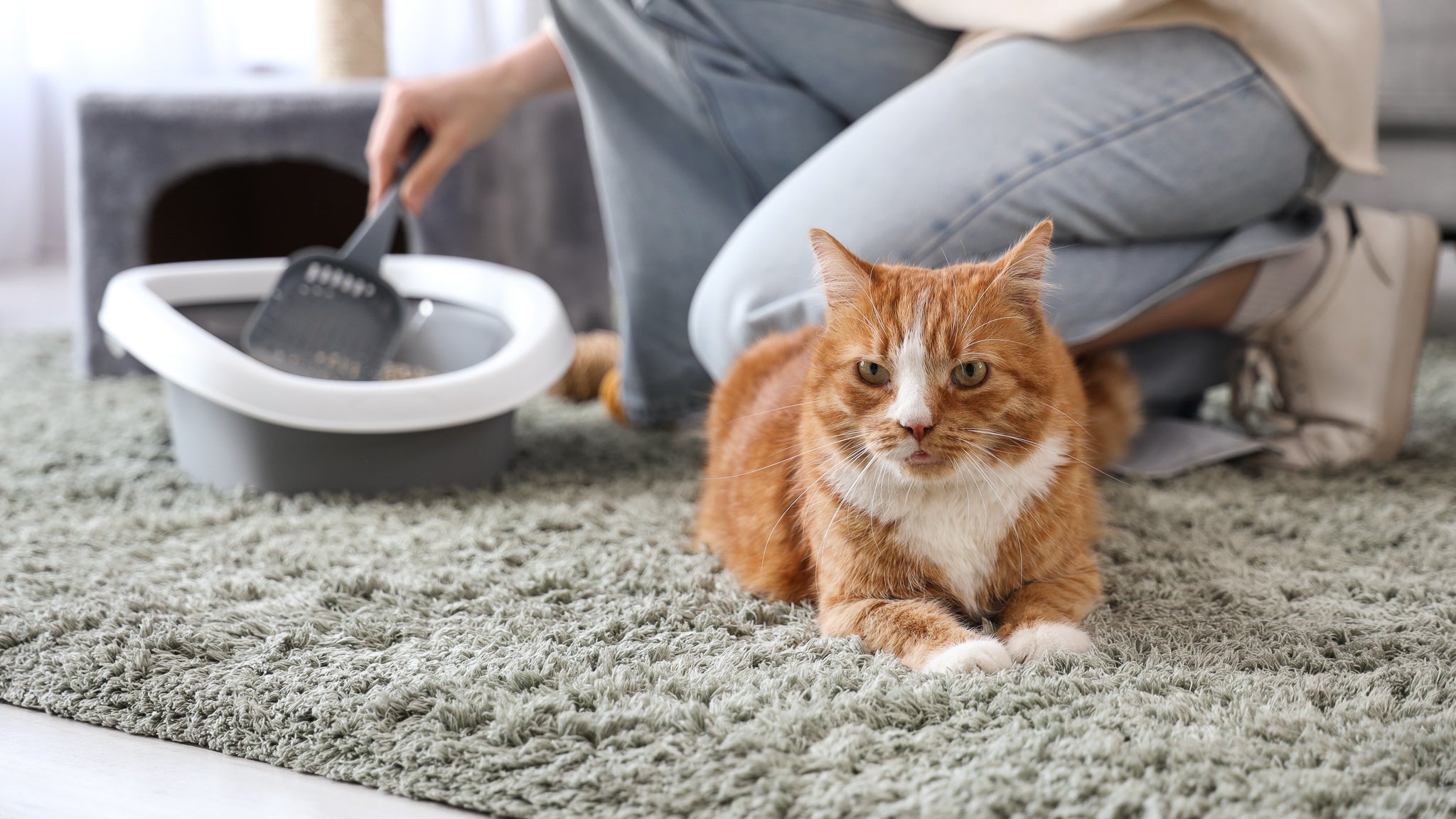
Normal cat stool is brown or dark brown. If your cat's stool is white, there may be an underlying illness. In this article, we will explain in detail about white cat stool.
What Causes White Stool in Cats?

Normal Cat Stool
Normal cat stool is brown to dark brown. It should be well-formed and have a slight sheen. Stool that is red, black, or white is abnormal. Also, hard, pellet-like stool can indicate constipation, while soft, unformed stool may indicate diarrhea.
Causes of White Stool in Cats
White stool in cats is mostly caused by illness. Possible causes include indigestion or parasites.
White stool can also appear if barium is used for an abdominal examination, so don't be alarmed if you see white stool for a few days after a barium test.
Be Aware of Possible Diseases and Symptoms

White Stool Caused by Liver or Pancreatic Disease
The color of stool comes from bile, a digestive fluid produced by the liver. Bile is stored in a sac called the gallbladder and secreted into the duodenum through a duct called the bile duct. When digested food passes through the duodenum, it mixes with bile, which gives the stool its color.
If bile secretion becomes difficult due to obstruction of the bile duct or reduced liver function, the stool will appear white or grayish.
Additionally, pancreatic disease can also cause white stool. The pancreas secretes digestive enzymes that break down fat. Exocrine pancreatic insufficiency (EPI) is a condition where the pancreas stops producing digestive enzymes. As a result, dietary fats are not broken down and are excreted in the stool, leading to white stool. Cats with EPI often have a distinctive odor and tend to be very thin.
Stool Abnormalities Due to Parasitic Infections
If parasites are present, white particles or thread-like objects may be mixed in with the stool, making it appear white. A distinctive feature is that these white objects may appear to move.
If you see white particles, it could be tapeworms (Dipylidium caninum), and if you see white, thread-like worms, it could be roundworms (Toxocara cati).
Treatment and Management of White Stool in Cats

Why Early Diagnosis and Treatment Are Important
Most cases of white stool are caused by illness. White stool after a barium examination will subside once the barium is excreted. For other causes, treatment is necessary, as conditions can worsen without it. If parasites are the cause, treatment is essential not only to prevent malnutrition but also to prevent transmission to humans and other cats.
About Treatment Methods
If white stool is caused by parasites, it can be treated with deworming medication. This may include spot-on treatments, oral medications, or injections.
If the cause is gallbladder or liver disease, antibiotics, anti-inflammatory drugs, or liver protectants may be used. If oral medication is not effective or if the bile duct is completely obstructed for some reason, surgery may be necessary.
In cases of exocrine pancreatic insufficiency, the missing digestive enzymes are supplemented. Digestive enzymes are mixed with food and given to the cat. Antibiotics and vitamins may also be supplemented if there is abnormal bacterial overgrowth or vitamin deficiency.
Home Care and Regular Health Checks
White stool caused by parasites will resolve once deworming is complete. Since re-infection can occur from stool, dispose of stool quickly and wash your hands thoroughly. Also, regularly disinfect the litter box with hot water.
White stool caused by liver, gallbladder, or pancreatic abnormalities may require long-term treatment. Follow your veterinarian's instructions for medication and diet.
Stool color and food intake are important indicators. If you notice anything unusual, consult your veterinarian immediately.
How to Prevent White Stool

Regular Deworming is Necessary
White stool caused by parasites can be prevented by regular deworming. Specifically, tapeworms are transmitted by fleas. Since owners can bring fleas indoors, it's important to deworm regularly even if your cat doesn't appear to have a parasitic infection. Products are available that eliminate fleas, ticks, and internal parasites.
|
【関連記事】 |
Importance of Regular Health Check-ups
Diseases of the liver, gallbladder, and pancreas may go unnoticed until symptoms appear. Health check-ups, which include blood tests, ultrasound scans, and stool examinations, can potentially detect these conditions before they worsen. Another benefit of health check-ups is that understanding your cat's healthy state makes it easier to recognize when they are ill.
|
【関連記事】 |
When to Consult a Veterinarian and What Signs to Look For

If your cat passes white stool, do not wait and take them to the veterinarian immediately.
In cases of gallbladder, liver, or pancreatic disease, the cat's general condition can be very poor. In addition to white stool, there may be abdominal pain, vomiting, diarrhea, jaundice, and extreme weight loss. Pay attention to whether your cat is losing weight despite eating, and if their skin, urine, or whites of their eyes appear yellowish.
Summary

White stool often indicates a significant internal organ abnormality, so do not wait to see if it improves on its own. Furthermore, white stool caused by parasites can lead to malnutrition if left untreated, and can also spread infection to other people and animals. Therefore, if you notice white stool, take your cat to the veterinarian immediately.

![Feline Infectious Peritonitis (FIP) Treatment Guide [2024 Edition]: Latest Information and Treatment Options](http://www.poponeko.jp/cdn/shop/articles/shutterstock_1633580878.jpg?height=400&v=1727181737)


![[Set] Leaf Ribbon & Cat Collar - Gingham Check Orange](http://www.poponeko.jp/cdn/shop/files/DSC00109_9b2822dd-1b99-4744-982e-5a48c8c1f667.jpg?v=1780663891&width=600 "[Set] Leaf Ribbon & Cat Collar - Gingham Check Orange")
![[Set] Leaf Ribbon & Cat Collar - Gingham Check (Raspberry)](http://www.poponeko.jp/cdn/shop/files/DSC00111_50fa7dfb-0b92-465f-96f3-373274a75e62.jpg?v=1780663890&width=600 "[Set] Leaf Ribbon & Cat Collar - Gingham Check (Raspberry)")

![[Set] Leaf Ribbon & Scrunchie Cat Collar, Gingham Check, Blue](http://www.poponeko.jp/cdn/shop/files/DSC00092_346b4b0c-da46-4b7b-b5e9-8ab3dafb6534.jpg?v=1780663891&width=600 "[Set] Leaf Ribbon & Scrunchie Cat Collar, Gingham Check, Blue")

![[Set Product] Leaf Ribbon Moda Floribunda & Cat Collar Cotton Ox Carrot](http://www.poponeko.jp/cdn/shop/files/260618_00157.jpg?v=1784451813&width=600 "[Set Product] Leaf Ribbon Moda Floribunda & Cat Collar Cotton Ox Carrot")
Leave a comment