

Have you ever found a "skinny cat" or an "injured cat" by the roadside or near your home and wondered what to do?
It's natural to want to help, but the correct response varies greatly depending on the situation.
In this article, a veterinarian clearly explains what to do when you find a stray cat, criteria for deciding to rescue, and how to interact with community cats.
If you find a stray cat, first assess the situation

Check if the location is safe
Check what kind of place the stray cat is in. If it's in the middle of a busy road or a dangerous location where it could fall, you'll need to move it. If you move it, don't do it alone; ask people around you for help. There are cases where people get into accidents because they prioritize rescuing a cat. If it's on a road, it would be good to have someone direct traffic. If it's a dangerous terrain like a cliff, consider catching and moving it with a net or similar tool.
High-urgency cases such as injury, debilitation, or kittens
Cases with obvious injuries, debilitation to the point of being unable to move, or kittens often have high urgency. First, carefully consider how much you can intervene (including medical expenses and aftercare), and if you can intervene, rescue it as soon as possible.
Kittens may have their mother nearby, so if they seem energetic, it's necessary to observe them for about half a day. If they are listless or the mother doesn't come to get them, then rescue is needed.
It's important not to approach carelessly to avoid stress for the cat and risk of accident
Even if you find a stray cat, it's necessary to observe the situation carefully first. If the cat can move, approaching it can cause it to flee, which may lead to secondary accidents. Also, stray cats are not accustomed to human contact and may panic or attack people. Assess whether immediate rescue is necessary and rescue it using safe methods (such as treats, traps, or nets).
There's also a possibility it's clearly a pet cat (collar, cleanliness, tameness)
Even if you think it's a stray cat, it could actually be a pet cat that goes outside. If it's wearing a collar, has good nutrition and a shiny coat, or is tame with people, it might be a pet cat. Unless there's a need for rescue due to injury, it's necessary to observe the situation. There's a possibility it's a lost cat, so taking photos and providing information to neighbors or animal hospitals is a good idea.
Cases where stray cats should be rescued and appropriate action

Injured, sick, or debilitated cats should be rescued and taken to a vet
If a cat is injured, sick, or debilitated, rescue it promptly and take it to an animal hospital. Depending on its condition, hospitalization or surgery may be necessary. Typically, the costs will be borne by the rescuer, so visit with that understanding. Even for rescued cats, the expenses can be high.
We occasionally encounter problems at our clinic where people say, "I rescued it, but I don't intend to keep it or take it in," or "I just rescued it, so I won't pay for treatment." While we request payment for treatment and a commitment to take the cat before treatment, some still refuse, ultimately leaving the cat at the clinic. Such inconsiderate behavior is a nuisance to animal hospitals, so think carefully before rescuing.
In the case of kittens (how to tell their age in days, checking for the presence of a mother cat)
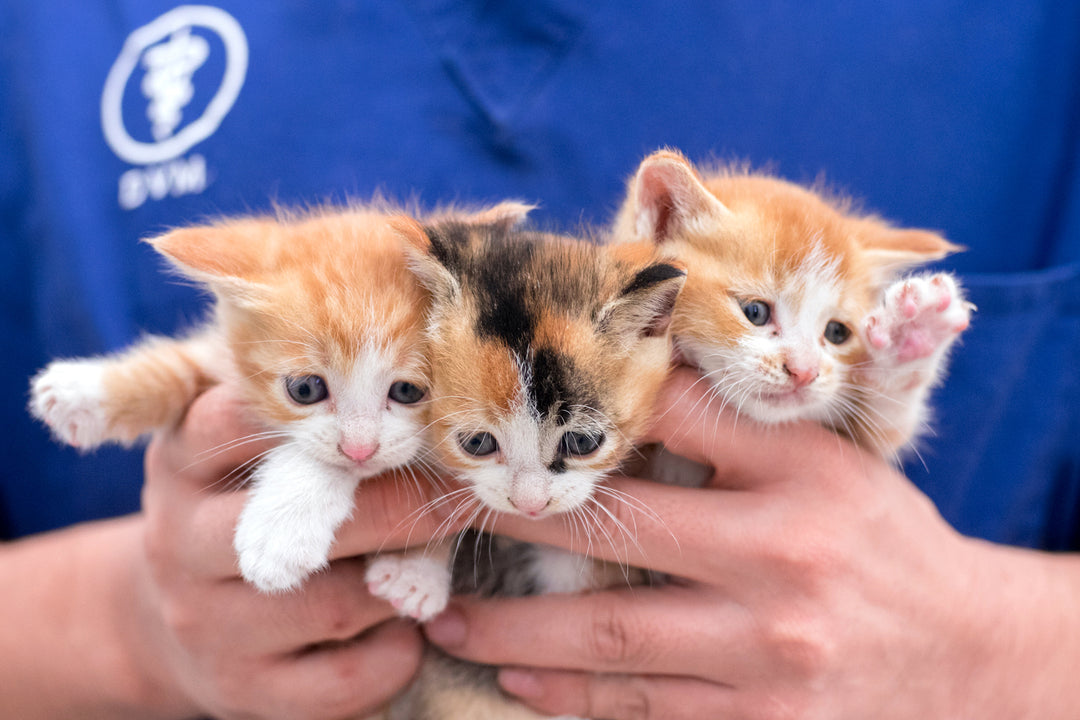
In the case of kittens, they need to be rescued and cared for. If they are less than one month old, they will require milk and assistance with defecation. If such a cat is alone, its mother may be out looking for food or moving their den. Observe for about half a day, and if it's still left behind, or if it's in a gutter or on the road, it's highly likely that the mother is absent or has abandoned it, in which case rescue is necessary. If it's under two months old, the mother cat usually takes care of it, so even if it's alone, the mother might return. If it's crying continuously or is on the road, it might be separated, so rescue is needed. For cats older than that, rescue might be necessary depending on their condition.
Here's how to distinguish a kitten's age:
🐾 Kitten Monthly/Age Identification
In areas with heavy traffic or dangerous zones
If a cat is in an area with heavy traffic, or a dangerous place like a cliff or factory, there is a possibility that it could get into an accident. Therefore, it needs to be rescued and moved from that location. When rescuing, care must be taken to ensure that people do not get into accidents themselves. Also, if it is on private property, obtain permission from the owner before rescuing to avoid trespassing.
|
【Related Article】 |
Tips for rescuing (using towels or laundry nets)
When rescuing a stray cat, unless it's very listless, it may be wary of people or become agitated. Attempting to rescue it with bare hands could lead to serious injury, so use a towel or a laundry net. If it's highly agitated, using a capture net or trap is also a good option.
Cases where it's better not to rescue a stray cat

If TNR or community cat activities are being carried out in the area
Among stray cats, some are watched over by local residents as community cats. Such cats have been spayed or neutered and have ear-tips. If you see such a cat, do not rescue it; instead, consult with organizations involved in community cat activities.
A friendly outdoor cat doesn't necessarily mean it's been "abandoned"
While it's ideal for pet cats to be kept indoors, some cats do go outside. If a cat is friendly, it might be a pet cat that is just out for a stroll. If it has a collar, is well-nourished, and has a shiny coat, it could be a pet cat. If it's a pet cat, it will go home. Rescuing such a cat could lead to the original owner searching for their cat. Abandoned or lost cats, unable to return home, wander around and may be dirty. When rescuing, providing information to neighbors and animal hospitals could help prevent future problems.
Intervening purely out of "pity" can sometimes burden both cats and people
Stray cats live outdoors and are not accustomed to human contact. Interacting with them can be a great burden. There are also tragic cases where people tried to rescue a cat, but it ran away and was hit by a car.
When a cat is rescued, the treatment costs are almost always borne by the rescuer. If an accident requires surgery or long-term hospitalization, the bill can amount to hundreds of thousands of yen. After discharge, the rescuer will either care for the cat themselves or find an adoptive home, and during that time, the rescuer is responsible for its care. If the cat has a permanent disability or requires ongoing treatment, the burden on the rescuer can be significant. Once rescued, the responsibility falls to the rescuer, so you should only rescue if you are prepared to care for the cat financially and emotionally until the end. Do not rescue purely out of "pity."
What is community cat activity? The right way to get involved

TNR (Trap, Neuter, Return)
TNR stands for Trap, Neuter, and Return, and is an activity aimed at controlling the reproduction of stray cats and promoting coexistence with humans. An increase in stray cats can lead to local problems such as rummaging through garbage and urine nuisance. To minimize such issues, the purpose of TNR activities is to control the breeding of stray cats and "watch over each generation of cats in the community."
Ear-tipping = sign of sterilization
After sterilization through TNR, one of the cat's ear tips is cut in a V-shape to indicate that it has been sterilized. Because the shape resembles a cherry blossom petal, cats that have undergone TNR are called "sakura cats." This system allows people to easily identify sterilized community cats just by looking at their ears.
Volunteer and local government support systems
While some individuals carry out community cat activities, it requires time and money, so these activities are often conducted by organizations. Community cat activities may receive support from local governments or other organizations, and there are subsidy programs for sterilization costs. Some animal hospitals also perform only stray cat sterilization.
Proper interaction with community cats (feeding rules, observation)
The basic stance for community cats is to observe them. Feeding is often done by those involved in community cat activities, and giving food indiscriminately can lead to problems. Also, feeding can attract other cats, potentially causing issues. Therefore, quietly observe and report anything to the active groups if necessary.
What to do after rescuing a stray cat

Health check at the animal hospital
After rescuing a stray cat, first have its health checked at an animal hospital. In some cases, pregnancy may be discovered. Fleas and ticks can also infest humans and cause skin problems, so it's necessary to have the cat treated with a repellent at the animal hospital.
If there are any injuries or illnesses, their treatment is the highest priority. Otherwise, you can monitor the cat at home.
Infectious disease testing (feline AIDS, leukemia, etc.)
Stray cats may carry various infectious diseases. Internal parasites and cat flu are commonly seen. They may also have infectious diseases like feline AIDS or feline leukemia, which can infect other cats, so testing is necessary if you have other cats at home. However, testing stray cats can be very difficult and may require sedation.
Creating an environment for temporary fostering
After rescuing a stray cat, preparation is needed whether you plan to keep it at home or foster it temporarily. For temporary fostering, depending on the duration, it's a good idea to use a three-tier cage. Stray cats not accustomed to humans may escape or attack people, so cover the cage with a towel to help them settle down. Provide a litter box, food dish, and water bowl inside the cage for them to live in. If you have other cats at home, isolate the rescued cat to prevent infection and avoid stress between the cats.
If temporary fostering lasts longer than a month, you might gradually let the cat out of the cage to allow it to live indoors. Measures to prevent escape or getting into tight spaces are necessary.
Methods for finding a new home (SNS, local organizations, adoption events)
If you cannot keep the rescued stray cat, you need to find an adoptive home early on. Post on social media or consult with rescue organizations. If there are any organizations planning adoption events, you might inquire if the cat can participate. By then, it's necessary to have completed any treatment and helped the cat become accustomed to people.
Absolutely do not quietly leave a cat at someone else's house, a rescue organization, a cat cafe, or the entrance of an animal hospital.
Summary: If you encounter a stray cat, act kindly to both the cat and people

If you encounter a stray cat, your response will vary depending on the cat's situation and its surroundings. If it's injured, listless, or a kitten needing milk, rescue is recommended. If it's a community cat managed by the local area, confirm with the community cat activity group before rescuing.
Rescue entails responsibility and treatment costs. Think carefully about whether you can support the cat for its entire life before rescuing it.
Related Articles



![[Written by a Veterinarian] How to Work in an Animal Hospital: Essential Qualifications, Job Responsibilities, and Traits of Suitable Candidates](http://www.poponeko.jp/cdn/shop/articles/shutterstock_2399480085.jpg?height=400&v=1755261095)
![[Written by a Veterinarian] Is Buying a Cat from a Pet Store a Good Idea? Pros, Cons, and Checkpoints for Identifying a Healthy Kitten](http://www.poponeko.jp/cdn/shop/articles/petshop_cat.jpg?height=400&v=1778304000)
![[Written by a Veterinarian] Before You Worry About Your Rescue Cat Not Warming Up to You: How to Build a Bond with a Skittish Cat and Train Them to Be More Sociable](http://www.poponeko.jp/cdn/shop/articles/shutterstock_2626846741_c3619e26-699b-4722-a0b0-0c99f5414d1b.jpg?height=400&v=1778305548)
![[Written by a Veterinarian] How to Prepare for a Successful Foster Cat "Trial Period": Environment and 2-Week Schedule](http://www.poponeko.jp/cdn/shop/articles/2_a624e34a-ac59-4dfe-88cb-6a373ea44e7d.jpg?height=400&v=1778305479)
![[Set] Leaf Ribbon & Scrunchie Cat Collar, Tartan Check, Dress Red](http://www.poponeko.jp/cdn/shop/files/2606_00008.jpg?v=1785759844&width=600 "[Set] Leaf Ribbon & Scrunchie Cat Collar, Tartan Check, Dress Red")
![[Set Item] Leaf Ribbon & Cat Collar: Vidro - Lapis Lazuli](http://www.poponeko.jp/cdn/shop/files/2608_00402.jpg?v=1789826564&width=600 "[Set Item] Leaf Ribbon & Cat Collar: Vidro - Lapis Lazuli")
![[Set] Leaf Ribbon & Scrunchie Cat Collar, Gingham Check, Tomato Red](http://www.poponeko.jp/cdn/shop/files/DSC00091_c37cc8a7-d056-4cf1-a8ec-9defb7c0c502.jpg?v=1780663891&width=600 "[Set] Leaf Ribbon & Scrunchie Cat Collar, Gingham Check, Tomato Red")
![[Set] Leaf Ribbon - Moda Old World Yuletide & Cat Collar - MUJI Cotton Plain Autumn Sky](http://www.poponeko.jp/cdn/shop/files/260618_00174.jpg?v=1784451812&width=600 "[Set] Leaf Ribbon - Moda Old World Yuletide & Cat Collar - MUJI Cotton Plain Autumn Sky")
![[Set] Leaf Ribbon moda Old Glory & Cat Collar Okayama Kojima Denim Black](http://www.poponeko.jp/cdn/shop/files/260618_00167.jpg?v=1784451812&width=600 "[Set] Leaf Ribbon moda Old Glory & Cat Collar Okayama Kojima Denim Black")
![[Set] Leaf Ribbon "Fleurage" Pink & Scrunchie Cat Collar "Belgian Linen" Wine Rose](http://www.poponeko.jp/cdn/shop/files/2608_00132.jpg?v=1789197487&width=600 "[Set] Leaf Ribbon \"Fleurage\" Pink & Scrunchie Cat Collar \"Belgian Linen\" Wine Rose")

Leave a comment