
Are you familiar with microchips?
If you purchase a cat from a pet shop, you will receive a microchip registration certificate. As of June 1, 2022, pet shops, breeders, and other facilities selling cats are obligated to implant and register microchips before sale, and purchasers are obligated to update the registration (Animal Welfare Management Law).
For cats already owned, there is a "duty to make an effort" to implant and register them.
This article will explain microchips for cats.
What is a cat microchip?
A microchip is a small cylindrical electronic identification device, approximately 1.4 mm in diameter and 8.2 mm in length.Each microchip records a 15-digit number.
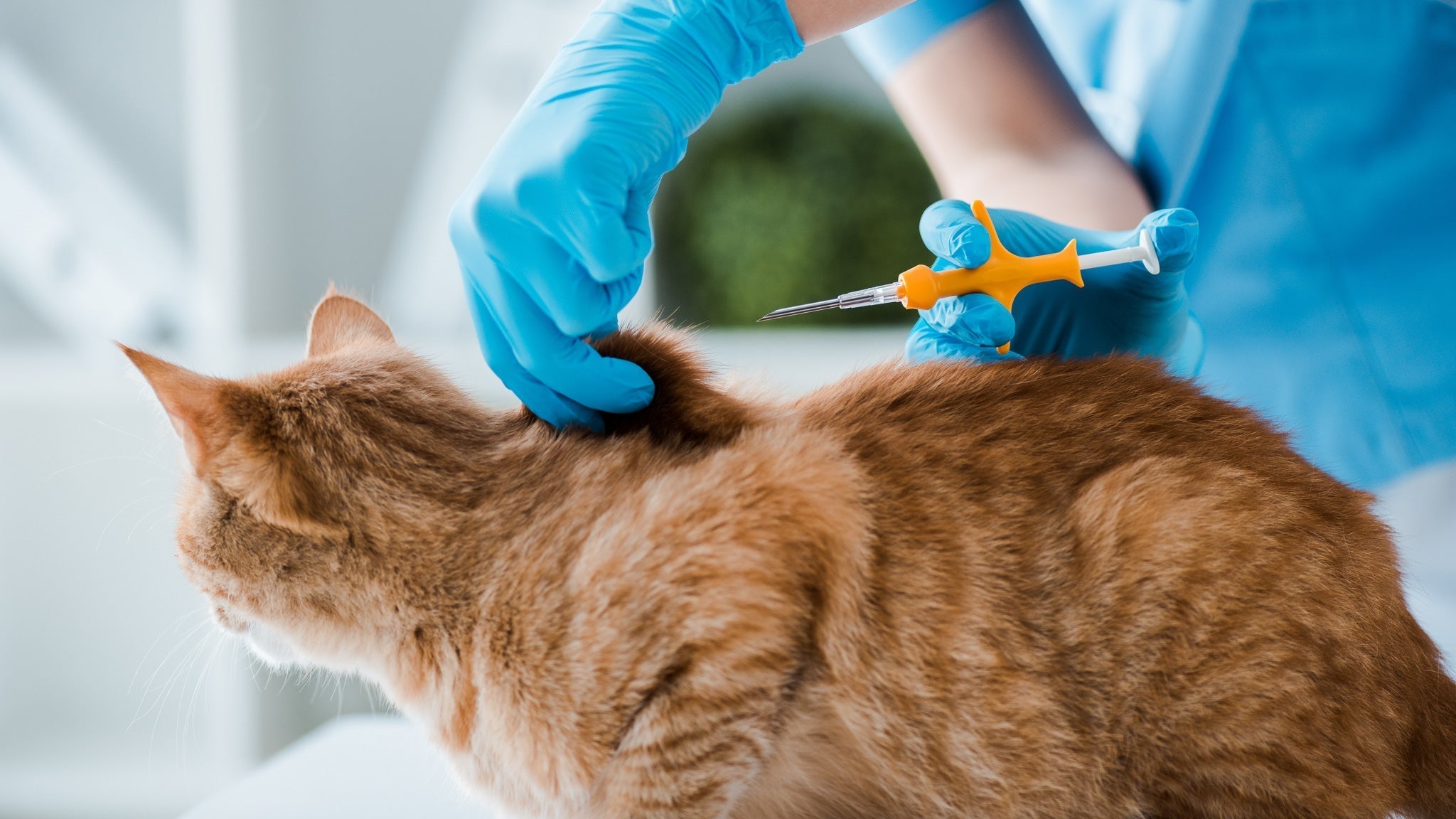
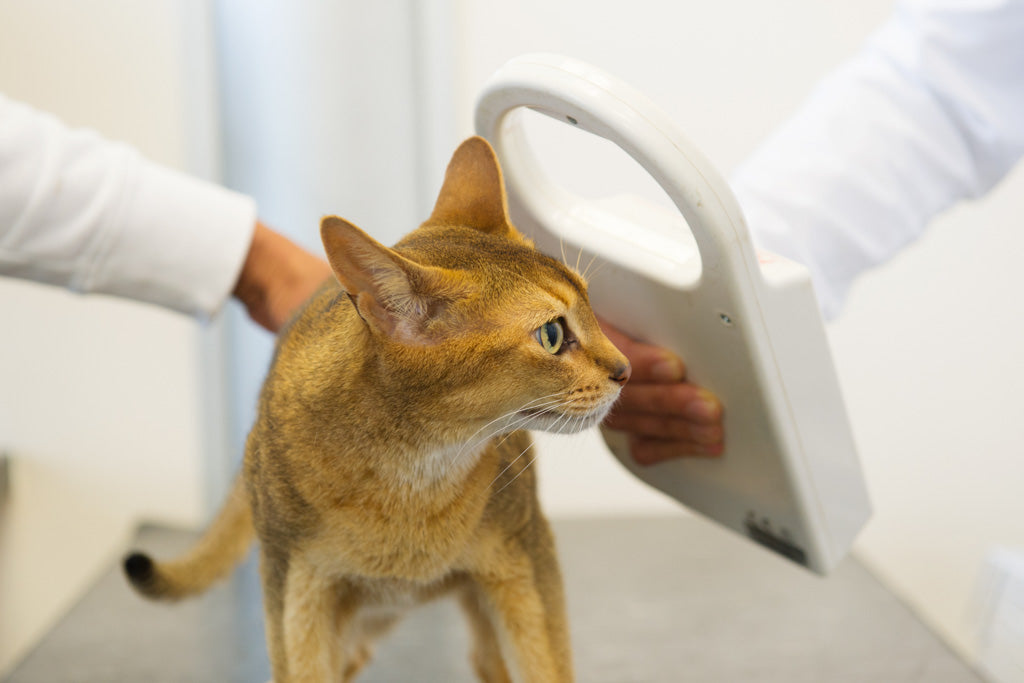
Microchips come in a syringe-like applicator and are implanted by a veterinarian or an animal care nurse instructed by a veterinarian at an animal hospital or similar facility. The microchip is implanted between the shoulder blades on the back. The number on the implanted microchip can be read with a dedicated reader.
The microchip itself does not emit radio waves like a GPS. Readers are available at animal protection and management centers, public health centers, and animal hospitals where stray animals are taken. If a cat with a microchip is found, it can be returned to its owner.
The obligation to implant and register microchips for cats purchased at pet shops and other retailers is based on the revised Animal Welfare Management Law, which came into effect on June 1, 2022.
While implantation and registration are mandatory for purchased cats, for cats that are adopted or rescued, there is an "effort obligation" to implant them as much as possible.
Are microchips necessary for cats?
Cats purchased from pet shops or breeders already have microchips, so here I will discuss cats that are already owned or adopted and do not yet have microchips.
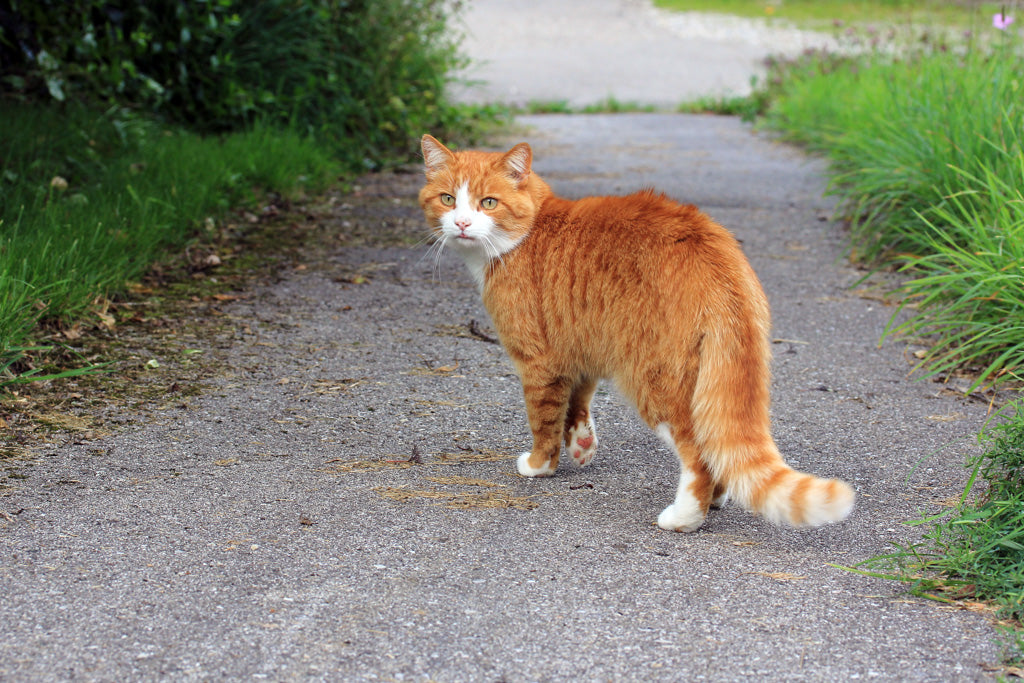
As mentioned earlier, the role of a microchip is that if a pet cat escapes and becomes separated from its owner, the microchip information can help it return to its owner.
If a pet cat does not have a microchip, it may be deemed ownerless and either be rehomed elsewhere, or in the worst-case scenario, euthanized. To prevent such situations, microchips are considered necessary.
Many owners attach lost pet tags to collars in addition to microchips. However, collars can come off if they get snagged. Furthermore, if personal information is written on the tag, it may become illegible over time, or some people might misuse it. Since microchips are embedded under the skin, there is a low risk of them falling out, and personal information is handled securely.
The process of implanting a microchip in a cat
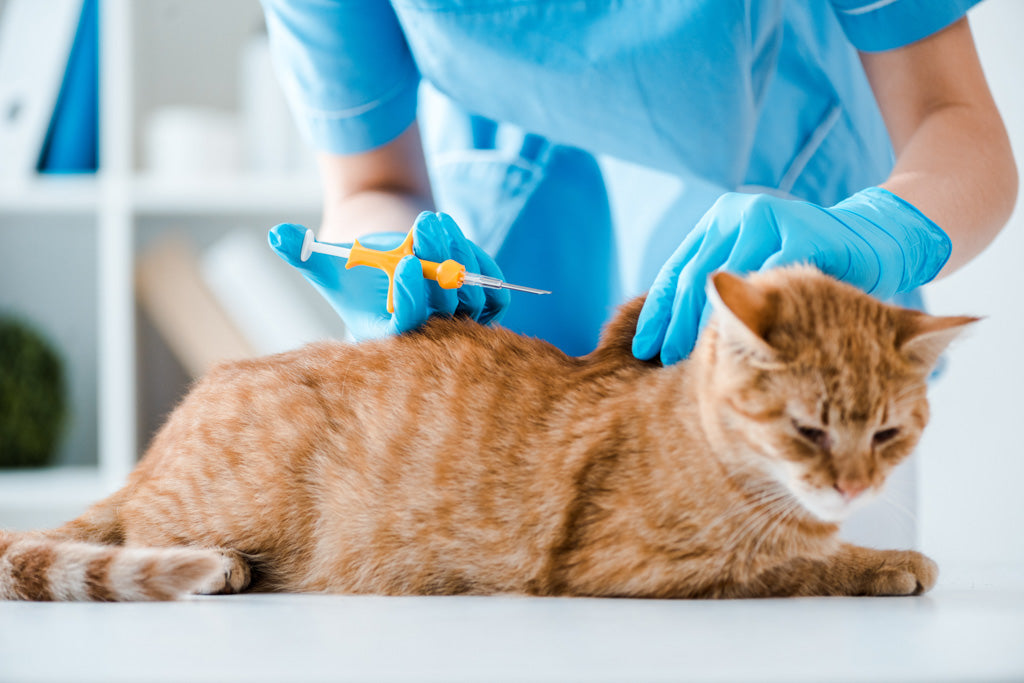
Microchips are implanted by a veterinarian or an animal care nurse instructed by a veterinarian at an animal hospital or similar facility. It's advisable to make an appointment in advance, as microchips may need to be ordered.
The implantation process is similar to vaccinations. The microchip is inserted under the skin using a syringe-like applicator. The implantation takes only an instant. If the cat has a difficult temperament or if spaying/neutering is planned, the microchip may be implanted under anesthesia.
After implantation, the veterinarian will issue a "Microchip Implantation Certificate." The owner then registers the microchip with a designated registration organization. Be sure to keep the implantation certificate as it is required for registration.
Pros and cons of microchipping your cat
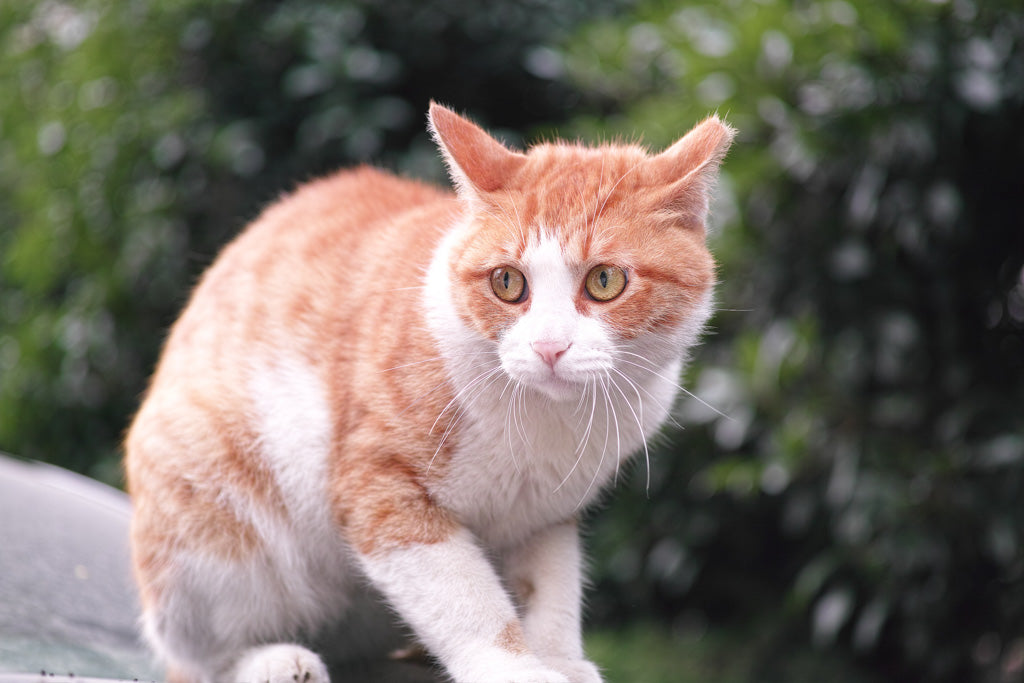
Since microchips are injected under the skin, they are unlikely to detach easily. Additionally, registered information is handled only by designated registration organizations, so the possibility of personal information leakage is considered low. These are considered the advantages of microchips. Furthermore, the risk of microchip implantation is said to be extremely low.
A disadvantage of microchip implantation is that the needle is thicker than a regular injection needle, so there is a tendency for more pain.
While implantation is instantaneous, if the cat struggles during the procedure, it may not be accurately implanted and could rarely fall out. Therefore, depending on the cat's temperament, implantation may be performed under sedation or during spaying/neutering surgery when anesthesia is already administered.
It is best to discuss the implantation with your veterinarian.
How much does it cost to microchip a cat?

The cost for microchip implantation typically ranges from 3,000 to 10,000 yen. If sedation is required, an additional sedation fee may apply. Since implantation is performed at an animal hospital, this fee is paid to the animal hospital.
In addition to the implantation fee, there is a registration fee. Owners are responsible for their own registration; the fee is 300 yen for online applications and 1,000 yen for paper applications. This fee is paid to the designated registration organization.
Frequently Asked Questions About Cat Microchip Implantation
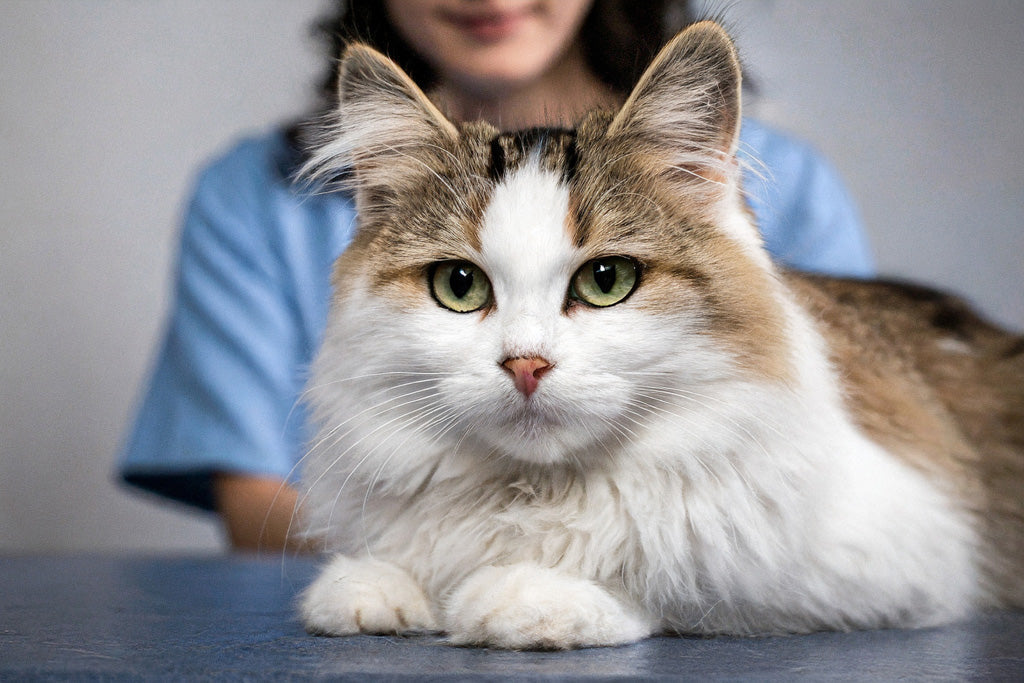
Common questions from those considering microchipping include "Is the microchip information immediately accessible?" and "Does it have GPS functionality?" These are very frequently asked.
Microchips only contain a 15-digit number linked to registration information. Even if a microchip is read with a reader, only the 15-digit number is displayed. By querying this number with the registration organization, it is matched with the owner's information, and the owner is contacted.
Contact with the owner is made by animal protection and management centers, public health centers, or designated registration organizations. The owner's registration information is never disclosed to animal hospitals or other institutions.
Furthermore, there is no GPS function, so it is not possible to locate where the cat is. If you are looking for such functionality, it is recommended to attach a tag with GPS capabilities to the collar, in addition to the microchip.
Summary

Some people might wonder if there's any point in microchipping a cat that doesn't currently have one. However, if a cat panics and escapes during a disaster, having a microchip significantly increases the chances of it being returned to its owner.
The pain of implantation is momentary. As a precaution for emergencies, why not consider getting your cat microchipped?


![[Veterinarian's Guide] Cat Escape Prevention Measures: Creating a Safe and Comfortable Environment](http://www.poponeko.jp/cdn/shop/articles/shutterstock_2035199633.jpg?height=400&v=1725783884)
![[Veterinarian's Guide] Preparing Your Cat for a Safe Time Alone at Home](http://www.poponeko.jp/cdn/shop/articles/shutterstock_1398782681.jpg?height=400&v=1726749748)


![[Set Product] Leaf Ribbon & Cat Collar "Champ de Fleurs" Pink](http://www.poponeko.jp/cdn/shop/files/DSC00100_cf7eae7a-b352-4d9f-ba35-9c34a715038e.jpg?v=1780663183&width=600 "[Set Product] Leaf Ribbon & Cat Collar \"Champ de Fleurs\" Pink")
![[Set] Leaf Ribbon & Cat Collar: Petit Fleur, Blue](http://www.poponeko.jp/cdn/shop/files/2608_00407.jpg?v=1789946167&width=600 "[Set] Leaf Ribbon & Cat Collar: Petit Fleur, Blue")
![[Set] Leaf Ribbon & Cat Collar - Gingham Check (Raspberry)](http://www.poponeko.jp/cdn/shop/files/DSC00111_50fa7dfb-0b92-465f-96f3-373274a75e62.jpg?v=1780663890&width=600 "[Set] Leaf Ribbon & Cat Collar - Gingham Check (Raspberry)")
![[Set Product] Leaf Ribbon & Scrunchie Cat Collar - Champ de Fleur Light Green](http://www.poponeko.jp/cdn/shop/files/DSC00088_9d993016-a552-497a-a7bd-05e1b7a11408.jpg?v=1780663183&width=600 "[Set Product] Leaf Ribbon & Scrunchie Cat Collar - Champ de Fleur Light Green")
![[Set Product] Leaf Ribbon & Cat Collar - Champs de Fleurs Light Green](http://www.poponeko.jp/cdn/shop/files/DSC00102_e084695b-e8f0-442d-89e1-43de838500c2.jpg?v=1780663183&width=600 "[Set Product] Leaf Ribbon & Cat Collar - Champs de Fleurs Light Green")
![[Set Product] Leaf Ribbon & Cat Collar - Tartan Check Classic Red](http://www.poponeko.jp/cdn/shop/files/2606_00018.jpg?v=1785759845&width=600 "[Set Product] Leaf Ribbon & Cat Collar - Tartan Check Classic Red")

Leave a comment