

Contrary to the scorching summer of 2024, news of heavy snowfall is now pouring in. While it's winter climatically, in the cat world, the mating season will begin soon. This time, we will explain the cat's mating season in detail.
What is a cat's heat cycle? Basic mechanisms and timing

Age and season when heat begins
Cats typically begin their heat cycle around 6 months of age. However, there are individual differences; some cats may start as early as 4 months, while slow-maturing breeds (such as Norwegian Forest Cats and Maine Coons) tend to start later.
Cats have two heat seasons a year: spring (February to April) and summer to autumn (June to August). Cats are long-day breeders, meaning their heat cycle is triggered when daylight hours exceed 14 hours. Therefore, they experience their heat seasons during the longer days of spring and summer. However, for indoor cats kept under constant artificial lighting or in brightly lit urban areas, heat cycles can occur year-round.
Differences in estrous behavior between male and female cats
Male and female cats exhibit largely similar estrous behaviors. These include loud vocalizations, spraying urine with a strong, concentrated odor on walls and other surfaces (spraying behavior), and attempting to escape.
Male cats become aggressive as they compete for female cats. Female cats exhibit behaviors such as raising their hindquarters and rubbing their backs on the floor (rolling).
The cat's heat cycle and its duration
Male cats do not have a heat cycle. When a female cat is in heat and a male cat senses her pheromones, the male cat also becomes aroused.
A female cat's heat cycle lasts about two to three weeks, during which mating occurs. If mating does not occur during this period, she will come into heat again.
Main symptoms observed in cats during heat

Female cats' characteristic vocalizations (features of their meows)
The meows of female cats in heat are distinctive and very loud. They emit an "aaah-ooh-n" sound, distinctly different from their usual meows, and continue to vocalize throughout the night when they are most active, causing significant stress for owners. These vocalizations typically last about a week. Not only female cats, but male cats also respond to the female's cries.
Male cat marking behavior
A cat's urine contains information about itself (age, sex, build, etc.), and by urinating, it asserts its territory. A male in heat will concentrate its urine and spray it at a higher position to assert its presence to female cats. This is called spraying behavior. To prevent other cats from masking their scent, they forcefully spray urine on vertical objects such as walls, pillars, and utility poles.
Specific examples of changes in appetite and behavior
Both male and female cats become restless and eager to go outside during their heat cycle. They may also become aggressive due to excitement, and their appetite may decrease.
Female cats may also exhibit behaviors such as raising their hindquarters high or rubbing their bodies on the floor to invite male cats.
In-home coping strategies for cats during their heat cycle

Do not give excessive attention
During heat, cats may become more affectionate than usual, which can be very endearing. However, giving excessive attention can potentially encourage the heat cycle. Interact with them as you normally would.
Specific care methods to reduce stress
During heat, cats are easily excited and experience high levels of stress. Since this behavior is instinctual, training cannot resolve it. Nighttime vocalizations are often a problem, so it's a good idea to help them burn off energy through play during the day. As cats need vertical exercise, incorporate activities that use a cat tower.
Mindset needed to get through the heat cycle
Heat is an instinctive behavior that is difficult to suppress. Training cannot resolve it, and scolding can even be counterproductive. Therefore, owners need to be prepared to get through the heat cycle. For male cats, if there is a female in heat, their own heat will continue. For female cats, if mating does not occur, the next heat will begin about two weeks after the previous one ends, and this cycle will repeat throughout the season.
During the heat cycle, nocturnal vocalizations are common, and cats may meow continuously to the point where owners cannot sleep. Measures such as exercising during the day are necessary. Spraying behavior occurs in male cats but can also occur in females. Since they spray urine with a very strong odor on walls, the scent is not easily removed. Measures such as attaching waterproof sheets or pet sheets to walls are necessary. The risk of escape also increases, so more extensive escape prevention measures are needed than usual.
Considering spaying/neutering to overcome a cat's heat cycle

Benefits and drawbacks of spaying/neutering
Spaying/neutering is a surgical procedure that removes the uterus and ovaries in female cats, and the testes in male cats, to prevent them from going into heat.
The benefits of spaying/neutering include the cessation of heat cycles and associated behaviors, as well as the prevention of unwanted pregnancies. It is also known to extend lifespan, likely due to the elimination of stress caused by heat. Furthermore, it can prevent diseases of the ovaries, uterus, and testes, and in female cats, it helps prevent mammary tumors.
There are also disadvantages in addition to the benefits. Spaying/neutering requires general anesthesia for both male and female cats, which carries some inherent risks. Also, since reproductive function is completely eliminated, having offspring will no longer be possible. The biggest drawback is that cats tend to gain weight more easily. This is because hormone balance and activity levels decrease.
|
[Related articles] |
Impact of surgery on cat health
In most cases, the impact of surgery is considered minimal, but as mentioned, spaying/neutering can make cats prone to weight gain, increasing the risk of obesity-related diabetes, arthritis, and urinary tract diseases. In very rare cases, autoimmune diseases can also occur.
Appropriate timing for surgery and things to be aware of
Spaying/neutering is typically performed after 6 months of age. If a cat has already experienced a heat cycle, some estrous behaviors may persist even after surgery. Additionally, to prevent mammary tumors, it is generally recommended to perform surgery before the first heat. If a cat does go into heat, performing the surgery as soon as possible can still reduce the risk of mammary tumor development.
Regarding surgery during heat, opinions among veterinarians differ, so it is necessary to confirm in advance whether surgery can be performed during this period.
Veterinarian's advice on appropriate actions and measures

Ideas to reduce stress during heat
During heat, cats are prone to excitement and stress. Therefore, it is necessary to relieve this stress during this period.
Since cats are often active at night, play with them more than usual during the day to help them exercise. Throwing food for them to find might satisfy their hunting instincts and relieve stress.
However, excessive attention can intensify estrous behaviors. When they are more affectionate than usual, avoid spoiling them and interact with them as you normally would.
Cases requiring consultation with a specialist
During the heat cycle, cats experience increased stress, and owners are often troubled by nighttime vocalizations, aggression, and spraying behavior. If you cannot cope with the estrous behavior, consult a veterinarian.
Furthermore, during heat, cats may lick their genitals excessively, leading to skin irritation. In multi-cat households, fights between cats can become intense, often resulting in injuries that require treatment.Since spaying/neutering is the only way to stop the heat cycle, it is important to carefully consider whether to allow it to continue.
Important considerations for the whole family
During heat, the risk of escape is very high as cats seek mates. Even cats not typically interested in the outdoors may start wanting to go outside during this period. Some cats will even tear through screen doors to escape. Therefore, families should thoroughly check for any potential escape routes, and when leaving the house, everyone should confirm and ensure the cat does not get out.
|
[Related articles] |
Summary

Heat behavior recurs throughout the season. While cats become easily agitated and stressed, owners are also significantly troubled by these behaviors. The increased risk of escape also presents dangers such as traffic accidents, getting lost, and injuries or infections from fights with other cats. Since spaying/neutering can resolve problems during the heat cycle, it is crucial to carefully consider whether to allow nature to take its course.

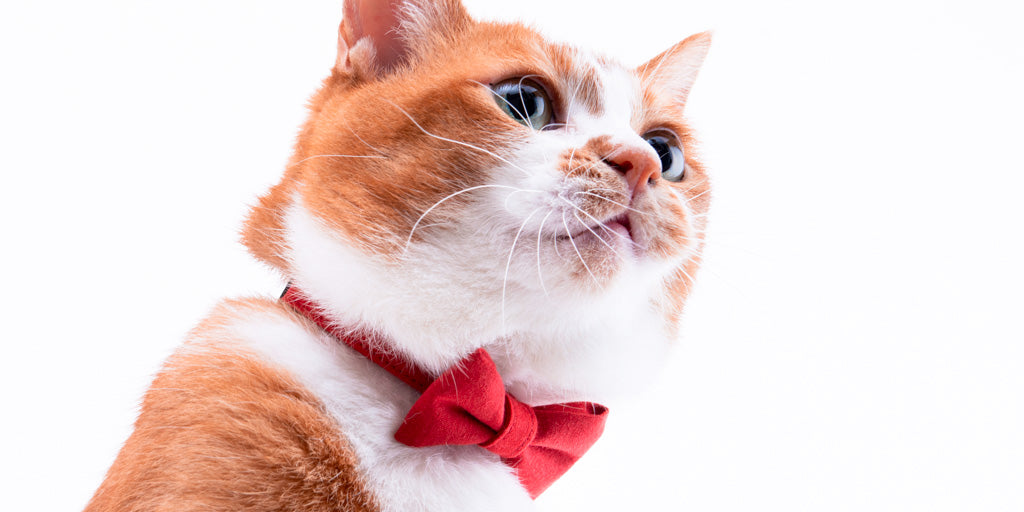
![[Veterinarian's Guide] Cat Escape Prevention Measures: Creating a Safe and Comfortable Environment](http://www.poponeko.jp/cdn/shop/articles/shutterstock_2035199633.jpg?height=400&v=1725783884)
![[Veterinarian's Guide] Preparing Your Cat for a Safe Time Alone at Home](http://www.poponeko.jp/cdn/shop/articles/shutterstock_1398782681.jpg?height=400&v=1726749748)


![[Set] Leaf Ribbon moda Star Spangled & Cat Collar Denim Navy](http://www.poponeko.jp/cdn/shop/files/260618_00160.jpg?v=1784451813&width=600 "[Set] Leaf Ribbon moda Star Spangled & Cat Collar Denim Navy")
![[Set] Leaf Ribbon & Scrunchie Cat Collar, Tartan Check, Trench Beige](http://www.poponeko.jp/cdn/shop/files/2606_00007.jpg?v=1785759845&width=600 "[Set] Leaf Ribbon & Scrunchie Cat Collar, Tartan Check, Trench Beige")
![[Set] Leaf Ribbon & Scrunchie Cat Collar, Petit Fleur, Pastel Pink [Limited Color]](http://www.poponeko.jp/cdn/shop/files/2608_00420.jpg?v=1789946167&width=600 "[Set] Leaf Ribbon & Scrunchie Cat Collar, Petit Fleur, Pastel Pink [Limited Color]")
![[Set] Leaf Ribbon & Cat Collar - Hannari Sakura Purple](http://www.poponeko.jp/cdn/shop/files/2608_00128.jpg?v=1789197917&width=600 "[Set] Leaf Ribbon & Cat Collar - Hannari Sakura Purple")
![[Set] Leaf Ribbon Fleurage Purple & Scrunchie Cat Collar Belgian Linen Turquoise](http://www.poponeko.jp/cdn/shop/files/2608_00136.jpg?v=1789197487&width=600 "[Set] Leaf Ribbon Fleurage Purple & Scrunchie Cat Collar Belgian Linen Turquoise")
Leave a comment