
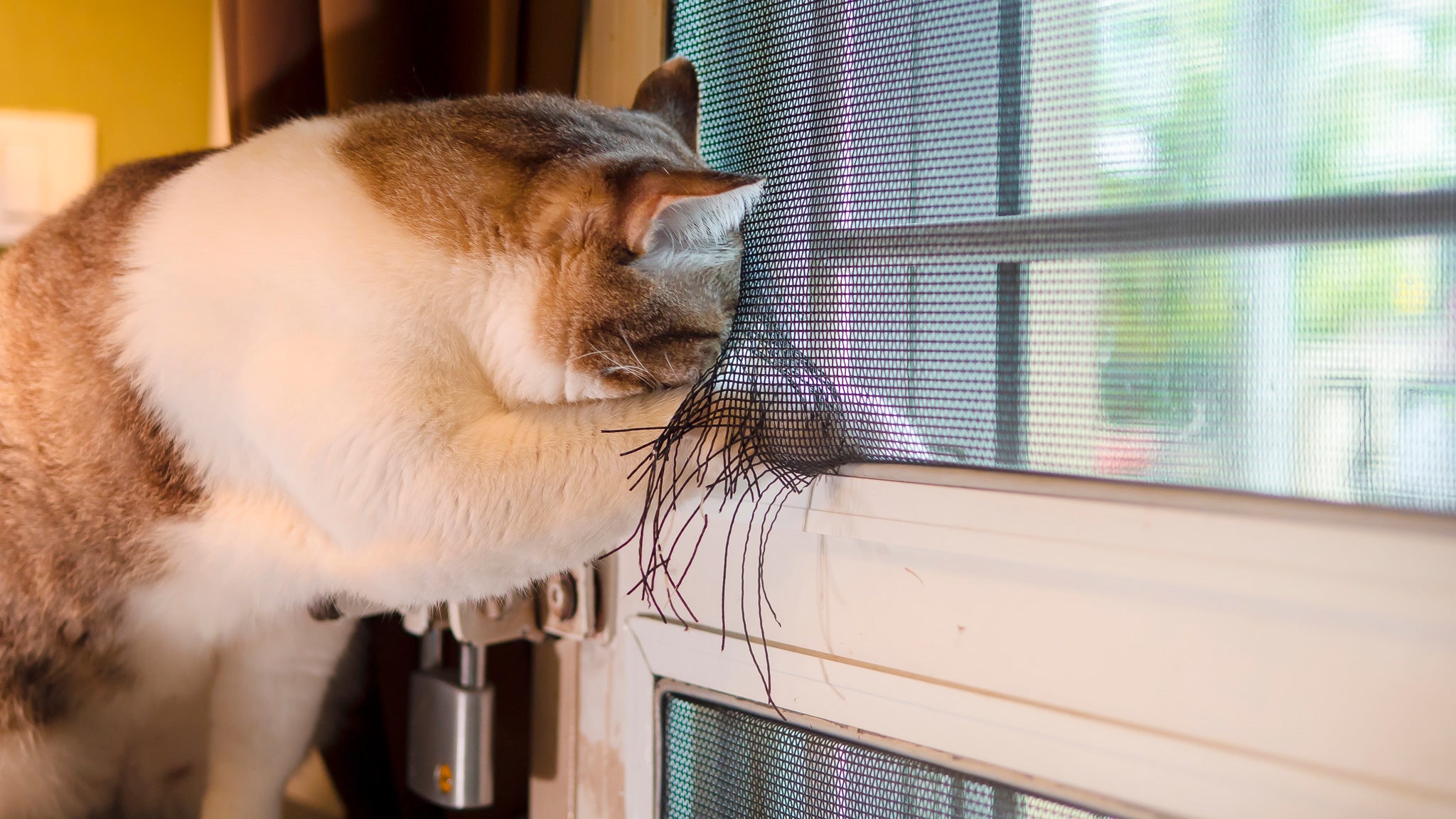
Many cat owners have likely experienced their cat escaping. If a gap is wide enough for a cat's head to pass through, it can squeeze through.
In this article, we will explain how to prevent cats from escaping.
Reasons Why Cats Escape and the Risks Involved

Cats can escape through the smallest gaps or due to a moment of carelessness. Here, we explain the reasons why cats escape and the associated risks.
Behaviors and Psychology Leading to Escapes
It is believed that the ancestor of the house cat is the Near Eastern wildcat, which lived in the desert. Cats are thought to have started living with humans during the ancient Egyptian civilization about 5,000 years ago (though recent studies suggest it may have been as long as 9,500 years ago). Dogs have been around humans for about 30,000 years, so cats have a much shorter history of cohabitation with humans. Consequently, they retain vestiges of their wild ancestors, including a strong curiosity about the outdoors.
Furthermore, as predators, their instincts are triggered by the sight of birds through windows. It is believed that because these instincts cannot be satisfied while indoors, their desire to go outside intensifies. This is especially true for cats that have experienced life outdoors.
Cats that have not been spayed or neutered will also want to go outside in search of a mate.
Many escapes are attributed to frustration stemming from unfulfilled natural instincts or curiosity about the outside world.
Dangers and Risks of Going Outside
Once a cat gets outside, it faces risks such as traffic accidents, infectious diseases from fighting with other cats, and parasitic infestations like fleas and ticks. Also, because cats are highly territorial, if they accidentally wander into another cat's territory, they may be chased and end up lost. Since indoor cats do not know the outside world, they have no way of knowing how to return home once they leave.
For cats that have not been spayed or neutered, there is the risk of unwanted pregnancy, or they may get into fights during the mating season, leading to severe injuries, feline immunodeficiency virus (FIV), or feline leukemia virus (FeLV).
Basic Principles for Preventing Escapes
The fundamental approach to preventing escapes is to block their escape routes. The areas where cats tend to escape are the front door, the back door, and windows. First, you must make a habit of keeping these shut. While some people use insect screens, cats can easily tear them with their claws or hook them open. Ensure that window glass is kept closed and locked. Even windows located high up are accessible to cats, so leaving them open is dangerous. Installing an escape-prevention gate at the entrance is also a good idea. Furthermore, when opening and closing doors, always check for the cat's presence first. Cats can sneak out through the smallest of gaps.
In-Home Measures to Prevent Escapes

Safety Measures for Doors and Windows
There are various products available to help prevent escapes through doors and windows. Gates installed at windows or the front entrance are the most common. A key point to remember when choosing them is that they should cover the area from floor to ceiling. Baby gates that only reach waist height can be jumped over, and if there is a gap at the top, the cat will simply climb through.
Even with gates installed, you should still keep your windows locked. Adding a stopper to prevent the window from opening is even more effective. When entering or exiting through a door, make sure the cat is not nearby, or use a barrier to block their path.
Some cats follow their owners to the door, and they may try to bolt the moment the door opens. Install a gate to keep them away from the entrance, or keep them confined to a specific living area when you are using the door.
Ensuring Safety on Balconies and in Gardens
Since balconies and gardens are completely outdoors, it is essential that the cat is never allowed access to them. Once a cat experiences the stimulation of the outside, its urge to go out will increase. Furthermore, balconies and gardens are home to fleas and ticks. In areas with wild animals, there is also the risk of other parasitic diseases and various infections.
Balconies have height, meaning there is a risk of falling. Gardens connect to streets, posing the risk of traffic accidents. To ensure they never get out, it is necessary to take measures such as installing an escape-prevention gate before the entrance or installing netting on the balcony.
How to Choose and Utilize Escape-Prevention Products

There are various escape-prevention products available. They can be found at hardware stores and online. You can also purchase materials at a 100-yen shop, which might be a fun challenge if you are good at DIY projects.
Types of Effective Escape-Prevention Goods
Aftermarket gates are the most common choice for doors and windows. It is best to choose ones that cover the span from floor to ceiling. Measure the height before making a purchase to ensure a good fit. If possible, seeing the item in person at a store will reduce the risk of disappointment. For gates placed near doorways, choosing a model with a built-in walk-through door is convenient so you don't block yourself.
For cats that can open windows, security products can be used as alternatives. Installing stoppers on window glass or screens will limit how far they can be opened, keeping the gap narrow enough so the cat cannot escape. Even if you forget to lock a window, the stopper will still prevent an escape.
Some cats can even turn door handles. In such cases, replace the handle itself or install a door handle lock.
For cats that go out onto balconies, stretch anti-fall netting across the entire balcony. Choose a net with small enough holes so the cat's head cannot pass through.
Safety and Practicality Considerations
It is important to remember that these items do not guarantee 100% prevention. If installed incorrectly, they could fall and cause injury, or the cat might find a gap. Correct installation is crucial. Additionally, you should consider that these items might cause some inconvenience in your daily life, so look for products that cause the least amount of stress for everyone.
How to Create a Satisfying Indoor Environment

To prevent escapes, it is important to help your cat relieve stress.
Providing Play with Cat Towers and Toys
Cats are animals that engage in vertical movement. Cat towers and allowing access to climbable furniture can facilitate this. Also, engaging in 15-minute play sessions two or three times a day will help alleviate a lack of exercise. Please participate in play sessions with your cat using toys.
Creating a Comfortable Window-Side Space
Even if they cannot go outside, simply watching the outside world through a window can help a cat release stress. Placing a cat tower near a window is a good idea. If you have a bay window, placing a cat bed there might also be enjoyable for them.
However, you must ensure that the window cannot be opened under any circumstances.
Ways to Reduce Stress
Cats build up stress when they lack exercise or when their instincts go unfulfilled. Try incorporating play that satisfies their natural urges. To satisfy their hunting instinct, try throwing food for them to chase, using food-dispensing toys to make them think, or hiding treats for them to find.
What to Do If Your Cat Escapes

If your cat does escape, it is important to stay calm and not panic.
Initial Actions to Take After an Escape
If your cat escapes, chasing them in a panic may cause them to run even further, potentially into traffic. Instead, take your time searching around the house with their favorite treats, a familiar towel, and a carrier. Call their name in a calm voice. Cats tend to hide in narrow, dark places, so focus your search on areas like garages and under parked cars.
Search Methods and Spreading the Word
Creating a lost cat flyer is essential. Include a full-body photo of your cat, their name, gender, distinctive features or items they are wearing, the location they were last seen, and your contact information, and post them in the neighborhood.
Contacting relevant organizations is also necessary. Notify the police and your local animal welfare center. Since lost cats are sometimes brought to local veterinary clinics, requesting that they post a flyer is a good idea.
|
【Related Articles】 |
The Importance of Microchips and ID Tags
A microchip contains the cat's registration number. If a microchipped cat is found, the owner will be notified. Note that a microchip does not have GPS; it works by scanning the number with a special reader and contacting the managing organization, which then notifies the owner. As such, the owner must wait to be contacted. Unlike ID tags, microchips are permanent and cannot be lost, and they reduce the risk of personal information leaks.
ID tags on a collar can show your contact information directly, which might lead to a faster reunion if someone finds your cat and calls you right away. However, cat collars are designed to break away easily for safety, so it is quite common to find only the collar.
It is best to use both a microchip and an ID tag.
|
【Related Articles】 |
Conclusion

Cats may escape due to instinct or stress. Make sure to implement solid escape-prevention measures and strive to relieve your cat's stress. If your cat is not yet spayed or neutered, doing so before the mating season is also a key way to prevent escapes.
|
【Related Articles】 |













Leave a comment