
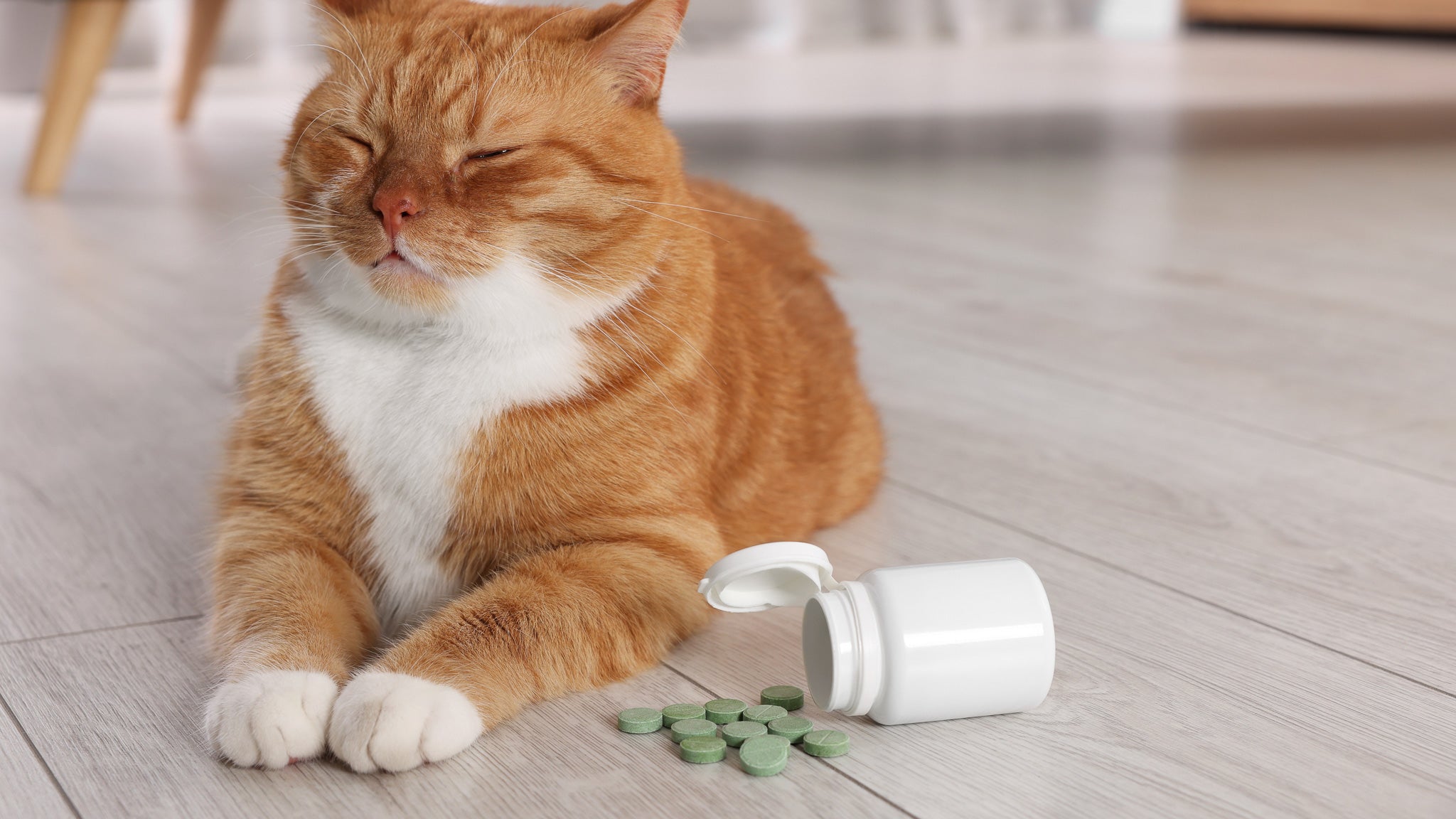
"Should I give my cat supplements for their health?"—Many cat owners with a high level of health awareness for their cats may wonder this.
However, cat supplements are "sometimes necessary, and sometimes not." In this article, we will explain the role of supplements, when to give them, and precautions, from a veterinarian's perspective.
Do Cats Need Supplements? Basic Principles

Generally Not Needed for Cats Eating Complete and Balanced Food
Supplements, also known as nutritional supplements, are food products containing vitamins, minerals, and other ingredients aimed at promoting a healthier life. Cats that consume sufficient amounts of complete and balanced food can obtain the necessary nutrients from their food, so supplements are generally not required.
Nutritional Balance Can Be Fully Maintained with Food
Cat food is categorized into "complete and balanced food," "therapeutic food," and "snacks." Complete and balanced food is formulated to provide all necessary nutrients for a healthy life with just water and the food itself. Therapeutic food is prescribed by a veterinarian for specific medical conditions. Snacks include treats and toppers. In essence, complete and balanced food alone provides all the necessary nutrients.
May Be Helpful as a Supplement for Specific Symptoms or Ages
Besides compensating for missing nutrients, some supplements can also offer various other benefits. For instance, while lactic acid bacteria for gut health are not usually necessary in a normal life, they can be expected to help with symptoms like loose stools. Moreover, as cats age, joint and kidney issues become more common, and there are supplements that can alleviate these symptoms.
Cases Where Cats May Need Supplements

Supporting Joints, Kidneys, and Immunity Due to Aging
Some supplements can support joint health, kidney function, and immune system activation. As cats age, various ailments can appear. Joint inflammation and kidney disease, in particular, are almost inevitable in older cats. Additionally, immunity declines, which can lead to cancer. Because these supplements can help with age-related problems, they are sometimes used as an adjunct to treatment.
Improving Conditions Like Hairballs, Skin Problems, and Constipation
For the purpose of improving physical conditions, lactic acid bacteria or dietary fiber may be necessary. While gastrointestinal issues and skin problems are primarily treated with medications, improving gut health and skin barrier function can help prevent recurrence.
When Nutrient Intake Is Difficult Due to Loss of Appetite or Picky Eating
Supplements can also help replenish missing nutrients and minerals. When a cat has a poor appetite or is a picky eater and isn't consuming enough complete and balanced food, supplements can help make up the deficit. However, self-diagnosing which nutrients are lacking can sometimes be counterproductive. Veterinary guidance is always necessary.
Precautions When Giving Supplements to Cats

Do Not Give Human Supplements
Human supplements are formulated for human metabolism and dosage. Therefore, they can cause toxicity in cats, whose metabolic pathways differ from humans. Always use animal-specific or cat-specific supplements.
Beware of Overlapping Ingredients
Ingredients in supplements and food can sometimes overlap. Depending on the ingredient, an excess can lead to toxicity. For example, fat-soluble vitamins like vitamins D and A are known to cause hypervitaminosis in cats. Furthermore, if multiple supplements are used, ingredients can become excessive unknowingly. Always check if the ingredients do not overlap. It is crucial to follow the prescribed dosage and not assume that more is better.
It's important to consult a veterinarian before administering.
When using supplements as an aid for treating an illness, or for anti-aging purposes in daily life, certain ingredients may interfere with treatment or hinder the absorption of medications. It is crucial to consult a veterinarian before administering any supplements. Alternatively, use supplements recommended by your veterinarian.
Popular Cat Supplement Ingredients and Their Effects

Lactic Acid Bacteria (Gut Environment Improvement & Immune Support)
Lactic acid bacteria are supplements that have garnered attention for gut health. They are known to improve the intestinal environment and boost immune activity. Not only do they help regulate stomach function, but by activating immunity, they can also improve overall health and are expected to be effective against skin problems.
|
【Related Articles】 |
Glucosamine and Chondroitin (Joint Care)
Cats develop arthritis as they age. Some cats suffer from joint pain as early as one year old. It is believed that taking glucosamine and chondroitin, which are components of joint tissue, as supplements can strengthen joints.
These products may also contain anti-inflammatory ingredients for joints such as proteoglycans and green-lipped mussels. When taken together, pain may be reduced.
Omega-3 Fatty Acids (Coat Luster & Skin Care)
Omega-3 fatty acids like DHA and EPA are supplements expected to be effective for skin problems. Omega-3 fatty acids are believed to have anti-inflammatory effects and are used for skin issues. Besides the skin, they are also expected to have anti-inflammatory effects on joints and are used for dementia prevention. In cats, they are sometimes used to slow the progression of chronic kidney disease.
While there are still unclear aspects regarding overdose, reports of bleeding and arrhythmia have been noted.
Taurine (Heart & Vision Support)
Taurine is an essential amino acid for cats and cannot be synthesized by their bodies, so it must be obtained from their diet. Taurine is vital for heart and vision health, and a deficiency can lead to dilated cardiomyopathy and vision loss. Current cat foods contain sufficient amounts of taurine, so supplements are not typically necessary. However, if a cat is on a homemade diet or is a picky eater, taurine deficiency can occur, in which case supplementation is needed.
Summary | Give Supplements to "Cats That Need Them" Correctly

Supplements are merely health-supporting food products designed to complement missing nutrients or enhance overall well-being. For healthy cats that consume sufficient amounts of cat food, there's no need to force-feed supplements.
If you have concerns about your cat's health or if they are currently undergoing treatment and you're considering supplements, always consult your veterinarian first to choose the appropriate one.

![[Veterinarian's Guide] Cat Escape Prevention Measures: Creating a Safe and Comfortable Environment](http://www.poponeko.jp/cdn/shop/articles/shutterstock_2035199633.jpg?height=400&v=1725783884)
![[Veterinarian's Guide] Preparing Your Cat for a Safe Time Alone at Home](http://www.poponeko.jp/cdn/shop/articles/shutterstock_1398782681.jpg?height=400&v=1726749748)


![[Defective] Cat-friendly Cat Wear, Cat Warm, Border (Sleeveless)](http://www.poponeko.jp/cdn/shop/products/DSC_6996.jpg?v=1675832276&width=600 "[Defective] Cat-friendly Cat Wear, Cat Warm, Border (Sleeveless)")
![[Set] Leaf Ribbon & Cat Collar - Hannari Sakura Purple](http://www.poponeko.jp/cdn/shop/files/2608_00128.jpg?v=1789197917&width=600 "[Set] Leaf Ribbon & Cat Collar - Hannari Sakura Purple")
![[Set] Leaf Ribbon & Scrunchie Cat Collar, Elegant Sakura Pink](http://www.poponeko.jp/cdn/shop/files/2608_00138.jpg?v=1789197917&width=600 "[Set] Leaf Ribbon & Scrunchie Cat Collar, Elegant Sakura Pink")
![[Set] Leaf Ribbon & Cat Collar - Petit Fleur - Pastel Blue [Limited Color]](http://www.poponeko.jp/cdn/shop/files/2608_00410.jpg?v=1789946167&width=600 "[Set] Leaf Ribbon & Cat Collar - Petit Fleur - Pastel Blue [Limited Color]")
![[Set Product] Leaf Ribbon & Scrunchie Cat Collar - Champ de Fleur Light Green](http://www.poponeko.jp/cdn/shop/files/DSC00088_9d993016-a552-497a-a7bd-05e1b7a11408.jpg?v=1780663183&width=600 "[Set Product] Leaf Ribbon & Scrunchie Cat Collar - Champ de Fleur Light Green")

Leave a comment